
This post was originally published on this site.
Kate Nash on Irish history, heritage and covering Sinéad O’Connor
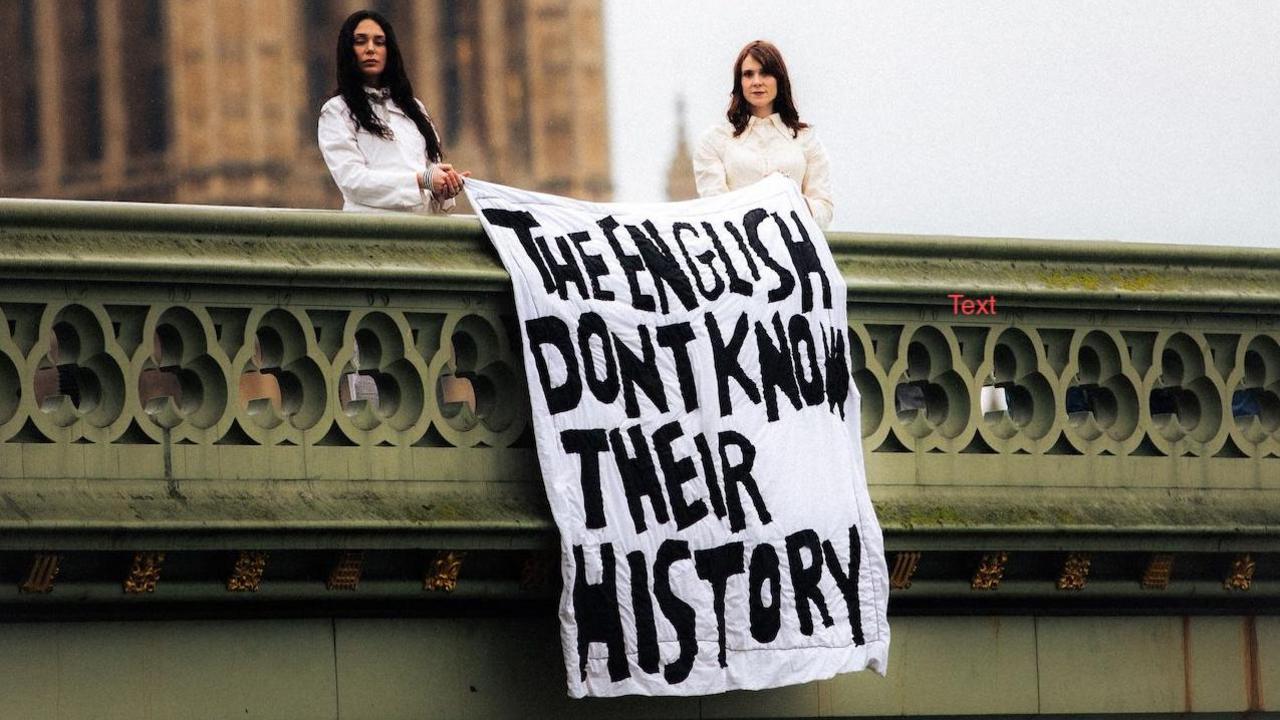 Image source, Jude Harrison
-
Published
Singer-songwriter Kate Nash believes many English people are disconnected from parts of their own history, and her latest single is an attempt to start a conversation about why.
She has recorded a cover of Famine, Sinéad O’Connor’s 1994 song about one of Ireland’s darkest periods, using it to explore wider questions about how Britain’s role in the famine is remembered.
For Nash, the project was also deeply personal.
Born in London to an Irish mother, she attended a Catholic school, spent childhood holidays in the Republic of Ireland and the first instrument she learned was the tin whistle, despite long claiming it was the piano.
Revisiting the song more than three decades later, Nash said she was struck not only by its message, but by her little knowledge of the subject matter.
‘That’s so audacious’
“Sinéad gave me the whole history lesson that school never gave me, that I didn’t really get at home either,” Nash told BBC News NI ahead of a performance in Belfast as part of this year’s Fleadh Cheoil na hÉireann fringe programme.
She is quick to clarify what she means when she says English people do not know their own history.
“When I’m saying the English don’t know their history, I’m also English.
“So I’m saying, I don’t know my history… and I want to learn.”
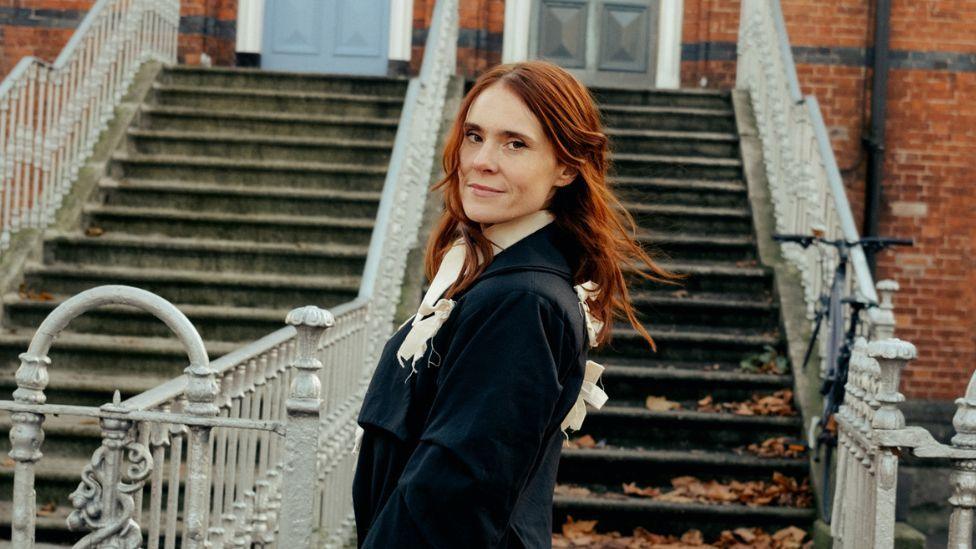 Image source, Ellius Grace
Nash’s debut album Made of Bricks came out in 2007 and spawned her biggest hit, Foundations.
She’s since released four more studio albums, including 9 Sad Symphonies in 2024.
While working in the United States more than a decade ago, Kate met music producer Kool Kojak and was encouraged to explore her Irish heritage through music.
After O’Connor’s death in 2023, he suggested recording Famine.
“I was like, ‘oh my God, that’s so audacious, only an American could suggest that’,” Nash said.
“But then I thought, why not?
“The tradition of covering old folk songs, passing music through is really important. And the more people that cover that song really the better, because you can bring that message, the education, to a new audience.”
To play this video you need to enable JavaScript in your browser.
This video can not be played
Rather than simply replicate the original, Nash rewrote parts of the song and added a new verse reflecting her own experience of dual identity.
“England doesn’t take responsibility for destruction that it’s caused, for its empire and now commonwealth, they left us uninformed”, she sings, echoing wider debates about how Britain’s imperial past is taught and remembered.
Deeply intertwined societies
Enda Delaney, professor of modern history and director of research at the Edinburgh Futures Institute, believes Nash’s point of view is “fair comment”.
Unlike in the Republic of Ireland, he said, Anglo-Irish history is not routinely taught to English students, creating a gap in public understanding.
“The fact that one million people died in a part of the United Kingdom, which of course Ireland was in the 1840s… there isn’t a really good knowledge of the context in which those terrible events occurred.”
He said there should be greater emphasis on Irish history in schools and pointed to growing interest in the subject at university level.
“When you’ve got two societies which are so closely located to each other and so deeply intertwined, it’s really important that both Irish people and British people understand those shared points of history.”
The BBC is not responsible for the content of external sites. YouTube content may contain adverts.
Allow YouTube content?
This article contains content provided by Google YouTube. We ask for your permission before anything is loaded, as they may be using cookies and other technologies. You may want to read Google’s cookie policy, external and privacy policy, external before accepting. To view this content choose ‘accept and continue’.
The BBC is not responsible for the content of external sites. YouTube content may contain adverts.
Nash said she had discussed the issue with educators and believes they need more support.
“There’s a lot of pressure on teachers… they need to be empowered to teach difficult topics,” she said.
“Sometimes they rely on lessons they’ve already developed because they don’t have time or resources to introduce new material.”
The Department for Education, which oversees the curriculum in English maintained schools, said Ireland and the UK “have a uniquely shared history, relevant not just to the millions of British citizens of Irish descent but the country as a whole”.
“The national curriculum provides a core frame within which teachers can take the opportunity to teach about Britain and Ireland in the 19th Century, including the Great Famine,” a spokesperson told BBC News NI.
A revitalised curriculum “will go further to strengthen pupils’ understanding”, they added.
“This will give teachers a clear framework to bring in a wide range of topics, including those that are challenging or uncomfortable.”
A contested history
More than one million people died during the Irish famine between 1845 and 1852, when Ireland was part of the United Kingdom, and about two million emigrated over the following decade.
It was triggered by potato blight which spread across Europe.
In 1997, Tony Blair issued a landmark statement, acknowledging that the British government failed the Irish people during this time.
However it later emerged it was neither written, nor approved by him.
That debate sits at the centre of both O’Connor’s and Nash’s interpretation of Famine.
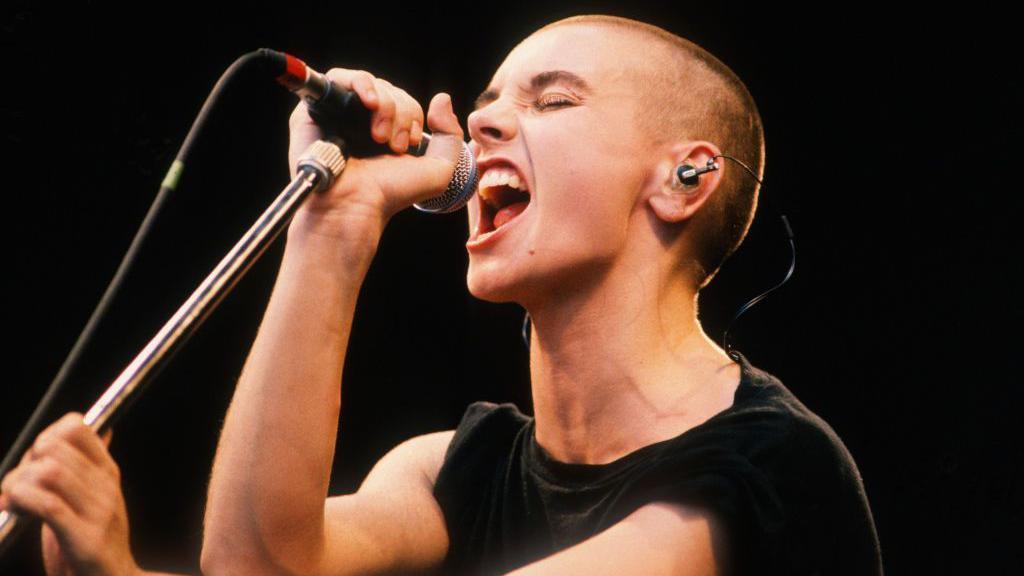 Image source, Getty Images
Robert Tombs, professor emeritus at the University of Cambridge and founding editor of History Reclaimed, argued the British government relief efforts should be judged against the economic realities of the 1840s.
“If the Irish famine were to be taught, it should counter the myth that it was caused or aggravated by Britain,” he said.
While Irish farmers did export some food to Britain, “it was dwarfed by the amount being brought in for distribution by the UK government”, he added.
As ministers grappled with high food prices and moved to repeal the Corn Laws, (tariffs on grain that kept the price of bread artificially high), the government, led by Sir John Peel, imported large quantities of maize and expanded relief schemes that at one stage fed about three million people a day.
However, the maize proved difficult to mill and distribute.
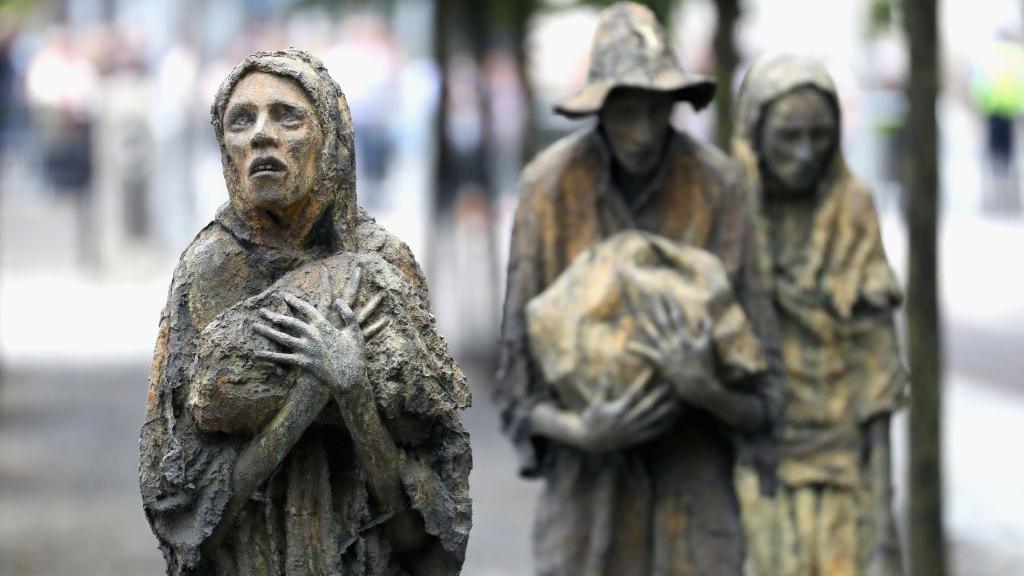 Image source, Getty Images
The UK Parliament has acknowledged the next government led by Lord John Russell “did not handle the famine effectively”, external.
Direct food distribution programmes were dismantled and legislation was introduced to place the financial onus for famine relief on Irish landowners, who in turn attempted to save money by ejecting tenants.
“It is possible to say that more could have been done, but there was a serious risk of financial meltdown,” Tombs reasoned.
He has suggested that history should be approached through “careful interpretation of complex evidence”, rather than political narratives.
Identity, heritage and belonging
Nash’s exploration of Irish history also places her in a long tradition of second-generation Irish artists examining their heritage.
Prof Sean Campbell, whose research focuses on popular culture and the Irish diaspora in Britain, said artists including Kevin Rowland, the frontman of Dexy’s Midnight Runners, Shane MacGowan and members of Oasis had done the same.
 Image source, Getty Images
Campbell explained that second-generation Irish identity is often misunderstood, with artistic expressions of that heritage frequently provoking mixed reactions.
Artists he said, did not simply “decide to become Irish”.
“They grew up feeling Irish. It was just an organic sense of identity.”
But of the many second-generation, political pop efforts, he said Nash’s recent recording stands out for being so “overt”.
“She’s tackling one of the really big issues in Anglo-Irish politics and history,” he said.
“It’s quite a brave thing to do.”
Nash believes that while many people in England engage with Irish culture, they are avoiding harder conversations about history.
“For English people, it’s really important to appreciate more than just the food and the culture and the Guinness,” she said.
“We need history, we need context, we need to understand things.”
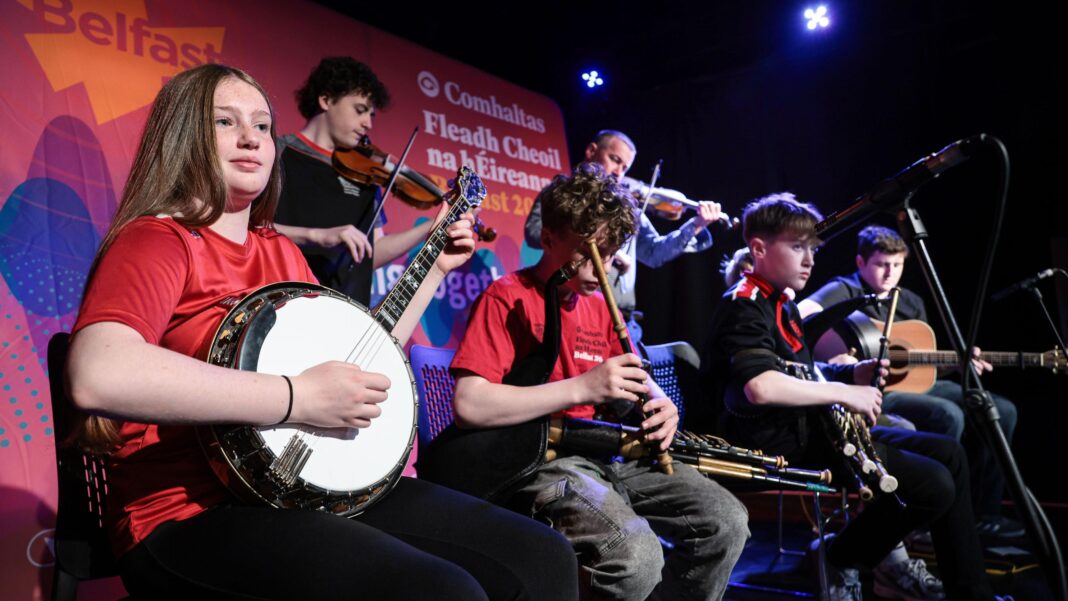
Kate Nash performs at The Mac in Belfast on 6 August as part of the fringe programme for the Fleadh Cheoil na hÉireann.
-
-
Published22 November 2024

-
-
-
Published13 hours ago
-
-
-
Published30 August 2025
-