

This post was originally published on this site.
Early release scheme risks more serious crimes, probation chief inspector warns
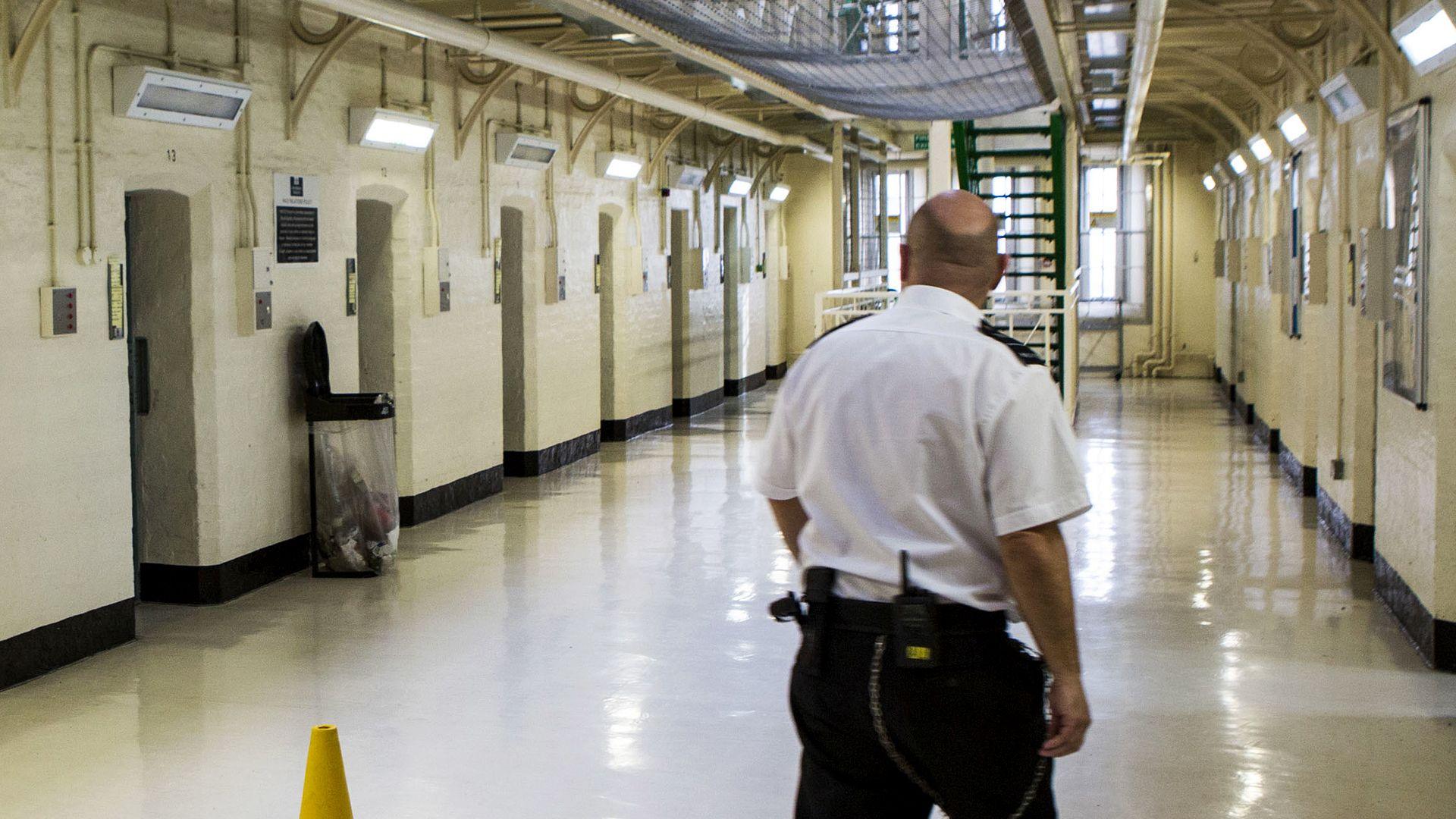 Image source, Getty Images
-
Published
The chief inspector of probation for England and Wales has told the BBC the early release of thousands of prisoners could lead to “a serious sexual or violent offence or even murder” because of the demands on probation staff to monitor offenders.
The government is set to release 5,000 offenders from October as part of new laws to create more space in overcrowded prisons.
Probation officers supervise offenders after prison sentences and check they follow the terms of their release, such as sticking to curfews and not taking drugs.
A Ministry of Justice spokesperson said “protecting the public is our top priority”, adding it had invested in probation and hiring trainee officers.
But Martin Jones, His Majesty’s Chief Inspector of probation for England and Wales, told the BBC that “ultimately I’m not fully confident that the probation system will be able to cope with this massive work and there’s a risk that things will go wrong”.
“Probation services are already under unprecedented pressure.
“I mean, they’re managing a caseload of 258,000 cases, that’s nearly three times the number that are in our prisons, and obviously the early release scheme will be increasing that pressure considerably.”
On Tuesday, 50 police chiefs across the UK signed a letter to the prime minister urging him to pursue “every legal option” to prevent the early release of PC Andrew Harper’s killers under the scheme.
They called for called for greater consideration of victims when prisoners have their sentences altered, adding: “Families across the country are now facing the distress of learning that offenders may be released earlier than they understood when sentence was passed.”
They also welcomed Burnham’s intervention on Tuesday, when he said he was “confident” the early release of Jessie Cole and Albert Bowers, who were jailed for 13 years for manslaughter in 2020, in January could be stopped.
Shadow home secretary Chris Philp told BBC Breakfast the early release plans had “put public safety at risk as well as disrespecting victims and undermining confidence in the criminal justice system”.
He urged Burnham to “pay attention and listen” to the senior police officers, adding he had “never seen every chief constable in the country write to the prime minister directly in this way”.
Philip and Nick Timothy, the Conservative shadow justice secretary, wrote to Burnham on Tuesday urging him to introduce emergency primary legislation in September to amend the Sentencing Act 2026.
The letter said grooming gang perpetrators, including those convicted of indecent assault, and those convicted of the manslaughter of an emergency worker should be exempt from the early release scheme.
Probation officers in ‘state of panic’
Probation officers help former prisoners with housing, employment and access to benefits once in the community, and help protect the public by assessing the risk of further offending.
Their workload will increase substantially when more offenders – some of whom will have been convicted of violent offences – are released months earlier than planned as part of the Sentencing Act.
According to the chief inspector, probation caseload has increased by 8% over the last two years.
Much of that is down to a separate early release scheme which was implemented in 2024 after prisons nearly reached full capacity.
That scheme has led to tens of thousands of offenders being let out sooner.
When asked what risk the additional early releases due to start in the autumn could pose to the public, Jones said “that could be a serious sexual or violent offence or even murder”.
One probation officer told the BBC the upcoming releases had put him and his colleagues into “a state of panic”.
“We can’t cope with this – we’ve been saying that to anybody who will listen.
“At the minute I think it’s pure panic in terms of where we’re at. I don’t understand how there can be this level of pressure put on us.
“The worst that can happen is that things are missed, plans aren’t put into place and we don’t give people the level of service they need and that leads to serious further offences.
“That leads to death under supervision.”
In a statement, an MoJ spokesperson said the department had exceeded its recruitment target for last year, with 1,389 trainee probation officers starting.
The spokesperson said this is “making sure the Probation Service has the resource it needs to keep dangerous offenders under closer surveillance than ever before”.
“The Sentencing Act is restoring order to a prison system left on the brink of collapse, while our record £700m investment in probation and community punishment is ensuring staff have the resources, powers, and technology they need to manage offenders safely in the community,” the spokesperson added.
-
What could happen to prisoner early release scheme now?
-
Published4 August
-
On Tuesday, probation officers voted in favour of strike action over the scheme, with probation union Napo saying 90% of its members had backed potential industrial action.
“This ballot wasn’t about members being too busy,” Napo national chair Ben Cockburn said.
“It was professionals warning they cannot protect the public properly when there are not enough people to do the work.”
The MoJ said it was “disappointed” by the ballot outcome.
Inspectorate reports published between January and March 2026 highlight staffing gaps in probation, a lack of experience, significant issues with information sharing, as well as “the burden placed on overstretched staff by large-scale change programmes”.
As of March, there were 5,554 full-time equivalent probation officers, a shortfall of 1,556 against the target staffing level of 7,110.
Prime Minister Andy Burnham has said there will be a presumption that all offenders released as part of the new laws will be tagged and have longer periods of supervision.
This will mean more responsibility on probation staff.
“Electronic tagging has been talked about as a key part of the arrangement but actually all that provides you with is information to inform their understanding of what is going on and then to act upon that when necessary, and I’m not sure the systems are there and robust enough to assist the probation officer when they’re doing their work,” Jones said.
“I’ve previously said that it would be a good idea to look at the overall workload of probation and consider what are the essential things that they need to be doing, not what’s desirable.”
“It’s a matter of desirable work that I want the probation service to be doing.
“But with a probation service that probably has a vacancy rate of 20-25%, what can they realistically do.”
On Tuesday, the prime minister said he was “increasingly confident” that work to add space in the prison system “will allow us to reduce the number of people released early”.
It comes as Burnham is facing growing pressure to ensure the killers of PC Andrew Harper are not released as part of the scheme.
Downing Street had earlier warned it would not be possible to exclude “one or two offenders” convicted of manslaughter from early release.
But after an outcry, Burnham ordered the justice secretary to find a way to bar Jessie Cole and Albert Bowers from the scheme, and the prime minister has now said he is “confident” they can be excluded.
The letter welcomed the prime minister’s intervention, adding: “This provides an opportunity not only to examine every lawful avenue in PC Andrew Harper’s case, but to ensure similar concerns do not arise again.”

Get in touch
Are you affected by issues covered in this story? Share your experiences.
-
-
Published19 hours ago
-
-
-
Published23 hours ago

-
-
-
Published7 hours ago
-