
This post was originally published on this site.
Business groups urge Swinney to scrap ‘ineffective’ food price cap plan
-
Published
The Scottish government’s proposed food price cap will be “ineffective”, business groups have told the first minister.
Twenty-three organisations have written a joint letter to John Swinney – who will set out his programme for government on Tuesday – urging him to scrap his plan for a legal cap on some food and drink prices.
Signatories include groups representing retail, food and drink production, manufacturing and distribution businesses in Scotland.
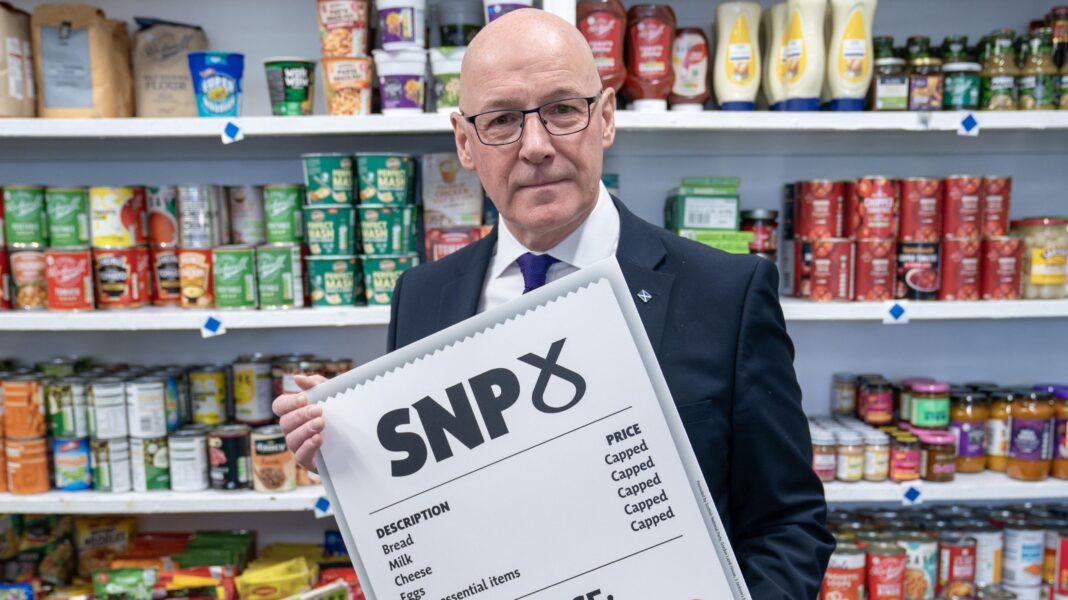
In the SNP’s election manifesto it pledged to compel large supermarkets to limit the cost of essential items – such as milk, eggs, cheese and rice – to ease the cost of living.
-
Swinney’s 100-day push gives way to bigger battles ahead
-
Published1 day ago
-
-
How much should we be prepared to pay for our food?
-
Published29 June
-
Swinney said people were struggling to afford a basic shop and he had a “public health responsibility” to provide an affordable nutritious diet.
But the joint letter said a statutory cap would not address the “root causes of elevated food prices” – rising production, refrigeration, and distribution costs.
It is signed by groups including the Scottish Retail Consortium (SRC), the Food and Drink Federation Scotland, Scottish Bakers and Dairy UK.
Ewan MacDonald-Russell, deputy head of the SRC, told the BBC’s Radio Scotland Breakfast programme the plans were an “appallingly terrible idea”.
“Price caps don’t tackle food price inflation,” he said.
“They are not a solution, they are a gimmick that sounds quite effective, but it just displaces cost elsewhere.
“We can’t see a single example of where this has worked.”
MacDonald-Russell pointed to Hungary, where he said a price cap policy led to shortages on the shelves, domestic products being replaced by “cheap imports” and tension between retailers and customers.
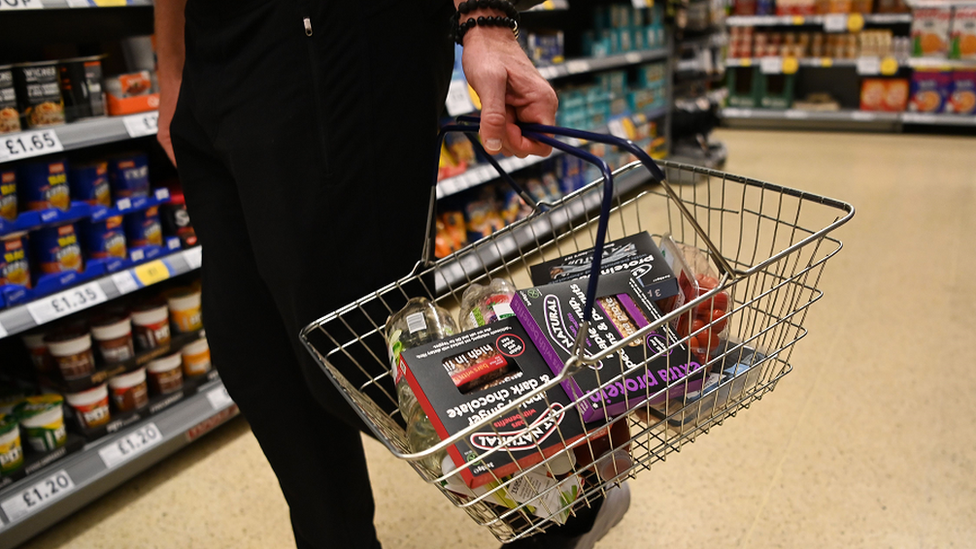 Image source, EPA
The SRC said the policy also risked forcing small shops which are not covered by the proposed legislation to be uncompetitive.
“Scottish consumers benefit from the most affordable food prices in western Europe,” MacDonald-Russell added.
“We know food price inflation is a problem, but the best model to deal with it is the one we have right now and price caps are going to make that worse.
“It is giving a false promise that it is going to be able to help with something.
“In reality, there is as good a chance it is going to make the overall cost of a shopping basket higher, because the cost of the scheme as well as the cap have to be absorbed by businesses.”
It is thought the proposals would require changes to the UK Internal Markets Act of 2020, which was brought in after Brexit to prevent trade barriers and regulatory divergence between England, Scotland, Wales, and Northern Ireland as powers returned from the EU.
The Scottish government said helping people with the cost of living was a “top priority”.
A spokesperson added: “Ministers have welcomed engagement with stakeholders, including retailers, food producers and farmers on proposals for food price controls.
“A consultation will launch shortly for further views.”


By proposing a food price cap, John Swinney wants to demonstrate a commitment to tackling the rising cost of living.
In turn that means those who oppose him risk appearing to be on the wrong side of the argument.
There are of course big questions about whether a cap would actually work in practice and if legislation could even get that far.
Firstly, law making takes time. Swinney himself has talked about a year-long process.
Secondly, the Scottish government would probably need the UK government to grant its proposals an exemption from the internal market act which is designed to harmonise the terms of trade across the UK.
UK ministers have not said whether or not they would oblige.
Thirdly, if legislation was eventually approved at Holyrood it would be open to the supermarkets to challenge it in court.
These complications help to explain why this is not the only avenue being explored by the Scottish government.
They have called a “summit” with food producers and retailers next week to consider the way forward.
-
-
Published16 April
-
-
-
Published16 April
-
-
-
Published19 May
-