
This post was originally published on this site.
The story of Japan has long been deflation. For the last 20 years or so, the country had been plagued by it, leaving its economy stunted. But the tide has finally turned.
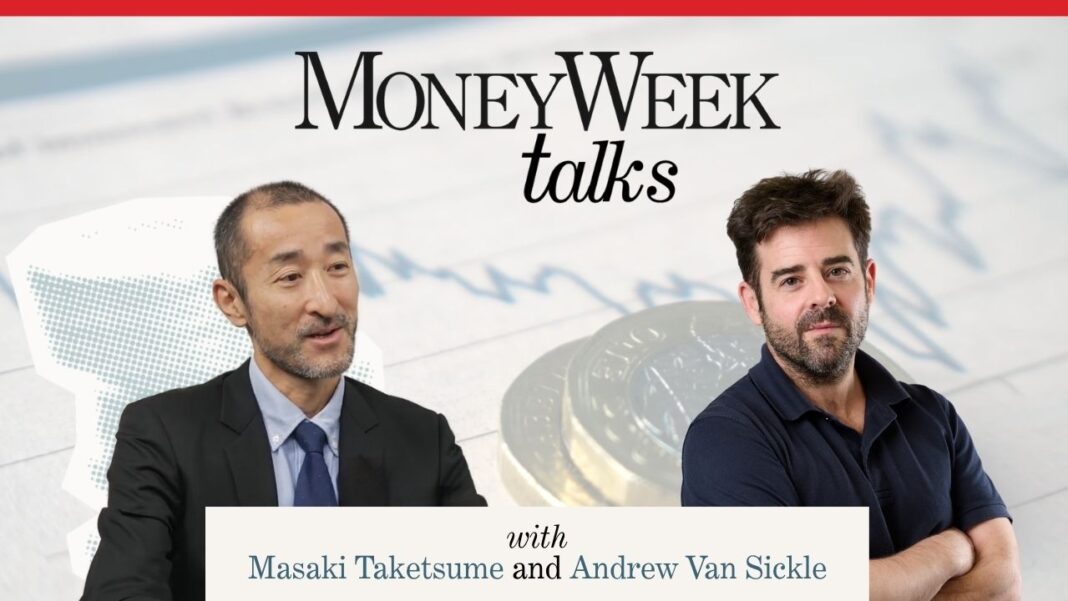
The initial catalyst was the increase in import costs in 2022 that pushed Japanese firms to raise prices, says Masaki Taketsume, manager of the Schroder Japan Trust, on the MoneyWeek Talks podcast.
This led to a virtuous circle – increased earnings growth fed into higher wage growth. Higher wages fuelled consumption, leading to further earnings growth.
Sign up to Money Morning
Don’t miss the latest investment and personal finances news, market analysis, plus money-saving tips with our free twice-daily newsletter
Don’t miss the latest investment and personal finances news, market analysis, plus money-saving tips with our free twice-daily newsletter
While this cycle may have helped end the deflation crisis, much of the groundwork was laid years before under the premiership of prime minister Shinzo Abe, who regained office in 2012 after a stint in 2006-2007.
To help pull Japan out of its rut, Abe employed the “three arrows” strategy. Taketsume says the strategy was used to tackle a shortage of demand in the economy, which was causing deflation and high levels of unemployment.
“The three arrows were a broad range of physical stimulus and accommodative monetary policy. The combination helped the Japanese economy to improve, narrowing the gap between supply and demand.
“The last arrow was deregulation, including corporate governance reform with a unanimous effort led by the Japanese government and regulatory agencies like the Tokyo stock exchange and investors like us.
“All the interested parties were supporting the Japanese corporation to rebuild their business portfolio and review their balance sheet to sustainably improve their return on equity. That effort has been evolving quite well”
How Abenomics gave Japan Inc. a jolt
Over the past few years, Abe’s corporate governance reforms have helped Japanese firms overcome a well-earned reputation of being uninterested in what their shareholders thought.
Taketsume says the reforms prompted Japanese companies to release excess cash from their balance sheets, initiate share buybacks, or increase their dividends to be more responsive to shareholders.
Now firms are being pushed further to undertake a comprehensive review of their business portfolio or make growth investments to realise a sustainable improvement in return on equity, a key gauge of profitability
“So in that sense, corporate governance reform is a structural positive tailwind for the Japanese equity market.”
Another aspect of the ‘Abenomics’ reforms was the cracking down on cross-shareholding, which had been rife among Japanese firms, but is now unwinding, according to Taketsume.
“Toyota Group used to have a reputation of having a very strong tie between Toyota and the supplier, but nowadays most of the Toyota group [has dissolved] their cross-shareholding. That’s one good piece of anecdotal evidence that the cross-shareholding has gone.”
The reforms are leading to stronger returns on equity.
Taketsume said: “If we move back to before the Abenomics era, average return on equity for the Japanese corporation was something like 4% or 5%, but now, thanks to the corporate governance reform, the Japanese company is getting closer to 9% or 10%”
While this transformation is strong – doubling in just over a decade – it still lags behind the European or US markets.
“Corporate governance reform is an ongoing effort, so that suggests we may see further upside in the return on equity for the Japanese company and move closer to that of the US or Europe,” said Taketsume.
For more on the Japanese stock market, the political context of Japan’s reforms, and more, watch the full episode of MoneyWeek Talks with Masaki Taketsume on YouTube, or listen to it wherever you get your podcasts.
About the podcast
MoneyWeek Talks is a podcast that helps you unlock the secrets to financial success. Editors Kalpana Fitzpatrick, Andrew Van Sickle and Cris Sholto Heaton are joined by influential guests – from CEOs and entrepreneurs to economists and fund managers – to share their top tips on managing money, investing wisely and building wealth.
Subscribe to the MoneyWeek Talks podcast and get ready to make it, keep it and spend it with confidence. You can also watch the episodes on our YouTube channel.
Explore More