
This post was originally published on this site.
National security can’t come at expense of social security, Burnham says
-
Published
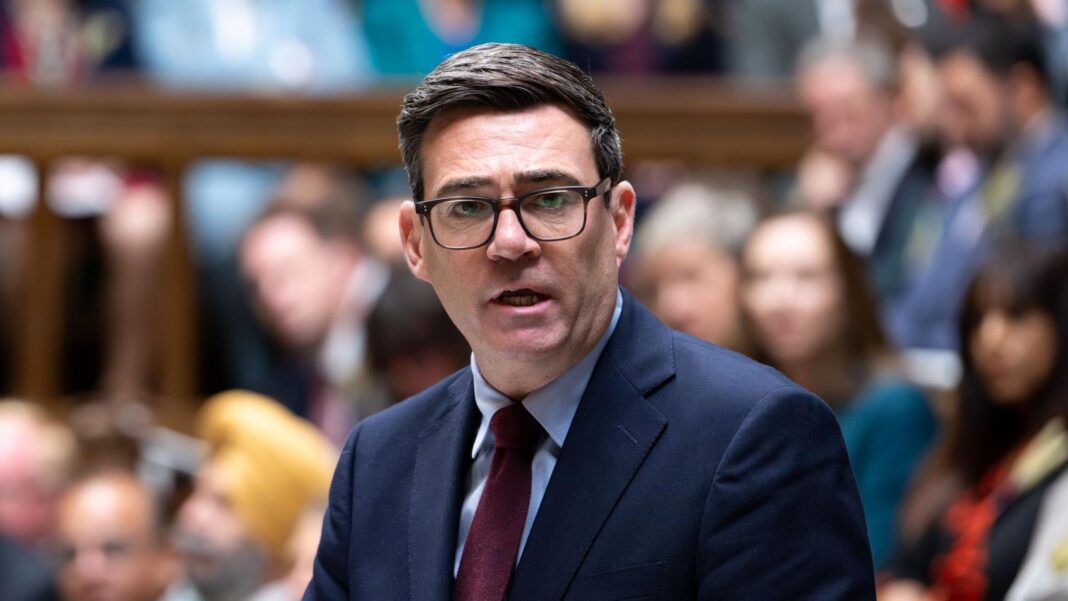
Andy Burnham has said national security “can’t come at the expense of social security”, as he was challenged over funding for defence at Prime Minister’s Questions.
Conservative leader Kemi Badenoch pressed Burnham over whether he would spend 3% of GDP on defence by 2030 and how he would pay for this.
The PM said the government’s commitment to defence was “absolute” and he would set a target date to reach the 3% figure in the spring.
Burnham said he would fund defence and get the welfare bill down in “the Labour way”, by changing education, supporting young people and providing more mental health support.
The Conservatives seized on the comments, with a party spokesperson saying: “Britain heard it loud and clear today: Andy Burnham will not cut welfare to fund the defence of our country.
“The prime minister is prioritising the ballooning benefits bill over our national security. Shameful.”
After PMQs, Burnham’s team was at pains to stress his commitment that “national security is the most important duty of any government”, and stressed the prime minister had been “consistent about getting the welfare bill down”.
But they said that did not mean “crude cuts” that could “put people into crisis” by making them homeless and so creating higher costs elsewhere in the system to support them.
-
Badenoch accuses Burnham of kicking defence spending into the long grass
-
Published5 days ago
-
-
British army told to stop non-essential training exercises to save money
-
Published5 days ago
-
In the Commons session, Burnham repeated that the government would meet the Nato target of spending 3.5% of GDP on defence by 2035, with a target date for hitting the 3% figure set out in the spending review in the spring.
The PM said he had appointed John Healey, who resigned as Sir Keir Starmer’s defence secretary over the government’s failure to commit to a 3% increase by 2030, “because of his strong commitment to the defence of this nation”.
However, Badenoch hit back that 2035 was “a decade away” and “the threats are now”.
She questioned whether Burnham was “unable” or “just unwilling” to meet the 2030 target.
In response, Burnham insisted: “This chancellor of all chancellors will be willing to provide that funding to our armed forces.”
However, he rejected a Conservative plan to partly fund increased defence spending by saving at least £4bn through reforms to housing benefit.
“I don’t think, myself, that taking £4bn out of housing benefit is going to get the right consensus around this issue because that would create levels of homelessness in this country… that we wouldn’t have seen before, hundreds of thousands of children in temporary accommodation,” he said.
“Yes, we do everything to support our national security, but it can’t come at the expense of social security.”
He added: “This side of the House will not be forced to choose between the two and we will set out a plan to get to 3.5% by 2035 at the spending review.”
Badenoch said Burnham’s comments were “unbelievable”, adding: “We need to fund our defence, not spend all of our money on welfare.”
Burnham insisted he would “bring the welfare budget down” by tackling the number of young people not in education, employment or training.
“That’s the Labour way to get the welfare bill down,” he said.
“That is the right way to fund defence.”
Badenoch accused Burnham of being “continuity Keir”.
“He’s pretending that he’s the change candidate. But the fact is, he’s still failing to cut welfare,” she said.
As prime minister, Sir Keir attempted to cut disability benefits but was forced to row back on the plans in the face of opposition from Labour MPs.
Cutting the welfare bill is a key part of Tory proposals for funding increased defence spending.
Spending on benefits has ballooned in recent years and is forecast to rise to £408.6bn in 2030/31, according to figures from the Department for Work and Pensions.
There is particular concern about the nearly one million young people in the UK who are not in education, employment or training – known as “Neets”.
The government has asked former minister Alan Milburn to look into the issue and he is expected to publish his final recommendations for how to tackle the problem shortly.

Sign up for our Politics Essential newsletter to keep up with the inner workings of Westminster and beyond.