
From ruin to a (Red) Bull market – how Prem become hot property
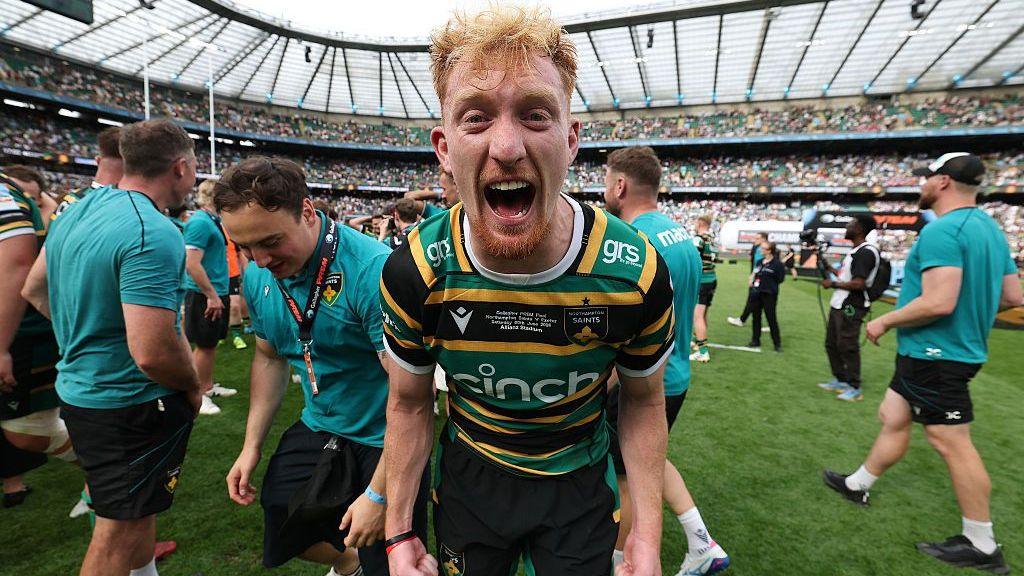 Image source, Getty Images
-
Published
Simon Massie-Taylor pulled up outside Newcastle’s Kingston Park stadium, and saw fear.
The unannounced arrival of Prem Rugby’s chief executive at one of the league’s clubs had rarely been a good sign.
Massie-Taylor started the role in January 2022. In the 18 months that followed, Wasps, Worcester and London Irish, with finances stretched out of shape by Covid, had flamed out of the English top flight.
“When those clubs were going into administration, the common denominator was their leadership leaving the room,” remembers Massie-Taylor.
“The owners, the chief executives, everyone went.
“So it was basically up to me, [Rugby Players Association general secretary] Christian Day and [Rugby Football Union director of legal and governance] Angus Bujalski to go in and say, ‘we’re terribly sorry, this is what’s happened, this is what it means for you’.
“Telling anyone that they’ve lost their job is one of the worst bits of having a job. But when it comes to sport, for the people that work in those clubs, it’s not just a job, it’s a way of life. It was horrible.”
So when Massie-Taylor pitched up at Newcastle last year, with the club limping from payroll to payroll, onlookers feared the worse.
“Some of the players and staff, when they first saw me, thought I was this grim reaper figure coming to deliver another bad news story,” he said.
This time, he wasn’t.
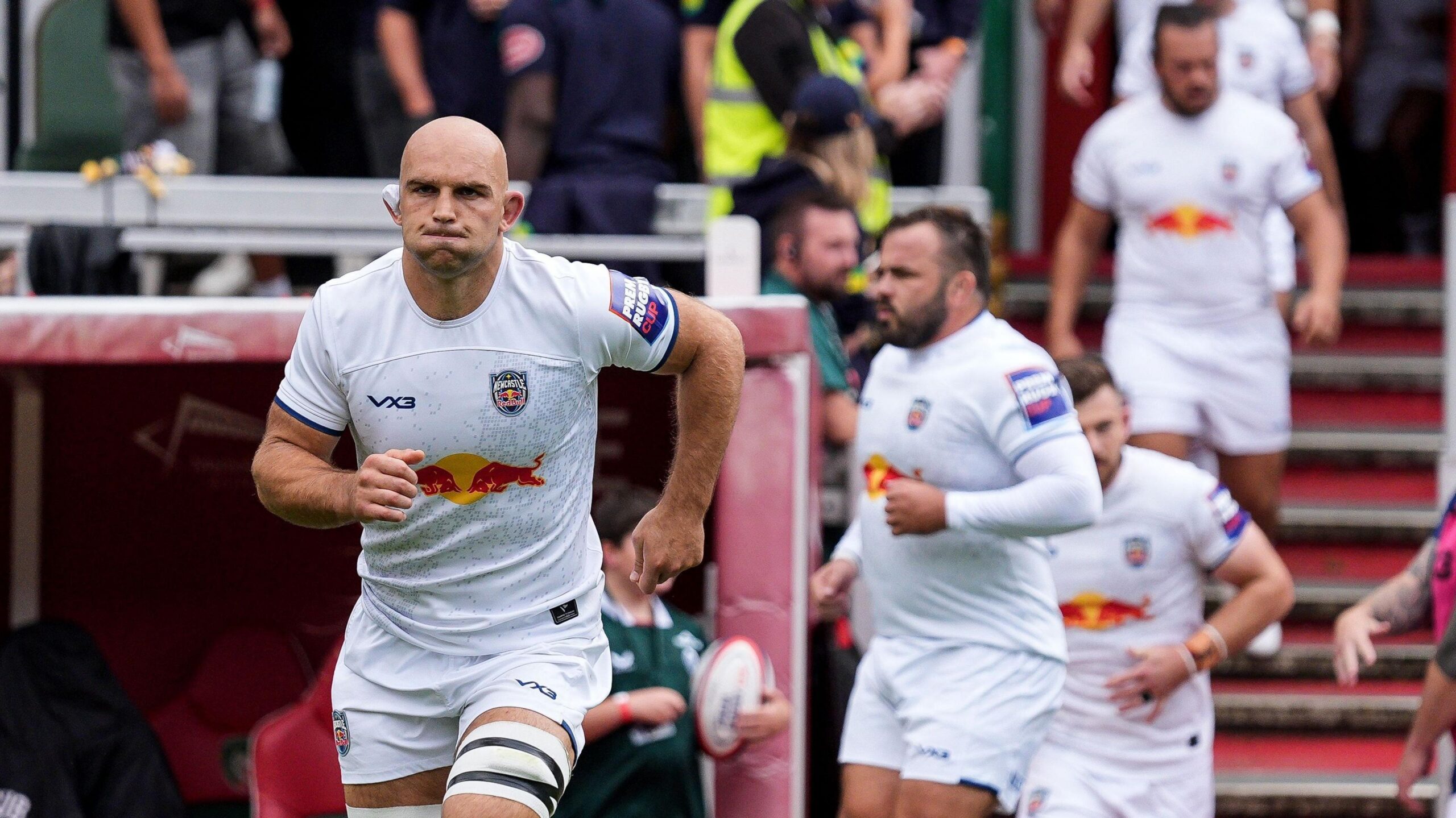
Instead he ushered Newcastle’s staff into a room decked out in the blue and silver branding of Red Bull.
Backed by a hype video filled with signature extreme sport stunts, executives from the energy drink giant, fresh off a flight, spelled out a grand vision for the Prem’s bottom club.
“There were people in that room in tears, it was pretty special,” said Massie-Taylor.
That investment was a pivot point for the league.
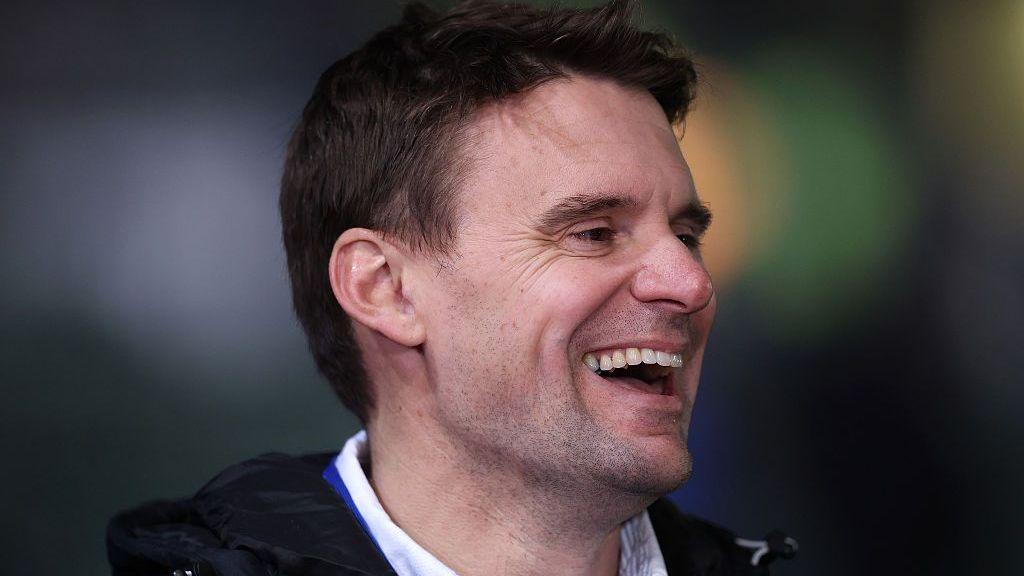 Image source, Getty Images
Massie-Taylor remembers how low the bar was to buy into the Prem in his first few, stressful years. “It was ‘do you exist, have you got a criminal record, do you actually have any money?,” he says.
But Red Bull’s arrival, sealed and delivered in August 2025, marked a sea change.
Since then Black Knight – the owners of Premier League side Bournemouth – have bought up Exeter Chiefs, billionaire industrialist Sir James Dyson has taken a 50% share of Bath and financier Steve Zander has made a multi-million pound investment into Northampton Saints., external
More outside investment is expected soon, with Gloucester and Leicester among those in conversations.
“Investor interest in the league has increased significantly in the last 12 months, certainly the last six,” says Massie-Taylor, who convened a summit for prospective buyers in London in June and is heading to the United States in October to press flesh and make the case.
His confidence is shared by more impartial experts.
Matthew Wheeler helped broker Red Bull’s takeover of Newcastle, but his specialist investment group A&W Capital has made deals across a variety of sports and media.
“I don’t think you’re drunk from the Kool-Aid to have belief in the Prem, there definitely is a momentum behind it,” he says.
Andrew Umbers is a co-founder of Oakwell Sports Advisory, which had a similar role in Exeter’s takeover.
“We put Exeter in front just over 110 sports investors and we had interest probably from around 30,” he says. “That interest came from North America, Asia and continental Europe.”
It is quite the difference from when Massie-Taylor would entertain enquiries from anyone with proof of identity, a clean chargesheet and a positive bank balance.
What is behind the turnaround?
There are a few factors that are happy coincidence, rather than canny design.
The value of sports teams generally has risen steeply. The sale of the LA Lakers for a record $12.5bn (£9.3bn) this summer is the prime example.
Wheeler puts the spike down to the guaranteed eyeballs sport attracts in a fragmented media world, its relative resistance to disruption by artificial intelligence as a product and the prestige and scarcity value of owning a sports team.
Prem Rugby was also on an upward growth trajectory before the Covid pandemic hit. Even with the loss of three teams, a return to normality has allowed the league to rediscover that groove.
A brand of the heft of Red Bull getting involved in the league, undoubtedly sparked interest elsewhere.
Prem Rugby
Friday 25 September – Saturday 19 June
Commentary of every Prem Rugby game is available on BBC local radio, via BBC Sounds or the BBC Sport website.
However, proactive changes have played a part.
An independent financial monitoring panel has kept across all Prem club finances for the past couple of seasons, and is designed to prevent dangerous levels of risk and spending. That has reassured investors.
With a funding deal with the Rugby Football Union and broadcast partnership with TNT Sports locked in for several seasons, there is stability for the foreseeable.
A calendar shift, external has meant England internationals are available more often to their clubs, raising the wattage on the domestic game’s star power.
And, while Massie-Taylor won’t say it himself, he has inspired confidence. A former investment banker, he understands what prospective buyers are looking for.
“He’s done a good job,” says Wheeler.
“The governance is important because the first thing an investor wants to know is can they rely on the management and is the league going to be well run.
“You may be buying into an individual team, but you’re really buying into the league.
“You can have the most successful team you want, but if the league’s not successful, it doesn’t mean anything.”
Massie-Taylor’s most important decision might be his most controversial.
He backed the ring-fencing of the league, scrapping relegation and bringing new teams in via a tender process rather than achievements on the pitch.
This season is the first to be played out without even a hint of jeopardy at the bottom of the table.
It has been unpopular with fans.
While some see a betrayal of sporting tradition, the change gives Prem Rugby a point of difference over lower-level football sides competing for the same investment.
No possible drop down the leagues, no danger of a distressed asset.
“It is a real thing for US investors,” says Massie-Taylor.
“There was a fear and, to some extent, a handbrake on investment because of that financial jeopardy.”
It is just one aspect of the league that makes prospective American buyers comfortable.
The upper and, from this season, lower limits on how much Prem clubs can spend on players’ salaries are common in Stateside sport, as is the equitable sharing of media revenues.
There has also been a shift to centralise deals and maximise revenues.
A proposal to have one kit manufacturer for the whole league – something seen in America’s ‘big four’ leagues (NBA, NFL, MLB and NHL) – has been floated in the past.
“For an investor, owning a Prem Rugby team is more is more like owning an NFL team than it is like owning a Premier League football team [in that regard],” says Wheeler.
It was noticeable that Brett Gosper, formerly the head of World Rugby, now leading NFL Europe, was on hand at Prem Rugby’s investor summit to underline those parallels.
The combination of features of a franchise league, with the long rivalries and established, loyal fanbases that a start-up competition lacks, makes the Prem a rare prospect.
“American investors are interested in under-commercialised sport, below the tier-one leagues such as Premier League, NFL or the IPL, that are at a turning point in their cycle,” says Umbers.
“We think Prem Rugby is one of those.”
Wheeler agrees.
“Rugby is not a big sport in America, so there has got to be some education going on,” he says.
“But will American investors be interested once they understand the dynamics? Yes.”
Massie-Taylor knows the margins are narrow.
A 10-team league cannot afford any more clubs to go under. There are financial debts and a dependency on owner generosity across the league.
But he heads to America with momentum.
“We’ve proved there’s opportunity going forward,” he says.
“The thing that’s niggling us now is the fear that we don’t make the most of it. That’s the pressure we all feel to really crack on.”
It isn’t just the players aiming to start the season fast.