
Burnham to unveil public body to invest in electricity grid
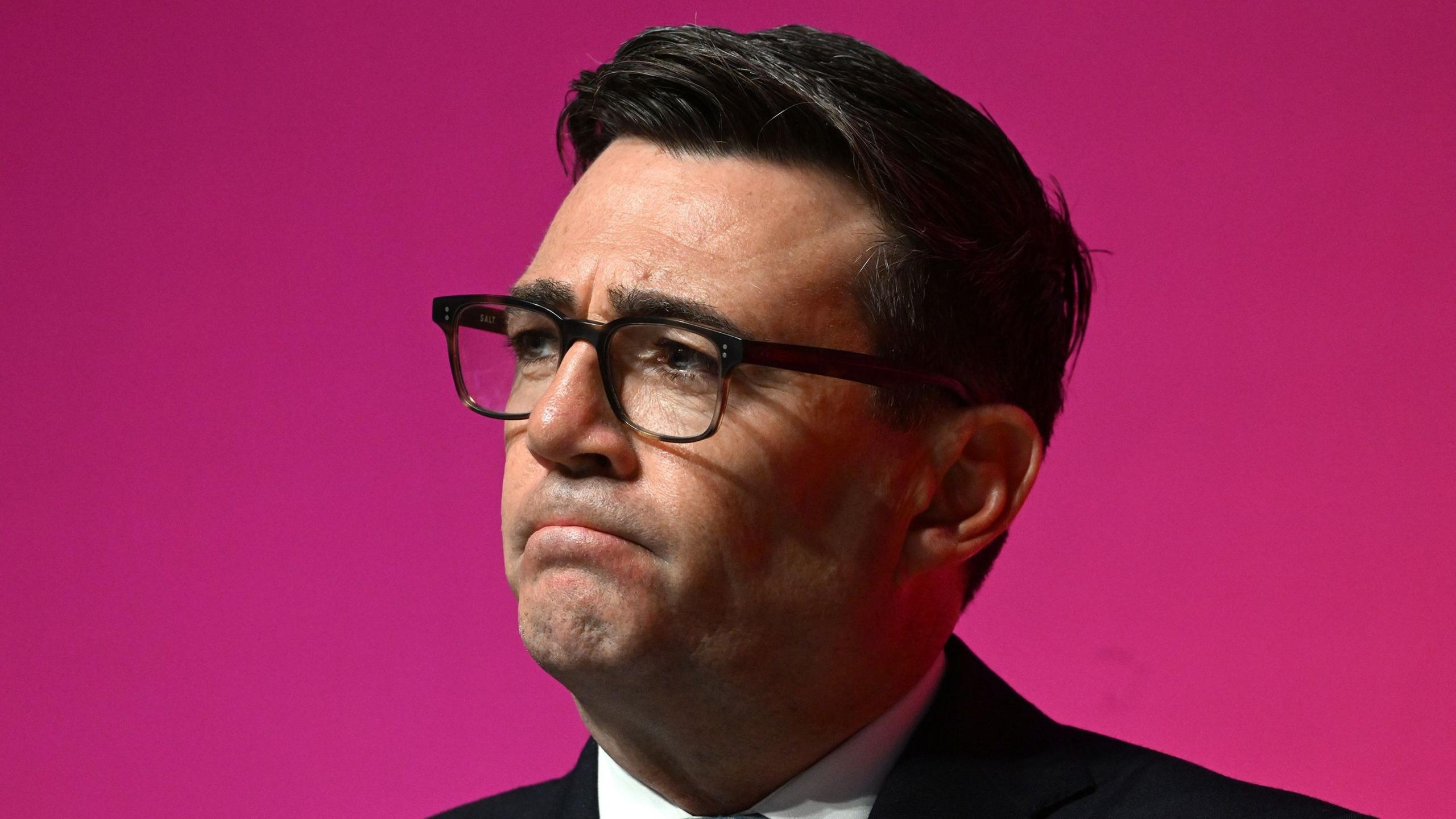 Image source, Jeff Overs/BBC
-
Published
Andy Burnham is expected to announce a new government body to invest in Britain’s electricity grid in his first party conference speech as Labour leader on Tuesday.
The prime minister will tell party activists in Liverpool that the new publicly owned company, branded Great British Grid, will speed up grid hook-ups by driving up competition for connection projects.
Burnham is expected to put the proposals at the heart of a new goal to bring UK energy costs in line with other nations in Europe within ten years.
He will promise to have an “honest conversation” with the public and take on the “difficult issues” that have been ignored for too long.
Burnham is expected to bill the creation of the GB Grid as the first significant move in his ambition to provide greater public control of utilities, which he put at the centre of his pitch for power over the summer.
He is expected to say that faster connections to the electricity grid could help fix a “cost crisis” in energy that has proved “crippling for businesses”.
Full details of the new body are yet to be set out, but Labour said it would invest in and compete for transmission connection projects alongside the three private companies that currently own and manage the grid in Britain.
The party said it would also make it easier for firms waiting to be connected to the grid to finance connection infrastructure themselves, with GB Grid supporting and potentially co-investing in projects alongside them.
Labour has said that funding for the new body will be found within the existing budget of GB Energy, the public green investment company set up by Labour last year and which is now headquartered in Aberdeen.
-
Faster grid hook-ups planned for some green energy projects
-
Published18 October 2024
-
-
Why the PM could finally drop the triple lock pension pledge
-
Published17 hours ago
-
The transition of electricity generation from large fossil fuel stations to the more remote locations used for renewables, such as offshore windfarms, will require Britain’s ageing transmission grid to undergo extensive rewiring in coming years.
Energy regulator Ofgem has estimated that £70bn of investment is required in the grid between 2025 and 2031, quadrupling the current rate of investment.
But in a report earlier this month, the National Audit Office warned that the number of projects waiting to connect to the grid had grown “significantly” whilst delays to projects were also increasing.
In his speech on Tuesday afternoon, Burnham is expected to say that GB Grid will “work with the private sector and network companies” to “reform a broken energy market”.
He will add: “It will increase competition to drive down costs and speed up delivery so businesses can connect faster and grow quicker.
“This is what more public control can do.”
Triple lock speculation
Burnham will promise “bold and honest” leadership, saying he will outline policies and commitments that form a “serious prospectus” for Britain and offer people more control over their lives.
He is expected to say that he initially wanted to “give the usual tub-thumping conference speech” but that “the patriot in me tells me something very different is needed”.
The prime minister has made “hope” the overall message of the four-day gathering.
It comes ahead of a tricky Budget at the end of next month, where the room for manoeuvre facing the prime minister has been narrowed by recent rises to the cost of UK borrowing.
Ahead of the speech, the prime minister has promised to reveal details of how he intends to fund his plans to provide free social care services to everyone in England.
He has said he wants to put his his plans before voters at the next general election, which legally must be held by August 2029 at the latest, before aiming to roll out the new system from 2030.
There has been speculation that in his efforts to free up future funding for his social care plans, the prime minister could question the long-term sustainability of the “triple lock” uprating policy for the state pension.
The policy – under which pension payments rise annually by the highest of 2.5%, inflation, or average wage rises – is expected to add billions to the cost of pensions in future years because of the UK’s ageing population.
Downing Street would not be drawn on whether a review is being considered, while ministers have been clear that a manifesto commitment to keep the triple lock for the duration of this parliament stands.
On Monday, Chancellor John Healey declined to guarantee the promise – which has featured in every Labour manifesto since 2015 – would feature in the party’s blueprint for voters at the next election.
“The manifesto will be the manifesto at the time, I’m not going to do that now,” he told BBC Radio 5 Live.
Sharon Graham, general secretary of the Unite union, issued a pre-emptive warning that scrapping the triple lock would be “electoral suicide”.

Sign up for our Politics Essential newsletter to read top political analysis, gain insight from across the UK and stay up to speed with the big moments. It’ll be delivered straight to your inbox every weekday.
-
-
Published7 hours ago
-
-
-
Published7 hours ago
-