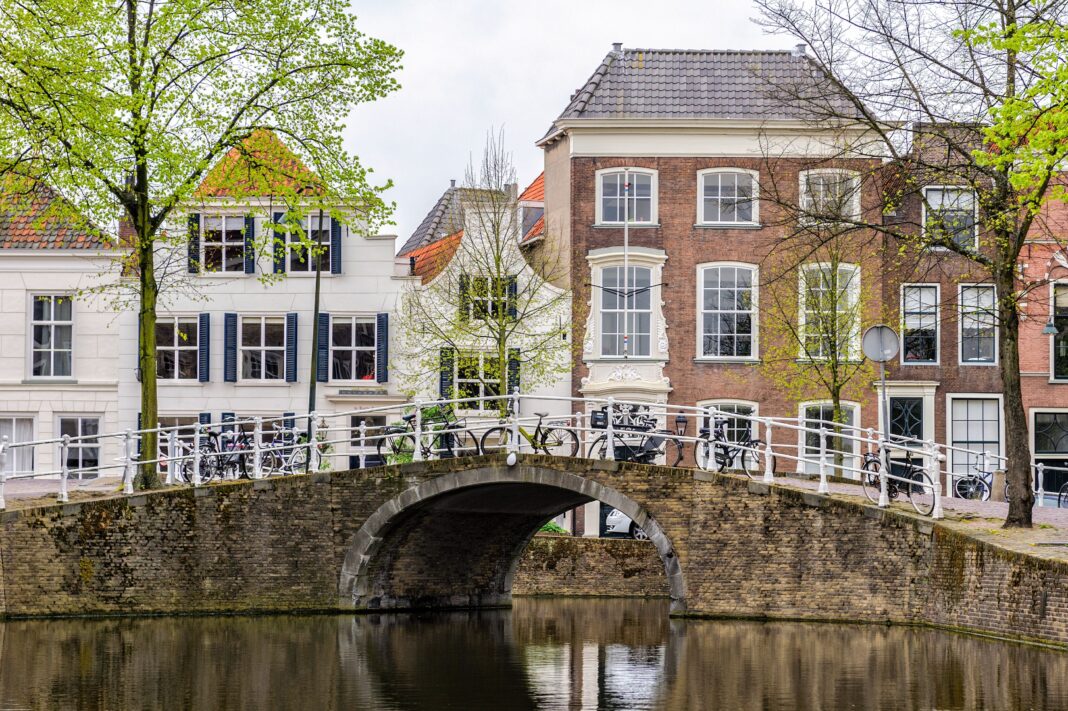

This post was originally published on this site.
Our museum guide, Sophie van de Ven, recounted the fascinating history of Delft blue ceramics with each hand-painted piece a unique work of art. She explained that it was one of the first products to fuse East and West, uniting cultures through design. Its legacy continues today, and it remains appreciated around the world. “At Royal Delft, tradition is alive in every brushstroke. Unlike most modern producers, the manufacturer still creates each piece entirely by hand, transforming earthenware into works of art rich in detail and depth,” van de Ven explains.
Instagram content
We also learn about the secret of Delft blue ceramics: What starts as a black pigment, made from cobalt oxide, emerges from the kiln as a luminous blue after firing. The result is never the same and each plate, vase, and tile has its own distinct character.
When asked why this business is still going strong, van de Ven explains: “Our products are still handmade, and we play an important role in preserving this traditional craft. In our factory, knowledge is passed down from master to apprentice, which allows the tradition to live on while preparing the next generation to take over. Preserving this craft is part of our identity and our mission to assure that Delft blue pottery continues into the future, keeping it relevant and alive for generations to come.”
Today, the museum offers many activities for a range of visitors. It is possible to tour the facility and watch artisans painting ceramics, join painting workshops, and enjoy a drink served in a painted ceramic cup. Each year, the museum welcomes around 140,000 visitors, many of whom leave not only with vivid memories, but also with a piece of Delft pottery, becoming ambassadors for the brand helping to assure its survival.
Beyond ceramics
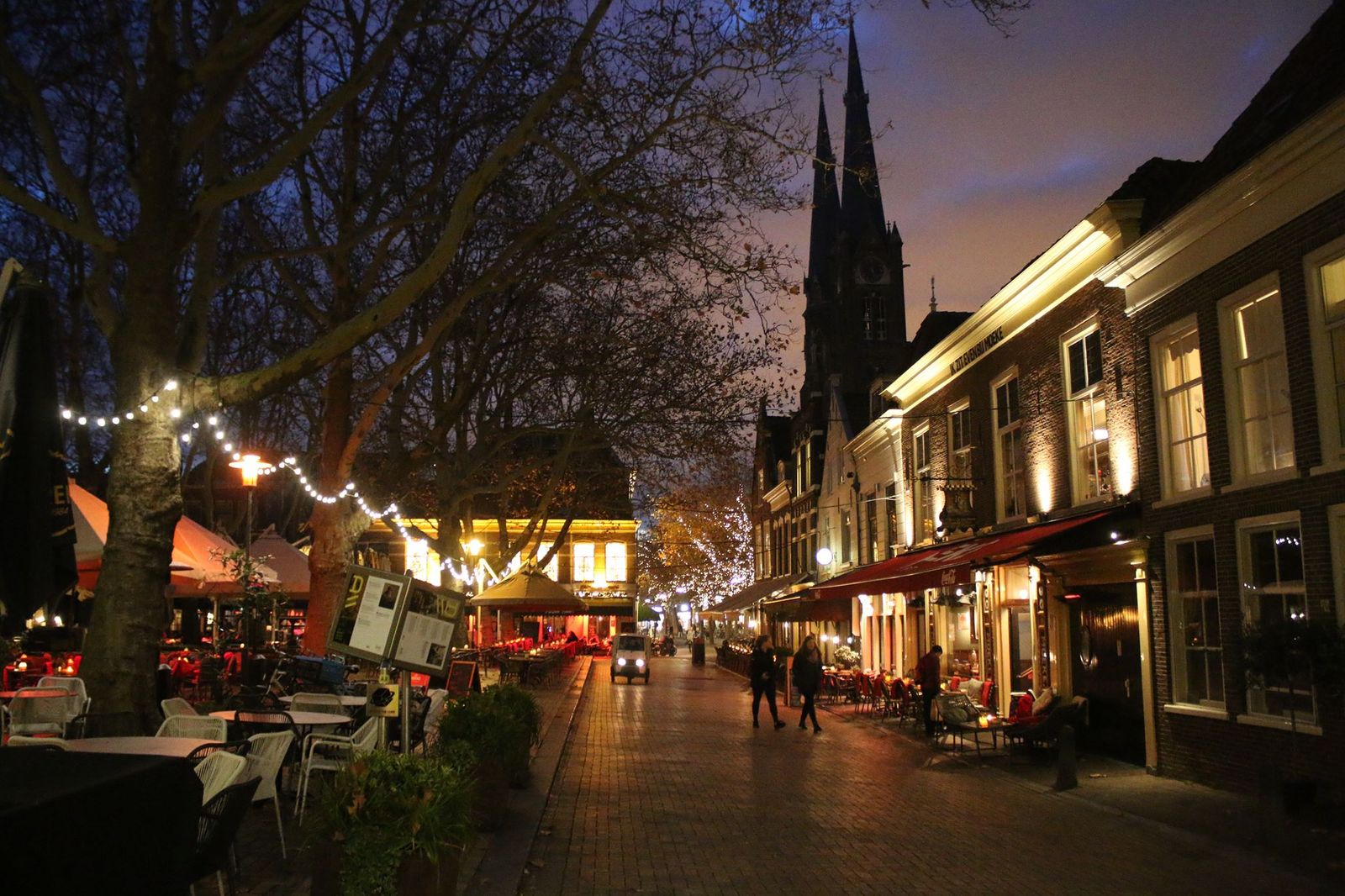
The Beestenmarkt and Market Square have many options when it comes to finding a good place to eat in the city of Delft. On the busy Beestenmarkt, you can enjoy a beer paired with a hamburger or ribs at Moeke (Beestenmarkt, 16). In the Market Square, behind the Town Hall, De Waag (Markt, 11) is a must for its meat croquettes and chicken satay. And, if you’re in the mood for some Spanish fare, cross the Kruyersbrug and you’ll find La Tasca (Voldersgracht, 13) where they serve ajoblanco soup, crema catalana, and other Spanish favorites.