
This post was originally published on this site.
The first 18 months of Labour in power have seen more than a dozen U-turns.
From welfare cuts to a climbdown on inheritance tax for farmers, Prime Minister Sir Keir Starmer and Chancellor Rachel Reeves appear to have gone back on several manifesto pledges and promises made before they were elected.
As the government made its latest U-turn on mandatory digital ID cards for workers, Sky News is looking at some of the biggest U-turns Labour has made since coming into power.
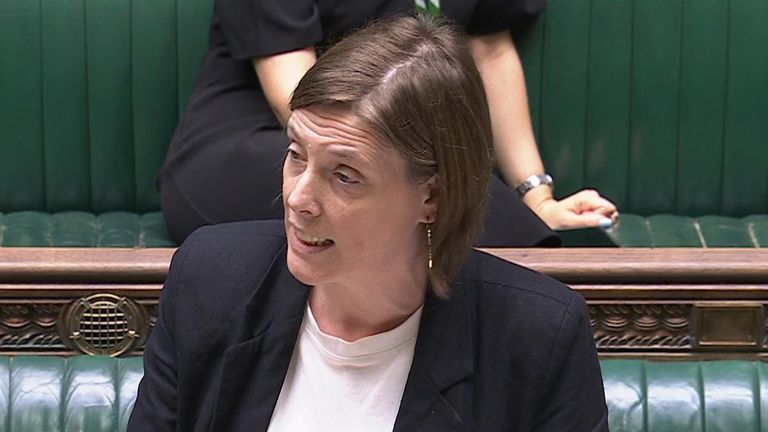
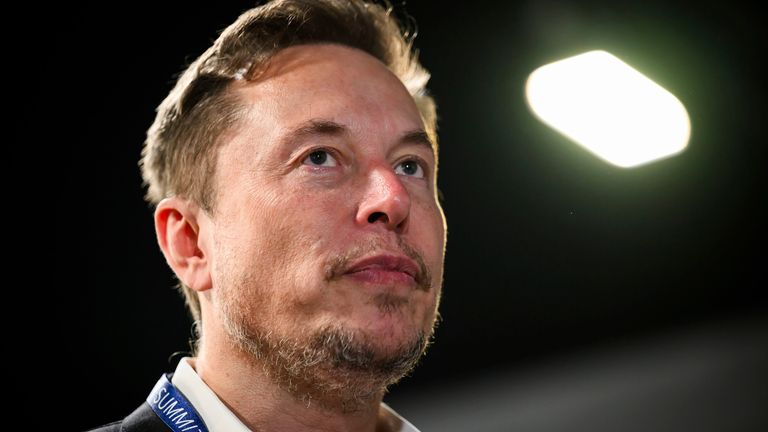
Musk caused outrage by calling Jess Phillips (above) a “rape genocide apologist”. Pic: AP
Grooming gangs
A central government-led inquiry into child sexual abuse in Oldham, requested by the council, was originally declined.
Tech billionaire Elon Musk launched a series of online attacks on Sir Keir and safeguarding minister Jess Phillips over that decision – going as far as calling Ms Phillips a “witch” who should go to prison.
Opposition leader Kemi Badenoch joined in, calling for a national probe.
The prime minister resisted calls for an inquiry for months.
But in June 2025, Sir Keir announced he would follow the recommendation of Baroness Casey to hold another inquiry into grooming gangs.
How the government measures debt
In her budget in 2024, Ms Reeves changed the fiscal rules on how the government measures debt, allowing up to £50bn of extra borrowing.
This was welcomed by many, but it wasn’t in Labour’s election manifesto. Back then, Ms Reeves talked more about her iron discipline with the fiscal rules.
“But I can confirm today that we will be measuring debt differently,” she said in October 2024, ahead of the budget.
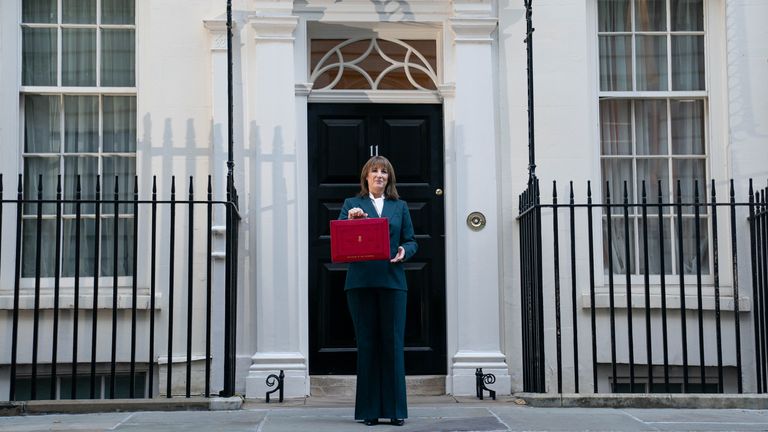
Chancellor Rachel Reeves Pic: PA
Trans rights
After the Supreme Court’s ruling on the legal definition of a woman in April 2025, Sir Kier seemed to change his previous stance on trans rights.
While in opposition, he said “a woman is a female adult, and in addition to that, trans women are women, and that is not just my view, that is actually the law”.
After the ruling, he simply said “a woman is a female adult, and the court has made that absolutely clear”.
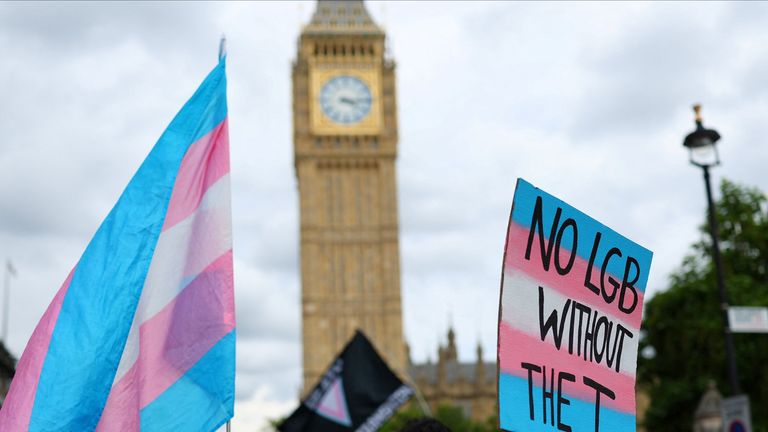
Participants gather at Parliament Square following the London Trans+ Pride parade. Pic: Reuters
Two-child benefit cap
The cap, which was hugely unpopular among most Labour MPs, was first introduced by the Conservative government in 2017.
The limit prevented parents from claiming universal credit or tax credits for more than their first two children.
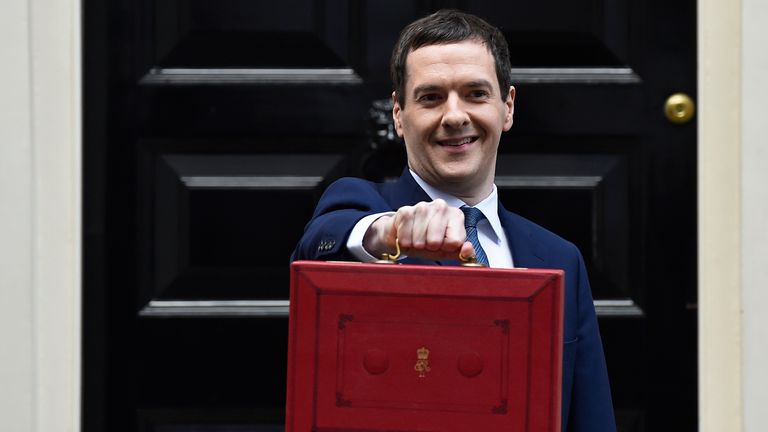
The cap was introduced by former Conservative chancellor George Osborne as part of austerity measures. Pic: Reuters
Ms Reeves announced that the two-child cap would be scrapped from April, a move the OBR estimates will cost £3bn by 2029-30.
The government says the move will lift 450,000 children out of poverty by the end of the Parliament, while Ms Badenoch branded Ms Reeves’s autumn choices “a budget for Benefits Street, paid for by working people”.
State pension age – Waspi Women compensation
In December 2024, the government said it would not be compensating millions of women who lost out through the changes to the state pension age.
This is despite Sir Keir and Ms Reeves supporting the campaign for the Women Against State Pension Inequality – often known as Waspi women – when they were in opposition.
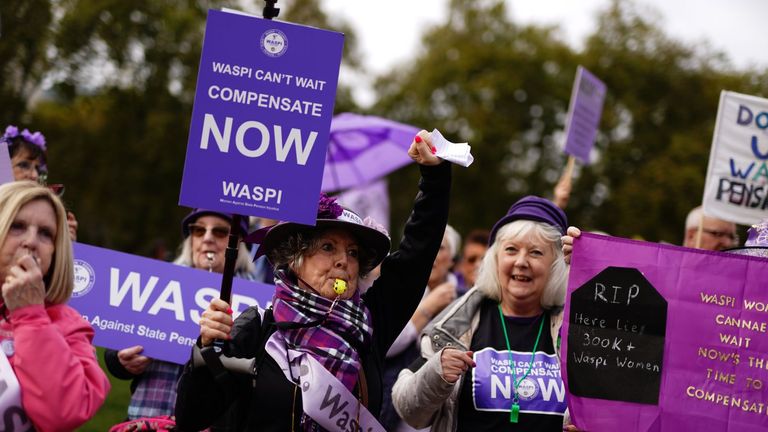
Waspi women
The prime minister defended the decision, saying: “I do understand, of course, the concern of the Waspi women, but also of course I have to take into account whether it’s right at the moment to impose further burden on the taxpayer, which is what it would be.”
Sir Keir also said the demands of the Waspi women were not affordable.
It came after Liz Kendall, then work and pensions secretary, issued an apology for a 28-month delay in sending out letters to those born in the 1950s impacted by state pension changes.
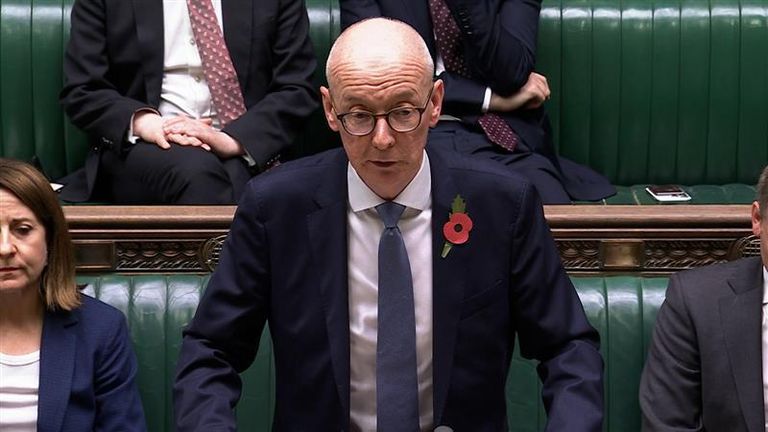
Work and Pensions Secretary Pat McFadden MP said the government will “retake the decision made last December as it relates to the communications on State Pension age”.
But she said she doesn’t accept that compensation should be paid, adding that the “great majority of women knew the state pension age was increasing” and that a state-funded payout wouldn’t be “fair or value for taxpayers’ money”.
In November 2025, the possibility of U-turning this original U-turn was raised when it was announced that the decision to reject compensation would, in fact, be reconsidered by the government.
Winter fuel payment cuts
Dropping the benefit for all pensioners was one of the first things Labour did in government, despite it not being in their manifesto and on top of Labour, when in opposition, attacking the Tories when reports emerged that they were considering such a move.

A cold man heats up his hands on an electric radiator. Pic: PA
The change meant only those on pension credit or other benefits were eligible – a deeply unpopular move that was widely blamed on the party’s poor performance in last year’s local elections.
But Sir Keir announced a U-turn on the unpopular cut to the benefit last May, with Ms Reeves later clarifying that winter fuel payments would extend to everyone over the state pension age with an income of £35,000 a year or below.
The Treasury said that by setting the threshold at this income, more than three-quarters of pensioners – around nine million people – will benefit.
The universal system meant some 11.4 million pensioners were in receipt of the benefit, which was slashed down to 1.5 million when the initial means test was introduced.
The new threshold is above the income level of pensioners in poverty and broadly in line with average earnings, the Treasury said.
Benefit cuts
Last June, Sir Keir faced a significant rebellion over plans to cut sickness and disability benefits as part of a package he said would shave £5bn off the welfare bill and get more people into work.
He stood by his position that the welfare system needs reform as “it doesn’t work, and it traps people”, but made several concessions to appease Labour MPs.
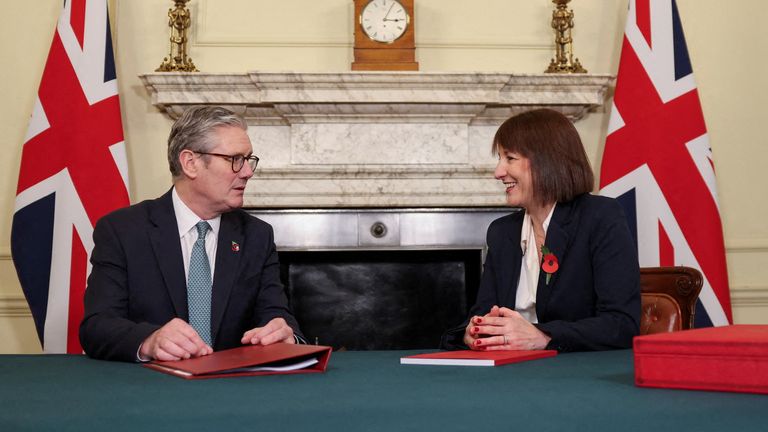
A U-turn over benefits cuts left Sir Keir and Rachel Reeves around a £3bn black hole. Pic: Reuters
The concessions included exempting existing Personal Independence Payment claimants (PIP) from the stricter new criteria, while the universal credit health top-up would only be cut and frozen for new applications.
The changes came after 127 Labour MPs signed an amendment calling for the cuts to be delayed and consulted on with disabled people.
Rebels feared the reforms wouldn’t actually help people find work, while potentially pushing thousands of disabled people and children into poverty, all to hit an arbitrary figure chosen by the chancellor.
National insurance
Labour’s election manifesto promised not to increase national insurance.
“Labour will not increase taxes on working people, which is why we will not increase national insurance, the basic, higher, or additional rates of income tax, or VAT,” it read.
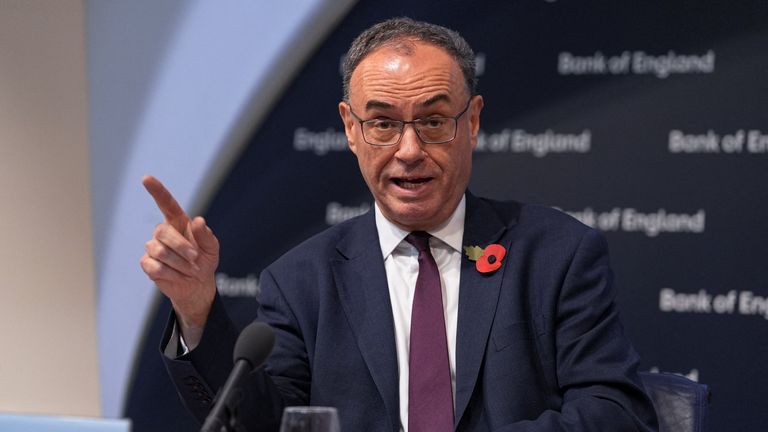
The governor of the Bank of England said in June 2025 that there was increased evidence that the move was hitting employment. Pic: PA
But in the budget in 2024, Ms Reeves increased the amount businesses had to pay on their employees’ national insurance contributions from 13.8% to 15%, effective from April 2025.
She also lowered the former £9,100 threshold at which employers start paying national insurance on employees’ earnings to £5,000, in what she called a “difficult choice” to make.
Ms Reeves later rejected that this was a U-turn on a manifesto promise, telling Sky News political editor Beth Rigby that the term “working people” in the manifesto referred to employees, not employers.
Income tax thresholds
In her latest budget, Ms Reeves extended the freeze on income tax thresholds – introduced by the Conservatives in 2021 and due to expire in 2028 – by three years.
But the chancellor previously said she would not freeze thresholds as it would “hurt working people” – prompting accusations she has broken the trust of voters.
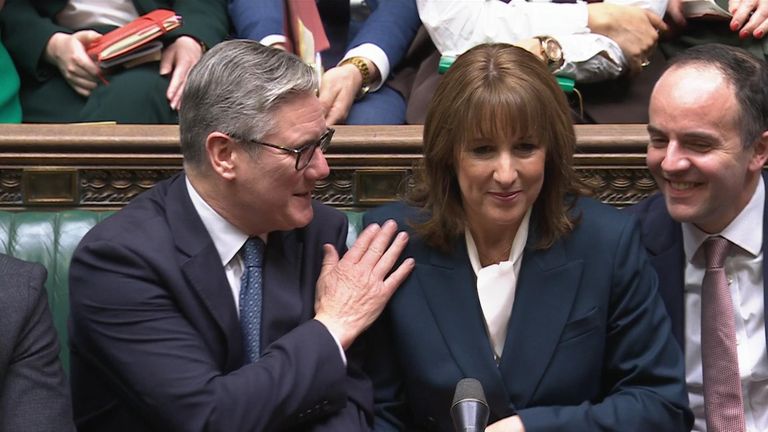
Rachel Reeves extended the freeze on income tax thresholds – described as a ‘stealth tax’ by critics
The move – described by critics as a “stealth tax” – is estimated to raise £8bn for the exchequer in 2029-2030 by dragging some 1.7 million people into a higher tax band as their pay goes up.
Sir Keir insisted at the time that there’s been no manifesto breach, but acknowledged people were being asked to “contribute” to protect public services.
He said it was “not true” that his government had misled the public after promising not to raise taxes again after 2024’s budget. Sir Keir also refused to say he had broken his manifesto promise not to raise income tax, national insurance or VAT “on working people”.
“We kept to our manifesto in terms of what we’ve promised,” he said.
Workers’ rights
One of the cornerstones of Labour’s 2024 election manifesto was the Employment Rights Bill, as part of which it promised to introduce protection from unfair dismissal “from day one”.
In November, Peter Kyle announced that the qualifying period for unfair dismissal would now be six months.
While this is down from the previous qualifying period of two years, it is far from the one day Labour had promised.
Mr Kyle said the day one pledge faced opposition from businesses as he defended the change, insisting “compromise is strength”.
Another minister, Education Secretary Bridget Phillipson, told Sky News at the time: “Sometimes you do have to adopt some pragmatism if you want to make sure that you get the wider package through.”
She said there was a risk that no progress would be made on the bill if there was no compromise and said the decision was made following discussions between businesses, the TUC union and the government.
Inheritance tax on farmers
In a U-turn before Christmas, the government announced a huge climbdown on inheritance tax on farmers.
The tax relief on family farms handed down between families is to increase from £1m to £2.5m, meaning only farms worth more than £5m will pay.
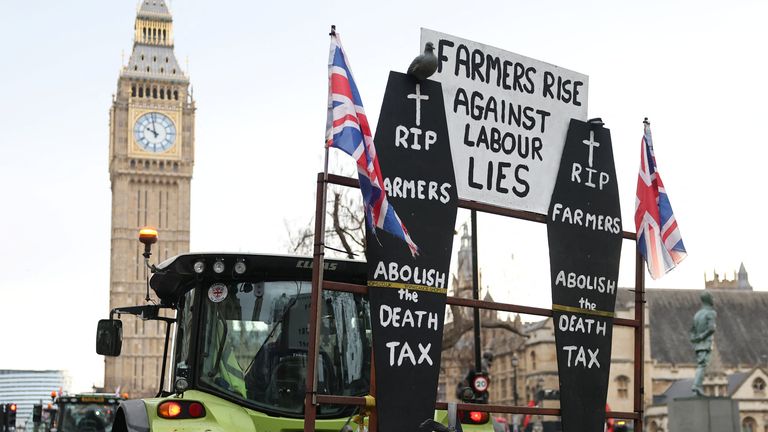
UK farmers took to the streets of London in their tractors to protest against the measures. Pic: Reuters
The climbdown, overturning bitterly unpopular proposals in Ms Reeves’s 2024 budget, follows a personal intervention by Sir Keir.
The National Farmers Union (NFU) president Tom Bradshaw said the government backed down after he had two “very constructive meetings” with the prime minister.
Responding to the climbdown, Mr Bradshaw – who led a high-profile campaign which included tractors blocking Whitehall – said it would come as a huge relief.
Business rates for pubs
Sky News understands that the Treasury is preparing a rescue package to provide new financial support for pubs, which is due to be announced in the coming days.
The anticipated climbdown includes a change to the methodology of the business rates calculation, plus “regulatory measures”, it is understood.
This comes following an outcry over the impact of a major hike in business rates included in last year’s budget.
Ms Reeves announced a shake-up to how business rates are calculated, with a new band for retail, hospitality and leisure – bringing an end to the relief scheme first introduced in 2020 during the pandemic.
The sector argued that the new business rates, while lower than before COVID, do not go far enough.
They said because the tax is based on rateable property values (an official estimate of a commercial property’s annual rental value), they are disproportionately affected because they have physical stores, restaurants and pubs – unlike online giants.
Digital ID cards
At the time it was announced last year, the government said that digital IDs would become mandatory for the right to work by the end of this parliament, which is 2029.
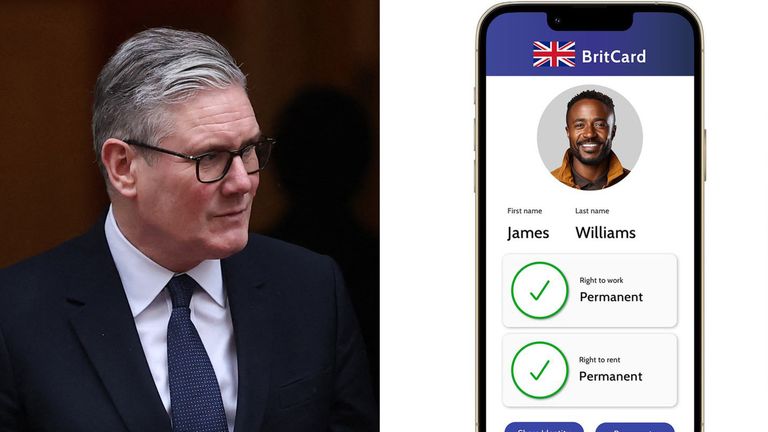
Keir Starmer previously stated, “Let me spell it out, you will not be able to work in the United Kingdom if you do not have digital ID”. Pics: Reuters/Labour Together
But Sky News understands this will no longer be the case, as the government makes another U-turn.
A government spokesperson said: “We are committed to mandatory digital right to work checks. We have always been clear that details on the digital ID scheme will be set out following a full public consultation, which will launch shortly.
“Digital ID will make everyday life easier for people, ensuring public services are more personal, joined-up, and effective, while also remaining inclusive.”
According to The Times, while right-to-work checks will still be mandatory, other forms of documentation, such as an electronic visa or a passport, will be valid.