
This post was originally published on this site.

Unlock the Editor’s Digest for free
Roula Khalaf, Editor of the FT, selects her favourite stories in this weekly newsletter.
Brussels is drafting proposals to tear up the EU accession system used since the cold war, replacing it with a contentious two-tier model that could fast-track Ukraine’s entry in any peace deal to end Russia’s invasion.
The overhaul plan under discussion at the European Commission, while preliminary, is already unsettling EU capitals alarmed at an “enlargement-lite” approach with sweeping implications for the union, according to seven senior officials involved in the talks.
Ukraine, which became a formal EU candidate country soon after Russia’s full-scale invasion in February 2022, sees membership as a foundational element of its postwar future and a definitive statement about its pro-western alignment.
A reference to Kyiv joining the EU in 2027 is included in drafts of a US-led 20-point peace plan under negotiation, despite EU officials estimating that the country may need a decade of reform to meet the EU’s strict entry criteria.
But Commission officials understand that Ukraine’s President Volodymyr Zelenskyy will only be able to accept other aspects of a possible peace deal, such as giving up territory to Russia, if he can present EU membership as the positive outcome.
The preliminary plan under discussion would enable Ukraine to join the bloc but with far less decision-making power. Normal voting rights, for instance, would not initially be available to Ukraine in leaders’ summits and ministerial meetings, according to the officials.
Under the proposals still being developed, Kyiv would gain incremental access to parts of the bloc’s single market, its agricultural subsidies and its internal development funding after meeting post-membership milestones.
That would drastically change accession rules agreed in 1993 that require countries to meet vast amounts of EU regulations across swaths of policy areas, and only enter the club when all boxes have been ticked.
“Extraordinary times call for extraordinary measures . . . We’re not undermining enlargement. We’re enlarging the concept of enlargement,” said one senior EU diplomat briefed on the concept. “The rules were written more than 30 years ago. And they need to be more flexible. This is a once-in-a-generation moment and we have to meet it.”
But diplomats from EU member states and other aspirational members that have been involved in informal discussions with the Commission about the proposal said there was deep unease about the concept. Some fear it would have a negative impact on the bloc’s future stability, cheapen the value of membership and upset other candidate countries.
“It’s a trap set by Putin and Trump and we are walking into it,” said a second EU diplomat, citing the risk to the bloc’s unity.
“The EU is once again stuck between a rock and a very hard place,” said Mujtaba Rahman, Europe managing director at Eurasia Group. “It has no choice but to expedite Ukraine’s accession, yet doing so will open a Pandora’s box of political and policy risks no one in Brussels quite fully understands.”
Ukraine’s progress through the existing membership process has been held up by Hungary, which has blocked the unanimous approval required to formally open and close each of its 35 so-called accession “chapters”.
EU and Ukrainian officials believe that if the US is a signatory to the eventual peace plan, it will force Budapest and its close ally President Donald Trump to give way.
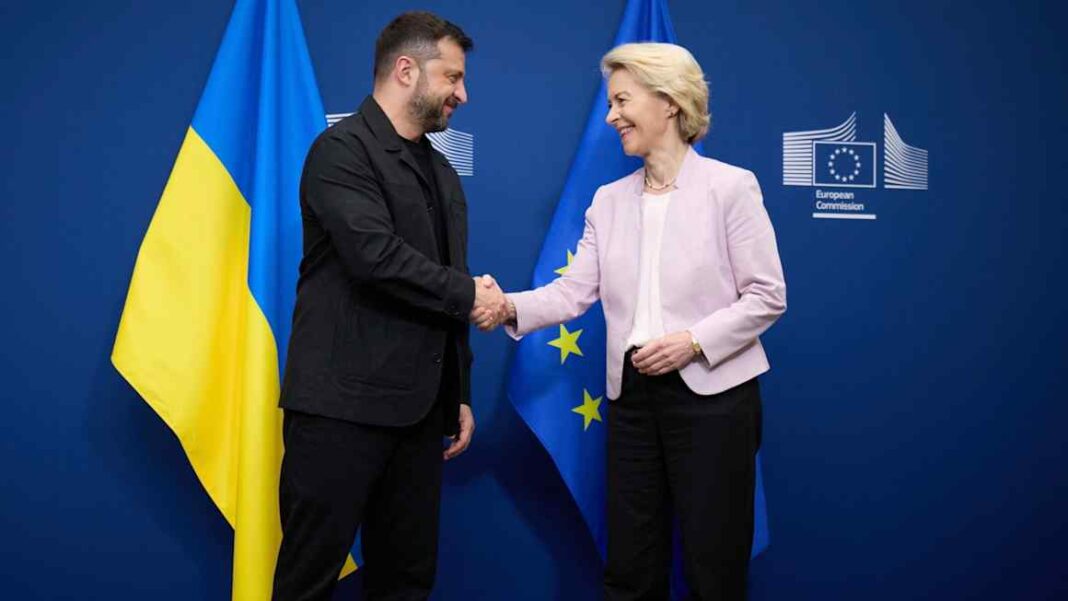
Ursula von der Leyen, the Commission president, on Thursday linked Ukraine’s accession to the peace talks. “Accession is both a key security guarantee in its own right for Ukraine, but also the essential engine for future growth and prosperity,” she said.
But a large group of existing EU members, while keen to support Ukraine, are fiercely resistant to any measures that would either create loopholes in the rules or set up a two-tier membership system, four bloc diplomats said.
“You can’t have a merit-based process with a fixed completion date,” said one of those diplomats.
“Try to force this down the throat of the member states and they will never accept it,” said a senior EU official, warning it would open a damaging rift between Brussels and member states.
Other officials said any move to adjust the enlargement process would also disrupt the ambitions of other accession candidates, and pose wider questions about how the EU interacts with its close neighbours.
Montenegro and Albania are closest to gaining membership in terms of progress through the chapters, and may feel like they are being offered a less appealing prize, three of the seven people said.
It would also raise questions about whether other states that have made little or no progress towards membership in recent years — such as Bosnia and Turkey — would be offered the same enlargement-lite option.
It is unclear how it would affect the European Economic Area countries such as Norway, which are part of the single market without voting rights, or other non-accession but close partner countries such as the UK.
“You’re posing huge, difficult questions with something like this,” said a third senior EU diplomat. “There are so many unforeseen outcomes possible.”
Additional reporting by Laura Dubois in Limassol