

This post was originally published on this site.
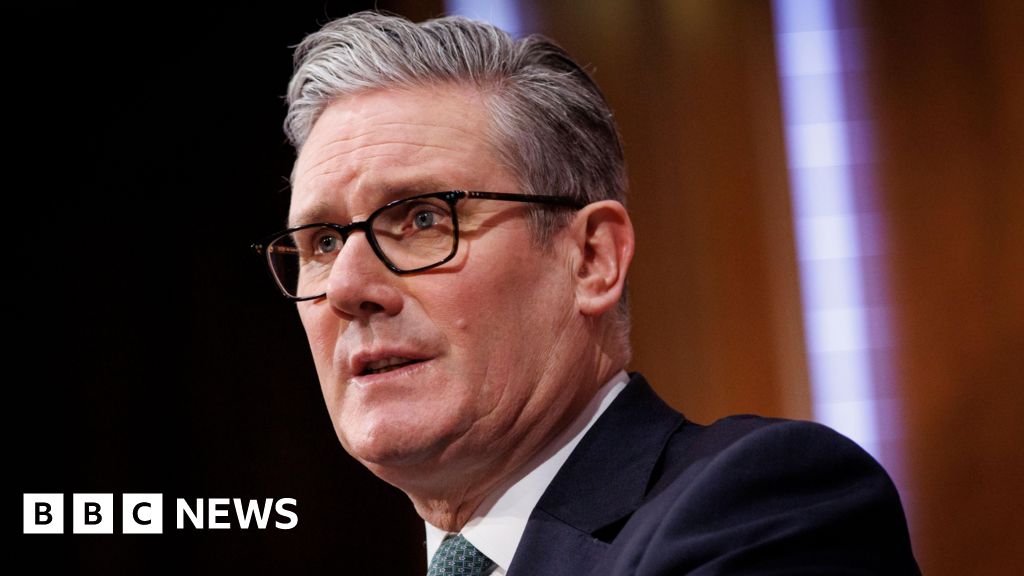
Listening to the prime minister’s tone and language this morning, the gravity of this moment was abundantly apparent.
Sir Keir Starmer isn’t a man to shoot his mouth off in public. He tends to pick his words carefully and avoid exaggeration or hyperbole.
That is exactly what he did today, but with a clear subtext: the events of the last 48 hours or so had crossed a rubicon. Downing Street’s long running attempts to avoid, wherever possible, public disagreements with the White House had run their course.
To be clear, it is not the first time there has been a disagreement. During President Trump’s state visit to the UK last autumn, I asked the two leaders about another issue where they transparently disagreed – the UK’s decision to recognise a Palestinian state.
But President Trump’s plan to impose tariffs – economic sanctions – on European allies not willing to acquiesce to his plan to take over Greenland is clearly a different category of disagreement: one the prime minister sought to ground in what he saw as the inviolable principles the UK has long regarded as sacrosanct – respecting the sovereign rights of other countries to determine their own futures.
The prime minister, keenly aware of the magnitude of this moment, sought to dial down how he intends to react and how he might hope others intend to react.
He repeatedly said he saw no value in a “trade war” and while not ruling them out is clearly not keen on retaliatory tariffs, where the UK would charge US exporters to Britain higher taxes.
Some others, notably France, have been more aggressive in their language, suggesting retaliation was necessary.
That is not a uniformly held view around the European Union, but it does open up the possibility, at least, that the UK and the EU could end up in different positions on this.
Sir Keir is leaning in, again, to his strategy of avoiding provoking Washington: he said he wanted “calm discussion” involving “mature alliances” but that close allies could disagree and “being pragmatic doesn’t mean being passive.”
The big question now is what happens next.
The prime minister wasn’t due to attend the World Economic Forum, of business and political leaders, taking place in Davos in Switzerland this week.
But guess who is there on Wednesday? Yes, President Trump. EU leaders are also due to gather in Brussels on Thursday.
No 10’s current position is Sir Keir choosing to dash to the Swiss Alps remains unlikely, but is an option. Would a delegation of European leaders seeing President Trump face-to-face change the dynamic?
Whitehall is having to prepare for the possibility that the answer to that is no and that the Trump administration is deadly serious about sticking to its strategy come what may.
Let’s see.
Words like “unprecedented” and “astonishing” slosh around with predictable frequency with Trump in the White House.
But those words are no less accurate for it, as the UK and Europe try to work out what on earth to do next.



