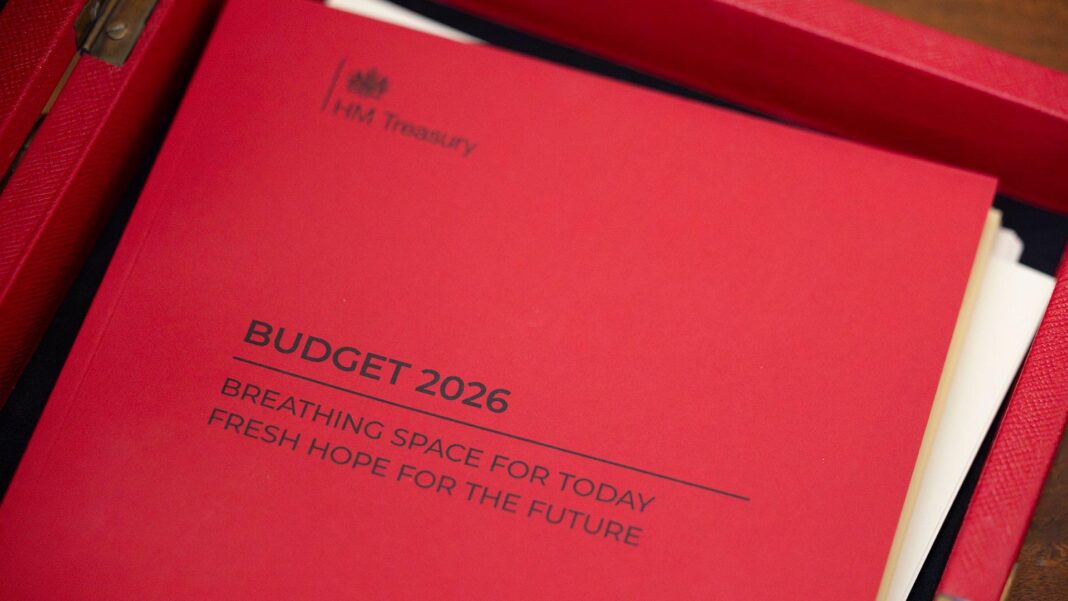

Budget 2026: Key points at a glance
-
Published
Chancellor John Healey has set out the government’s tax and spending plans in his Budget – the first since Andy Burnham became prime minister.
Here is a summary of the main points.

-
A £100 payment for 20 million households in council tax bands A-D in England to help deal with rising energy bills, with equivalent funding for Scotland, Wales and Northern Ireland
-
Standing charges – fixed daily fees customers pay regardless of usage – to be removed from household gas bills, with costs added to the unit rate instead
-
VAT cut on electricity bills extended beyond April to July
-
Freeze on fuel duty to be extended again to July
-
Import taxes to be removed on more than 100 food products, including gherkins and marmalade, as well as kerosene and fertilisers
-
A 55p per mile tax-free mileage rate for those driving up to 10,000 miles for work made permanent, with the rate rising from 25p per mile to 35p above that distance

-
A new tax-free allowance for low-income pensioners, to ensure those with income up to the value of the full new State Pension will not pay income tax
-
Legal minimum wage for workers to rise by 3.9%
-
Unpaid carers will no longer lose their entire Carer’s Allowance if they earn more than £204 a week after tax, with a taper rate introduced instead
-
Parental pay extended to self-employed fathers and parents in same-sex couples

-
Surcharge banks pay on their profits to rise from 3% to 6% for 15 months, starting in January
-
Threshold at which High Street shops start paying business rates in England to be increased from £12,000 to £18,000, meaning businesses would pay no rates on properties with a rateable value below this level
-
Adult games centres and vape shops will not qualify for business rates relief
-
Taxes on gambling machines to rise from 20% to 25% for higher stakes machines
-
Requirements for online marketplaces like Amazon, eBay and Temu to be strengthened to prevent sellers using their platforms avoiding paying VAT

-
An extra £1bn for social and affordable housing in England, taking total funding for the 10-year programme to more than £40bn
-
An extra £432m for a programme aimed at giving every rough sleeper in England a route off the streets by Christmas

-
All business rates to be retained locally by the end of the decade, with mayors to keep 20% of revenue from next year
-
A share of income tax receipts to go to mayors from 2028
-
Regional bodies and mayors in England to get greater powers over spending, starting with £285m next year for things like housing, transport and High Streets
-
Government to work with mayors to design a £1.5bn borrowing facility, enabling investment in larger projects

-
More than £600m of investment in projects related to artificial intelligence (AI), including an extra £120m for the UK’s AI Security Institute and £100m for a national AI Biosecurity Lab
-
Fund to tackle misogyny in schools, at work and in communities to get £15m

Get in touch
Do you have any views, comments or questions about this story?

Sign up for our Politics Essential newsletter to keep up with the inner workings of Westminster and beyond.