
This post was originally published on this site.



Look closely at the posters, placards and online posts. Your eyes aren’t deceiving you if Labour’s red seems a little deeper and the Conservatives’ blue a little truer.
Politics seems to have found a new rhythm, one that feels a little familiar, despite Reform’s jaw-dropping new donations putting it back in the headlines today.
For the avoidance of doubt, the scale of that initial £36m gift to Nigel Farage’s party alone is like something from a different political universe.
“It’s a gobsmacking sum,” a senior figure involved in running successive election campaigns for one of the big parties tells me.
That was even before another Reform donor pledged to match that astonishing sum with another £36m, saying the first donation had provoked his “competitive spirit”.
But one cabinet minister is enjoying what they see as a newly obvious difference between Labour and the Tories. “It’s clarifying,” they say, a clear gap between Labour and the Tories’ “sense of purpose and values”.
A member of Conservative leader Kemi Badenoch’s top team tells me, “normal jogging is reasserting itself”, hopeful they’re at the start of a more straightforward, routine moment in politics after years of craziness, with smaller parties vying to shove the traditional tribes out of the way.
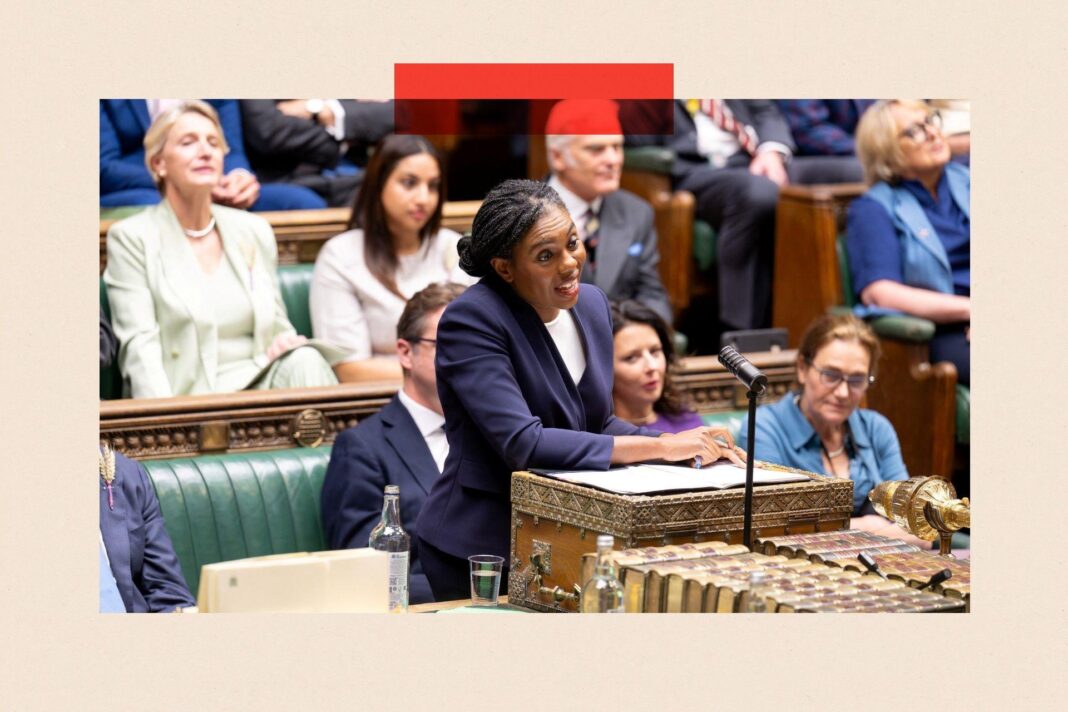
The standout moment was at the despatch box this week when Prime Minister Andy Burnham declared that national security couldn’t come at the expense of social security – a phrase immediately seized on by the Tories, interpreting it as the PM saying he’d never cut welfare spending to pay for defence.
One senior conservative said: “It was a real line in the sand, we could never have imagined Sir Keir Starmer saying that.”
The party seems cock-a-hoop at a line they can use again and again, asserting the prime minister cares more about welfare than guarding against war.
But there is a positive atmosphere in No 10 too, one source telling me that the face-offs between Badenoch and Burnham have “breathed new life into the Labour versus Tory dynamic”.
How can they both be happy, when ultimately politics is a contest and there can only be one winner in the end?
Well, on the security spat, Burnham’s backers are adamant he does want to cut welfare spending, and find more money for defence. How does that stack up with his words this week?
I’m told No 10 will explain in more detail his belief that security also means secure communities, which aren’t created by slashing benefits.
Crucially, they reckon while cutting welfare might appeal to some voters, “once you dig into the ‘who’ and the ‘how’ of doing that, public support wavers, and when Kemi talks about housing benefit cuts, public opinion goes all over the shop”.
They even cite that moment as evidence that the prime minister is “happy to grab thorny issues and put himself at the centre of them”, as he did with the early release of prisoners.
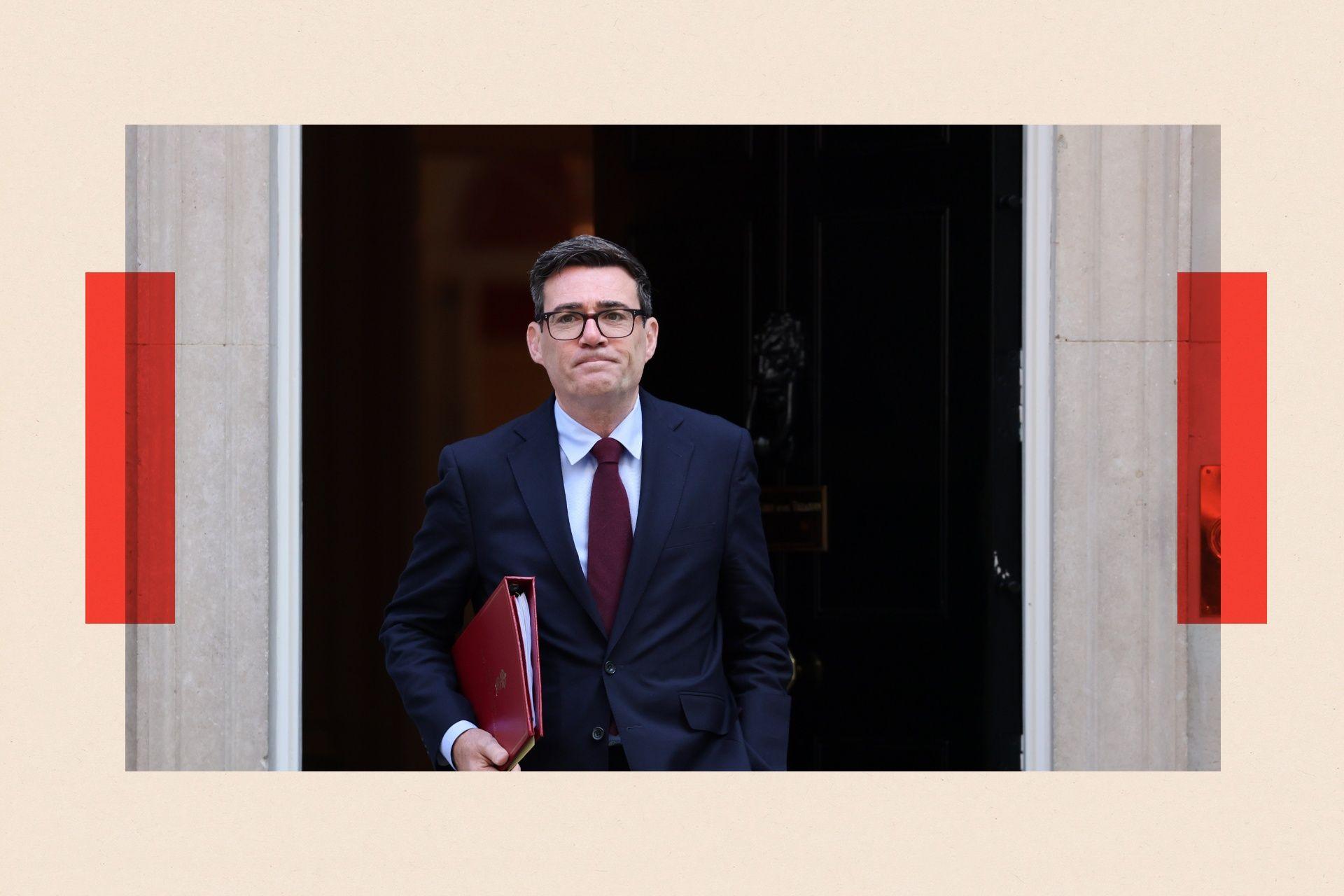 Image source, EPA/Shutterstock
He’ll give a grabby-sounding view before the government has found a solution to a problem, stake part of his reputation on it, and make the case, hoping it will work out.
The choices are only going to get harder and harder though. “Hope” as a slogan and a strategy could never be enough.
But when politics is fundamentally a contest, how can both the traditional political tribes be buoyant?
For Labour, it’s not just the obvious change of leader to a more effective politician who is much more at ease talking to the public, whether that’s an eight-second TikTok or his long explanations of his positions expressed in a newspaper opinion piece and posted on Facebook.
It’s that Burnham is making arguments that are more appealing to Labour’s psychology – build council houses, take stronger action against the worst excesses of the Israeli government, stand up for those who need to rely on benefits from the state.
Labour believes, for now, they have a leader who is simply a better politician, who is making arguments many of them find instinctively more appealing.
The party knows what its leader believes, broadly at least. As one senior figure said: “He has a worldview which the last one didn’t – he’s clear what he wants and he’s grabbed the reins of power.”
Another who has worked under Starmer and now Burnham said: “It’s just chalk and cheese.”
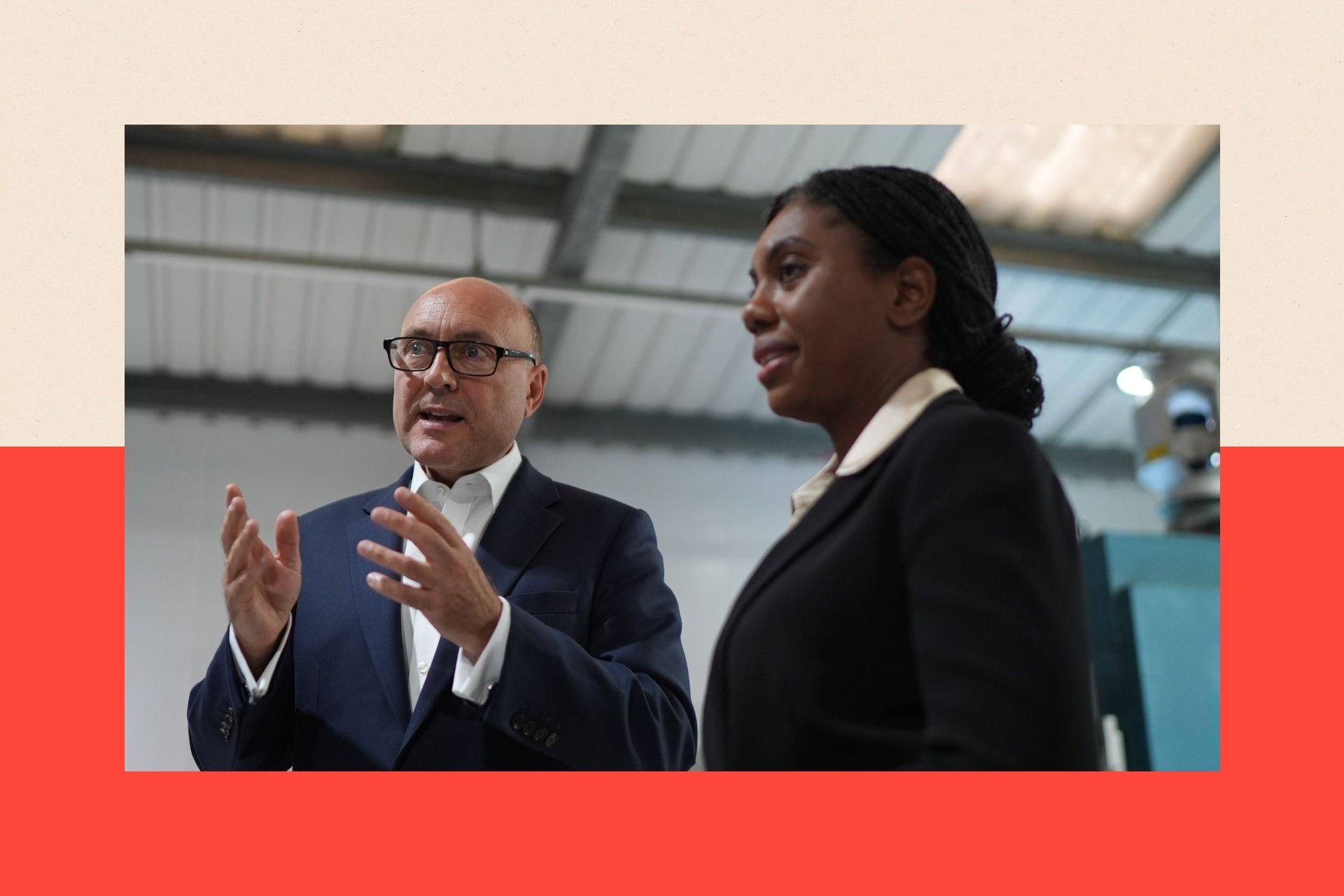 Image source, PA Media
And don’t underestimate the importance of keeping backbenchers content, feeling understood. A government source joked the whips, the party managers, are becoming a bit “like an HR department” listening to concerns rather than driving the troops forward.
But as Starmer found to his cost, backbenchers weren’t prepared to be loyal to him when many felt he hadn’t shown much care or loyalty to them.
But Badenoch’s tribe also seems more chipper because, as she has told friends, there is now a sharper ideological divide between the two parties saying, “it’s much clearer to have those arguments rather than a process discussion with Starmer”.
Shadow ministers reckon it’s easier to make classic Conservative arguments because in the words of one, “Andy Burnham is a classic old leftie and we’re the obvious answer to that”.
Shock, horror, Labour sources I put that to dispute that is the case, one close ally calling him “a pragmatist”, another denying he’s further to the left than Starmer, because, “Keir was so hard to place”.
But one conservative source also pointedly wonders how long Labour’s happiness with their new leader will last, given Burnham’s rapid return to Parliament saying, “looking at the benches opposite there is a vision of somebody who has turned up to a Tinder date and doesn’t quite look like his profile pic”.
Ouch.
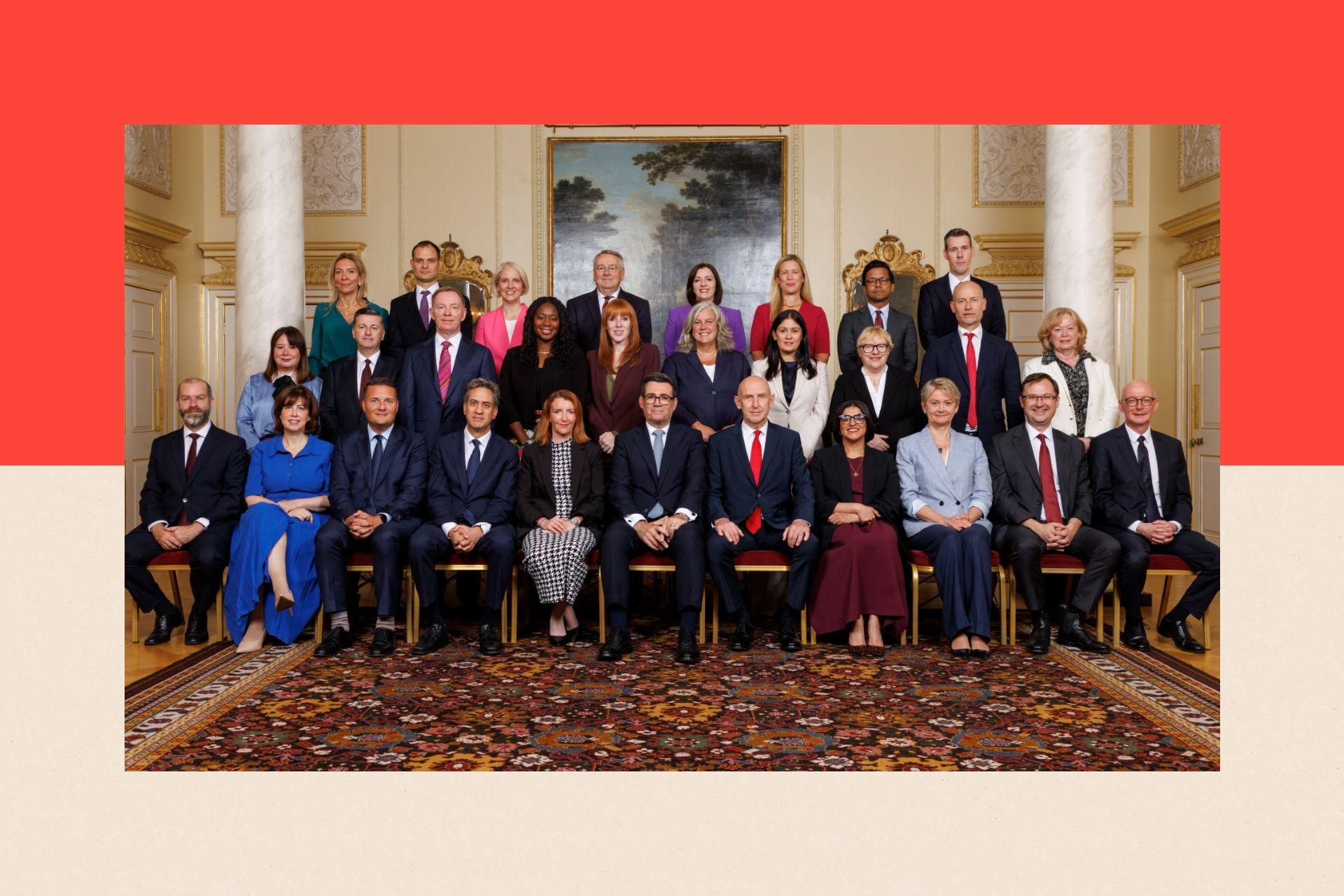 Image source, No 10 Downing Street
Will this newly refreshed red-blue battle prove to be the real deal?
Rhetorical lines have been drawn this week, but real choices and arguments loom, and the bouncy feeling around the place may not last, especially when it comes to finding cash for the prime minister’s big promises.
Downing Street sources acknowledge privately that bringing down the welfare bill in the way that Alan Milburn envisages, with his report expected, but not confirmed, to come before the Budget, will need billions spent up front, money the government might struggle to find.
Similarly, to build the council houses Burnham desires to cut the housing benefits bill will need big cheques.
It’s one thing promising those Labour friendly dreams. It’s another, perhaps at the party conference, to answer the much harder question of how the government plans to pay.
It won’t be easy for a mid-term prime minister to find money in the short term that might only produce savings in the years to come.
But Burnham’s Labour are happy to talk about the economy and how they want to help hard-up families, still citing the chaos of Liz Truss and keen to underline the early steps the prime minister has taken to ease the pressure.
With borrowing costs and the country’s debt seriously sky high, the Conservatives are pleased to sketch out a classic left-right argument too.
It’s also true they have both been enjoying the moment of real pressure on their opponents in Reform, who have slipped back in the polls, besieged by claims and counter claims about party funding.
Although this weekend’s mega donations illustrate that Nigel Farage still has the capacity to bust political conventions, the money from the crypto billionaire, Ben Delo, and cryptocurrency investor, Christopher Harborne, is completely off the charts for our politics.
Talking about the initial donation, a senior figure told me: “To put £36 m in context, one man has donated a sum bigger than Labour’s entire 2024 election budget, bigger than the Conservatives’, and about six times what Reform actually spent.
“It’s the kind of donation that could change how politics is funded in the UK.”
During the last general election campaign Labour raised about £9m, the Tories, Reform and the Lib Dems all less than £2m.
These extra millions give Farage enormous and immediate spending power, and there might be more to come. Although you can bet the other parties will cry foul over the scale of this big money coming from men with deep pockets, not least because Delo was given an unconditional pardon by US President Donald Trump over violating the Bank Secrecy Act.
It would be daft for either of the two main parties to assume this apparent return to traditional two-party politics is here to stay. But it is strangely new to be in a moment when both Labour and the Conservatives are broadly content.
As the new prime minister’s universe settles, a key Labour figure observed: “We’ve had the amuse–bouche and it was very tasty. What happens next?”
More from InDepth
-
Is it harder than ever to be prime minister?
-
Published17 May
-
-
Sir John Curtice: The ‘Burnham bounce’ is real but it’s not massive
-
Published1 August
-

BBC InDepth is the home on the website and app for the best analysis, with fresh perspectives that challenge assumptions and deep reporting on the biggest issues of the day. Emma Barnett and John Simpson bring their pick of the most thought-provoking deep reads and analysis, every Saturday. Sign up for the newsletter here
Get in touch
Are you personally affected by the issues raised in this story?