
This post was originally published on this site.
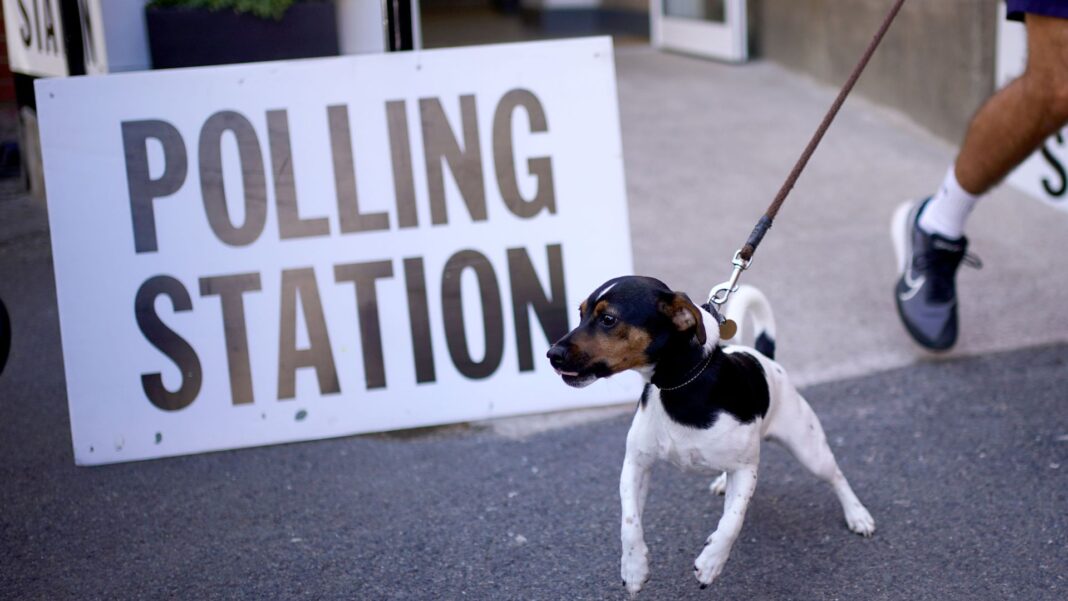
Reform UK’s legal challenge to the government’s plan to delay dozens of local council elections scheduled for May will be heard by a court next month.
Nigel Farage’s party is taking legal action against the Ministry of Housing, Communities, and Local Government (MHCLG) over plans to allow councils to delay elections by a year due to the challenges of the local government reorganisation (LGR) programme.
The case will be heard in full during a two-day hearing from 19 February. Any of the 63 local authorities seeking to be joined as an interested party or seeking permission to intervene must file an application by next Friday.
Politics latest: China’s controversial ‘super’ embassy in London approved
The day before that deadline, the government must inform Reform UK of “the reasons for its decision” to exercise its powers to delay local elections.
In exchange for a full hearing within a month and the orders issued by the court, Reform UK’s legal team agreed not to ask Mr Justice Chamberlain to issue a temporary injunction preventing the government from announcing delays to any local elections.
Julian Blake, representing the MHCLG, said the secretary of state was content to agree to a “reasonable amount of expedition” in the matter so it could be resolved before 27 March, and therefore the application was “unnecessary”.
In response to today’s court order, a Reform UK spokesman said: “We said we would fight Labour every step of the way on this and we are. Labour are disgracefully trying to deny democracy. We are determined to win this case next month.”
The MHCLG has been contacted for comment.
Has your council requested a delay? Use our search tool below.
See the full list of councils that have asked for a delay.
Sky News contacted all 63 councils that the government said could request a delay to their local elections, and nearly half have requested one.
Twenty-nine councils have said they would like a delay or presented a case for one – 21 of which are Labour-run, four are Conservative, two are Liberal Democrat, one is Green, and one is independent.
The final decision rests with the government, and ministers have said they will announce shortly which elections will not go ahead this year.
Amid outrage from opposition parties that some local elections are being delayed for the second year in a row, Local Government Secretary Steve Reed argued on Sky’s Politics Hub last week: “The vast majority of elections are going ahead on schedule.
“Where we have asked councils to let us know if there needs to be a delay or a postponement is where we’re going through the biggest reorganisation of councils in decades.”
He explained that a third of the country has two councils, rather than one, which is money that could be spent on local services, and so they are offering to postpone elections this year if holding them could mean a delay to elections next year.
All the councils that have requested a delay cited the resources needed to deliver the government’s LGR programme, and many said it would not make sense to spend hundreds of thousands of pounds to hold an election for councillor positions that would exist only for one year.
But the Reform UK leader has described the government’s move as “absolutely monstrous”, and has previously accused Labour and the Tories of working together to lock his party out of power.
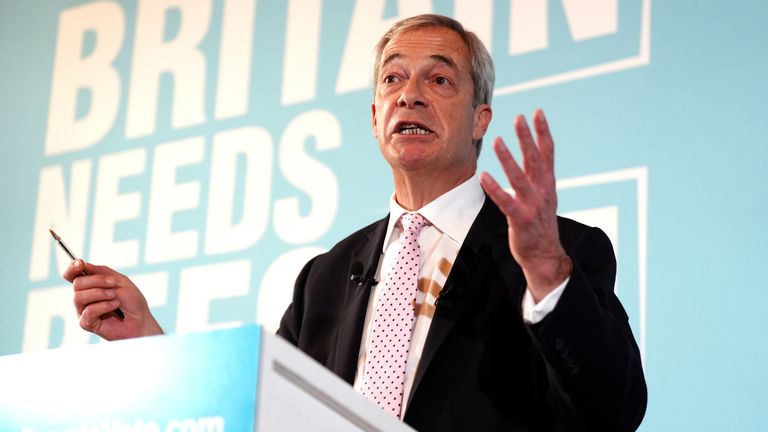
Nigel Farage’s party is seeking to prevent the government from delaying any local elections scheduled for May.
The Tories, however, have also expressed their opposition to the government’s plans, with shadow chancellor Sir Mel Stride telling broadcasters that it is “not right” that millions could be “denied their democratic right to seek change in their councils”.
“We don’t want to see councillors serving seven-year terms, and we need to get on with democracy,” he added.
The Liberal Democrats have also opposed the plans, with leader Sir Ed Davey calling for a change of the law “so that ministers cannot simply delay elections at the stroke of a pen”.