
This post was originally published on this site.

Welcome back. By now you’ve probably read several pieces outlining analysts’ macro and market predictions for 2026. So for this edition, I went hunting for the unexpected. In other words, tail risks: low(ish) probability but potentially high-impact events.
Why? Probing the extremes is helpful to fight “tunnel vision”, as my colleague Gillian Tett articulates in a recent column.
Given the widespread (US-led) optimism entering into the year — from bullish end-2026 S&P 500 forecasts to solid projections for US economic growth — I focused on the left tails this week, aka the worst-case case scenarios.
Send your left- and right-tail risks for this year to freelunch@ft.com or via X @tejparikh90.
With some creative licence and input from experts, here’s my top eight, beginning with economics, then on to geopolitics and ending with some Black Mirror-esque tech scenarios:
A pliant Federal Reserve chair lets inflation rip
I asked FT economics commentator Chris Giles for his worst-case scenario on the Fed.
“First, a Donald Trump-loyalist Fed chair is nominated and approved by Congress early in the year. Call him Kevin Hassett. Then comes a Supreme Court decision saying Lisa Cook cannot stay on the Fed board while her case against Trump’s dismissal is heard. This would enable the president to gain a majority of his nominees on the Fed board.”
“They could then loosen policy excessively. Further price pressure could come from fiscal measures while companies pass through higher import duty costs in earnest. Rising inflation becomes more obvious towards the end of the year, bond markets take fright and term premiums rise on the back of high inflation expectations and existing fiscal concerns. This would burst high equity valuations.”
Federal Open Market Committee meeting press conferences in which Hassett echoes Trump’s messaging on rates and central bank independence could also catalyse market ructions.
Bond vigilantes return
With fiscal discipline still a problem in many developed markets, bond vigilantism remains a risk. The UK, US, France and Japan are particularly vulnerable, given their debt loads.
A push by Trump to fix America’s affordability problem ahead of the US midterm elections, combined with a weakening of the Fed’s independence, could push up US Treasury premiums and, in turn, raise yields in countries with shaky budget arithmetic.
In Britain, there are a few scenarios to consider. Lingering low growth and confidence mean fears around further tax rises could resurface as fiscal events approach (particularly since chancellor Rachel Reeves has backloaded a lot of consolidation to the end of the parliament). Another risk is the resignation of Prime Minister Sir Keir Starmer or Reeves, potentially after a poor showing in local elections in May.
“If Starmer and Reeves are replaced by a new left-leaning top team that weakens the fiscal guardrails and promises big increases in public spending and borrowing, there could be a spike in yields perhaps to above 5 per cent on the 10-year yield,” notes Ruth Gregory, deputy chief UK economist at Capital Economics.
Supreme Court tariff ruling has unintended consequences
The odds of the US Supreme Court voting down the tariffs Trump implemented under the International Emergency Economic Powers Act are currently around 75 per cent, according to online prediction platforms. A ruling is expected imminently. If it happens, it will come as a relief for the global economy. But there are ripple effects to consider.
First, an angered Trump could double down on duties using other legislative tools — JPMorgan has a useful summary here. Some may take time to implement, but could still lead to punitive duties for certain nations and sectors. Even higher tariffs on China, which markets are most sensitive to, are possible. In any case, this could lead to worse trade and supply chain uncertainty than in 2025.
Second, the court could force the White House to refund revenues paid by US importers. This may eventually trigger panic in US fixed income markets particularly if other legal routes to raising duties are drawn-out. Indeed, bond investors and credit rating agencies highlight the important role existing tariff revenue streams are expected to play in taming America’s budget deficit.
Next, geopolitics. The capricious second Trump administration has already turned the definition of black swans on its head. The following three scenarios come from Marko Papic, chief strategist at BCA Research:
‘The fall of the west’
“Riding a high following the exfiltration of [President Nicolás] Maduro, Trump orders the US military to seize Greenland. Denmark pulls out of Nato. Its Nordic peers join it in a new military alliance. The backbone of the western alliance falls apart. Canada begins a rearmament initiative to deter the US.”
While this may trigger risk-off sentiment across markets, Papic reckons there is scope for European assets to boom too. “A break with the US would finally force Europeans to deepen integration in a dramatic manner. The question of whether Europe is a geopolitical entity would be resolved.”
‘Chuck Norris’ premium
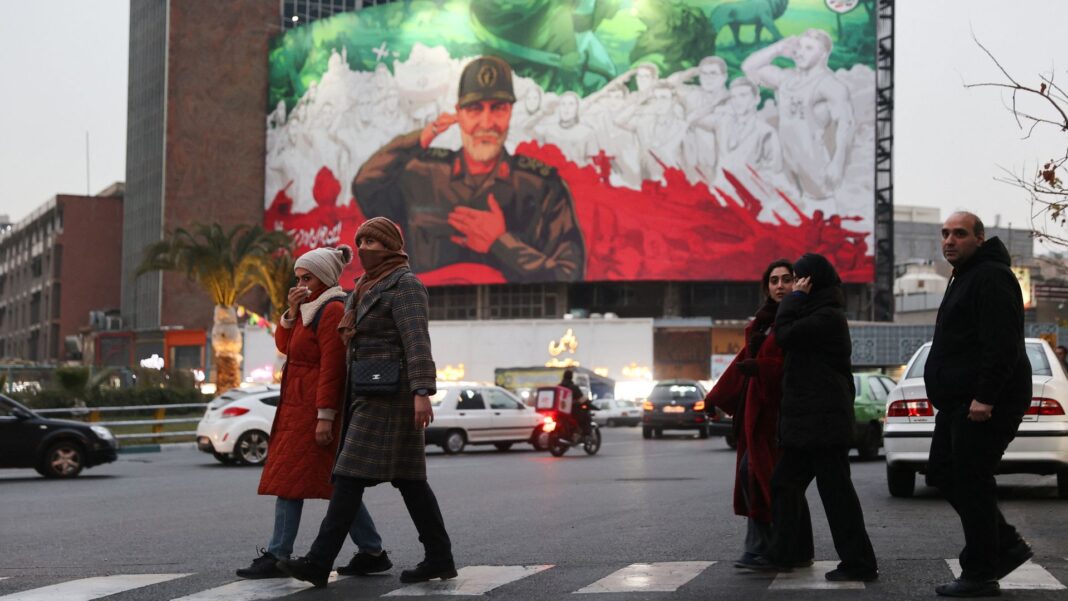
“President Trump could start to apply the Maduro tactic to other countries, but ends up choosing a country with a way to retaliate: Iran. Tehran could respond using low-cost tools — drones or zodiac boats filled with TNT — to disrupt the shipping of oil through the Strait of Hormuz. Oil prices rise precipitously ahead of the midterm elections, ensnaring Trump in a downward popularity spiral, denting global economic growth and sparking bearishness.”
‘Age of Empires’ premium
“Taking a page from Trump’s newfound respect for a world of spheres of influence, China decides to entrench its own. With Nato in disarray over the potential US war with Denmark and the Middle East again in chaos with Trump threatening regime change in Iran, Beijing decides to invade Taiwan. This would be the ultimate risk for 2026, with stock markets falling, defence stocks surging and commodities going parabolic.”
In order, Papic places a 10 per cent, 40 per cent and 10 per cent chance of these risks crystallising in 2026.
Now, tech.
Chatbots trigger a market crash
This one is inspired by James Rickards’ 2024 book MoneyGPT. (Here’s my review.)
In one scenario AI-generated press releases or deepfakes could rapidly spread false information about companies, banks or governments, sparking panic selling.
Rumours about finances at the Magnificent Seven tech firms would cause a ruckus, given their high market concentration. This could be compounded by automated trading algorithms that react to the same false signals, amplifying volatility.
“The absence of subject matter expertise in the AI design stage results in everyone relying on the same trading strategy. There are no contrarians. There is no one to play the role of John Pierpont Morgan in the Panic of 1907. There is only panic and sell, sell, sell because that’s all AI knows,” says Rickards.
For measure, algorithmic trading accounts for an estimated 60-70 per cent of trading volume in major global markets. (The figure is even higher in certain segments, such as cryptocurrencies.)
Attacks on infrastructure
Last year’s cyber attack on Jaguar Land Rover cost the UK economy around £1.9bn, and illustrated how a breach at one company could cascade across supply chains.
Now consider this on a different scale. À la Netflix thriller series Zero Day, attacks on power grids could cause prolonged blackouts, halting business and, crucially, financial services. (Berlin this month was hit by its longest power outage since the second world war, following an arson attack that damaged several high-voltage cables near a power plant.)
A disruption of payment systems or interbank networks could freeze transactions, while attacks on ports, logistics or GPS systems could paralyse global supply chains.
This may have raised your blood pressure. But tail risks are not forecasts, they are lenses. Exploring unlikely but high-impact scenarios helps identify weak links and challenge blind spots.
These scenarios are not base cases. But assessing them now at least keeps our minds open. In a year in which a lot of unexpected events have happened already, that’s no bad thing.
Food for thought
Elections, crises and reforms are fought with storytelling. This column tracks political narratives linked to heroes, villains or victims using a large language model and 1.15mn tweets.
Free Lunch on Sunday is edited by Harvey Nriapia