

This post was originally published on this site.
Frank Gardner: Key points from government’s defence spending plan
-
Published
The government has published its long-delayed defence investment plan (DIP) that outlines how much money it will spend on the UK’s armed forces.
An additional £15bn will go on defence – a total of £298bn over the next four years – and will include spending on the nuclear deterrent and new combat aircraft.
But the extra money is less than the £28bn reportedly sought by defence chiefs, and both the Conservatives and Liberal Democrats have criticised the plan as underfunded.
Here are the key points included in the 81-page plan, and what they may mean.
Largest increase in defence spending since the Cold War, government says
The government has raised defence spending from £54bn per year when it took office in 2024, to £80bn by 2029 – a real-term increase of 27%,
Ministers say that is the largest increase since the Cold War in the 1980s.
Since John Healey resigned as defence secretary on 11 June over what he considered insufficient funding in the plan, his successor Dan Jarvis has secured a further £1.5bn.
But this takes the total additional funds awarded to the Ministry of Defence (MoD) to £15bn, while the gap between what’s needed and what’s actually funded reportedly stands at £28bn.
£298bn earmarked over the next four years
But is it enough? This represents just 2.7% of GDP by 2030, well short of the 3% mandated by Nato.
The US already spends 3.2%, Germany 3.7%, while Russia, which has put its economy onto a war footing, spends more than 7.5%.
Seismic shift to smaller, cheaper, uncrewed and autonomous systems
In a speech earlier on Tuesday, Prime Minister Sir Keir Starmer described it as a “huge, historic shift for our nation”.
It is certainly a dramatic transformation away from expensive big-ticket items like destroyers, towards large numbers of much cheaper and more expendable weapons.
Jarvis has spent the last few weeks getting his team at the MoD to ‘refocus’ the DIP plan to incorporate the lessons learnt from wars in Ukraine and the Strait of Hormuz in the Middle East.
£63bn for nuclear deterrent
Money is being earmarked for the UK’s continuous-at-sea nuclear deterrent, and the warheads and infrastructure that supports it.
The plan includes buying F35A combat aircraft modified to carry relatively small nuclear bombs to allow Britain to play a part in Nato’s European Nuclear Plan. But these aircraft will not be delivered during this decade.
Russia already possesses large numbers of smaller, tactical nuclear weapons while Britain has none.
£11bn to replenish weapons and munitions sent to Ukraine
Britain has sent huge volumes of defence equipment to Ukraine, some of which has been instrumental in holding back the Russian advance, such as the NLAW anti-tank weapons.
The UK’s stock of AS90 self-propelled artillery are so depleted that the MoD has had to buy in Swedish Archer systems to replace it.
£8bn for next-generation combat aircraft
Money will be spent on a collaborative project with Italy and Japan to build the next generation of RAF stealth jets.
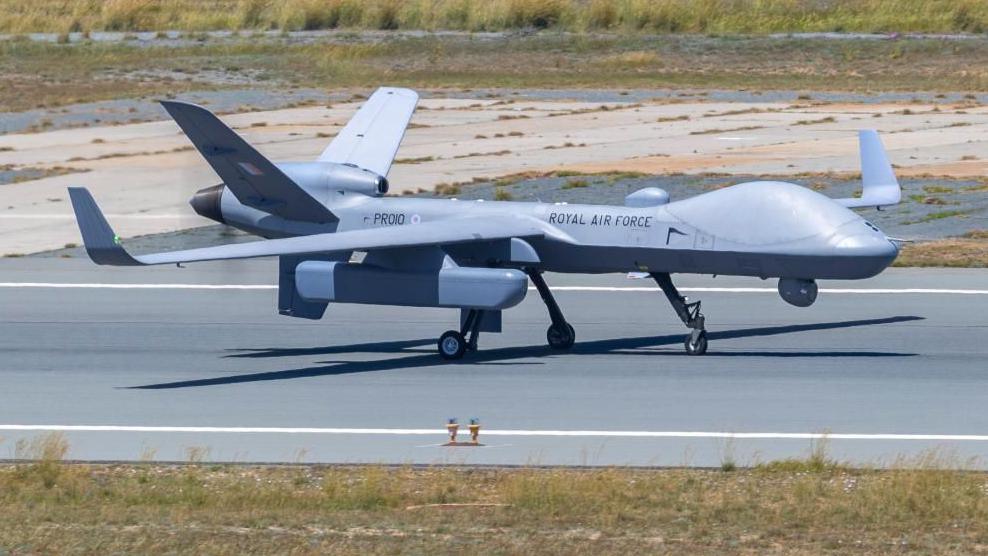
As with the Army and the Royal Navy, the whole way the RAF operates is set to change as it moves away from traditional crewed aircraft to ‘hybrid’ squadrons whereby pilots in their cockpits will be flanked by legions of uncrewed drones flying alongside.
£790m for air and missile defence
The government has said this funding will enhance protection of the UK and overseas bases by investing in command as well as buying new radars, sensors and more counter-drone systems.
This will be welcomed but military officials worry there is still a glaring gap in the UK’s defences when it comes to ballistic missiles.
The RAF’s Typhoon jets, in service since 2004 and now to be extended to the 2040s, will remain the primary means of intercepting drones and cruise missiles.
But even with the new investment it is likely that an adversary armed with hypersonic missiles would be able to overwhelm Britain’s defences.
£330m for protecting undersea cables
This is in response to Russia’s increasing interest in scoping out some of the 60-odd vital undersea cables that carry the UK’s data as well as the energy pipelines under the North Sea.
A Russian deep sea ‘research’ ship, the Yantar, has been seen loitering close to the points where these cables come ashore.
The fear is that should a conflict with Russia ever materialise then these cables, which carry trillions of pounds worth of financial data, would be cut.
-
Will Starmer’s plan for defence help UK hit Nato’s spending target?
-
Published54 minutes ago
-
-
Starmer trims budgets to fund extra £15bn for defence
-
Published58 minutes ago
-
Size of Army to increase to 76,000
At its current size of just 74,000, the British Army is now so small that it would be impossible for it to generate the size of forces (45,000 men and women) that it did for Operation Desert Storm in the Gulf War 1991.
Instead, one recently retired British general expressed doubts it could even generate a 5,000-strong brigade for a conflict in Europe.
But the DIP plans to increase by tenfold the lethality of the Army by combining crewed weapons systems with drones.
Some ‘tough choices’ and programmes sacrificed
Inevitably, there are some losers in the plan. The Royal Navy’s ageing but capable Type 45 destroyers will no longer be replaced by the planned Type 83 destroyers.
Instead, the Navy is to become a ‘hybrid force’ by combining traditional crewed vessels with a range of uncrewed and autonomous vessels both on and below the waves.
The Storm Shadow missile programme is to be discontinued but will eventually be replaced by a new missile called Stratus, a low-cost cruise missile.
There will also be cuts in Civil Service support and the expansion of the Cadets is being pushed back until after 2030.



