

This post was originally published on this site.
Home Secretary admits failures led to Southport attack
-
Published
The Home Secretary has vowed to “right the wrongs” identified by an inquiry into the “senseless killing” of three young girls and violent attacks on others in Southport.
Bebe King, six, Elsie Dot Stancombe, seven, and Alice da Silva Aguiar, nine, were killed by 17-year-old Axel Rudakubana at a Taylor Swift-themed dance class in June 2024.
Inquiry chairman Sir Adrian Fulford said there had been a “fundamental failure” by any organisation to take ownership of the risk Rudakubana posed in the years leading up to his attack.
Shabana Mahmood said the government accepted these findings, adding: “We will do whatever is needed to protect the public.”
“The Southport Inquiry identified fundamental failings, across many of our public services in the years leading up to July 2024,” she said.
“These devastating failures led to the senseless killing of three young girls and violent attacks on others.
“My thoughts today are first and foremost with the families and friends of Bebe, Elsie and Alice and all the victims of that awful day.
“We owe it to them to right these wrongs.”
She added that her department would now carry out the necessary work “with the urgency it deserves”.
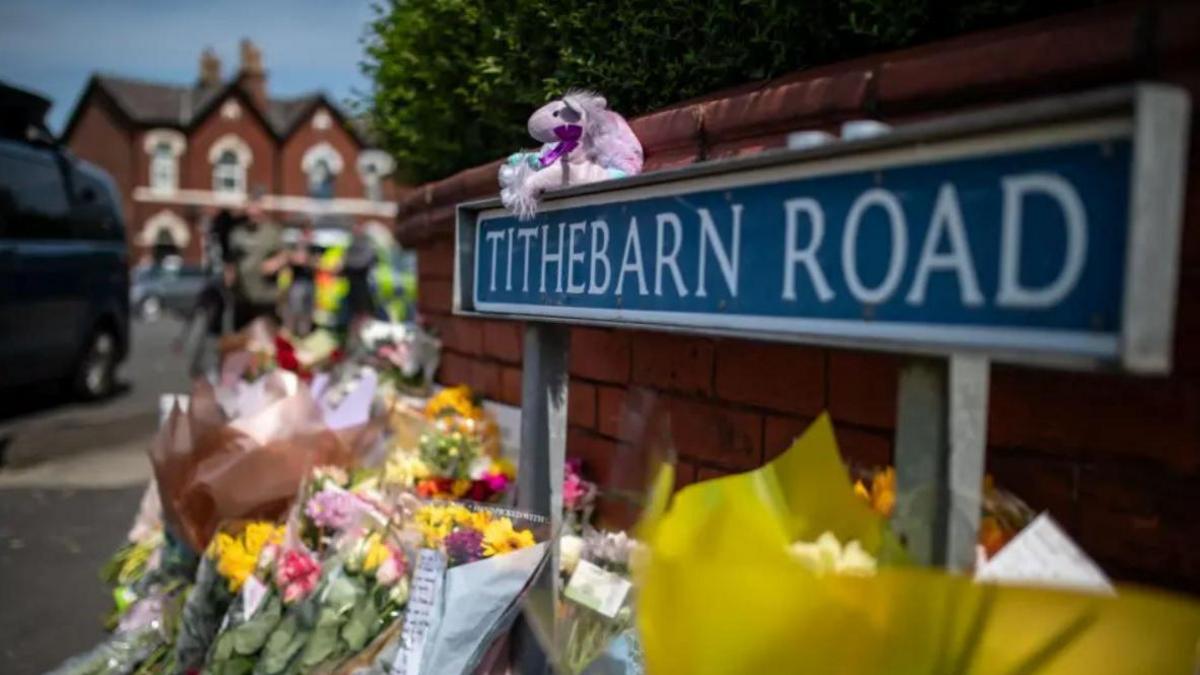 Image source, PA Media
The Southport Inquiry, commissioned by then Home Secretary Yvette Cooper, was set up to examine the overall timeline of the killer’s history and interactions with various public bodies.
The first phase of that inquiry finished in November following nine weeks of evidence.
Sir Adrian found that “catastrophic” failures by the parents of the killer and various agencies meant clear chances to prevent the attack were missed.
In a 760-page report published in April, he called for the end of what he described as a “culture” of agencies passing responsibility between each other or downgrading their own involvement in cases like this.
He described it as the “single most important conclusion” of his report, adding: “This failure lies at the heart of why [Rudakubana] was able to mount the attack, despite so many warning signs of his capacity for fatal violence.”
Sir Adrian said the attack “could and should have been prevented”, if public bodies had taken steps to stop the killer, who was 17 when he launched the attack.
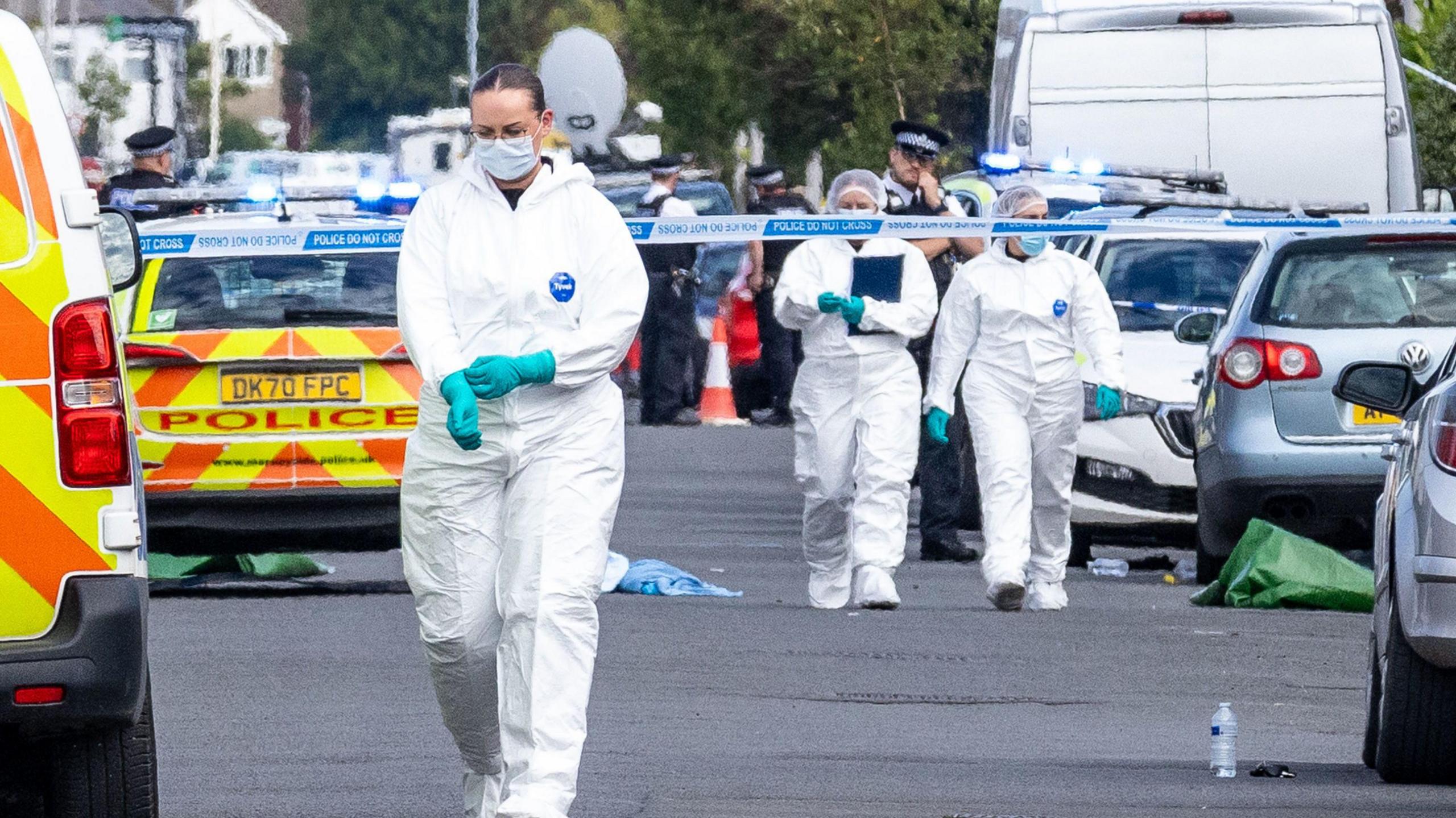 Image source, PA Media
The report also focused on a serious incident in March 2022, when the teenager was reported missing and found by Lancashire Police officers on a bus with a knife.
Sir Adrian described that incident as the “most marked example of the consequences of poor information sharing”.
He said an arrest would likely have led to his home being searched and “critical information” found about the ricin seeds he had bought and the terrorist manuals he had downloaded.
Instead, he was simply taken back to his family home in Banks, West Lancashire, and no criminal action was taken.
Sir Adrian also said if the killer’s parents had done “what they morally ought to have” and reported his suspicious behaviour, he would not have been free on the day of the attack.
But a “merry-go-round” of referrals, assessments and “hand-offs” – and his autism being used as an “excuse” for past conduct – meant no agency understood the danger he posed.
The second phase of the inquiry is expected to consider the adequacy of multi-agency systems to address the risk posed by young people whose desire to commit acts of extreme violence presents a significant risk to public safety.
Get in touch
Tell us which stories we should cover on Merseyside
Listen to the best of BBC Radio Merseyside on Sounds and follow BBC Merseyside on Facebook, external, X, external, and Instagram, external. You can also send story ideas via Whatsapp to 0808 100 2230.
-
-
Published13 April
-