
This post was originally published on this site.
Richard WheelerPolitical reporter

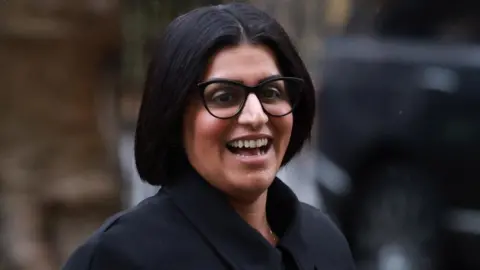
The home secretary has said she rejects suggestions that making live facial recognition available to all police forces in England and Wales contributes to a “Big Brother” society.
Shabana Mahmood told the BBC she makes “no apology” for the policy and believes it would help detect criminals while allowing people to “go about their daily business in safety”.
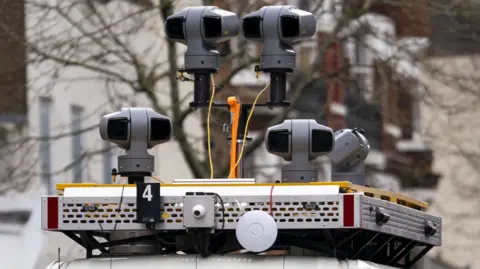
The government announced plans to increase from 10 to 50 the number of live facial recognition vans available to be deployed as part of reforms to policing.
Human rights and privacy campaigners have raised concerns, describing the announcement as “one of the most significant threats to civil liberties in the history of British policing”.
In an interview with Matt Chorley on BBC Radio 5 live, Mahmood said “appropriate safeguards and regulations” would be in place over the use of the technology and a consultation was taking place.
“Let me say I make no apology for rolling out this technology,” she said.
“The [Metropolitan Police] has been using it for some time now, they’ve made 1,700 arrests off the back of using live facial recognition.”
Mahmood said there is “always concern” when a new technology is adopted, adding this previously applied to the use of fingerprinting and DNA samples.
She added: “What I would say to people that are very motivated by sort of campaigning on civil liberties is that you can’t enjoy any of your liberties in any country if you’re not safe.”
 PA Media
Pressed on whether there are any limits to a surveillance culture, Mahmood said: “We have CCTV in lots of shops.
“For 20 years we’ve been talking about Big Brother societies, maybe for even longer than that, I just really reject that analysis.
“I think that law-abiding citizens going about their daily business can do so in security, nothing about that will change.
“But what we do have is a new technology that is capable of picking up prolific offenders, people on the police’s watchlist, helping us police protests more effectively.”
Ruth Ehrlich, from campaign group Liberty, said: “Rolling out powerful surveillance tools while a consultation is still under way undermines public trust and shows disregard for our fundamental rights.”
She said attempts by police forces to use AI and facial recognition have been “plagued by failure”.
She added: “We have seen what happens when facial recognition technology is rolled out without clear safeguards: children are wrongly placed on watchlists, and black people are put at greater risk of being wrongly identified.”
Conservative former minister Sir David Davis also highlighted “significant error rates” in the use of digital face ID and artificial intelligence, telling the House of Commons on Monday that this could risk “miscarriages of justice”.
‘More polarised world’
Elsewhere in the interview, Mahmood spoke of abuse both she and her relatives have faced.
She said “it’s true to say both antisemitism in particular and also anti-Muslim hatred, both of those feel very much like they’re on the rise”.
Mahmood, a practicing Muslim, said: “I’ve had family and friends sworn at … effing ‘P’ word and all of that now in recent weeks and months, when they’ve gone 20 years without hearing those words said to them.”
Asked why, Mahmood said: “I think we’re living in a more divisive, more polarised world.
“I think that social media has a lot to do with it, sending hateful, divisive stuff through the algorithms into the minds of our young people and to our people in this country.”
Mahmood also said there are “systems that are broken that people are fed up about” and cited the need for politics to “meet this moment” and provide answers on issues, including immigration.