
This post was originally published on this site.
Mahmood says law will be changed to help deport grooming gang leader
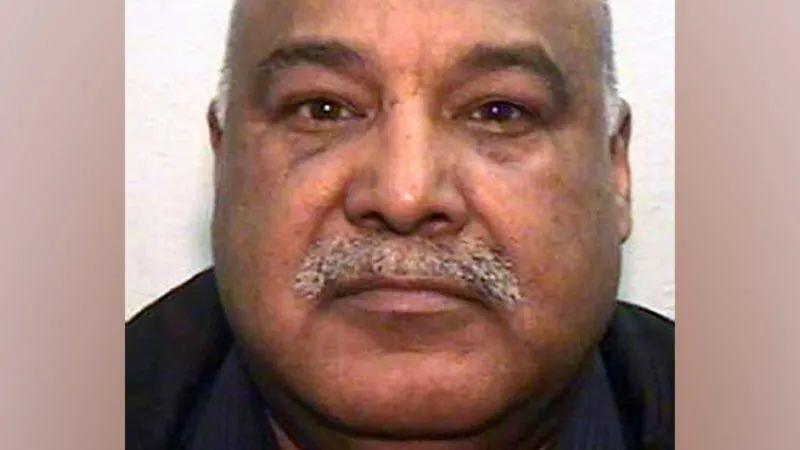 Image source, GMP
-
Published
Home Secretary Shabana Mahmood has announced plans to change the law to help deport the freed ringleader of a Rochdale grooming gang.
Calls have mounted for the deportation of Shabir Ahmed, who had dual British-Pakistani citizenship before being stripped of the former following his 2012 conviction for multiple counts of child sexual offences.
Ahmed, who was jailed for 22 years and released on licence this month, cannot be deported due to a 1971 law forbidding the removal of a small group of Commonwealth citizens who arrived in the UK more than 50 years ago.
Under the proposed amendment, foreign criminals will no longer benefit from these protections where they are guilty of some serious crimes.
It would bring the law on deportation in line with the law on the removal of citizenship.
Mahmood said the 1971 Act provided protections for long-term UK residents but “should not be used as a bar against removal in cases like that of Shabir Ahmed”.
But the Home Office said Ahmed’s removal depends on Pakistan accepting him. At the moment, it appears Pakistan has no intention of accepting Ahmed, who claims to have renounced his Pakistani citizenship.
The government would continue to “explore all avenues to pursue a deportation”, Mahmood added.
Ahmed was one of nine men from Rochdale and Oldham found guilty of exploiting girls as young as 13 at two takeaway restaurants.
After leaving prison, Ahmed was sent to 24-hour staffed accommodation and fitted with a GPS electronically monitored tag.
While he is in the UK, the government has said he would be returned to prison if he breaches a series of strict licence conditions.
Some of his victims said they were “frightened” and felt “unsafe” at his release.
At the time of his release, his victims were told he could not be deported to Pakistan due to the 55-year-old Immigration Act, which bars the removal of any Commonwealth citizen who arrived in the UK before 1973 and had been in the country for five years.
It is not known how long it would take to change the law but one government source previously suggested it could potentially be up to a year.
The amendment will be tabled under the government’s Immigration and Asylum Bill, currently going through Parliament, which would in effect disapply Section 7 of the 1971 Immigration Act for serious criminals.
Shadow home secretary Chris Philp urged Mahmood on Thursday to instead introduce emergency legislation in September following parliamentary recess, which he said would see a law change “in a matter of weeks”.
Earlier he suggested sanctions could be imposed on Pakistan in the event it refused to accept Ahmed.
“If they don’t take him back, we can say: well, we’re simply going to stop or restrict issuing visas to people from Pakistan to come here,” he told BBC Radio 4’s Today programme.
“That, by the way, should apply to any country around the world who doesn’t take back its own citizens who are criminals or here illegally.”
Officially, Pakistani authorities have not commented. The prime minister’s office referred BBC questions to the Foreign Office, which has not yet responded.
Several senior ministers also declined to comment, describing the matter as highly sensitive and saying it is being handled at the highest levels of government.
Privately, however, multiple officials have indicated that Pakistan is “unlikely” to accept Ahmed if the UK seeks to deport him.
They say he left Pakistan decades ago, surrendered his Pakistani nationality and is a British citizen. Unofficially, it was shared with the BBC that he is now Britain’s responsibility, arguing that Pakistan should not be expected to receive someone who is no longer its national.
Dr Farzana Shaikh, an expert on Pakistan working at Chatham House, told BBC Radio 4’s Today programme that negotiations on the issue had seen Pakistan demand the extradition of two political dissidents from the UK.
“We do know there are back channel negotiations going on – these are fraught and point to quite a diplomatic crisis between the two countries,” she said.
Victims Minister Catherine Atkinson told BBC Radio 4’s Today programme Mahmood had a strong track record of removals, citing examples where visa sanctions were threatened in order to secure them.
“She threatened visa penalties for Angola, Namibia and Democratic Republic of Congo unless they took back illegal immigrants and four months later all three were co-operating, with flights off the ground,” Atkinson said.
“They were previous negotiations where countries refused to take back foreign national offenders and Shabana was able to secure those returns.”
On Thursday, a spokesperson for Sir Keir told reporters “we are exploring every available option in this case, and that includes talking to the Pakistani authorities.”
-
-
Published6 days ago

-
-
-
Published5 days ago
-