
National museums to stay free for all visitors
-
Published
Overseas visitors will not be charged to enter England’s national museums after ministers decided against changing the universal free admission policy.
It comes after months of discussions between the government, museums, the tourism sector and local leaders to examine whether making tourists from abroad pay could boost the institutions’ finances.
In March, the government said it would explore charging international visitors to enter national museums as it looks for ways to tackle funding pressures.
But the Department for Digital, Culture, Media and Sport (DCMS) has now said this could deter domestic visitors and that any benefits of charging would not be felt equally across the sector.
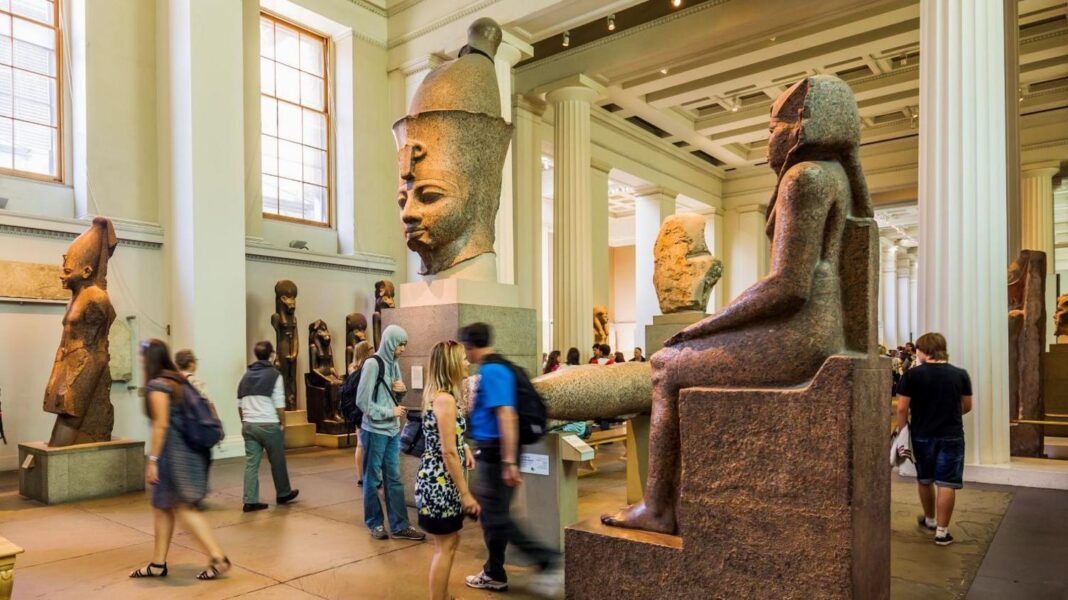
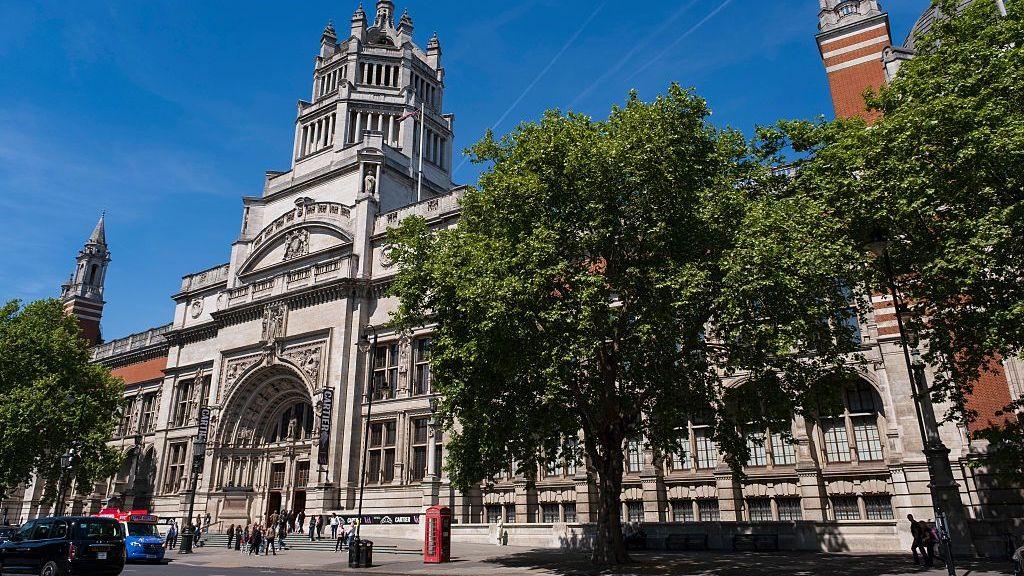
The UK’s 15 national museums, including 12 in London, have been free for all to enter since 2001.
But a review published last year by former Labour minister Baroness Margaret Hodge suggested that a charging model for international tourists “would align the UK with other countries, such as New Zealand and Singapore”.
On Tuesday, DCMS confirmed free admission to these museums would remain in place for everyone.
“The government believes that charging overseas visitors could deter domestic visitors and that the impacts and benefits of charging would not be felt equally across the sector and therefore will not introduce charges for overseas visitors,” a spokesperson said.
Culture secretary Lisa Nandy said: “Our museums are the places that light up the world.
“That’s why they must be free, forever, for everyone to access.”
‘Delighted’
The DCMS said national museums contribute more than £1bn a year to the economy and attract visitors from around the world, with the Natural History Museum and the British Museum drawing 7.1 million and 6.4 million visitors respectively in 2025.
The Natural History Museum’s director Dr Doug Gurr said although his museum would have benefitted from charging, the sector would have lost out overall.
“Free museums aren’t a cost to the economy – they’re a key reason the economy benefits from tourism in the first place,” he said.
“So, we’re delighted to remain free but given the visitors we bring there’s a strong case for reinvesting a share of any tourism revenues in the institutions that help attract them.”
Nicholas Cullinan, director of the British Museum, said: “When the British Museum was founded as the world’s first public national museum in 1753 it was to be free for ‘all persons’.
“So, we are delighted by the government’s announcement that free entry for all will be maintained.
“This will allow everyone to enjoy and have access to our great museums across the nation as one of the things this country does so brilliantly.”
The government also pointed to £760m in funding for museums through its £1.5bn Arts Everywhere Fund, as well as £600m in infrastructure funding for national museums.
It said the £13.6m museum transformation programme would help organisations move towards more sustainable business models, while ministers would work with the Arts Council and the sector on a long-term strategic plan for museums, with further details to be announced.
Listen to the best of BBC Radio London on Sounds and follow BBC London on Facebook, external, X, external and Instagram, external. Send your story ideas to hello.bbclondon@bbc.co.uk, external
-
-
Published21 September
-