


No 10 North will face greater scrutiny as Burnham’s 10-year plan looms
-
Published
The work of Andy Burnham’s new Number 10 North office in Manchester has been kept largely away from the headlines since it opened in July.
But the officials based there are mainly focused on two soon-to-be-published documents that could go on to define his time as prime minister.
The first is Burnham’s 10-year plan, which is due next month, and which the prime minister says will lay out a path “to where I believe we all want Britain to be”.
The second is the ‘rewiring the state’ white paper, a detailed policy document that will follow in the new year and should give the clearest indication yet of what power Burnham hopes to move away from Westminster to other parts of the country.
But despite Burnham insisting his new Manchester team will be the “engine room” of change, others in government question how much difference they can really make.
There’s talk among Labour MPs that the 10-year plan, which has also had significant input from Westminster departments, will not go as far as the prime minister had hoped.
But one official who has seen elements of the plan said it will be “pretty weighty” and include “quite a lot of radicalism”.
Number 10 North has been focused on how the plan can deliver on Burnham’s pledge to achieve “growth in every postcode”.
One major theme is expected to be reindustrialisation, with advisers exploring how to attract businesses to less prosperous towns and cities.
Staff in Manchester are also said to be looking at what parts of the country may not see growth through reindustrialisation – such as some rural and coastal areas – and what the alternative offer for those places could be.
Eyebrows were raised in Whitehall this summer when a government statement said that “local economic growth policy” would be transferred “from HM Treasury directly into No 10 North”.
Some saw that as an attempt to disempower the Treasury, but sources there insist that no serious decisions on growth can be made without the department’s involvement and approval.
-
Burnham’s Number 10 North goes on multi-million pound hiring spree
-
Published30 October
-
-
‘Mindset shift’ needed within government on No10 North, says deputy
-
Published21 October
-
When Burnham first announced plans for the Manchester base, he singled out housing as an issue on which it would take the lead.
In a speech last month Number 10 North’s deputy director highlighted health, transport and education as other areas it was focused on.
While it’s understood the 10-year plan is likely to include long-term ambitions for social care, skills training and council housebuilding, there are doubts within government departments about exactly how involved Number 10 North will eventually be in those areas.
One Whitehall official said “most things” that have been announced as Number 10 North priorities have in practice “stayed with other departments”.
They said Number 10 North is “not doing delivery” because it “doesn’t have its own resource” and is “underpowered compared to departments” in London.
A recent hiring spree will see around 120 officials and advisers working from Number 10 North when it moves into its permanent premises next spring.
That is almost half of the around 280 staff members that work for “Number 10 South”, a term some advisers are now using for Downing Street.
But even those staffing levels are only a fraction of the numbers employed by other departments.
The Treasury’s north of England campus in Darlington, which was set up in 2021, has around 3,000 staff.
John Healey is said to have been particularly impressed with the Darlington campus’s record of hiring people who would otherwise not have joined the civil service, something Downing Street hopes to achieve in Manchester too.
Darlington’s most senior civil servant, Beth Russell, has been working with Number 10 North to share her experience of how best to set up a new government office outside London.
Prime ministers have for decades been frustrated by how little power Number 10 can sometimes wield within Whitehall, arguing that levers can be pulled but nothing then happens.
One question at the heart of the Number 10 North project is whether it will eventually wield genuine power itself or merely decide which powers to take from Westminster and give to mayors and other regional politicians around the country.
A government source said Number 10 North’s current role is “more in convening” people from elsewhere and argued the prime minister would need to choose what he wanted it to do in the future.
They added: “I could see it going two different ways.
“Will it be more delivery or will it be more in the conventional role of Number 10?
“Maybe it’s not best placed to do things, but maybe directing and convening are also important things to do.”
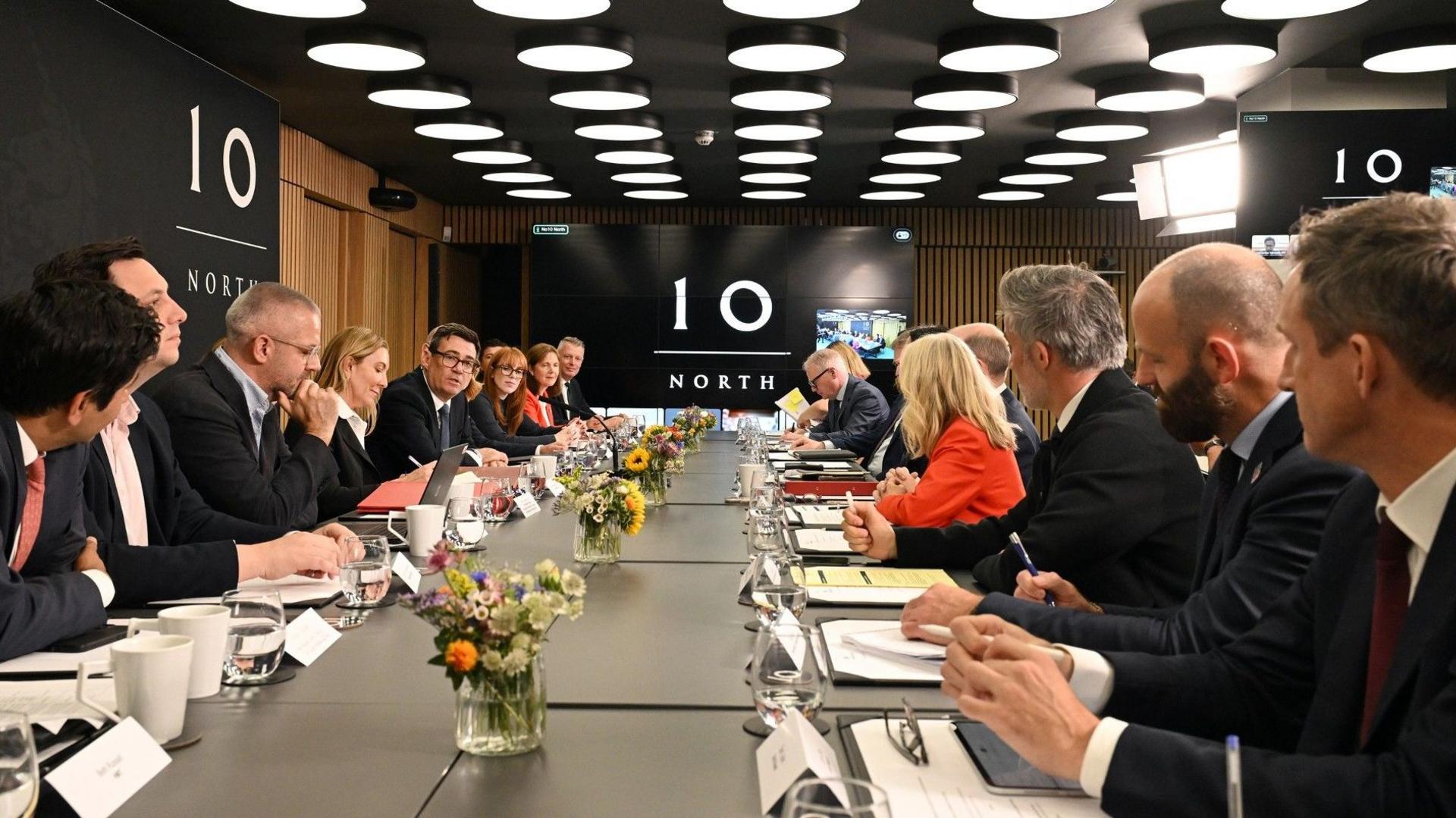
Regional mayors have been regular visitors of Number 10 North and are set to be earmarked for much more expansive powers in the ‘rewiring the state’ white paper.
England currently has 14 metro mayors, a number which is likely to be expanded in the coming years.
Sources in both Number 10 and the Treasury say “fiscal devolution” will be a major part of the Burnham agenda.
People close to the prime minister say that is likely to ultimately mean more cash-raising, spending and borrowing power for mayors.
Two of Burnham’s early announcements this summer saw mayors given a share of income tax and the ability to introduce a tourist tax for people visiting their areas.
The Treasury believes one of the most underreported elements of Healey’s Budget last month was a £1.5bn borrowing facility that will be given to mayors from 2028.
Sources say that in the future projects such as Doncaster-Sheffield Airport, which Healey gave his backing to, could be given the financial go-ahead directly by mayors, without the need for a separate thumbs up from the chancellor.
For now mayors have each been asked to submit a list of projects to Number 10 North, which they feel are being held up by government processes.
Government departments in Westminster have also been asked to identify what areas they are currently responsible for which could potentially be devolved to mayors and other local government officials.
What’s less clear is how the prime minister’s devolution plans will affect Scotland, Wales and Northern Ireland and whether he is keen for them too to adopt a mayoral model.
At a recent meeting in Glasgow, Burnham said he would discuss that further with the leaders of the devolved nations.
He recently rejected a proposal from the First Minister of Wales to devolve more responsibilities over policing and justice.
Away from the gaze of backbench MPs, opposition parties and Westminster journalists, Number 10 North has so far been able to go about its business without drawing much attention.
But as Burnham’s long-term plans for the country start to become more clear, the scrutiny faced by his Manchester power base is likely to grow too.

Sign up for our Politics Essential newsletter to read top political analysis, gain insight from across the UK and stay up to speed with the big moments. It’ll be delivered straight to your inbox every weekday.