
This post was originally published on this site.
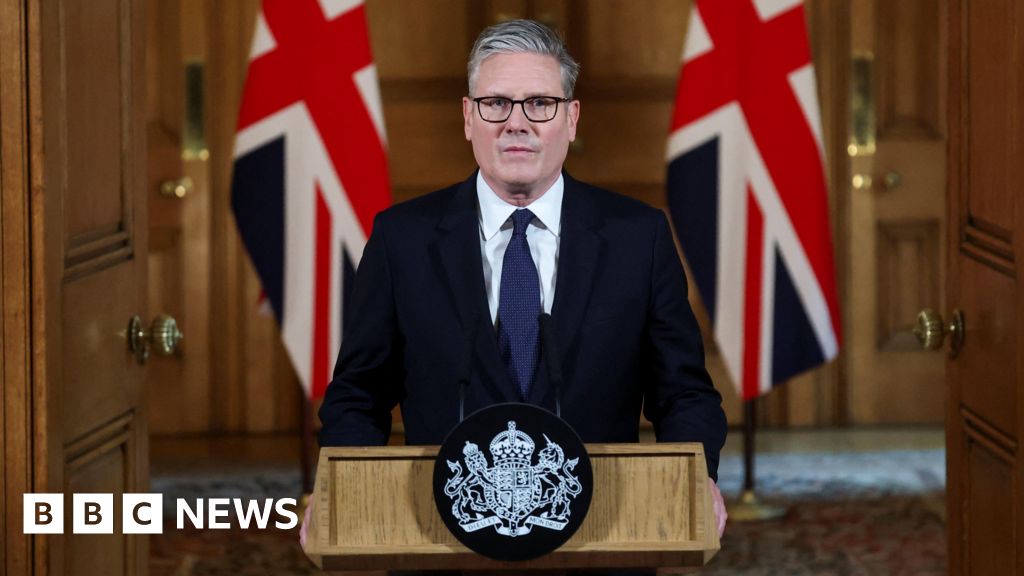
The prime minister will take to the Downing Street lectern this morning, after another extraordinary weekend of diplomatic turmoil prompted by US President Donald Trump.
Sir Keir Starmer knows that people and businesses in the UK will expect him to respond, in front of the cameras, to the prospect of the UK and European allies being hammered by more US tariffs.
It is the latest twist in the row over Greenland, the autonomous Danish territory Trump wants to get his hands on.
Trump has said he will impose new taxes on eight US allies – Denmark, Finland, France, Germany, the Netherlands, Norway, Sweden and the UK – on 1 February if they continue to oppose his proposed takeover of Greenland.
One long-standing observer of Western diplomacy told me: “This is extraordinary. We haven’t seen anything like this in 80 years.
“This is pure political coercion against Nato allies over the attempted seizing of a chunk of territory – it’s astonishing.”
Expect Sir Keir to reiterate that he believes the imposition of tariffs would be a mistake, and make clear that is something he spelt out directly to Trump on the phone on Sunday.
Downing Street said Sir Keir spoke to the Danish prime minister, the president of the European Commission and the Nato secretary general on Sunday, before calling Trump.
Labour insiders, well aware this is another blast of turbulence they could frankly do without, argue the capacity of the UK to be central to these diplomatic conversations is down to their “reset” with the EU and their establishing a strong relationship, despite obvious political differences, with the Trump administration.
But when pressed on what might happen next, or what the next move from European allies might be, there is, from some, a shrug of the shoulders. This is perhaps understandable – these are unprecedented developments and the options open to European powers are limited.
Some worry that any countermeasures from European countries could deepen the breakdown in relations with Washington and hurt Europe as much if not more than they would hurt the US.
The question now is whether a face-to-face meeting with Trump, perhaps involving a collection of European leaders, might make a difference. The president is due at the World Economic Forum in Davos in Switzerland this week.
In the meantime, Downing Street and the Foreign Office continue to hit the phones as they explore their options as to how they might respond.
They rue too that, yet again, the White House imposing diplomatic G-forces on supposed allies the likes of which have never been seen before means the prime minister’s desire to focus on concerns about the cost of living get squeezed out again.
There have been three Mondays so far in 2026 – and on two of them Sir Keir had planned trips outside London to talk up what he says the government is doing to help people who have faced spiralling bills.
A fortnight ago he took reporters, myself included, to a community centre in Reading to do just this – but ended up facing endless questions about Venezuela and Greenland.
Today, a similar trip was planned but then ditched, given what happened over the weekend.
Sir Keir will attempt to argue in his news conference that international and domestic issues are indivisible – and that being actively involved and taken seriously on the international stage helps deal with many of the domestic concerns millions of voters will have.
Just before the latest convulsions over Greenland, the prime minister and the foreign secretary attended an event just down the road from Downing Street – an event that would serve to underline the magnitude of what was to follow.
On Saturday lunchtime, people gathered in Westminster at the birthplace of the United Nations, to mark the 80th anniversary of the founding of the organisation in the aftermath of World War Two.
In 1946, that first gathering of the UN General Assembly happened, in London, just four months after the war’s conclusion.
It marked the start of a collection of international organisations to emerge in those post war years, not least the defence alliance Nato, established four years later in 1949.
Not long after Foreign Secretary Yvette Cooper and UN Secretary General Antonio Guterres had eaten lunch, a parable of our times began to unfold: yet another upending of Western diplomatic convention, courtesy of a post on social media from the US president.
Yet again, Trump was shredding the international norms and conventions organisations like the UN and Nato were set up to espouse all those years ago.