
This post was originally published on this site.
Protein or pickled garlic? What’s new in ice cream
-
Published
I’m at the research and development centre of the world’s biggest publicly listed ice-cream maker, Magnum. Near Bedford in the UK, it’s where the company’s researchers dream up new recipes and develop their production processes.
What really catches my eye is a pale yellow glow in the corner of the room. The light emanates from a glow-in-the-dark ice lolly.
Launched in the clubbing capital of Ibiza, it’s targeted toward clubbers and festival-goers, and one of its ingredients, vitamin B2, is naturally luminescent and glows under UV club lights.
While a luminescent product may seem a bit of a gimmick, ice cream is a serious business and innovation is crucial to staying ahead of the game.
There’s tough competition from other giants including Häagen-Dazs owner, Froneri, and Baskin-Robbins, the world’s largest chain of ice cream specialty shops, not to mention smaller artisan ice cream makers that are popping up all the time.
They’re all dealing with a notoriously unpredictable market and with fluctuating commodity and energy prices. No one can afford to stand still.
“We’ve had five years of price volatility impacted by war in Ukraine, Covid, the cost of living crisis. We’ve now got the Strait of Hormuz. We’ve just been in this constant state of instability when it comes to pricing,” says Georgia Rose, principal analyst at global market research company, Kantar Retail IQ.
And those price fluctuations affect multiple areas of the ice-cream making process.
“Manufacturers have been hit by higher prices for dairy, cream, eggs; the ingredients that make ice-cream bases. And then you’ve got the flavours; vanilla, chocolate, sugar, fruit. And something that often gets forgotten is the cold-chain energy costs and storage,” she says.
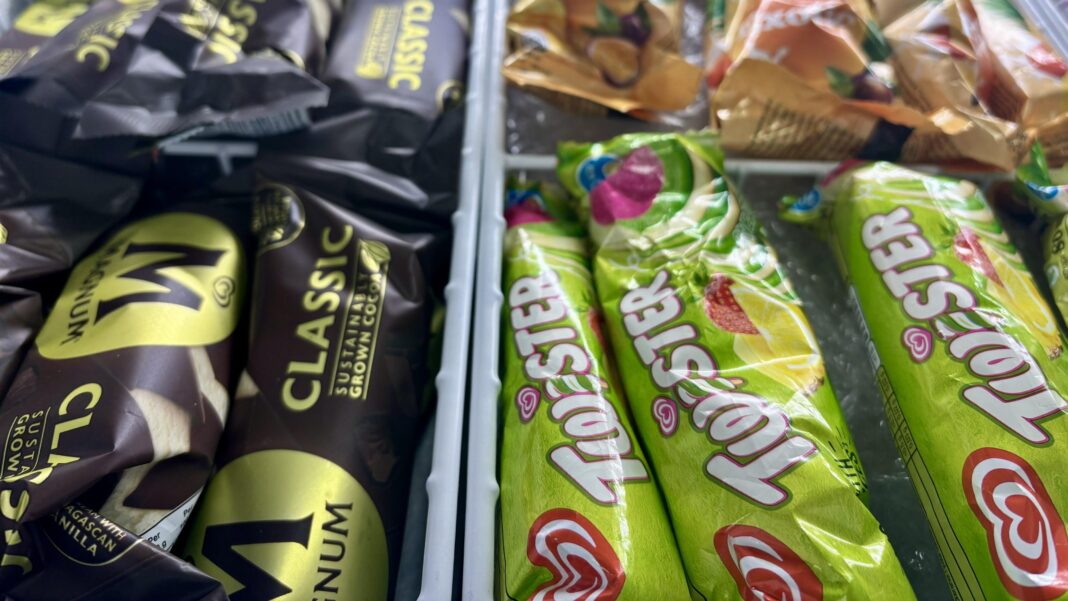
Rising costs are something The Magnum Ice Cream Company is battling with. It was spun off from parent firm Unilever last year and owns brands including Cornetto, Twister, Solero and of course, Magnum.
As the largest stock market-listed ice cream company in the world, with a market capitalisation of around £8bn, it has the funds to innovate.
One area under constant development is refrigeration – globally Magnum owns three million fridges, (designed and built by a third party), and some are fitted with cameras taking images to be uploaded to data centres.
From the pictures, AI identifies each product and it’s also trained in depth-recognition, which means it can estimate how many units of a particular ice cream have been sold and when a fridge needs to be restocked. This equates to less empty space and more targeted supplies.
Meanwhile, the fridges themselves have been made more energy efficient.
Zbigniew Lewicki, Magnum’s chief research, design & innovation officer says innovations like this aren’t just a nice-to-have, they’re crucial to the business’ bottom line.
“If you look at the freezers we had in 2010, the ones we have now are 40% more efficient. Will we ever be able to absorb every shock? I can’t say, but it’s definitely one way of making the business long-term resilient.”
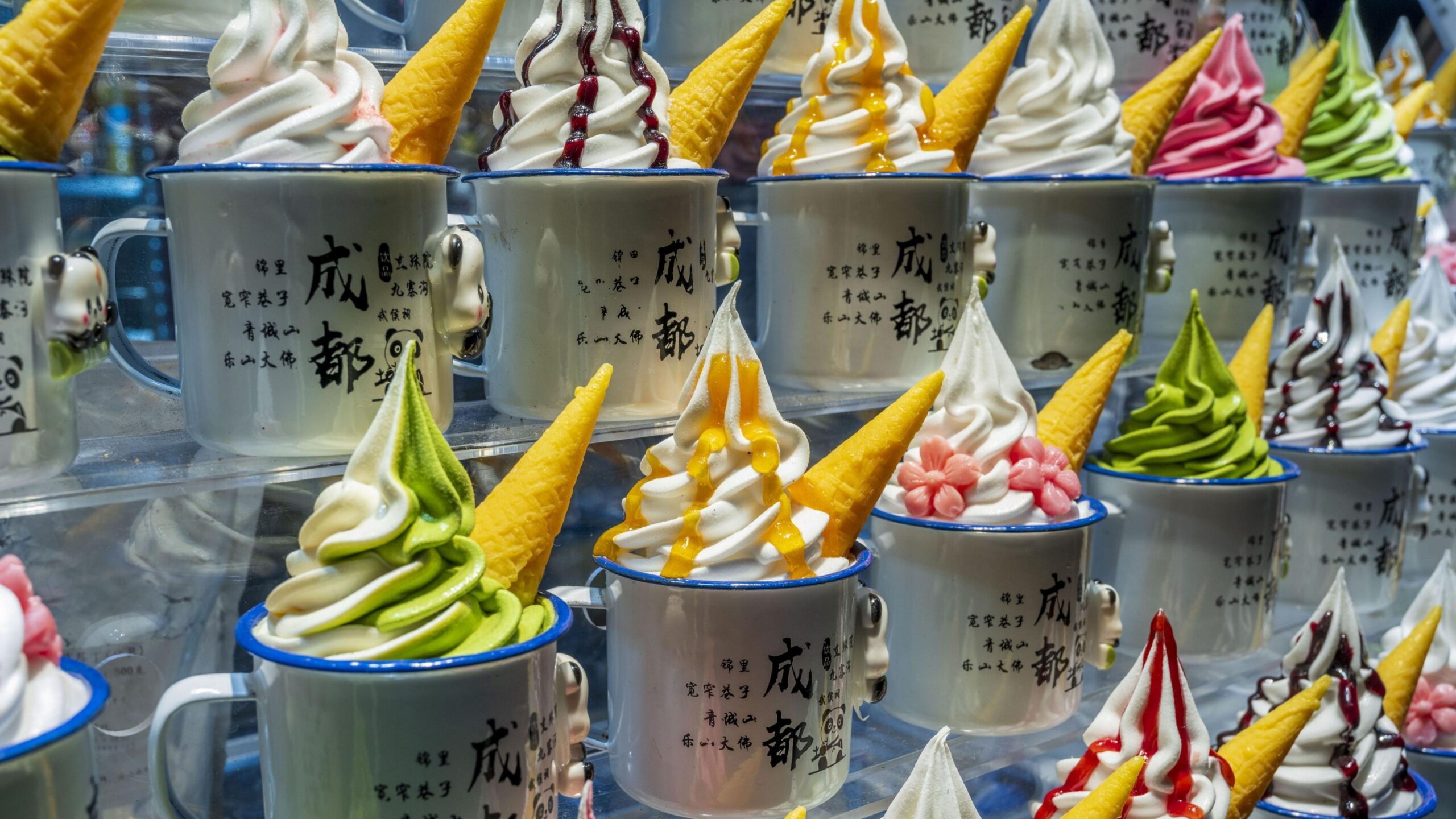 Image source, Getty Images
Fridge technology isn’t something the average consumer will notice, but new products on the shelf are a different story. When it comes to innovation, a lot of attention is turning to Asia according to Lewicki.
“The inspiration and trends come from the East. There’s an incredible intensity of innovation in places like Japan, Korea and China and the markets are growing and expanding in a phenomenal way.”
One of the products inspired by Lewicki’s trips is Volcanics which has launched in the UK and Europe. It comprises a chocolate shell with biscuit pieces, chocolate and vanilla ice cream layers, and a caramel lava centre which he describes as “four dimensional”.
Shanghai-based, Neil Yan is a researcher of market trends for consumer and sensory specialists, MMR. She agrees that Asia is now the centre of ice-cream innovation, and says there are some deeper cultural reasons for this,
“In China, ice cream is no longer a niche story. It’s not just for Instagram. It’s not just a summer treat. It’s a new centre of gravity, representing a part of Chinese people’s lifestyle.”
And Yan says this affects the whole market: “[We are in] an era where everyone is experimenting with the flavours and the format, and blending it with what China, or the border term, Asian nationality, represents.”
And within the context of flavour experimentation, pretty much anything goes.
“We have ham, pickled garlic, tahini, and stinky tofu and liquor. Just below my office is a shop whose speciality is vodka, foie gras and apple in one scoop,” says Yan.
“The reason why people are so excited and so experimental is basically the ability to think beyond just the flavours that have been offered by the Western market for the past two or three decades.”
 Image source, David
Innovation in ice cream is not just limited to flavour, according to Honorata Jarocka, associate director at market intelligence company, Mintel. She says that products with added health angles are becoming increasingly popular.
Take protein for example, which has made its way into cereal bars and milkshakes over the last few years and now ice cream.
“It’s not only about building your muscles, it’s more about satiety because with the GLP1 user movement, [incorporating weight loss drugs such as Ozempic and Mounjaro], people are drawn to products that are more filling. Protein is really an important factor and ice-cream is a great place to use that.”
But protein-packed ice cream often doesn’t come cheap. David bars made by US company David Protein – and with a whopping 20g of protein – come in at $39.99 (£30) for a 12-pack, more than double the price of Magnum’s Yasso frozen yoghurt bars.
But they’ve been a hit says Jarocka, because consumers are choosing “high quality, smaller portions, and are able to maybe pay a bit more for products with extra benefits because they are spending less on grocery items overall.”
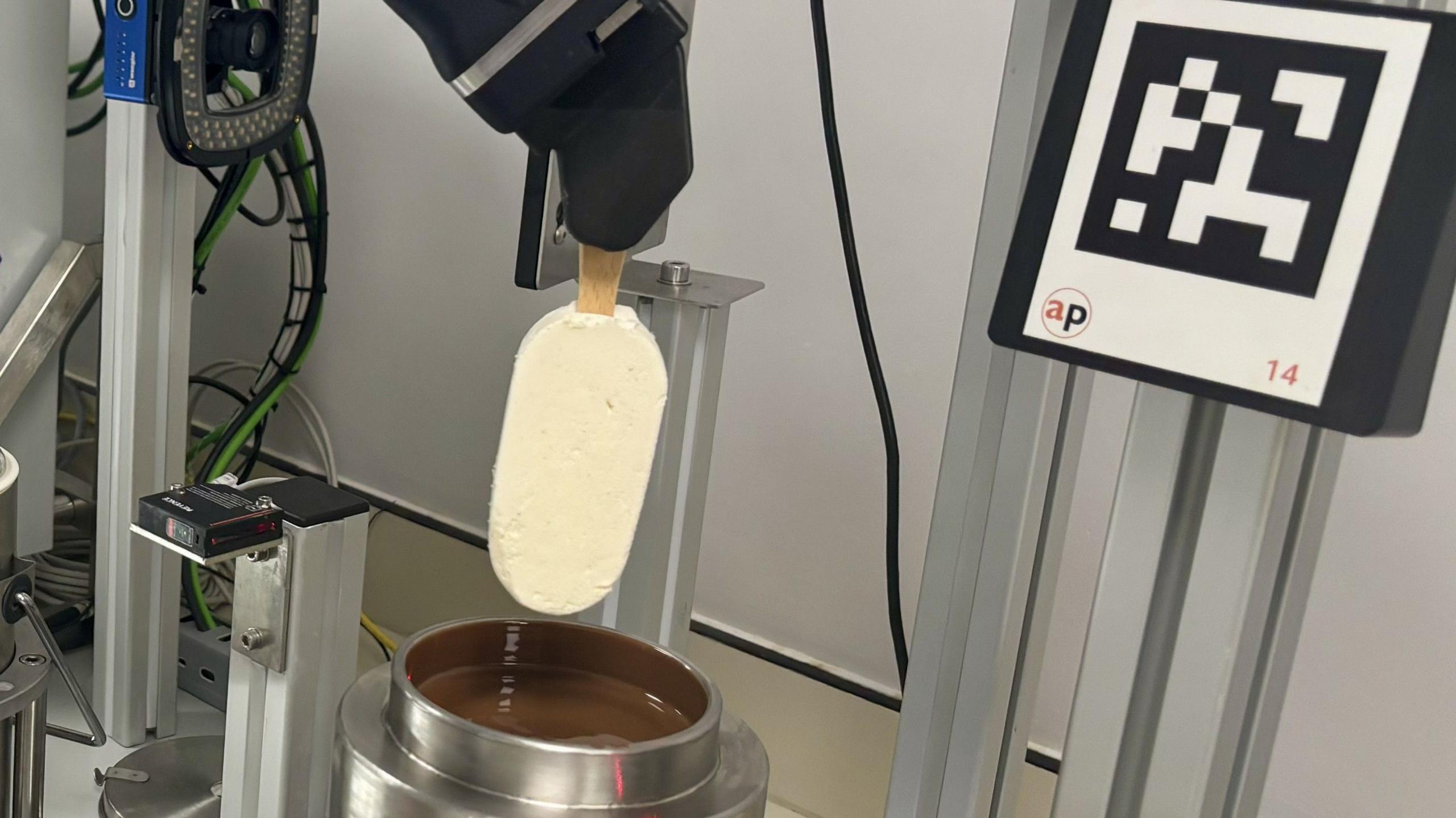
Back in Bedford, Magnum researchers are tinkering with their core product, with a little robotic help. The goal is to find the perfect viscosity of chocolate on Magnum bars, for the perfect crunch.
Helping with that is a robot called Eric, who does something that even the most dedicated ice cream consumer could not – collecting data on ice cream 24 hours a day.
More Technology of Business
-
-
Published3 July

-
-
-
Published12 June
-
-
-
Published26 June

-