
This post was originally published on this site.
Starmer trims budgets to fund extra £15bn for defence
-
Published
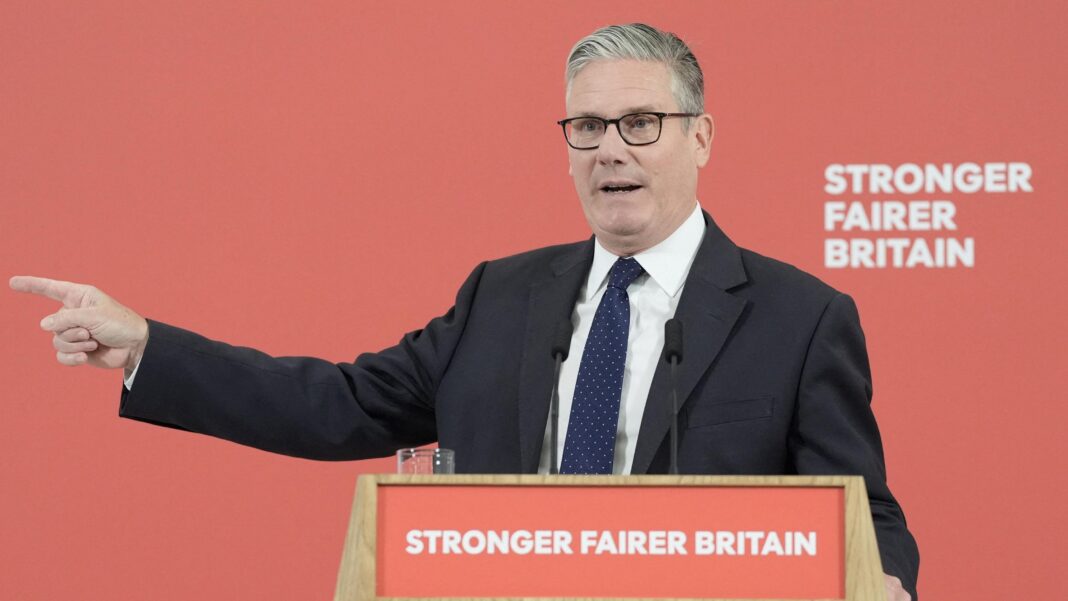
Prime Minister Sir Keir Starmer has said a £15bn increase in military spending will be funded by cutting investment budgets in other areas, as he set out the UK’s long-delayed plan to invest in defence.
In one of his final acts as prime minister, Sir Keir said some road and energy projects would not “go ahead as planned” to help raise defence funding to £80bn a year by 2029.
In a speech, he said the defence investment plan (DIP), initially expected last autumn, would reverse the “corrosive hollowing out” of the armed forces under the Conservatives.
He said the plan would be built on by his successor, widely expected to be Andy Burnham, who is yet to comment on the plan.
In his speech, Sir Keir said he had chosen chosen not to further increase government borrowing or cut day-to-day spending on public services to pay for the extra defence investment.
Instead, he said the money would be found by cutting the long-term investment budgets of other government departments by 1%.
The extra £15bn in spending over the next four years is more than the £13.5bn secured by former Defence Secretary John Healey, who resigned earlier this month in protest at the plans, but less than the additional £28bn sought by defence chiefs.
Some details of planned commitments over the next four years include:
-
More than £64bn to strengthen the UK’s nuclear deterrent, including new submarines and F-35A fighter jets capable of carrying nuclear bombs
-
£5bn to fund a “drone transformation” for the armed forces
-
More than £8bn for the global combat air programme (Gcap), a scheme to build the next generation of RAF stealth jets, in partnership with Japan and Italy
-
Plans for the Royal Navy to become a “hybrid navy”, using self-controlled vessels and AI alongside warships and aircraft and funding for six new warships
-
The Royal Air Force will develop autonomous fighter jets and bring its “uncrewed electronic warfare drone system” into service in 2026
The DIP also says the Ministry of Defence (MoD) will attempt to make efficiency savings worth almost £11bn by 2030.
The MoD is planning to deliver the savings by reducing the civil service workforce, cutting back consultancy spending, and expanding the use of technology.
Defence officials say the increase in defence spending is not conditional on the savings being made.
Sir Keir has pushed ahead with the DIP despite his impending departure from Downing Street after announcing his resignation last week. Tense Whitehall negotiations over how to fund it have been ongoing for months.
But the row over increasing military funding has seen two defence ministers resign, with Armed Forces Minister Al Carns joining Healey in resigning over the scale of the proposed uplift.
Sir Keir said the plan would now increase the military budget to 2.7% of gross domestic product (GDP) by 2029, and put the UK on track to meet Nato’s core defence spending target of 3.5% of GDP by 2035.
The prime minister said the UK was on track to spend 3% of GDP on defence in the next five-year Parliament – but he did not set a more specific date on this target, something Healey had called for.
The DIP says the plan to hit the 3% target would be set out at the next spending review, which is currently scheduled to take place next year.
The DIP follows the wide-ranging Strategic Defence Review (SDR), which was published in June 2025 and pledged billions in extra spending to fund a shift towards “warfighting readiness”.
General Sir Richard Barrons, one of authors of SDR, said while the publication of the DIP “does count as progress”, it would not “crack the issue” defending the UK “sufficiently well and quickly”.
Speaking earlier, he said: “More has to be done sooner and that requires more money than is currently on the table”.
-
Frank Gardner: Navy plans reflect sea change in how wars are fought
-
Published23 hours ago
-
-
Burnham will need a Moscow test as well as Makerfield test, says ex-military chief
-
Published2 days ago
-
-
UK forces face operational cuts without more cash, defence chief warns
-
Published16 June
-
Sir Keir’s decision to publish the DIP in his final weeks as prime minister could cause tension with his successor, who may want to revise defence spending when they take over.
The Sunday Times reported Burnham had seen the DIP and approved it, though Sir Keir declined to say whether this was the case when asked by a reporter.
Burnham is the only candidate to have formally joined the Labour leadership race and is widely expected to succeed Sir Keir next month.
Shadow defence secretary James Cartlidge said the prime minister had left a “legacy of failure”, an “underfunded defence investment plan that’s too little, too late”.
Lib Dem leader Sir Ed Davey said the government had “dangerously short-changed our armed forces”, meaning defence chiefs “have been forced to make hard choices, when they should be given what they need”.
Nato General Secretary Mark Rutte has previously urged the alliance’s members to present “clear, concrete and credible plans” for how they will raise defence spending to 3.5% ahead of a leaders’ summit in Turkey next week.
Rutte welcomed the DIP as a “good step” towards the 3.5% target, saying “stronger UK defence makes us all safer”.

Sign up for our Politics Essential newsletter to read top political analysis, gain insight from across the UK and stay up to speed with the big moments. It’ll be delivered straight to your inbox every weekday.