


This post was originally published on this site.
Jordan Daviesand
Telor Iwan,BBC Wales, Old Bailey

 PA Media
A teenager inspired by Southport killer Axel Rudakubana planned a copycat attack on a children’s dance school and planned to bomb the first Oasis reunion gig in Cardiff.
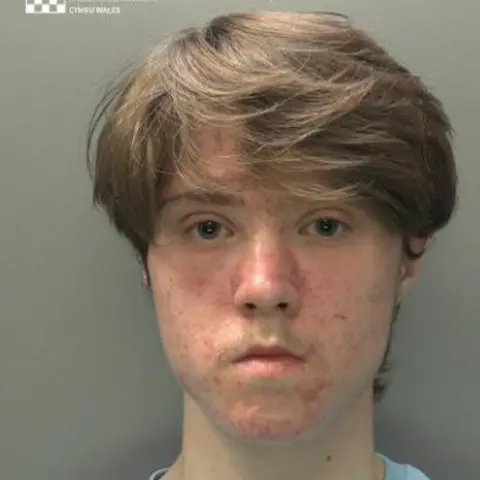
McKenzie Morgan, 18, from Cwmbran, Torfaen, has been sentenced to 14 months in a young offenders institute, after pleading guilty to possession of an al-Qaeda training manual.
Morgan said he wanted to carry out a “Rudakubana-style attack”, claimed he was trying to make ricin [a highly dangerous toxin] and sent an image of a large knife for sale to a friend, saying “would this work”.
He was initially arrested on 2 June 2025 after the police were contacted by an individual who was worried by what they had seen on Snapchat.
Morgan was sentenced for one offence of possession of information likely to be of use to a person engaged in terrorism, contrary to section 58(1) of the Terrorism Act 2000.
The Crown Prosecution Service said Morgan’s actions included researching violent attacks, discussing targeting an Oasis concert and attempting to purchase knives.
However, the conviction related solely to possession of terrorist material, not to planning or attempting any attack.
 PA Media
He was released on bail but his phone was seized and police discovered several banned al-Qaeda documents, including instructions on how to carry out a knife attack.
Morgan, who had saved images of Rudakubana on his phone, was rearrested on 19 June 2025, charged and appeared in court two days later.
He told police he searched for the al-Qaeda training manual, saved it and then read it – and admitted a single charge of possessing a terrorist manual.
The Crown Prosecution Service said this was a document likely to be useful to a person committing or preparing an act of terrorism.
Note had ‘places to attack’
Judge Sarah Whitehouse told the court there was no clear evidence that Morgan held any political, religious or racial ideology and his motivation appeared to be to “emulate the Southport terrorist attacker”.
She said he was a danger to himself and “vulnerable to being bullied, groomed and radicalised”.
Prosecutor Corinne Bramwell said Morgan, who was aged 17 at the time of the offences, was infatuated and inspired by Rudakubana.
Rudakubana was sentenced to a minimum of 52 years in prison for the murder of three young girls and ten counts of attempted murder during the attack at a Taylor Swift-themed dance class in Southport on 29 July 2024.
Elsie Dot Stancombe, seven, Bebe King, six, and Alice da Silva Aguiar, nine, died while eight other children and two adults – dance class leader Leanne Lucas and businessman Jonathan Hayes – were seriously wounded.
Morgan possessed the same al-Qaeda manual as Rudakubana.
Police also found a note on the defendant’s phone from April 2025 called “places to attack”.
The note contained images of a local dance school, “located close to his home address”, along with directions of how to get there – Morgan had even timed the journey on foot at just over 30 minutes.
Location data on his phone suggested he had been near the venue a few days before his arrest.
BBC Wales contacted the dance school but they did not want to comment.
Oasis attack messages
Morgan researched other places to attack, including his own school and a children’s playground.
In messages on Snapchat, Morgan told others about a plan to attack the first Oasis reunion concert in Cardiff on 4 July.
Following his arrest he told a counsellor of his desire to carry out a “Rudakubana-style attack”.
On the day of his initial arrest Morgan had researched knives and in the months before had looked into buying knives.
In a chat with a friend in April 2025 he sent an image of a large knife for sale, saying “would this work”.
The teenager admitted to police he had tried to buy a kitchen knife from Amazon, but failed because he could not prove he was over 18.
He also said his mother had hidden knives at their home, having found one in his bedroom, adding he was unhappy, had been bullied at school and had been experiencing suicidal thoughts.
 Julia Quenzler
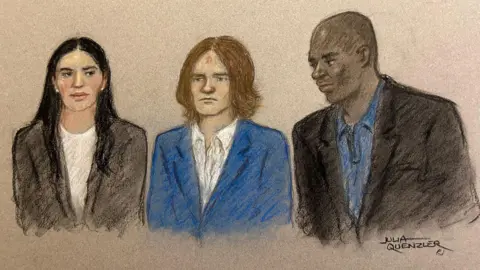
Morgan arrived at the Old Bailey accompanied by five mental health nurses who have been supporting him.
He was dressed in a dark blue suit and an open necked white shirt as he confirmed his name and date of birth.
Morgan was visibly in tears as the case was outlined and through his barrister, Michael Stradling, told the court that Morgan wanted the judge to know he was “very sorry”.
Mitigating, Stradling told the court that Morgan had no history of violence and that the greater risk was “of self-harm or the defendant suffering harm at the hands of others”.
The court heard that Morgan had been deemed a “high risk to others and to himself” after overhearing conversations that took place since he has been in custody.
Morgan could not be identified previously during the trial because of his age, but the restriction was lifted on his 18th birthday.
The prosecution said: “The risk of radicalisation of other vulnerable young children is a possibility.”
The court was told that youth offending service have “significant reservations about managing your risk in the community”.
Morgan was given a criminal behaviour order stating that he “must not go to places where children are”.
As well as being sentenced to 14 months in a young offenders institution, he has also been given a one year period on licence.
The police must also have details about where he lives for the next ten years and he has been given rules about using the internet.
Young people ‘exposed to dangerous content’
Speaking after the sentencing, Det Supt Andrew Williams, of Counter Terrorism Policing Wales, said Morgan was “not born bad”.
“As a teenager himself when he committed the offence, he was vulnerable to the malign influences that pray on our young people in today’s online world,” he added.
Williams said the influence of Rudakubana’s crimes on Morgan showed that “too many of our young people” are exposed to dangerous, addictive and influential content online.
Williams said he did not become a police officer “to put teenagers in prison”, but he has no choice if there is a “very clear risk that it will destroy their young lives before they’ve really begun.”
He added: “There are no winners today, just a sense of sadness that highlights the need for us as a society to grip this issue and finally stop our young people being exploited.”
The CPS said Morgan’s conviction related solely to the possession of terrorist material and not planning or attempting any attack.
Bethan David, of the CPS, said there was “no evidence” of a real plot to carry out an attack or that he had shared his thoughts with his family or evidence of a terrorist purpose, adding the conviction demonstrated the CPS’s determination to prosecute those who possess terrorist material without reasonable excuse.
“The evidence showed that Morgan was fantasising, expressing violent thoughts, and seeking attention online,” a CPS spokesperson added.
 Jordan Pettitt | PA Media
An expert on cyber extremism has told the BBC that “copycat”, lone extremists present a “huge” threat to society.
Dr Joe Whittaker, from Swansea University, has written a book on online radicalisation and is an expert on countering violent extremism.
He said it was “incredibly difficult for the authorities to detect and counter” lone extremists.
“From an operational security perspective for terrorists, the more people that are involved in the plot,” he said, “the more ability that law enforcement has to intercept it.”
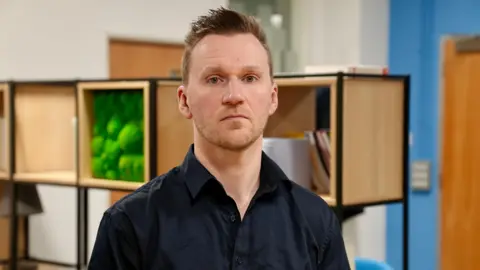
Whittaker said it was no surprise Morgan wanted to emulate Rudakubana, adding attackers “are looking to copy what has already happened before”.
“For most lone actor terrorists, infamy is very often what they want to gain from what they’re doing,” he said.
“Conducting this sort of attack is something that gives them significance, even if it’s a horrible kind of significance.
“People are looking to be remembered in some way.”
He added: “When there is one really high profile attack there is very often copycat elements that are often used or being planned to be used in other attacks.”
‘Lone attackers’ a huge threat
One focus of the inquiry into the Southport murders was why the Prevent counter-terrorism scheme missed an opportunity to intervene in the life of Rudakubana.
Rudakubana could have been monitored, treated and potentially turned away from violence by the programme, said Lord David Anderson KC, the author of the initial review conducted shortly after the murders.
He said the government programme must change its focus to people obsessed with extreme violence, even if counter-terrorism police find no evidence of an ideological motive.
Teachers warned Prevent officials three times that Rudakubana was obsessed with violence – but on each occasion his case was closed because he did not seem to have a identifiable terrorist motive.
In the year ending 31 March 2025 there were 8,517 people referred to Prevent, the highest number since the programme began in 2015.
Teachers were responsible for the highest proportion of referrals, with the “no ideology” category now accounting for the largest proportion of referrals, at 56%.
Whittaker said there had been a “slow evolution” moving away from group-based extremism to “almost everything now being lone actor attacks”.
He said the nature of the threat posed to society by these lone actors was “stable but really quite dangerous”.
“That creates a huge threat for counter-terror police, because it’s so much more difficult for them to detect,” he said.


