
This post was originally published on this site.
Neil HendersonBBC News, Stratford Magistrates’ Court

Three men have been found guilty of harassing a BBC journalist who presented the podcast series and documentary A Very British Cult.
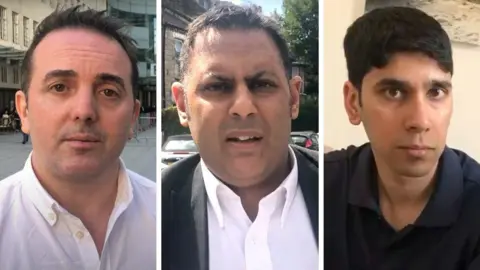
Kristofer Deichler, 47, Jatinder Kamra, 46 and Sukhraj Singh, 39, were all convicted at Stratford Magistrates’ Court of harassment without violence.
All three are members of Lighthouse, which was investigated for the 2023 documentary and podcast fronted by BBC journalist Catrin Nye.
The programmes raised concerns about the group and reported allegations about the way its leadership treated people who tried to leave it.
A district judge sitting at Stratford Magistrates Court heard how the men held demonstrations outside the BBC and on three occasions turned up to Nye’s home, claiming to be delivering a Bible and a letter.
Prosecutor Simren Singh said the group’s complaints about Nye’s programme-making had begun before the episodes were even released.
Judge Susan Holdham heard how attempts by the programme-makers to obtain an interview with the Lighthouse leader, Paul Waugh, had either been met with silence or demands for several hours of live primetime television.
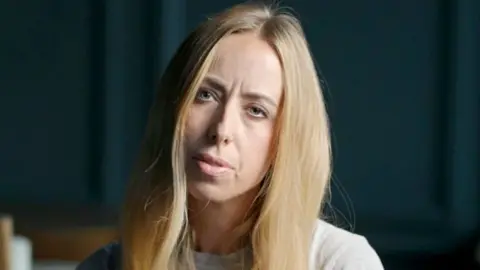
After the broadcast, Lighthouse staged demonstrations outside the BBC’s offices in central London. The group’s members held up placards accusing both the corporation and Nye of shielding child abusers and racists.
The court was also shown a video featuring group members chanting: “Stop paedophilia at the BBC.”
Lighthouse followers were seen shouting at BBC staff, accusing them of being “complicit” and asking “don’t you have any shame?”
The prosecutor told the judge that while these protests were lawful, the men “crossed the line” when they began visiting Nye’s home in the summer of 2024.
It was then that protests became illegal, he said, telling the court it was “revenge” for her journalism.
It emerged in court that Lighthouse had hired a private investigator to trace Nye’s home address.
Members of the group then travelled to her house. They rang the doorbell and recorded themselves on their phones apparently trying to deliver a Bible and a letter.
When there was no response they posted leaflets to neighbours and staged a demonstration nearby.
They returned several days later, at 08:00, waiting until Nye’s partner had left the house with their two small children before calling again. Nye, who was in the house with a security guard, didn’t answer the door.
The men claimed they had been attempting to produce their own documentary in response to A Very British Cult and said they had been acting as “citizen journalists”.
They described the group’s relationship with the BBC and Nye as a “David versus Goliath” struggle.
“The purpose was doorstepping,” Sukhraj Singh told the judge. “The purpose was to interview any of her team. We wanted justice, compensation, reform and truth.”
He told the court he had joined Lighthouse as a mentor and then became an associate partner in 2010.
After the programme’s broadcast, he said many of his clients had cut their ties with him, leaving him without an income. He said he was currently living on benefits.
Asked what justice would look like, he replied: “Justice would be for the BBC to apologise and broadcast the facts to the audience.”
Instead of posting the letter and Bible through the letterbox, the court heard the men instead left an unsigned note saying they would “be back”.
Earlier in the trial, both Nye and her partner gave evidence from behind a screen about the effects the visits had on them and their children.
Nye said Lighthouse had been given “multiple opportunities and deadline extensions to involve themselves in the production of the programme, and these were not responded to”.
She added: “Terrifying people in their neighbourhood and terrifying their children is not how you respond to an organisation.
“They distributed leaflets with my name and picture on it, said the most awful things possible, saying that I destroyed businesses and protected child abusers.”
The couple installed a Ring doorbell and CCTV in their house and Nye told the court how she became unwilling to leave home with her children, even for short trips. She was reduced to a “paranoid” state, the court heard.
The case, which was initially scheduled to last four days, instead involved hearings staggered over several months.
The defendants at first said they were ill. Proceedings were then further delayed when the men lost their legal representation in a dispute with their original solicitors.
Finding all three men guilty, the judge said the visits to the journalist’s house “were intimidatory as well as retaliatory” and that their conduct amounted to harassment.
The three men were bailed and will be sentenced on 2 February.
A BBC spokesperson welcomed the verdicts, adding: “A free and independent press is fundamental to a democratic society, and it is essential that journalists are able to carry out their work without intimidation, harassment or abuse.
“We stand firmly behind our reporter and our journalists’ right to report freely in the public interest.”