

This post was originally published on this site.
UK’s iconic Jodrell Bank telescope faces axe in science cuts
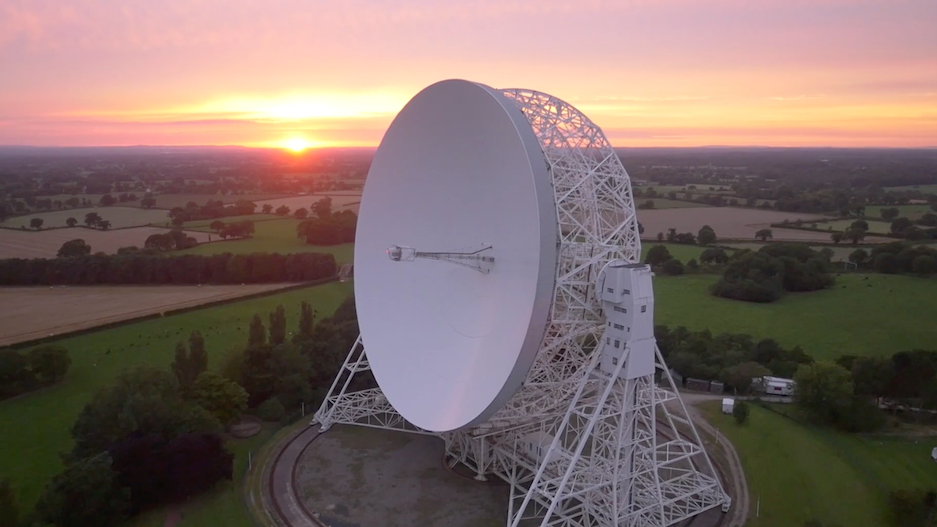 Image source, Jodrell Bank/Manchester University
-
Published
The Jodrell Bank Observatory, which has housed the UK’s largest telescope for nearly 70 years, has lost its funding and could now close, the BBC understands.
The observatory and its network of telescopes have been pivotal to the country’s study of distant galaxies and training future astronomers. Scientists have described the decision as “heartbreaking” and “scientifically misguided”.
All scientific observations at Jodrell are expected to cease on the 1 April 2028 unless alternative funding can be found.
The funding body, the UK Research and Innovation (UKRI) agency, said it had to focus investment on projects that deliver “the greatest long-term impact”.
The site was first established in 1945 and pioneered radio astronomy and the study of galaxies beyond our own.
It was also pivotal during the Cold War, when it was used to monitor Soviet missiles during the height of nuclear tensions between the USSR and Nato powers.
Its contribution to global scientific efforts earned it Unesco World Heritage status in 2019.
But the UKRI, which has an annual budget of just under £10bn, says it has had to cut the observatory’s annual £2.8m budget because planned research costs for physics and the running of its labs had escalated.
The announcement is part of a broader 2.7% cut to astronomy, nuclear and particle physics research over the next four years which will also impact on other projects.
The UK will no longer participate in research at the James Clark Maxwell Telescope in Hawaii, which scientists are using to image supermassive black holes at the centre of galaxies.
UKRI has also cut funding for the UK’s involvement in two instruments on the Extremely Large Telescope which is being built in Chile to search for signs of life on other Earth-like worlds.
And there will be a 20% cut in funding that supports UK participation in the Vera Rubin Telescope in Chile, which is creating the first movie of the Universe – the project was only launched last year.
Prof Michele Dougherty, executive chair of the science and technology branch of UKRI, said: “After listening to our community we have protected core discovery research. However, the situation does require some tough, but necessary, decisions.
“These are never easy choices, but we have made what we feel are the right decisions to bring… a sustainable financial position by 2029/30.”
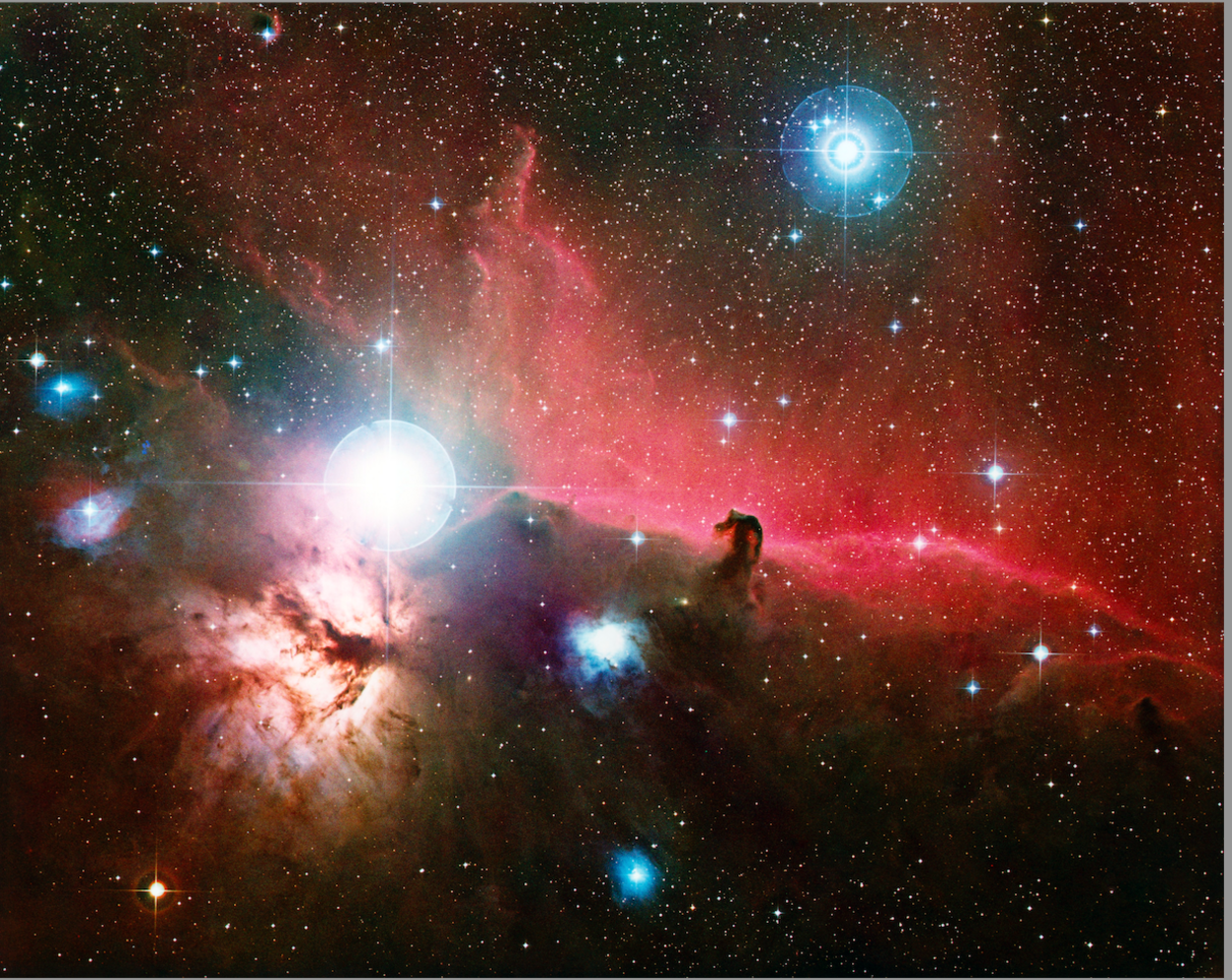 Image source, NASA/ESA
Twenty-eight jobs are at risk at the Jodrell Bank site in Cheshire, but its closure would also affect the work of nearly 3,000 scientists who use it in their research.
Prof Simon Garrington, associate director of the Jodrell Bank Observatory, told BBC News that everyone at Jodrell Bank was “devastated” by the decision.
“It’s not just because of the fantastic science that we do, but Jodrell Bank and its telescope network [have been] a national capability for nearly 70 years and a beacon for science in the north-west [of England], attracting young people into science and engineering careers,” he said.
The importance of the site to science and the community has seen it immortalised in popular science fiction works from the Hitchhiker’s Guide to the Galaxy to Doctor Who.
Prof Garrington said the UKRI’s decision would be challenged, but added that if those discussions failed the leadership team would do all it could to find alternative funding to keep the iconic Lovell Telescope, which is at the heart of the observatory and the network of telescopes it supports, continuing in some form.
“It is a huge hill to climb to try to establish a new way to fund this if UKRI will not fund any of it,” he said.
Scotland’s Astronomer Royal, Prof Catherine Heymans, who was speaking for the UK’s community of astronomers, described the decision by UKRI as “a real act of national self-harm”.
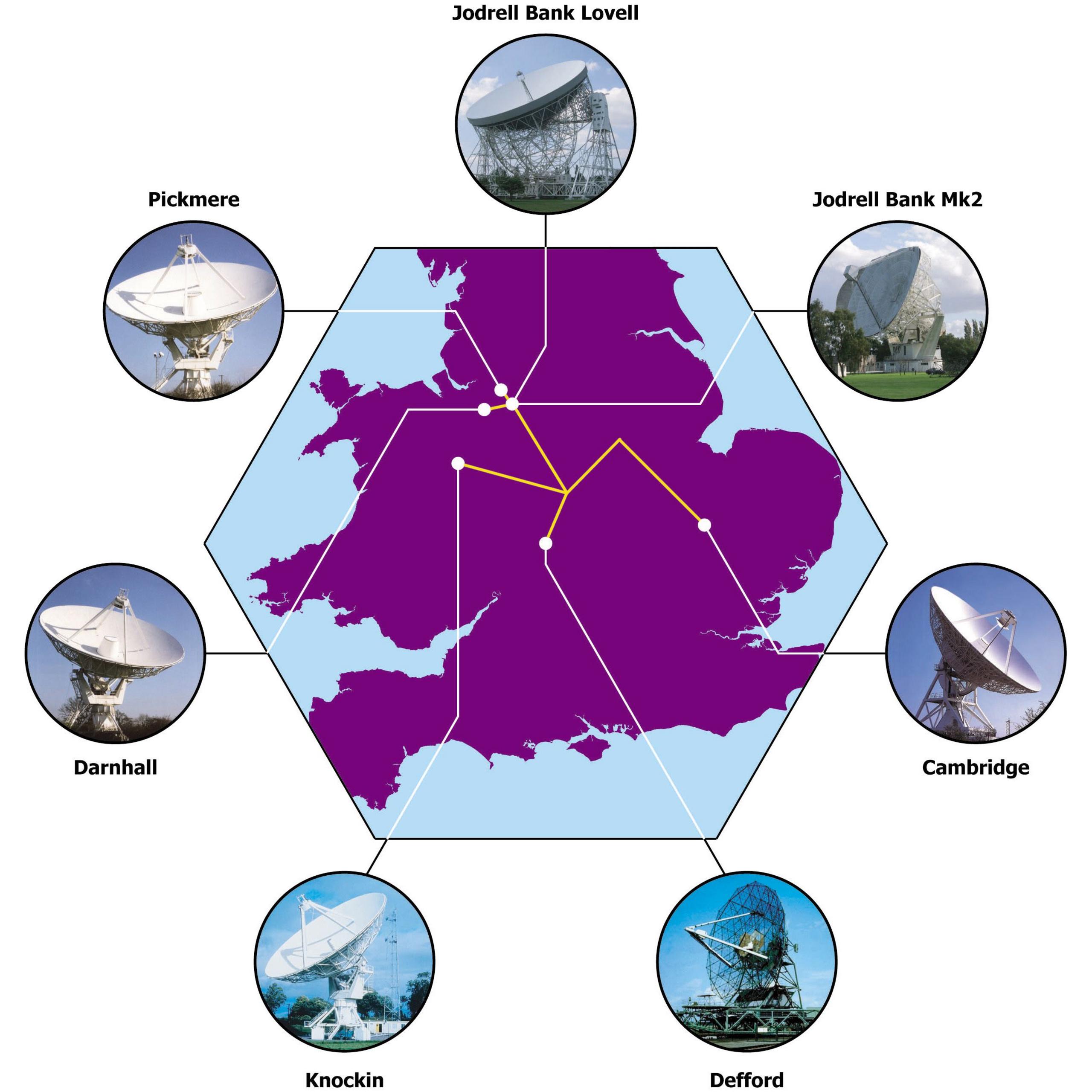 Image source, e-MERLIN
Despite its age, continuous upgrades have kept the Lovell telescope at the cutting edge of astronomical research.
It is the third largest steerable radio telescope in the world, and its science was supercharged when it was connected to six other telescopes across central England, to create the e-Merlin network.
Joined together these UK telescopes can zoom into objects in deep space and see them in incredible detail – with similar resolution to the Hubble space telescope.
The e-Merlin network is being used for research into:
-
How planets and their parent stars form.
-
How galaxies evolve, and the role played by supermassive black holes.
-
The invisible dark matter and dark energy that make up more than 95% of the Universe.
The e-Merlin network is part of a pan-European network of telescopes – without it, images of distant stars and galaxies will be less clear.
Prof Michael Kramer, is executive director of the Max Planck Institute for Radio Astronomy in Bonn, and a highly respected scientist at the University of Manchester.
He told BBC News that he believed the decision by UKRI to be “scientifically, technologically as well as economically short-sighted”.
But another important role of Jodrell Bank Observatory is training UK astronomers in the science of radio astronomy. Astronomers have claimed that the closure of Lovell and the e-Merlin network will mean that Britain will fall behind in a field that was pioneered at Jodrell Bank.
“Internationally, people will look at that and will hardly believe it. You’re cutting off the radio astronomy capability in the country,” Prof Kramer said.
The cut comes at a time when other countries are investing in their own national observatories to prepare for, what many astronomers believe will be, the dawn of a golden age in radio astronomy. This is because of the construction of a new super radio telescope in South Africa and Australia called the Square Kilometre Array (SKA).
-
UK labs hit by cuts despite record science funding
-
Published10 July
-
-
UK’s £8bn research fund faces ‘hard decisions’ as it pauses new grants
-
Published5 February
-
SKA is due to start to come online in five years and in 10 years begin to answer some of the biggest questions in astronomy.
But having been one of the leaders in the field for decades, the UK now risks missing out on this scientific bonanza, according to Prof Philip Diamond, a former head of Jodrell Bank as well as the SKA organisation.
“It’s removing the science capability which is essential for the long-term health of UK radio astronomy and the SKA, so it would have severe impact on the training and career of young researchers.”