
This post was originally published on this site.
Westminster’s time is coming to an end, Welsh, Scottish, Northern Irish leaders say
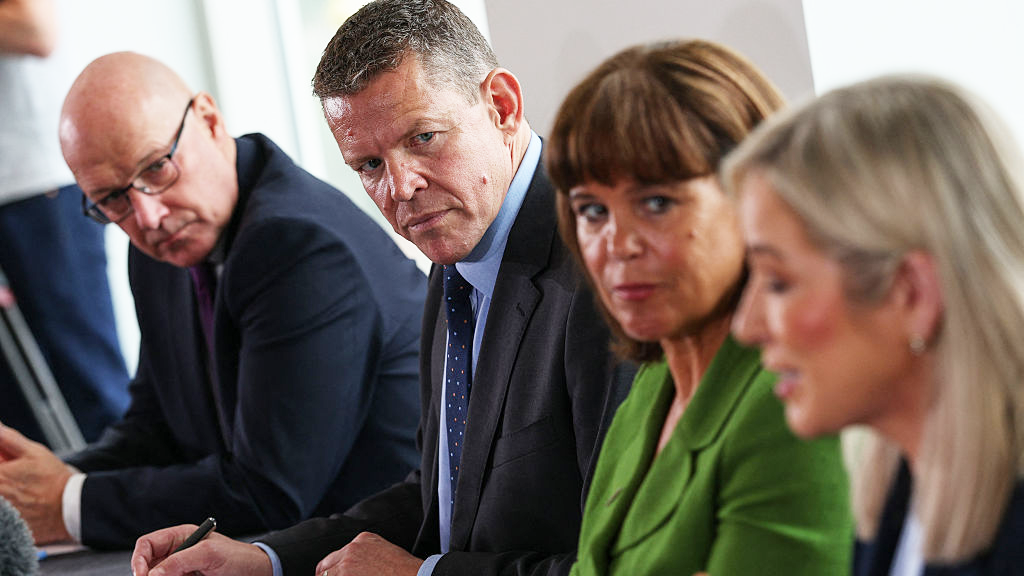 Image source, Getty Images
-
Published
The first ministers of Wales, Scotland and Northern Ireland have declared that “Westminster’s time is coming to an end”, and that the UK government should “prepare” for constitutional change.
The nationalist leaders from Plaid Cymru, Sinn Féin and the SNP – who want their countries to leave the United Kingdom – signed an agreement on Monday which said no Westminster government had the right to “block democracy”.
But while Scotland’s John Swinney and Northern Ireland’s Michelle O’Neill called for referendums at a joint press conference, Wales’ Rhun ap Iorwerth declined to give a timetable for one in his country.
Labour accused Plaid of wanting to use its power “to break up Britain”.
Ap Iorwerth will hold further talks with Swinney in the afternoon in their roles as government leaders, with both men expected to sign an agreement on “future collaboration in areas of shared interest”.
For the first time since devolution began, Wales, Scotland and Northern Ireland all have first ministers who want to leave the United Kingdom.
All three met on Monday as representatives of their parties. Sinn Féin president Mary Lou McDonald also attended.
The memorandum of understanding said: “For people watching across these islands – for people watching around the world – there could be no clearer sign that Westminster’s time is coming to an end.
“No Westminster government has the right to block democracy or undermine the principle that our people will decide their own future.
“We recognise that our parties have different constitutional positions and that each nation will determine its own future in its own way and in its own time.”
-
‘Pivotal moment’ as Swinney attends leaders summit
-
Published7 hours ago
-
-
Little-Pengelly criticises O’Neill as nationalist first ministers to meet
-
Published52 minutes ago
-
-
A united Ireland would be ‘fantastic’ says Trump during Irish visit
-
Published1 day ago
-
Plaid has ruled out an independence referendum before the next Senedd election in 2030.
At the press conference, Ap Iorwerth said there was a “growing recognition that Westminster is not working” and “power genuinely needs to be brought closer to people and communities”.
“Wales should have the power, the resources, the fair treatment we need as a nation to build the future our people deserve,” he said.
SNP leader Swinney said Monday was a “pivotal moment in the constitutional journey of the United Kingdom”.
He said the elections last May for each nation created a situation with first ministers who believe “their countries should decide their own future”.
“That principle of self-determination in an alienable right,” he said.
Sinn Féin’s McDonald described Monday’s meeting was “historic”, saying: “We have the right to referendum. We have the right to decide our future.
“We will not accept or tolerate any prime minister telling us that right is off the table.”
Northern Ireland’s first minister O’Neill said all three nations were “distinctively different” and had their own priorities.
But she said the “common cause here is that Westminster does not and will never serve our people well”.
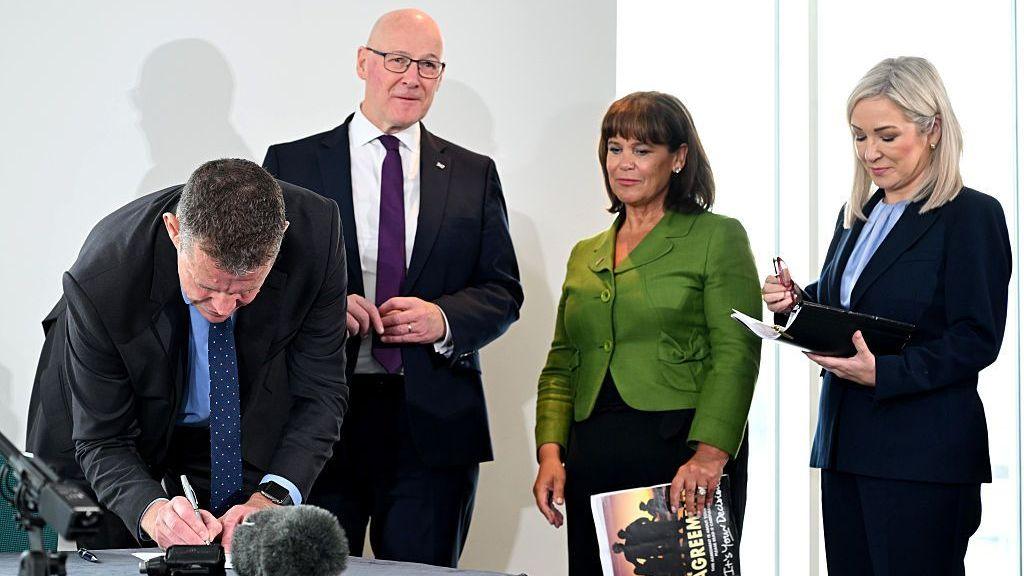 Image source, Getty Images
Asked by BBC Wales to clarify what the memorandum of understanding meant for Wales, and whether it meant asking Westminster not to block a Welsh independence referendum, ap Iorwerth said it was “up to the people of Wales to decide its own future”.
Pressed further, he said: “You know I prefer to leave the question of a timetable in the hands of the people of Wales.”
He added: “The timescale will be set by the people of Wales when they are persuaded. My job is to persuade.”
The Welsh government does not have the power to hold such a referendum, but ap Iorwerth told the press conference he wanted to see that devolved.
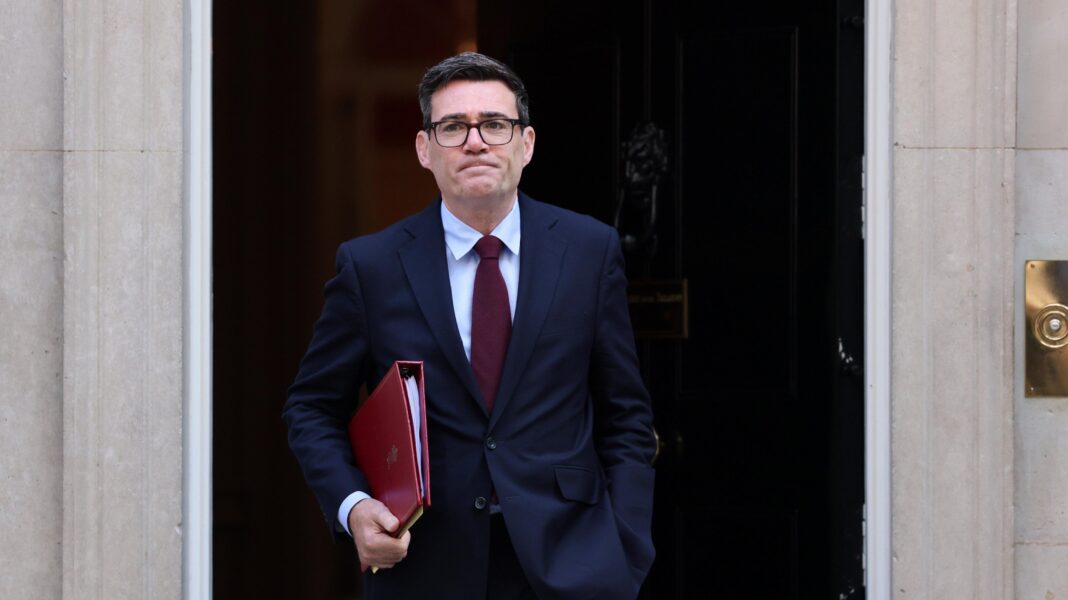
During Prime Minister’s Questions on Wednesday, Andy Burnham appeared to indicate a second referendum could be held in Scotland if there was clear public support for a vote.
He compared the situation to the conditions for a border poll in Northern Ireland, explaining the Good Friday Agreement made clear a poll would be “considered by the Northern Ireland secretary when there is a clear consensus in the country, when public opinion has changed to the point where the call has to be considered”.
“I would say that it is exactly the same situation in Scotland,” he added.
The apparent softening in tone was welcomed by Swinney before Burnham clarified that another Scottish referendum remained “off limits”.
A referendum on Scottish independence in September 2014 saw the country vote to remain part of the UK by a margin of 55% to 45%.
But the dynamics in Wales are different from those in Scotland.
Ap Iorwerth, who was appointed the first non-Labour first minister of Wales after May’s Senedd election, had ruled out pushing for a referendum on Welsh independence during his party’s first term in government.
His government intends to set up a national commission to “lay the foundations” for future plans for Welsh independence.
In the meantime, Welsh ministers are seeking extra powers to be transferred to Wales, including over policing and youth justice – which Burnham has said he is “open” to the idea of.
In Northern Ireland, the first and deputy first minister have identical powers and responsibilities and the Democratic Unionist Party’s (DUP) Emma Little-Pengelly is the deputy first minister.
Little-Pengelly criticised O’Neill for attending Monday’s talks.
The UK government said: “The prime minister is committed to delivering change across all four nations of the United Kingdom and believes strongly in the union.”
The talks are likely to cover the way the devolved nations are funded by the UK government.
Welsh ministers have long called for the Barnett funding formula to be reformed, claiming it disadvantages Wales.
However, it is argued Scotland does well from the formula.
Before he became prime minister, Burnham made the case for change, but on his recent visit to Wales he played down the prospect of reform.
The devolved leaders will meet the prime minister next month.
Labour leader in Wales, Ken Skates, said: “Plaid have given people nothing since the election.
“They clearly want to use power to break up Britain, weaken Wales and spend their time obsessing over more powers for their politicians.”
Welsh Conservative Senedd leader Darren Millar said: “Instead of obsessing about independence, the first minister should be focused on dealing with the crisis engulfing the Welsh NHS and the declining standards in Welsh schools.”
Dan Thomas, Reform UK’s Welsh leader, said: “The first minister can’t get a grip of NHS waiting lists or our education system, but apparently has time to tell us what we all know. That he wants the break up the UK.”

Get in touch
Do you have any comments or questions about this story?
More top stories
-
-
Published2 days ago

-
-
-
Published2 days ago

-
-
-
Published1 day ago

-