
This post was originally published on this site.
Why has Farage resigned and what happens next?
-
Published
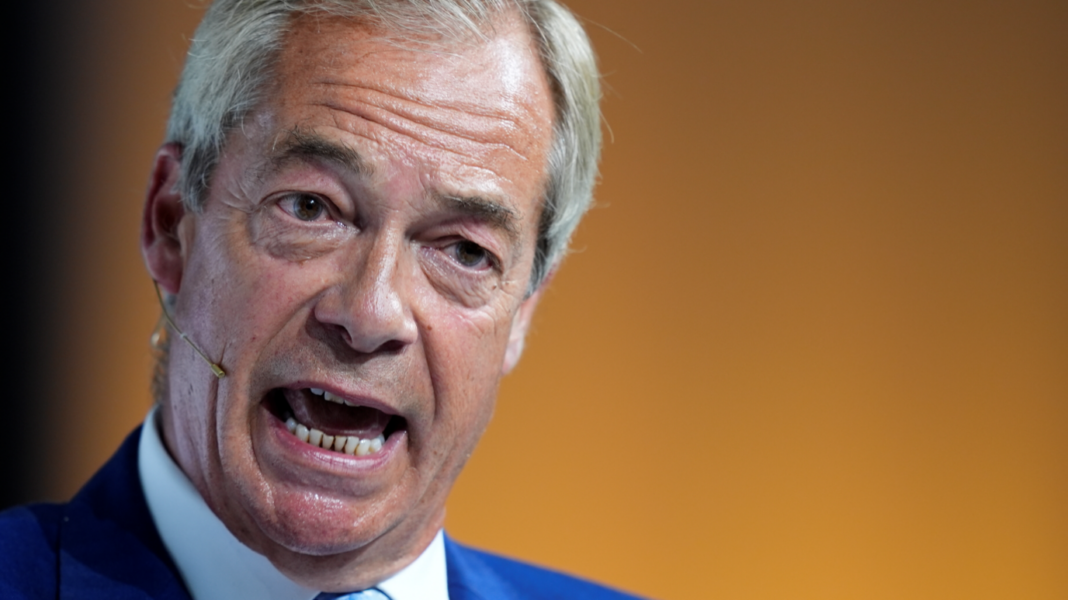
Reform UK leader Nigel Farage has said he is quitting as MP for Clacton in order to stand in the subsequent by-election, which he argued would vindicate him following questions over his financial arrangements.
An investigation by the parliamentary watchdog into the £5m gift received by Farage will be suspended during the by-election but could be resumed if he is voted back into Parliament.
Why has Farage resigned?
In a 20-minute video statement, Farage said he was standing down in order to trigger a “people versus the establishment by-election” in his Essex constituency.
He said he wanted to be “judged” by the people of Clacton rather than the media, who he accused of conducting a “pile-on”.
He also attacked the Labour government for trying to “stop Reform” by changing the rules on donations.
His decision to stand down comes as he faces intense scrutiny over money and support he has received, but not declared to Parliament.
Since May, the Reform UK leader has been under investigation from Parliament’s standards commissioner after not declaring a £5m gift he received from a billionaire Reform UK donor before his election.
Now opposition parties are calling for a further parliamentary probe, after reports he did not disclose support provided by a different political ally.
Farage argues that he was not obliged to declare any of the benefits under Commons rules, and has done nothing wrong.
What happens now?
A by-election will take place between 21 and 27 working days after the parliamentary formality of issuing the writ takes place.
Senior Reform sources are making it clear that they want to initiate that process as soon as possible, meaning a by-election is likely to take place in August.
The Conservatives, Labour, Restore Britain and the Lib Dems have ruled out standing candidates against Farage, in an effective boycott by his main opponents.
Prime Minister and Labour leader Sir Keir Starmer accused Farage of a “desperate stunt”.
Conservative Party leader Kemi Badenoch likened the resignation to a “hissy fit” and Liberal Democrat leader Sir Ed Davey has urged all parties to “stand aside” rather than participate in “Farage’s vanity project”.
Green Party leader Zack Polanski also labelled the move “a stunt”. A party spokesperson has said it will be up to local members whether to stand a candidate.
Rupert Lowe – leader of Restore – said the “people of Clacton do not need a media circus”.
However, he said his party would join a second by-election – something that could potentially take place after the standards investigation concludes its inquiry.
What did Farage receive?
The Reform UK leader hit the headlines earlier this year after it emerged he had received £5m from Christopher Harborne, a Thailand-based British cryptocurrency investor, in April 2024, before he entered Parliament.
Harborne has donated £15m to Reform since the start of last year, making him one of the party’s most important financial backers.
Over the weekend, The Sunday Times said Farage had also received support ahead of the election from George Cottrell, a longstanding ally who was jailed for eight months in the US in 2017 after pleading guilty to a charge of wire fraud.
This reportedly included paying for staff who provided Farage’s security and worked on his social media content.
According to the newspaper, Farage also used a property near Buckingham Palace rented by Cottrell.
Why does it matter?
Parliament’s rulebook says newly-elected MPs have to declare gifts or benefits, including accommodation, received in the 12 months before their election that relate to their “parliamentary or political activities”.
However, there is an exemption for gift and benefits that are “purely personal”.
The guidelines say MPs should consider “both the possible motive of the giver and the use to which the gift is to be put” when deciding whether to make a declaration.
“If there is any doubt, the benefit should be registered,” the rulebook adds.
MPs can seek advice from parliamentary authorities about what to register. If they provide adequate information and follow the advice they receive, they cannot be found in breach of the rules.
What does Farage say?
When he became an MP, Farage registered a £9,253 trip to Belgium donated by Cottrell in April 2024, before the election. He went on to register a £15,276 donation from Cottrell for a US domestic flight in December 2024.
However, he has not declared any further support from Cottrell, or the £5m he received from Harborne, arguing he was not required to do so under the rules.
In interviews towards the end of June, the Reform UK leader said he had chosen to earmark the £5m sum from Harborne for his future security costs, arguing he would require protection “for the rest of my life”.
However, he stressed the gift was “unconditional” and how he spends it was “entirely up to me”. Speaking to ITV, he said he was yet to spend the money.
In an interview after the Sunday Times story was published, Reform Treasury spokesman Robert Jenrick said Cottrell had contributed towards Farage’s staffing and security costs before he was an MP.
“You’re allowed to accept a gift, support, whatever you want to call it, from a personal friend before you’re a Member of Parliament if it’s in a purely personal capacity,” he added.
Farage is yet to face media questions about support provided by Cottrell detailed in the Sunday Times report. In a statement, he said he had “followed the rules” and was the victim of an “establishment hit job”.
Lawyers for Cottrell say he disputes “allegations and assertions” in the Sunday Times report, and he was reviewing the matter with legal representatives.
What was the parliamentary watchdog investigating?
In May, Parliament’s standards commissioner, Daniel Greenberg, opened an investigation into whether Farage broke Commons rules by not declaring the £5m from Harborne.
That probe will be paused once the by-election begins but could be reopened if Farage is voted back into Parliament.
Ahead of Farage’s resignation, opposition parties had called on Greenberg to also investigate whether any of the support reportedly given by Cottrell should have been registered too.
The Liberal Democrats have asked him to specify whether this could happen as part of the existing investigation, or as part of a separate inquiry.
If Greenberg resumes the investigation and decides that Farage broke Commons rules by failing to register any financial support, he has two options.
If the failure to declare is found to be minor, he could ask him to update his entry without a punishment.
This happened earlier this year, when he found Farage had failed to declare £384,000 in financial interests he had received since becoming an MP within the required 28-day limit.
Alternatively, he could recommend a sanction, which would have to be considered by the Commons Standards Committee and approved by the entire House of Commons to come into effect.
The most serious sanction available to Greenberg is a suspension from the Commons.
Any suspension longer than 10 days would lead to a vote in Farage’s Clacton seat that would see voters decide whether to trigger another by-election.