
This post was originally published on this site.
E-bike and e-scooter battery fires cause of 18 deaths and nearly 700 injuries
-
Published
Eighteen people have died and nearly 700 have been injured in fires caused by e-bikes and e-scooters, new data shows.
Fatalities recorded by fire and rescue services across the UK from these fires include cases where people became trapped inside burning homes, died while trying to escape from a fire out of a high window, or from inhaling toxic smoke.
More than 2,000 fires were started by e-bikes, e-scooters or their batteries between 2019 and 2025, Freedom of Information requests made by BBC Verify show.
The number of incidents has risen year-on-year and nearly half the fires started in homes or garages, the data shows.
London Fire Brigade Assistant Commissioner Pam Oparaocha told BBC Verify the service is “increasingly concerned by the significant fire risk” some of these vehicles can pose.
“From our investigations we know many of the fires we’ve attended have involved second-hand vehicles or the bike has been modified using parts bought online. We urge people to be extremely careful about where they buy their e-bike or e-scooter from,” she added.
Footage of fires caused by e-bikes and e-scooters show how quickly the vehicles can start smoking and then apparently explode, causing blazes that spread within minutes.
To play this video you need to enable JavaScript in your browser.
This video can not be played
An average of 153,000 new e-bikes have been added to the UK’s roads each year since 2020, according to cycling industry trade body, the Bicycle Association.
The cost of a new e-bike ranges from around £400 to £4,000 in high street retailers such as Halfords or Decathlon, while second-hand vehicles and unregulated e-bike conversion kits can be found on online marketplaces for as little as £150.
Any lithium-ion battery sold in the UK for these vehicles must meet safety requirements set out by the government that ensures the batteries can be charged safely, do not overheat and are protected from damage.
The government’s “Buy Safe, Be Safe” campaign, external states that while millions of people use these vehicles safely every day, the risk of fire can increase if they don’t meet safety rules, are damaged, modified or used with an incompatible charger. It also says people should look for UKCE or CE product safety marks when buying an e-bike or e-scooter.
The number of fires caused by e-bike and e-scooter batteries has increased dramatically from 32 in 2019 to 605 in 2025, according to the data gathered by BBC Verify.
The highest numbers of incidents were recorded by fire and rescue services in urban areas, with 793 recorded in London over the seven year period, 128 in Manchester, 93 in West Yorkshire, 74 in Merseyside and 73 in Avon.
Lithium-ion batteries are useful because they store a huge amount of energy in a small space, Dr Simon Jones at the University of Warwick, who led research into the safety of e-bikes and e-scooter batteries for the Office for Product and Safety Standards, told BBC Verify.
“However, if these batteries are faulty, over-charged or damaged, the stored energy may be released rapidly in the form of flame jets and burning projectiles,” he said.
“If this occurs in the home this is likely to result in a fast spreading fire that can engulf a room in seconds and block escape routes, trapping people inside. These fires also release toxic fumes from the batteries that pose a serious risk to health.”
Jahmell Campbell, 24, from London, said when his e-scooter caught fire “it was the loudest explosion I’d ever heard”.
He was at his grandmother’s home in Hither Green in March last year when the vehicle burst into flames by the front door.
“The only way out was through the window, so I jumped straight out,” he said.
Jahmell said he ran to the back of the building, and realised his grandmother was trapped. He made his father throw a blanket down for her to escape.
“My dad had to throw her out the window and we had to catch her,” he said.
His grandmother suffered minor injuries after hitting a windowsill on the way down.
“Somehow we all made it out with our lives intact, which honestly shouldn’t have happened,” he added.
Six fire engines attended to fight the blaze. The flat, where his grandmother had lived for over 20 years, was destroyed.
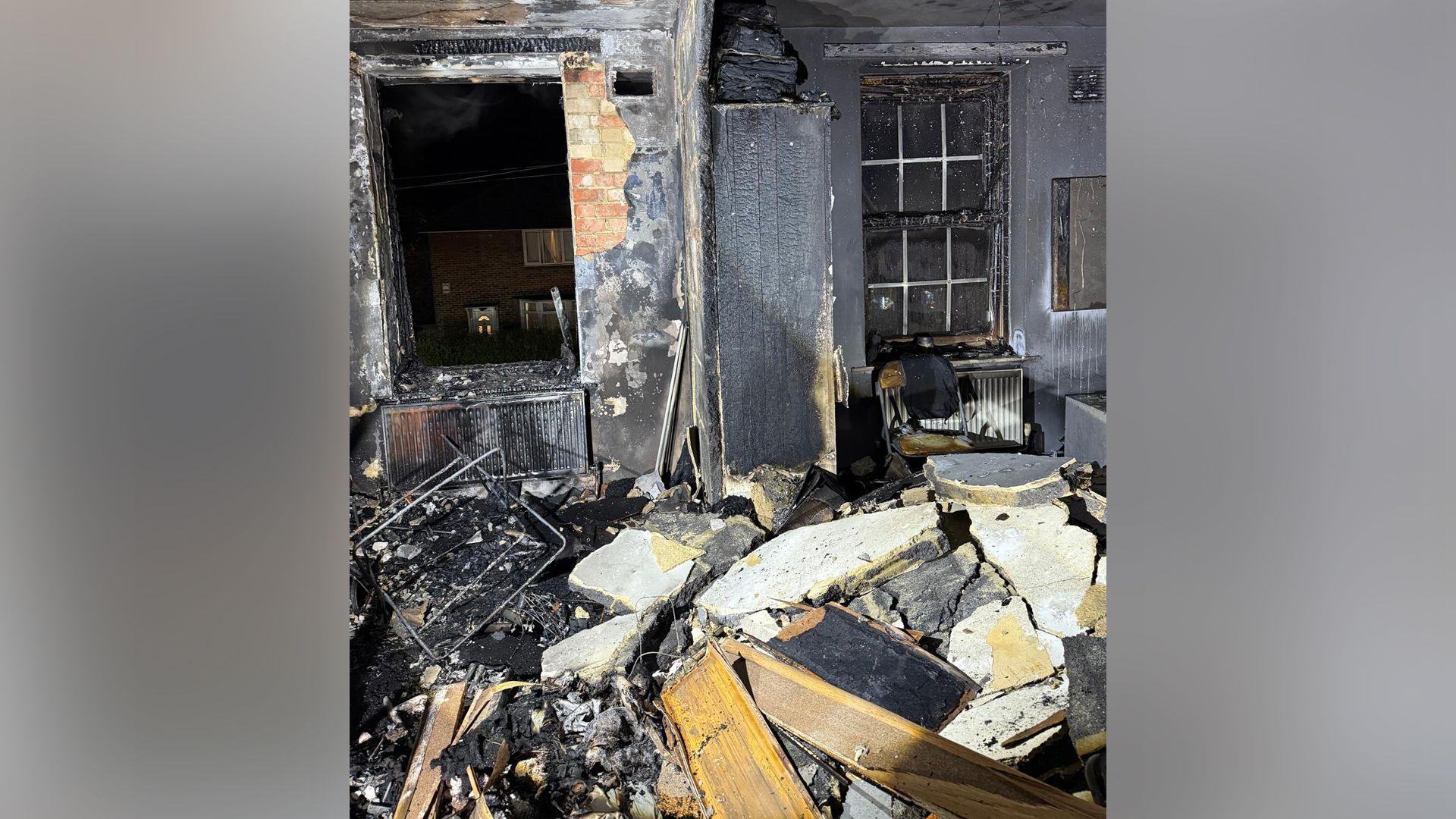 Image source, London Fire Brigade
Several coroners have warned about the dangers posed by these batteries and have issued at least five Prevention of Future Deaths reports since 2023, with recommendations to improve public safety.
Among those cases was eight-year-old Luke Albiston-O’Donnell from Birkenhead, who died after inhaling toxic fumes from a house fire caused by an e-bike battery on charge in 2024. Following an inquest, coroner Anita Bhardwaj warned: “The general public do not appreciate the life-threatening risks involved with having lithium-ion batteries, from electronic bikes in this case, stored in domestic properties.”
Mohsin Janjua, a 28-year-old man from Bradford, died in similar circumstances in 2023. Later investigations found a “catastrophic failure” of the battery in an e-bike conversion kit purchased online from China was “more likely than not” responsible for the fire.
Other coroners linked fatalities to e-bikes and e-scooters that did not conform to UK safety standards.
Steve Garidis from the Bicycle Association said retailers have invested in developing safe and legal e-bikes but this can be “undermined by illegal and unsafe products often sold through online marketplaces to unsuspecting consumers”.
The Bicycle Association and the Association of Cycle Traders run an “E-Bike Positive” scheme, external to help consumers identify distributors, retailers and manufacturers that have met current safety standards.
They have also called on the government to crack down on the sale of unsafe e-bikes through online marketplaces and tackle the demand for cheap e-bikes and scooters driven by the gig economy.
A government spokesperson said: “Unsafe e-bike and e-scooter batteries can pose a serious fire risk, which is why we are taking action to protect consumers.
“This includes strengthening the responsibilities of online marketplaces to better protect consumers, working with local authorities to identify and remove unsafe products from sale, and helping people make informed choices through our ‘Buy Safe, Be Safe’ campaign.”
Methodology
BBC Verify sent Freedom of Information requests to all 49 fire and rescue services in the UK, asking for data on fires where the source of ignition was recorded as an e-bike or e-scooter, including associated batteries. Forty-one provided comparable responses. Greater Manchester and West Sussex were unable to provide data on casualties, fatalities, and the number of fires that happened in dwellings.
While some fire and rescue services log e-bikes and e-scooters as a distinct category, others provided data by performing a text search for “e-bike”, “e-scooter” and similar keywords. While this provides a reasonable estimate of incidents, some reports may not have been picked up in this search if e-bikes or e-scooters were not mentioned directly.
In analysing this data, BBC Verify removed any clear incidents of arson, as well as any incidents that related to mobility scooters.


Get in touch
Are you affected by issues covered in this story? Share your experiences.