
This post was originally published on this site.
If you want to boost your organization’s efficiency and quality, you need to understand essential business process improvement methods. Start by identifying key areas where defects or waste occur. Then, explore strategies like Six Sigma to reduce errors, or Lean Manufacturing to eliminate unnecessary steps. Don’t forget about tools like the PDCA cycle and 5 Whys analysis for effective problem-solving. Each method offers practical steps to enhance your operations, but which one will you tackle first?
Key Takeaways
- Business process improvement enhances efficiency, reduces costs, and fosters a culture of continuous improvement within organizations.
- Six Sigma employs the DMAIC framework to minimize defects and empower data-driven decision-making across various industries.
- Lean Manufacturing focuses on waste elimination and value delivery by identifying customer needs and employing value stream mapping.
- The Kaizen approach emphasizes small, incremental changes involving all employees to cultivate ongoing learning and adaptation.
- Utilizing tools like the PDCA cycle and 5 Whys analysis helps in systematically identifying issues and implementing effective solutions.
What Is Process Improvement and Why It Matters

Process improvement is vital for any organization looking to enhance efficiency and quality. By systematically identifying and analyzing inefficiencies, you can implement effective process improvement solutions that reduce costs and improve overall performance.
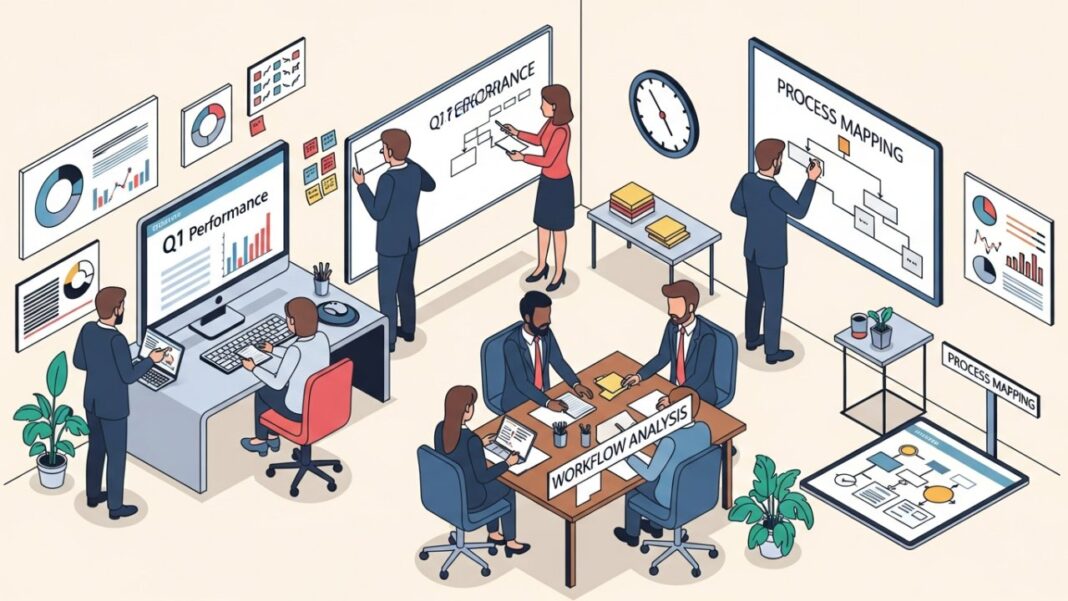
Start by mapping your workflows; this helps pinpoint bottlenecks and redundancies.
Next, consider quality improvement methodologies like Lean or Six Sigma, which provide structured frameworks for eliminating waste. Use data-driven decision-making to guarantee that your changes lead to measurable outcomes, such as increased productivity and lower error rates.
Fostering a culture of continuous improvement is essential. Encourage feedback from your team and adapt processes based on their insights and changing market conditions.
Six Sigma: Reducing Defects and Improving Quality

When aiming to improve quality and reduce defects, Six Sigma stands out as a powerful methodology. Developed by Motorola in 1986, it targets near perfection by minimizing defects to fewer than 3.4 per million opportunities.
To implement Six Sigma effectively, follow the DMAIC framework: Define the problem, Measure current performance, Analyze data to identify root causes, Improve processes based on findings, and Control solutions to sustain gains.
This data-driven approach empowers you to make informed decisions and target specific areas for improvement. Many Medtronic companies have seen significant benefits; for example, a medical device manufacturer achieved a 40% reduction in defects, which led to a 25% boost in customer satisfaction.
You can apply Six Sigma across various industries, proving its versatility in quality improvement methods. By adopting this structured approach, you’ll enhance operational efficiency and drive meaningful change within your organization.
Explore Total Quality Management (TQM) for Continuous Improvement
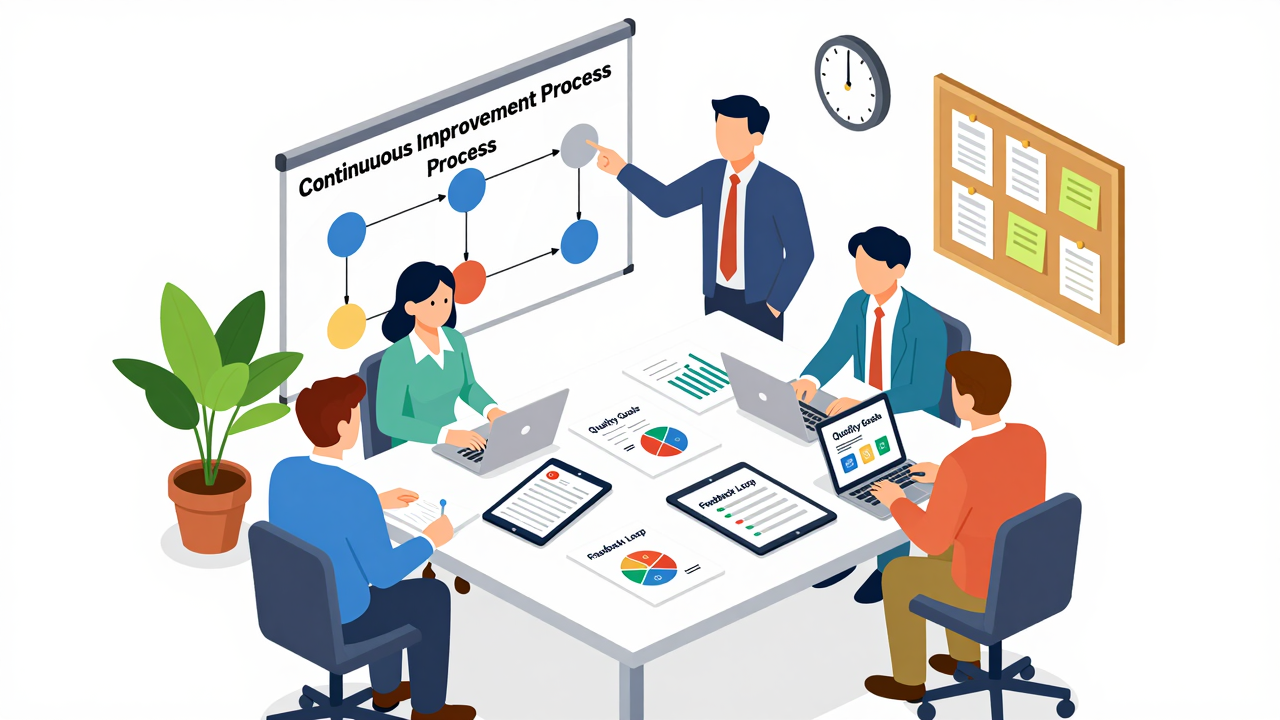
Total Quality Management (TQM) is a powerful approach that can transform your organization by focusing on continuous improvement.
By involving every team member in quality efforts and using data to make decisions, you can enhance customer satisfaction and operational efficiency.
Implementing TQM requires understanding its core principles and adopting strategies like the PDCA cycle, which guides your team in planning and executing quality initiatives effectively.
Principles of TQM
Effective quality management hinges on the principles of Total Quality Management (TQM), which focus on enhancing customer satisfaction through continuous improvement.
To adopt TQM successfully, consider these key components:
- Customer Focus: Always prioritize customer needs and feedback.
- Employee Involvement: Engage all team members in identifying and solving quality issues.
- Data-Driven Decision-Making: Use data to inform your choices and track performance.
- Continuous Improvement Methods: Implement process excellence tools, like the PDCA cycle, to facilitate ongoing enhancements.
TQM Implementation Strategies
Implementing TQM effectively requires a structured approach that focuses on key strategies to enhance continuous improvement.
Start by defining your process steps clearly, so everyone understands their roles. Use process improvement tools and techniques, like the PDCA cycle, to monitor performance and make necessary adjustments.
Emphasize data-driven decision-making; collect and analyze metrics to identify areas for enhancement. Adopt improvement methodologies that align with the ISO 9000 standards, ensuring you meet industry benchmarks.
Foster a culture of teamwork and open communication, aligning employee goals with your organization’s quality objectives.
Lean Manufacturing: Eliminating Waste for Enhanced Efficiency
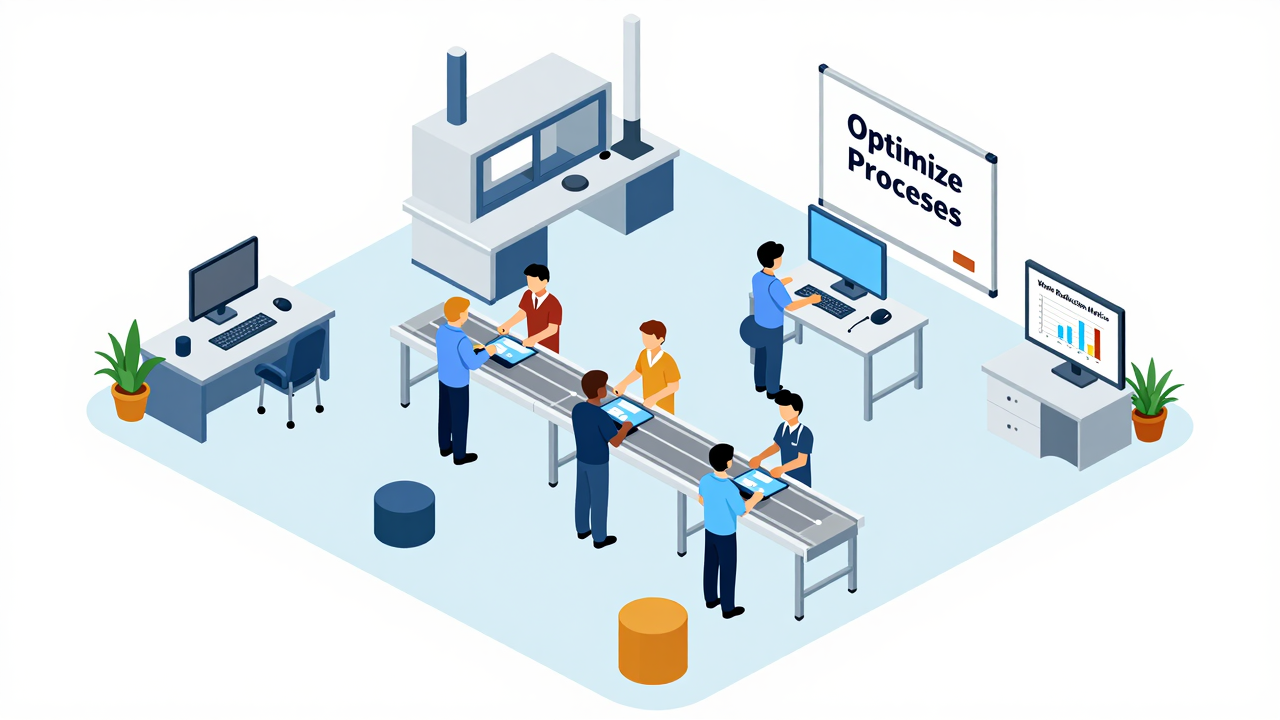
Lean Manufacturing helps you eliminate waste and boost efficiency in your production processes. Originating from Toyota, this methodology focuses on enhancing value delivery.
To effectively implement lean manufacturing, consider these four steps:
- Identify Value: Understand what your customers truly need.
- Value Stream Mapping: Visualize workflows to spot inefficiencies.
- Create Flow: Guarantee that production processes are streamlined without interruptions.
- Establish Pull: Produce only what’s needed, reducing excess inventory.
How Continuous Improvement (Kaizen) Drives Incremental Change

Continuous Improvement, or Kaizen, focuses on making small, incremental changes that can lead to big improvements over time.
By targeting waste through Muda, Mura, and Muri, you can streamline processes and enhance efficiency.
Engaging all employees in this effort fosters a culture of ownership, making everyone a part of the solution and driving sustainable growth.
Philosophy Of Incremental Change
To enhance your organization’s efficiency, consider adopting the philosophy of incremental change through Continuous Improvement, known as Kaizen. This approach emphasizes small, consistent changes that can lead to significant improvements over time.
It encourages everyone in your organization to identify areas for enhancement, fostering collaboration. Here are four key steps to implement Kaizen effectively:
- Engage Employees: Involve all team members in the improvement process.
- Identify Waste: Focus on eliminating Muda, Mura, and Muri to streamline operations.
- Implement Changes: Apply continuous process improvement examples to real situations.
- Measure Results: Regularly assess the impact of changes using models of continuous improvement.
With Kaizen, you’ll cultivate a culture of ongoing learning and adaptation, essential for staying competitive.
2. Waste Elimination Strategies
Effective waste elimination strategies are essential for boosting your organization’s efficiency and productivity. By embracing Continuous Improvement (Kaizen), you can target Muda (waste), Mura (unevenness), and Muri (overburden) in your workflow.
Start by involving all employees in process improvement projects; their insights can drive significant changes. Use tools for process improvement in Six Sigma, like DMAIC (Define, Measure, Analyze, Improve, Control), to systematically tackle waste.
Implement regular Kaizen activities, such as daily stand-up meetings, to assess processes and gather suggestions. These small, incremental changes can lead to measurable results, like reducing production time by 20% and cutting operational costs by 30%.
Commit to continuous evaluation, and watch your efficiency and productivity soar.
3. Employee Engagement Techniques
Engaging employees in the process of continuous improvement isn’t just a nice-to-have; it’s essential for driving meaningful change.
Using effective employee engagement techniques can foster a culture of inclusion, leading to impactful results.
Here are four steps to implement:
- Encourage Idea Sharing: Create a platform where employees can submit suggestions for small changes.
- Regular Training: Offer workshops to enhance skills, which boosts confidence and satisfaction.
- Recognize Contributions: Acknowledge employee input, showing that their ideas matter.
- Monitor Progress: Track the impact of implemented changes to demonstrate improvements in efficiency.
Implementing Plan-Do-Check-Act (PDCA) for Effective Problem Solving

Implement the Plan-Do-Check-Act (PDCA) cycle to tackle problems and drive continuous improvement in your processes.
Start with the “Plan” phase, where you identify a specific problem or opportunity for improvement. Develop a clear action plan that outlines your approach.
Next, move to the “Do” phase, implementing your plan on a small scale to test its effectiveness. This step allows you to make adjustments based on initial feedback.
In the “Check” phase, you’ll evaluate the results against your expected outcomes. Use data to analyze whether the changes led to real improvement.
Finally, in the “Act” phase, standardize the successful changes and plan for further enhancements.
5 Whys Analysis: Uncovering the Root Causes of Process Issues
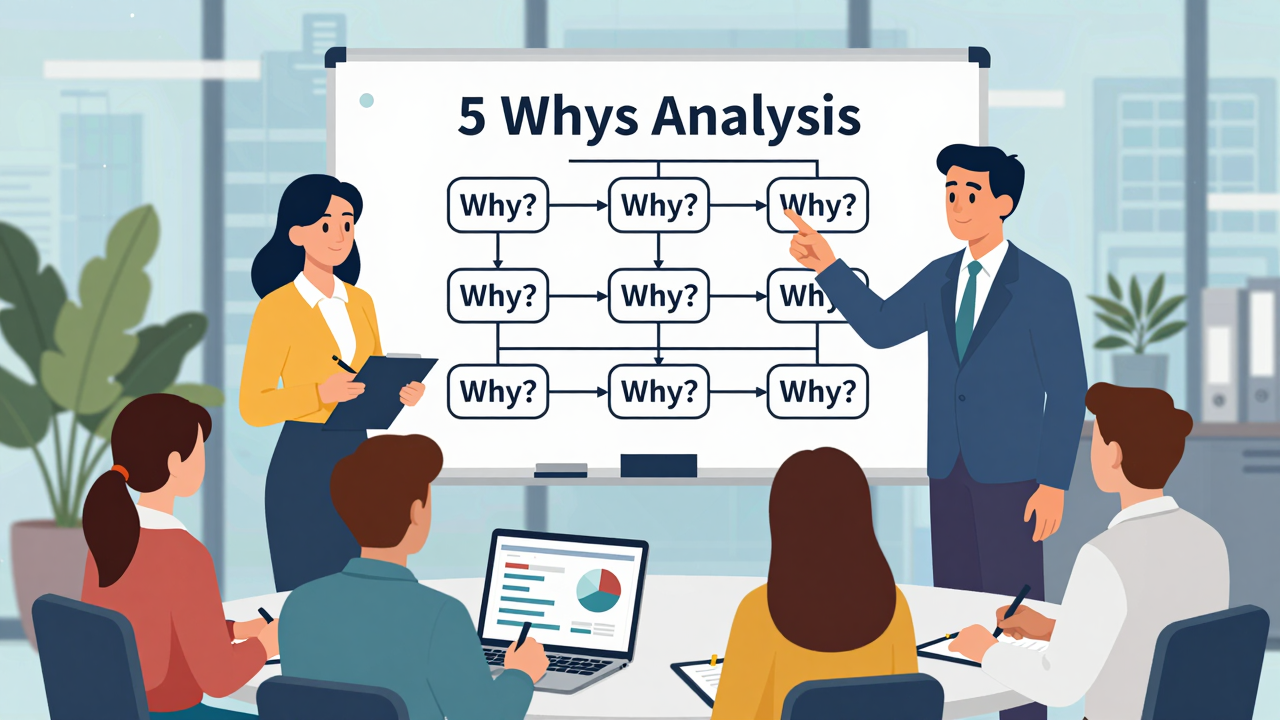
Why do some process issues seem to persist despite your best efforts to fix them? One effective way to uncover the root causes is through the 5 Whys Analysis.
This technique, popularized by Taiichi Ohno at Toyota, encourages you to ask “Why?” repeatedly—typically five times—to dig deeper into problems rather than just treating symptoms.
Here’s how to implement it:
- Identify the issue: Clearly define the problem you’re facing.
- Ask Why: Start questioning why the issue occurred.
- Repeat: Continue asking why for each answer until you reach the root cause.
- Collaborate: Involve team members to gain different perspectives on the problem.
Frequently Asked Questions

What Are the Methods of Improving Business Process?
To improve business processes, you can use several methods. Start with Six Sigma to minimize defects by analyzing data.
Lean Manufacturing helps you reduce waste by identifying non-value-added activities.
Implement Total Quality Management for continuous improvement involving all employees.
Use the PDCA cycle to plan, implement, check, and act on results.
[embedded content]
Finally, adopt Kaizen for ongoing, small improvements that enhance efficiency.
Each method focuses on making your processes more effective and customer-focused.
What Are the 5 Key Elements of Process Improvement?
The five key elements of process improvement are defining the process, measuring performance, analyzing root causes, improving the process, and controlling the new process.
First, outline your current workflow clearly.
Then, assess it using metrics like cycle time and error rates.
Next, identify underlying issues with tools like the 5 Whys.
After that, develop targeted solutions and implement them.
[embedded content]
Finally, set up monitoring to guarantee these improvements remain effective over time.
What Are the 7 Steps of the Improvement Process?
To follow the 7-Step Improvement Process, start by defining the problem and mapping the current workflow.
Next, identify potential causes and gather relevant data.
After that, develop and test solutions to see which ones work best.
Implement the chosen solution, ensuring it fits into existing processes.
Then, monitor the results to check the impact.
[embedded content]
Finally, keep evaluating and adjusting as needed for ongoing improvement, ensuring your changes remain effective over time.
What Are Process Improvement Methods?
Process improvement methods include techniques like Lean, which cuts waste to boost efficiency, and Six Sigma, which focuses on reducing defects using data.
You can implement Total Quality Management by involving your entire team in ongoing improvements, ensuring a customer-first approach.
The PDCA cycle helps you systematically solve problems, while tools like the 5 Whys can uncover root causes of inefficiencies.
Start by identifying issues, then choose the method that best fits your needs.
Conclusion
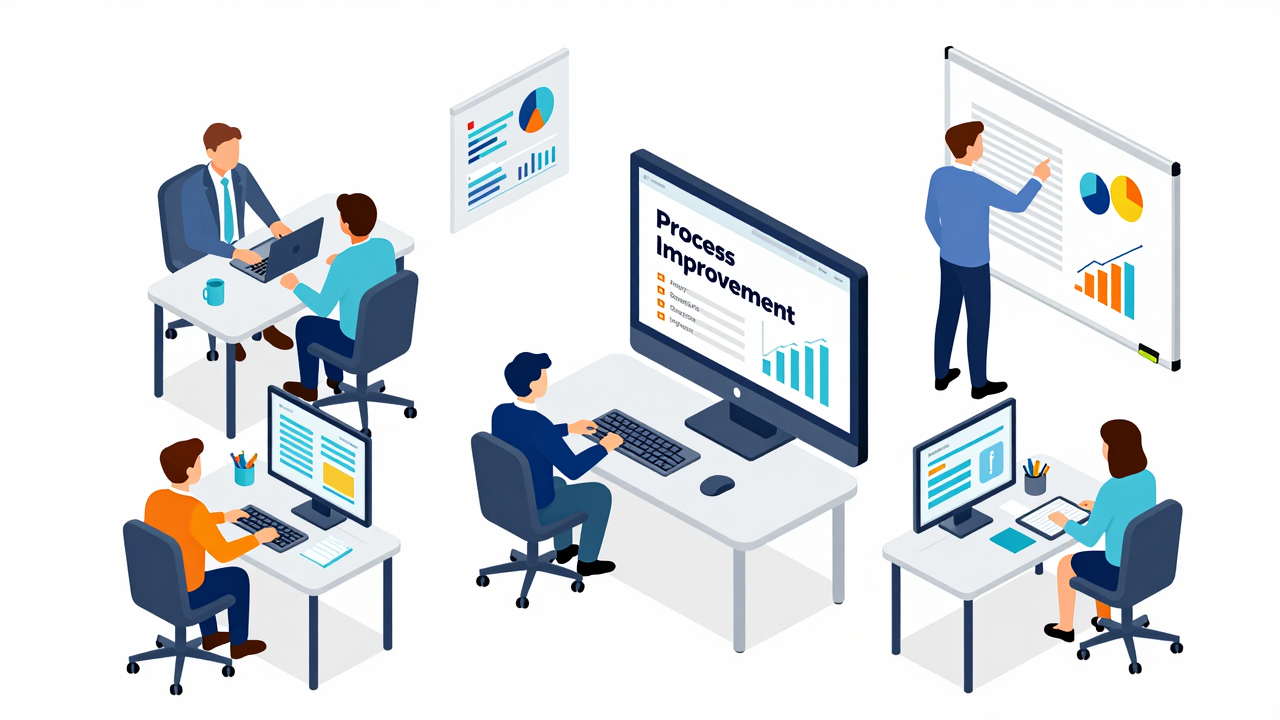
Incorporating these seven business process improvement methods can greatly enhance your organization’s efficiency and quality. Start by identifying areas needing change and apply the appropriate techniques, like Six Sigma for quality control or Lean to cut waste. Use tools like PDCA and the 5 Whys to tackle specific problems. Remember, continuous improvement is a journey. Regularly assess your processes, gather feedback, and adjust as necessary, ensuring your organization remains agile and competitive in a changing landscape.
Image via Google Gemini and Small Business Trends