

Performance reviews are essential for both employee growth and overall business success. You need to prepare by gathering feedback and setting clear objectives. Create a positive space for discussion, and use specific examples to clarify points. Encourage open communication to make the process collaborative. After the review, define actionable goals and guarantee regular follow-ups. By following these steps, you can foster improvement. Let’s explore how to implement each step effectively.
Key Takeaways
- Establish clear performance standards and monitor behaviors throughout the review period for meaningful insights.
- Create a positive feedback environment by encouraging two-way communication and recognizing employee achievements.
- Use specific examples to provide actionable feedback, linking behaviors to outcomes for clarity.
- Schedule regular follow-ups to maintain open communication and adjust goals as necessary.
- Document agreed-upon action steps with timelines to track progress and foster accountability.
Why Performance Reviews Matter

Performance reviews matter because they provide vital feedback that helps you grow and succeed in your role. Regularly scheduled discussions, like a midyear review, guarantee you’re not waiting a year for important insights.
In fact, research shows that 92% of employees want feedback more often, and 70% of professional development comes from continuous feedback.
Using a performance review guide can help you identify your strengths and weaknesses, enabling you to focus on targeted development that aligns with your organization’s goals.
A mid-year performance review can boost your motivation and productivity, especially as engaged employees who receive feedback weekly show a 13% increase in productivity.
How to Get Ready for Performance Reviews
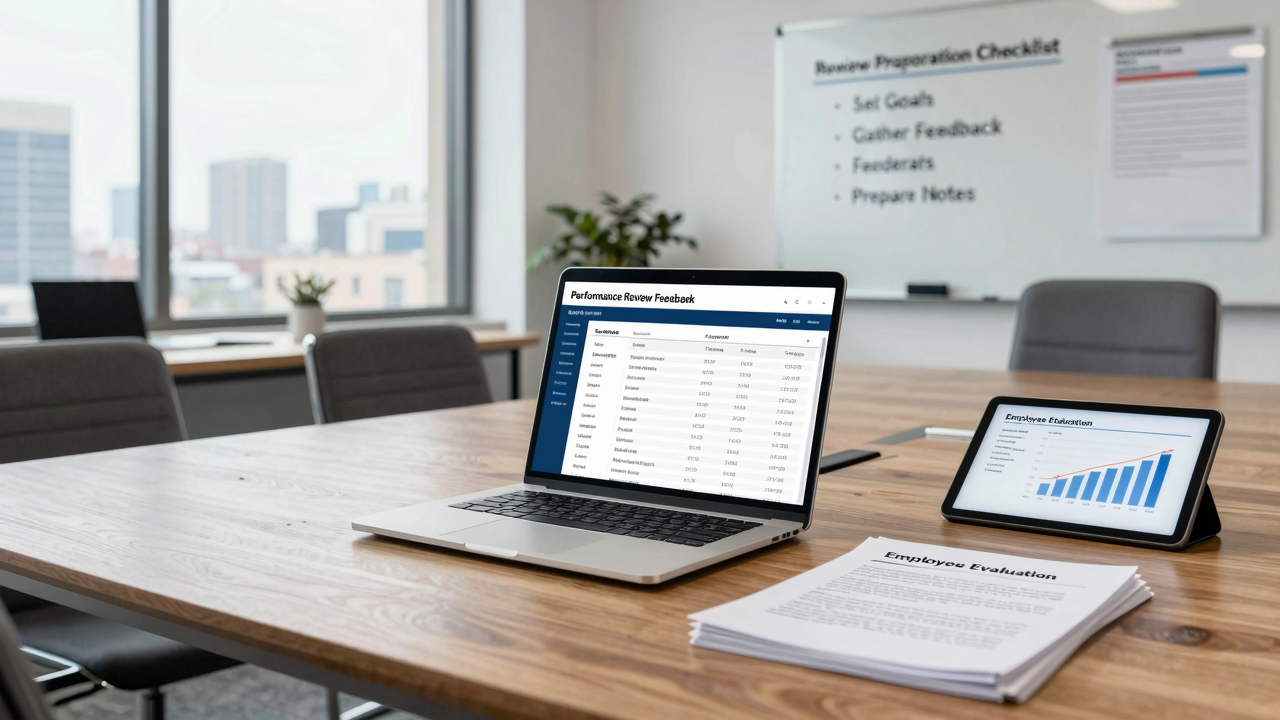
Getting ready for performance reviews involves several key steps that set the stage for productive conversations. First, establish clear performance standards and ethical expectations to guide discussions effectively. Next, allocate sufficient time for meaningful conversations about performance and compensation, making sure both you and the employee are prepared.
Monitor employee behaviors throughout the review period to gather relevant feedback and identify patterns. Utilize performance management systems to collect data and insights, allowing for a thorough assessment of each employee’s contributions. Finally, prepare a checklist of key points and past performance metrics to keep the review focused.
Here’s a quick overview:
| Step | Action | Purpose |
|---|---|---|
| Establish Standards | Define clear expectations | Guide discussions effectively |
| Allocate Time | Schedule adequate review time | Make sure meaningful conversations |
| Monitor Behaviors | Observe performance throughout | Gather relevant feedback |
| Use Performance Systems | Collect data on contributions | Enable thorough assessments |
| Prepare Checklist | List key points and metrics | Focus the review conversation |
Foster a Positive Environment for Feedback

Creating a positive environment for feedback starts with setting a constructive tone during performance reviews. Begin by greeting your employee warmly and expressing your intent to support their growth. This sets a welcoming atmosphere.
Encourage two-way communication; ask open-ended questions to invite their input. This not only builds trust but also makes them feel valued.
Recognize their achievements upfront; acknowledging what they do well boosts morale and reinforces positive behavior. When discussing areas for improvement, be specific and actionable. Help them see how they can grow rather than just pointing out flaws.
Finally, don’t wait for annual reviews to give feedback. Maintain regular dialogue throughout the year. This approach fosters a culture of continuous improvement and keeps employees engaged.
Use Specific Examples for Constructive Feedback

Feedback becomes much more effective when you use specific examples during performance reviews. Instead of saying, “You need to improve your teamwork,” highlight a recent project where collaboration was lacking. For instance, mention how delays occurred because communication fell short. This approach enhances clarity, making your feedback actionable and easier to understand.
Research shows that constructive feedback based on concrete instances can lead to a 39% increase in employee performance over time. By linking behaviors directly to outcomes, you help employees grasp how their actions affect results. Specific feedback reduces ambiguity, allowing them to focus on measurable behaviors rather than vague perceptions.
To maximize impact, guarantee your examples are recent and relevant. This not only fosters improvement but also boosts employee satisfaction and engagement, as 70% of employees appreciate clear, evidence-based critiques.
Using specific examples transforms your performance reviews into powerful tools for growth.
Encourage Open Dialogue and Two-Way Communication

To foster a productive performance review, it’s essential to encourage open dialogue between you and your employee. Start by creating a welcoming atmosphere where both of you can share thoughts honestly.
Ask open-ended questions that invite your employee to express their views on their performance, challenges, and goals. This not only clarifies assumptions but also addresses differing interpretations of performance, a common issue known as the Rashomon effect.
Make certain to actively listen and validate their input; employees who feel heard are 85% less likely to contemplate quitting. Incorporate their feedback into your assessment to enrich the review process.
After the review, maintain regular check-ins to keep communication flowing. These follow-up discussions reinforce accountability and guarantee both of you stay aligned on performance improvement.
Define Actionable Goals and Next Steps After the Review

After your performance review, it’s essential to set clear objectives that everyone can agree on.
Create specific timelines and milestones to track progress, ensuring you stay accountable.
Regularly monitor these goals, and be open to adjustments as needed, so you can stay aligned with both your personal growth and the organization’s success.
Establish Clear Objectives
Establishing clear objectives during performance reviews is essential for aligning your goals with the organization’s expectations. Start by setting SMART goals—specific, measurable, attainable, relevant, and time-bound. This clarity boosts your motivation and direction.
Collaborate with your manager to define these goals, as this fosters ownership and accountability, increasing your engagement. After the review, document the agreed-upon action steps; this creates a reference point for tracking progress.
Regularly revisit these objectives based on feedback to guarantee they stay pertinent, adjusting them as necessary to align with changing business needs. This ongoing dialogue not only keeps you focused but also enhances your performance and contribution to the team’s success.
2. Set Timelines and Milestones
Once you’ve set clear objectives, the next step is to outline specific timelines and milestones to guide your progress.
Establish deadlines for achieving each goal, fostering accountability and tracking. Define milestones that align with your organization’s objectives, so you know what’s expected at each stage.
[embedded content]
Use measurable metrics to evaluate your progress, allowing for adjustments based on your development and feedback. Schedule regular follow-up meetings to assess progress and recalibrate goals as needed, encouraging ongoing dialogue.
Finally, take ownership of your action plan by collaboratively setting timelines and benchmarks with your supervisor. This approach enhances your motivation and engagement, ensuring you stay focused and on track toward achieving your goals.
[embedded content]
3. Monitor Progress Regularly
Monitoring your progress regularly is essential for staying on track with your performance goals. To guarantee accountability and development, set specific, measurable goals that align with your action plans.
Here are some steps to think about:
- Follow up on agreed-upon action items within a set timeframe.
- Use weekly check-ins to discuss progress and adjust goals as needed.
- Document your progress and outcomes for future reference.
- Encourage self-assessment to promote engagement in your growth journey.
- Foster a culture of continuous improvement with ongoing feedback.
The Importance of Regular Follow-Ups for Continuous Improvement

Regular follow-ups after performance reviews are key to keeping communication open and tracking progress effectively.
By checking in regularly, you can guarantee that goals remain clear and adjustments are made as needed.
This ongoing dialogue not only holds everyone accountable but also helps employees feel valued and supported in their development.
Foster Open Communication
To foster open communication, it’s crucial to establish regular follow-ups after performance reviews. These check-ins reinforce commitments, support accountability, and keep the dialogue going.
Here are some key benefits of regular follow-ups:
- Boosts employee motivation through continuous feedback.
- Identifies performance patterns early, allowing for timely support.
- Enhances engagement, creating a positive work culture.
- Increases productivity and overall satisfaction by up to 13%.
- Demonstrates managerial support, leading to higher retention rates.
Track Progress Regularly
Tracking progress regularly is essential for ensuring that performance reviews lead to meaningful growth. Schedule consistent follow-ups to discuss action plans and keep employees accountable.
These check-ins help maintain focus on development goals and boost motivation; studies show that 43% of highly engaged employees receive weekly feedback. Use these meetings to monitor performance patterns over time, allowing you to make timely adjustments to development plans.
Encourage open communication during these sessions to create a positive work culture and foster ongoing dialogue. This approach not only assesses progress but also reinforces your commitment to continuous improvement, which can lead to higher employee retention and satisfaction rates.
Make regular check-ins a part of your strategy for success.
Set Clear Goals
Setting clear goals is a vital step in creating a roadmap for success in performance management. Regular follow-ups after setting these goals are necessary, as they help you track progress, guarantee accountability, and encourage open dialogue.
Consider these key benefits of consistent check-ins:
- Track progress on action plans effectively.
- Boost productivity by up to 13% through continuous feedback.
- Increase motivation and job satisfaction among employees.
- Identify performance patterns early for timely adjustments.
- Foster a culture of continuous improvement within your team.
Frequently Asked Questions

What Are the 5 C’s of Performance?
The 5 C’s of performance are Clarity, Communication, Collaboration, Commitment, and Continuous Improvement.
Start by setting clear expectations for roles.
Encourage open dialogue to share feedback and concerns.
Foster teamwork by establishing shared goals, which creates accountability.
Stay dedicated to regular check-ins and discussions about performance.
Finally, focus on ongoing development by seeking ways to improve processes and skills, ensuring that everyone is engaged in their growth and success.
What Are the 7 Steps of the Performance Evaluation Process?
To conduct an effective performance evaluation, follow these seven steps:
First, define clear performance standards for the role.
Next, gather relevant data and feedback from past reviews and metrics.
Third, initiate a two-way conversation during the review.
Then, collaboratively set future goals and action plans.
After that, document the outcomes clearly.
Finally, schedule regular follow-ups to monitor progress and keep accountability.
This process guarantees everyone stays aligned and focused on improvement.
What Are the 4 Pillars of PMS?
The four pillars of Performance Management Systems are goal setting, continuous feedback, performance appraisal, and employee development.
Start by aligning your goals with the organization’s objectives. Maintain regular communication for ongoing feedback, rather than waiting for annual reviews.
Use performance appraisals to formally assess contributions and identify strengths.
[embedded content]
Finally, focus on employee development by identifying training opportunities that prepare your team for future challenges and career growth.
What Are the Steps in a Performance Review Process?
To conduct a performance review, start by scheduling it in advance and gathering necessary performance data.
Write the review by comparing the employee’s achievements against goals, highlighting successes, and offering clear feedback.
During the review, engage in a constructive conversation, allowing the employee to share their thoughts.
Document key points and set action plans.
Finally, follow up regularly to track progress and maintain open communication for ongoing development.
Conclusion

In conclusion, effective performance reviews are essential for growth. Start by preparing thoroughly and creating a positive atmosphere. Use specific examples to guide feedback, encouraging open communication throughout. Clearly define actionable goals, and guarantee you follow up regularly to track progress. By implementing these steps, you foster a culture of continuous improvement and accountability. Remember, consistent feedback not only motivates employees but also enhances overall productivity within your organization. Take these actions to make your reviews impactful.
Image via Google Gemini and Small Business Trends