

This post was originally published on this site.
Successful referral programs can greatly enhance customer acquisition and brand loyalty. By examining various strategies, you can identify effective elements to implement in your own approach. For instance, Omsom offers dual incentives for both referrers and friends, whereas SimpliSafe provides cash rewards that encourage participation. Each program has unique features that promote engagement and community. Comprehending these strategies can help you create a more effective referral system for your business, but what specific tactics will resonate most with your audience?
Key Takeaways
- Omsom: Offers $5 rewards for both referrers and referred, fostering community participation through straightforward incentives.
- Casper: Leverages emotional appeal with $50 off for friends and a $75 gift card for referrers, enhancing user excitement.
- PayPal: Features a simple referral system that rewards both referrers and new users with $10, promoting easy participation.
- Dropbox: Provides additional storage space for referrals, creating a unique non-cash reward that boosts user engagement.
- Airbnb: Earns travel credits for referrals, effectively promoting word-of-mouth and building a loyal community among users.
Omsom: Dual Incentives That Attract Attention

Omsom’s referral program stands out due to its dual incentives, which not only draw attention but also encourage participation from both current customers and their friends. By offering $5 rewards to both the referrer and the referred, Omsom creates a simple yet effective way to get referrals.
With its bold design elements, the program catches the eye, drawing users in and prompting action. You can share your referral link through various methods, including email and social media, making it convenient to spread the word. This flexibility is one of the creative ways to get referrals that sets Omsom apart.
Furthermore, incorporating referral contest ideas could further improve engagement, motivating users to actively participate. Overall, Omsom serves as a prime example of how a well-structured referral program can cultivate a sense of community while driving customer acquisition.
Consequently, it stands as a remarkable model in the field of referral program examples.
Blume: Simple and Elegant User Experience
Blume’s referral program stands out with its uncluttered layout, making it easy for you to navigate and understand the benefits.
The quick sign-up process requires only minimal steps, allowing you to engage effortlessly with the program and boosting conversion rates.
Furthermore, attractive visual elements improve the overall experience, reinforcing the brand’s appeal as you move through the referral process.
Uncluttered Layout Benefits
An uncluttered layout greatly improves user experience, as it allows individuals to navigate and understand the referral process with ease.
Blume’s Blume referral program exemplifies this through its simple design, which effectively reduces cognitive load. By using high-quality product images, the interface becomes visually appealing, drawing users in and encouraging participation.
Clear presentations of reward details further help users to grasp the benefits quickly, making the program more attractive for potential referrers.
When the design is straightforward, users can focus on the actions they need to take without feeling overwhelmed.
This seamless experience not just improves user engagement but also increases the likelihood of customers sharing the referral program with friends, nurturing organic growth.
[embedded content]
Quick Sign-Up Process
A quick sign-up process is crucial for encouraging user participation in referral programs, and Blume exemplifies this with its streamlined approach.
With minimal steps, you can easily join the referral program without facing unnecessary complications. This efficient layout improves your experience by making the referral process straightforward and easy to understand.
As you navigate through the system, you’ll find that the simplicity contributes to higher participation rates. By reducing friction during the sign-up phase, Blume effectively encourages more referrals, increasing customer engagement.
The elegant design not merely captures attention but also facilitates a seamless experience for you, demonstrating the importance of user-friendly interfaces in referral marketing and underscoring how a quick sign-up can lead to greater success.
Attractive Visual Elements
When maneuvering through Blume’s referral program, you’ll quickly notice the impact of attractive visual elements on your overall experience. The program features a simple and uncluttered layout, making navigation intuitive and participation straightforward.
Eye-catching product images create a visually appealing environment that draws your attention and boosts engagement. By prominently displaying reward details in the headline, Blume effectively communicates the benefits, prompting you to take action.
The quick sign-up process, involving minimal steps, allows you to join the referral program without unnecessary complications. This focus on aesthetic appeal and user-friendly design not just improves your experience but also contributes to higher conversion rates and overall satisfaction among participants, ensuring a seamless engagement with the program.
Casper: Excitement of Product Opening as a Reward
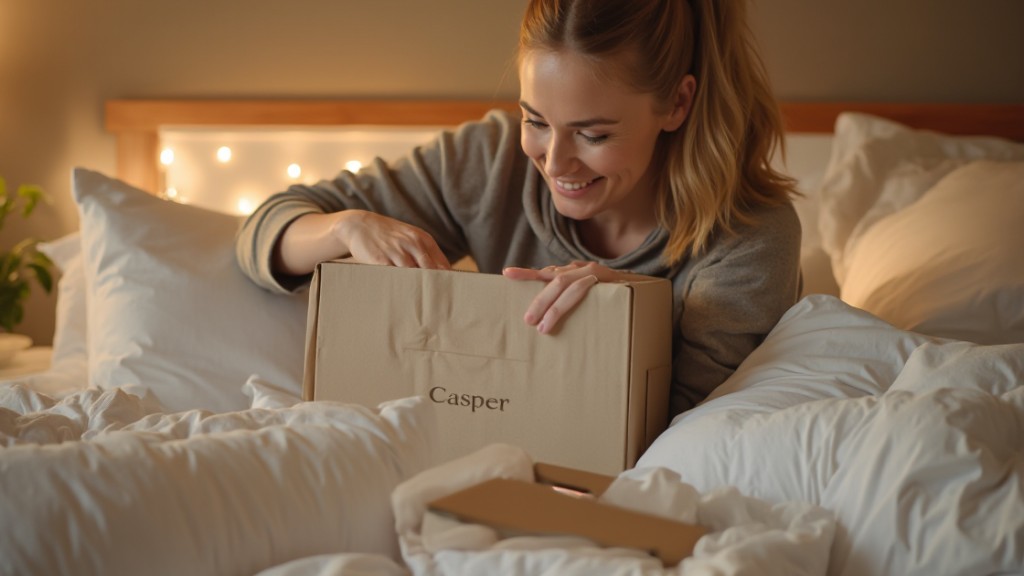
Casper’s referral program effectively leverages the thrill of unboxing, making the product opening a fundamental part of the customer experience.
Their visually appealing landing page captures your attention and clearly communicates the rewards for both you and your friend, enhancing engagement and comprehension.
Unboxing Experience Appeal
Unboxing experiences have become a significant marketing tool, particularly evident in how companies like Casper leverage them to improve customer engagement.
Casper’s referral program emphasizes the excitement of unboxing by offering substantial rewards—$50 off for the friend referred and a $75 Amazon gift card for the referrer. This creates a strong incentive tied to the thrill of receiving a new product.
By focusing on the emotional appeal of unboxing, Casper not only improves customer interaction but additionally encourages sharing among users, as they enthusiastically share their experiences.
The integration of this unboxing narrative into the referral program contributes to higher conversion rates, tapping into the anticipation and satisfaction associated with discovering and opening a new product, nurturing a sense of community among users.
Visual Landing Page Design
A well-designed landing page can greatly improve the effectiveness of a referral program by capturing user attention and clearly communicating the program’s benefits. Casper’s landing page exemplifies this, showcasing the excitement of unboxing their products, which creates anticipation among potential customers. The visually appealing layout boosts user experience and simplifies participation in the referral program.
To illustrate Casper’s clear communication of rewards, here’s a concise comparison:
[embedded content]
| Reward Type | Amount |
|---|---|
| Discount for Friend | $50 off |
| Gift Card for Referrer | $75 Amazon gift card |
This combination of engaging design and attractive rewards motivates existing customers to share their enthusiasm, contributing greatly to Casper‘s successful referral marketing strategy.
SimpliSafe: Stacking Discounts for Enhanced Tracking

Though many companies offer referral programs, SimpliSafe stands out by effectively stacking discounts to improve tracking and user engagement.
Their referral program provides a $100 Visa gift card for the referrer and substantial discounts for new customers, making it a compelling choice for participation. The ease of sharing options—through email, SMS, or direct link—simplifies the referral process, allowing you to invite others effortlessly.
Furthermore, new customers who sign up via referrals receive a free indoor camera along with their discount, enhancing the overall appeal of the offer.
SimpliSafe’s strategy focuses on stacking referral discounts with ongoing promotions, which can lead to improved tracking and increased engagement metrics.
This dual incentive structure not only encourages existing customers to share the service but likewise delivers valuable savings to new users, creating a win-win situation for everyone involved.
PayPal: Timeless Approach to Referral Rewards

PayPal‘s referral program stands out for its straightforward approach, rewarding users for sharing the platform with friends. This method not only incentivizes users but additionally drives growth effectively. Here’s how it works:
- You earn $10 for every friend you refer who signs up and completes a transaction.
- New customers likewise receive $10 after spending or sending just $5 within their first 30 days.
- There’s an annual limit of $100 on referral earnings, encouraging you to refer multiple friends without straining PayPal’s budget.
This win-win scenario makes it one of the most cost-effective ways to acquire new customers, markedly lowering customer acquisition costs compared to traditional marketing methods.
The success of PayPal’s referral program lies in its simplicity and effectiveness, leveraging existing customer relationships to encourage growth and engagement. It’s a classic example of how a clear incentive can drive both user participation and company success.
Dropbox: Encouraging Engagement Through Storage Incentives
Dropbox leverages a unique referral program that encourages user engagement by rewarding you with additional storage space for each friend you successfully refer.
This straightforward process is seamlessly integrated within the app, allowing you to invite friends directly through various platforms with ease. Both you, the referrer, and the new user gain benefits from this dual incentive, promoting a sense of community and shared experience among Dropbox users.
This model has set a long-lasting standard in referral programs, demonstrating how non-cash rewards can effectively increase user engagement. The program not only drives user growth but additionally motivates existing users to actively promote the service to their networks.
By incentivizing referrals in this way, Dropbox greatly boosts its customer acquisition efforts, ensuring that both new and current users remain engaged and invested in the platform.

Airbnb‘s referral program stands out for its ability to cultivate a sense of community among users by offering travel credits as incentives. This approach not only rewards existing users but likewise encourages them to introduce friends to the platform.
Here’s how it works:
- Mutual Benefits: Both the referrer and the new user can earn up to $40 in travel credits, making it appealing for everyone involved.
- Word-of-Mouth Promotion: By sharing their unique referral links via social media or email, users can easily invite friends, improving personal connections.
- Clear Communication: Airbnb guarantees users understand the benefits, which boosts participation rates and promotes engagement.
This community-oriented strategy improves brand loyalty and user interaction, contributing to Airbnb’s growth as a leading travel platform.
Frequently Asked Questions
What Is an Example of a Referral Program?
An example of a referral program is PayPal’s initiative, where you earn $10 for referring a friend.
If your friend joins and completes a qualifying transaction, they additionally receive a $10 bonus.
This approach not just incentivizes you to spread the word about PayPal but similarly encourages new users to engage with the platform, effectively driving customer acquisition as well as rewarding both the referrer and the new user.
How to Run a Successful Referral Program?
To run a successful referral program, start by defining clear goals that align with your business objectives.
Offer attractive incentives for both referrers and new customers, ensuring both parties feel rewarded.
Simplify the referral process with easy sharing options and clear instructions.
Regularly update incentives to keep participants engaged, and consider using referral software to automate tracking and reward distribution, which helps maintain accurate records and improves overall customer experience.
[embedded content]
What Is the Best Referral Program?
The best referral program usually includes double-sided rewards, benefiting both the referrer and the new customer.
Clear communication and easy sharing options are crucial, as they encourage participation. Programs that leverage community ties often see higher spending from referred customers.
Innovative strategies, like gamified rewards, can make the process engaging. Furthermore, tiered rewards can nurture loyalty, motivating customers to refer multiple times and become active advocates for the brand.
How to Measure the Success of a Referral Program?
To measure the success of your referral program, track key metrics like conversion rates, which show how effectively referrals turn into sales.
Calculate the Customer Acquisition Cost (CAC) for referred customers compared to traditional methods, as this can reveal cost-effectiveness.
Monitor retention rates, since referred customers often have higher lifetime value.
Utilize analytics tools to assess participation and engagement, and gather feedback to identify improvement areas, ensuring the program aligns with customer preferences.
Conclusion

In conclusion, successful referral programs leverage various strategies to engage users and propel growth. By offering dual incentives like Omsom, creating streamlined experiences as Blume does, or focusing on community engagement through travel credits like Airbnb, companies can effectively attract and retain customers. These diverse approaches underscore the importance of clarity, simplicity, and rewarding both referrers and referred friends. By analyzing these examples, you can develop a referral strategy customized to your business needs and goals.
Image via Google Gemini and ArtSmart