
This post was originally published on this site.
 Getty Images
Lessons have been learned, insist organisers of the US Open after the past two visits to Shinnecock Hills descended into controversy over brutal and ultimately substandard set ups of the Long Island layout.
US Opens are invariably about the golf course and the way it is laid out to test the world’s best players, but whenever America’s national championship is staged at Shinnecock there seems an extra dimension to the extremity of the examination.
It is a unique venue. This is probably the closest the event comes to being played on a links course.
It is not quite on the shoreline, but is treeless, windswept and exposed, and the links-like turf runs fast and firm.
Sometimes too fast and firm.
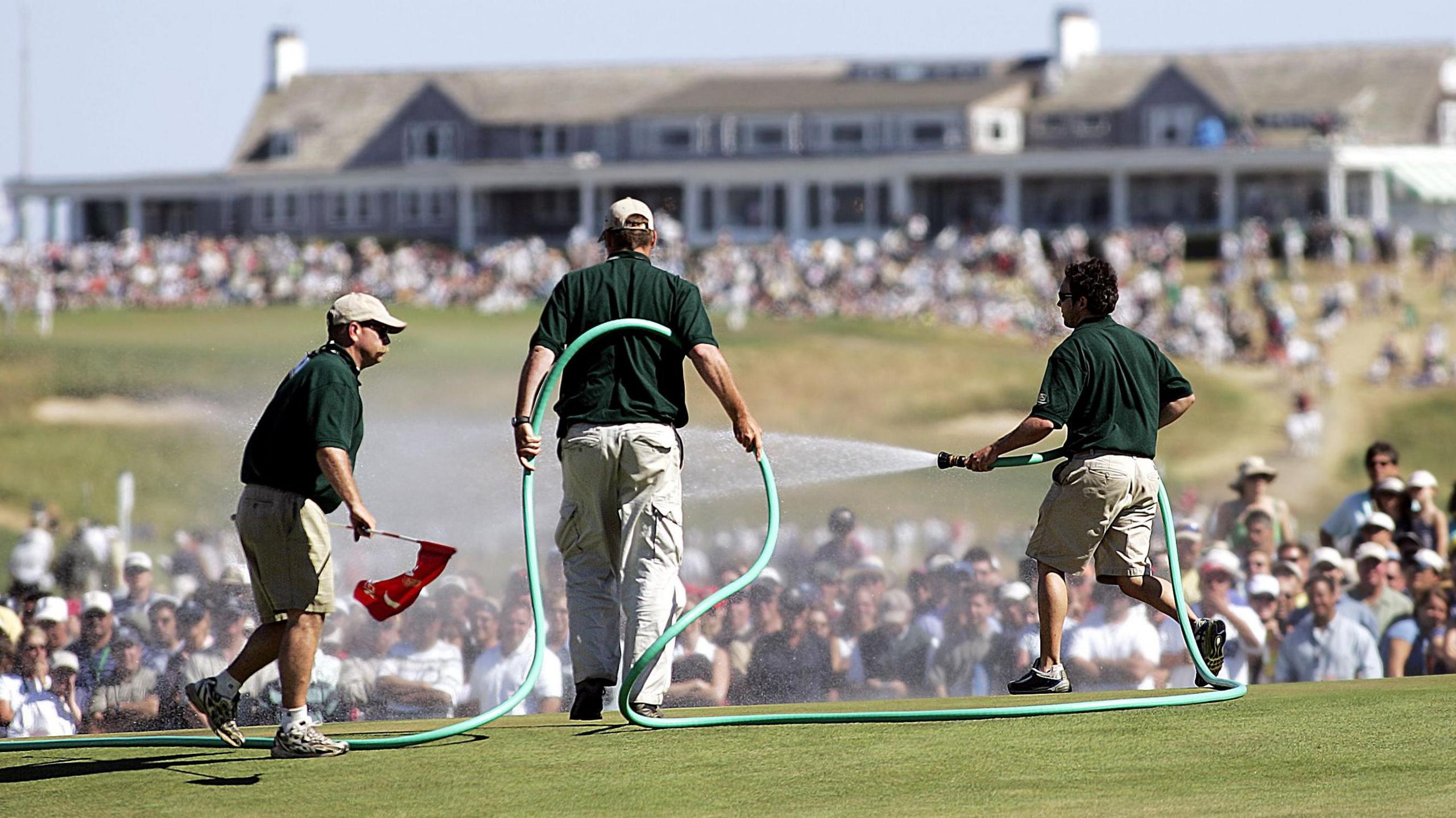
In 2004, when Retief Goosen produced one of the all-time great putting displays to secure his second US Open title, the seventh green needed to be hand watered mid-round because the 189-yard par-three hole had become unplayable.
The next time the tournament came to Southampton, New York, gusty winds pushed the first round scoring average to more than six over par. Rory McIlroy was among those who failed to break 80 and English qualifier Scott Gregory shot 92.
The following day proved nearly three shots easier, but for those who made the cut the Saturday became gruesome. “I’ve never seen a golf course change that quickly,” said Justin Rose. “We came off pretty much shell-shocked.”
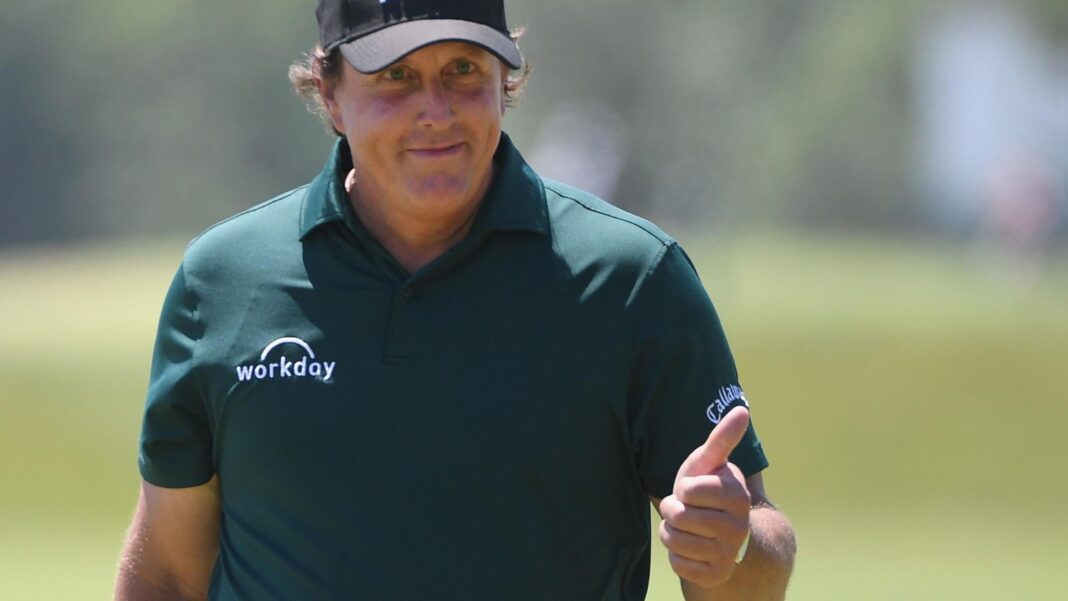
It broke Phil Mickelson when the six times major champion resorted to hitting a moving ball to prevent his putt from running off the 13th green.
It was a moment as comedic as controversial; one of the world’s best golfers turning into a hockey player with a move that many thought should have led to the American being thrown out of the championship.
Instead he received a two-shot penalty for breaching rule 14-5, which deals with hitting a moving ball. It meant he ran up a 10 on that 13th hole.
Compounding the difficulty of rock hard greens that grow quicker and quicker as the day progresses, especially when polished by drying coastal winds, was the overall set up of the course.
The United States Golf Association (USGA) narrowed fairways appreciably from the widths played by the Shinnecock members. Players were confronted with five inch rough if tee shots veered only marginally off line.
Staying in control of the golf ball – the ultimate test as far as the USGA is concerned – was nigh on impossible. No one totalled under par for the four rounds with American Brooks Koepka’s score of one over beating Tommy Fleetwood by a single shot.
The English runner-up took advantage of a more favourable final day set-up, shooting a startling 63, while Koepka’s composed 68 was enough to secure a successful defence of the US Open Trophy.
So what should we expect this week? More of the golfing carnage that the USGA is reputed to favour or a more reasonable test for Scottie Scheffler and co?
The latter seems the most likely scenario. “We’re going to let Shinnecock be Shinnecock,” says the USGA’s John Bodenhamer, the man responsible for course set-up.
He admits playing conditions were sub-optimal in 2004 and 2018. “I think we’ve learned a lot,” Bodenhammer told the No Laying Up podcast.
“This place is so different than anywhere else we go, particularly with the weather, these perched up sandy soil greens, and you just never know what’s going to happen here.
“It all depends on the weather. But I think what we learned were a number of things. I think there’ll be some things different in 2026.”
Bodenhammer and his team will try to ensure the course does not dry out and green speeds will be slower than they were in 2018.
The aim is to open up the most interesting hole locations and give players choices of shots around the greens. Even the most gifted golfers can be discomfited by choices rather than having a shot selection dictated to them.
Fairways will play the same width as they do the rest of the year, providing appreciably wider landing areas. But they will still be bordered by penal, thick rough.
Since the departure of former USGA boss Mike Davis in 2021, US Opens have seemed fairer. There is less dependence on the long-assumed aim of making level par the winning score.
US Open
18-21 June
Shinnecock Hills, New York
Live text updates of all four rounds on BBC Sport website and app. Live radio commentary of rounds three and four on BBC Radio 5 Live, Sports Extra and BBC Sounds.
In 2022, Matt Fitzpatrick – the last British winner – triumphed at six under, the same mark as Jon Rahm the previous year. Wyndham Clark was 10 under at LACC in 2023 and Bryson DeChambeau six under at Pinehurst No 2.
Last year, at a rain-sodden Oakmont, one under was the number that allowed JJ Spaun to beat Bob MacIntyre by two for his first major crown.
Nowadays it seems conditions are the biggest influence on how many shots it takes to make a champion. “Mother Nature always gets a seat at the table, and at Shinnecock, maybe more than anywhere else,” Bodenhammer told Golf Digest.
“If we get wind, the course will resist scoring. If we don’t, it won’t – and we’re OK with that.
“That’s part of the evolution in our thinking, being willing to let conditions play a role instead of trying to control every outcome.”
There is some rain forecast before a predicted dry weekend, which might help the USGA dodge further criticism at a Shinnecock US Open.
It will remain a mighty test for the world’s best. Will the planet’s top player, Scheffler, pick off the major he needs for the career Grand Slam?
Could Fitzpatrick go one better than last week’s runner-up finish in Canada and collect a second US Open? Is Masters champion McIlroy ready to win his second major of the year?
Or is it time for LIV’s Tyrrell Hatton to join the major winning club? The Englishman competes after winning at the formidable Valderrama, the famed Spanish course that provides a similar test of fortitude as we expect Shinnecock to do this week.
Whoever prevails will need to control their ball better than anyone else. Take advantage of the wider fairways and cope with challenging run-off areas, devilish pin positions and drying greens that are still likely to get tougher on an hourly basis.
And that is how it should be at a US Open.