
This post was originally published on this site.
Train passed red signal before fatal crash – report
-
Published
A train driver killed in a crash in Bedfordshire passed a red signal moments before the collision, investigators said.
Train driver Shaun Burton, 60, died and 162 people were injured when one London-bound service crashed into the back of another on Friday.
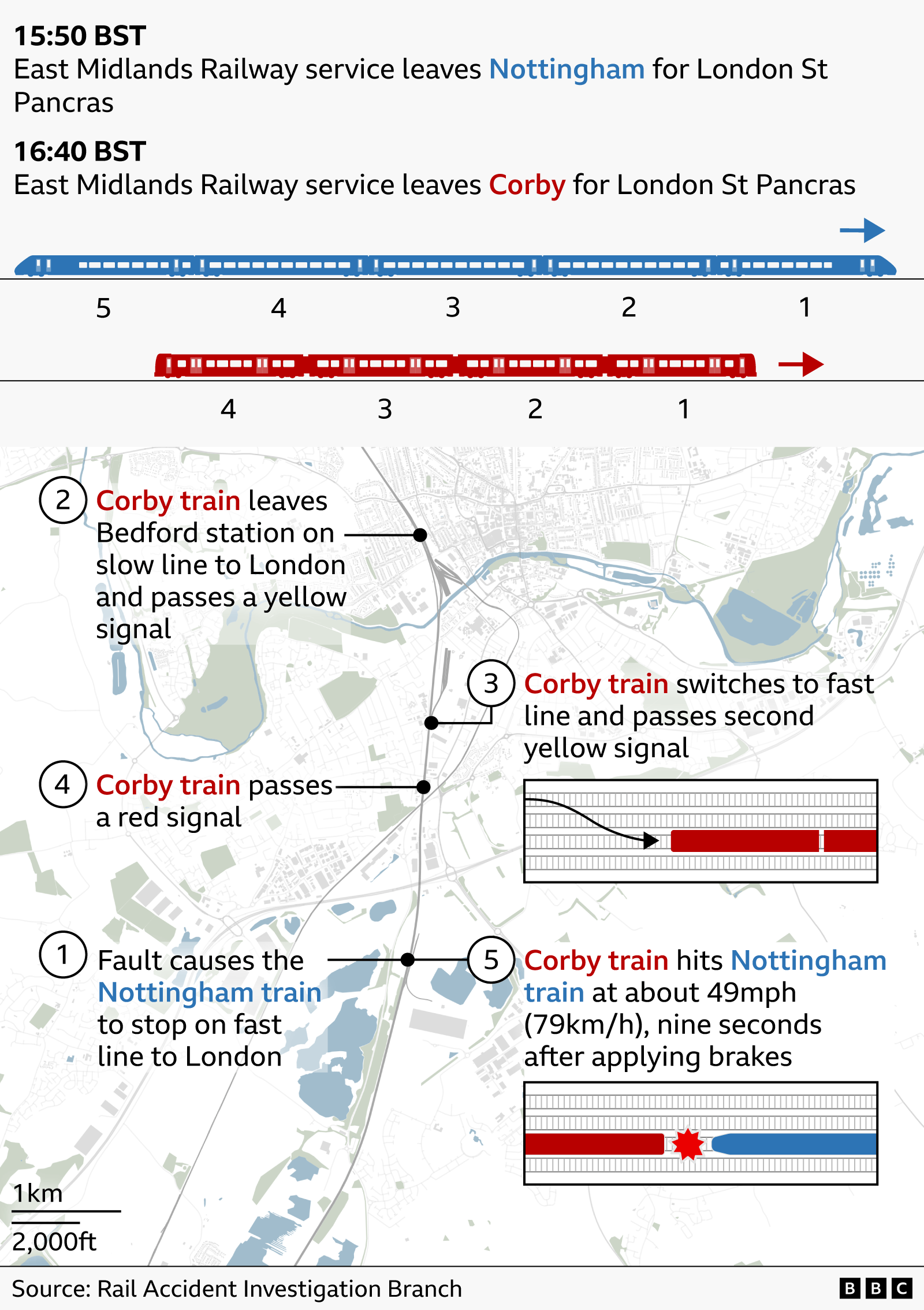
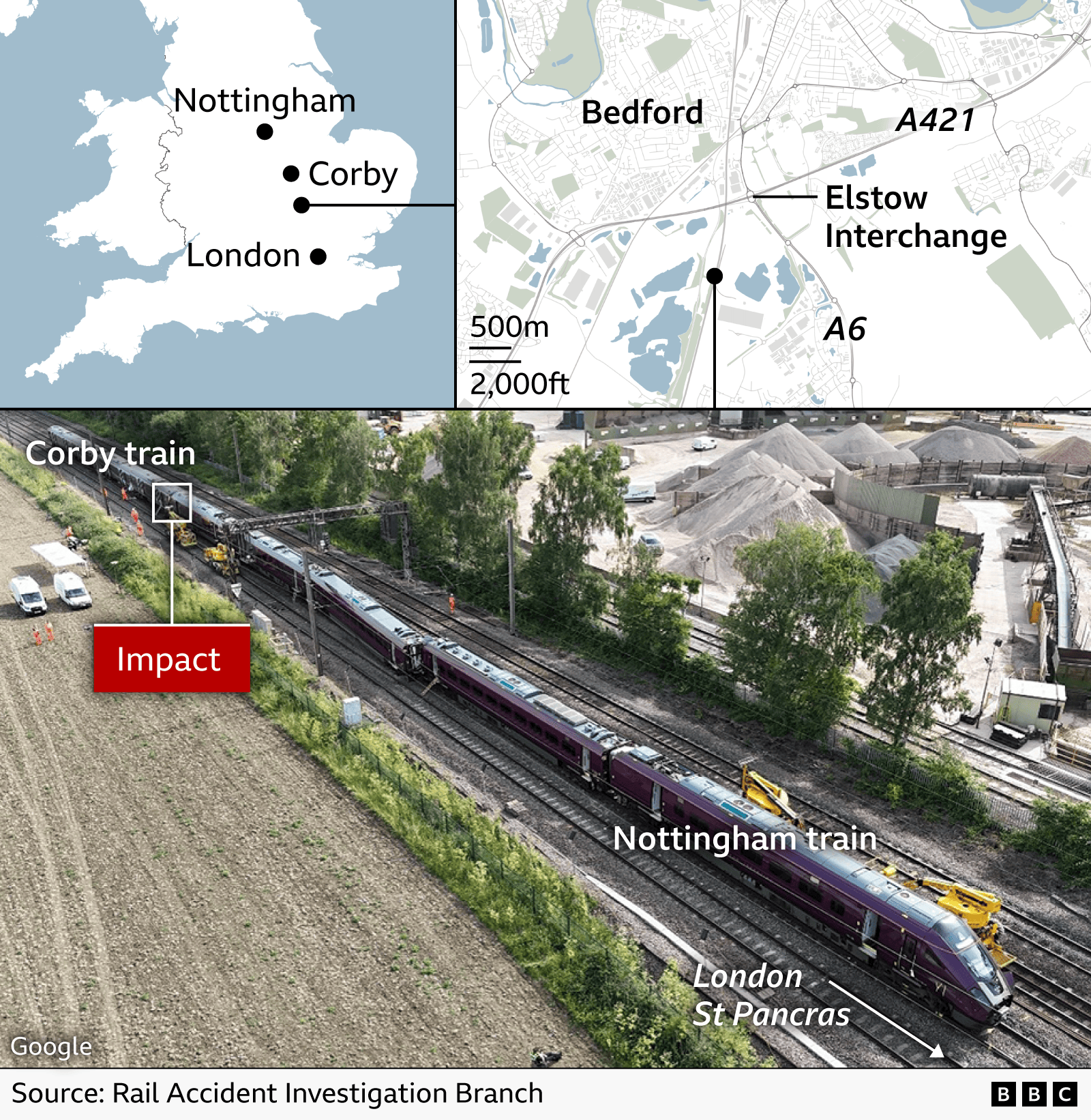
The Rail Accident Investigation Branch (RAIB) said in an interim report, external that Burton’s train proceeded past a red signal near the scene of the crash in Elstow, near Bedford at 17:15 BST on Friday.
It added that “it is not yet possible to say what indication the driver received” from automatic warning system (AWS) equipment fitted to the train.
The RAIB has found the stationary train had come to a stop “unexpectedly” because of a fault with its Automatic Warning System (AWS) equipment.
Data suggests the signal behind the stationary train was red, according to investigators.
The train that had started its journey at Corby, passed this red signal, its brakes were activated for about nine seconds before the collision, when the train was travelling at about 76mph.
Its speed had reduced to 49mph when the impact happened.
The RAIB said its full investigation would consider “the actions of those involved and any factors that may have influenced them”.
Dave Calfe, the general secretary of train driver union ASLEF, welcomed the investigation and said the incident may have been avoided if the train protection and warning system (TPWS) had been installed in that location.
He said: “Because what will concern passengers, and what concerns us, is that there are safety systems that can be put in place to prevent such accidents happening and the network should have been able to cope.”
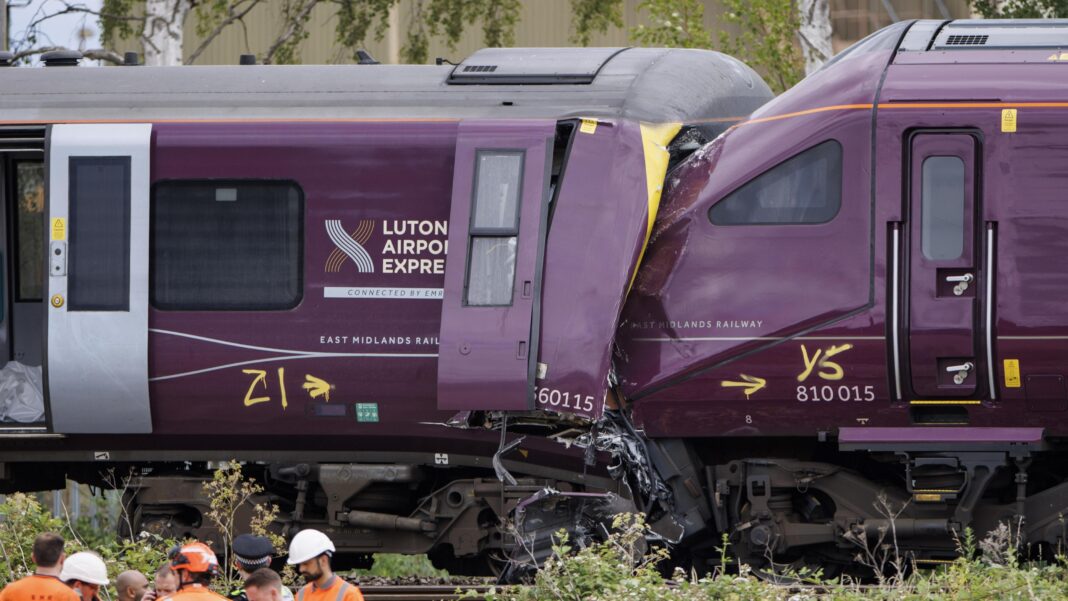
The 16:40 train from Corby collided with the 15:50 service from Nottingham at about 17:15 BST, just south of Elstow.
British Transport Police confirmed that 53 people remain in hospital and eight are in a critical condition.
Passenger Pete Knapp described the crash as being “like a bomb explosion”.
Earlier Prime Minister Sir Keir Starmer said his thoughts “were with all those injured” in the incident.
He told the House of Commons: “I was deeply saddened to learn of the death of the driver of the Corby to St Pancras train.
“His family have requested privacy, and we should all respect that. I send my deepest sympathies to them at this awful time.”
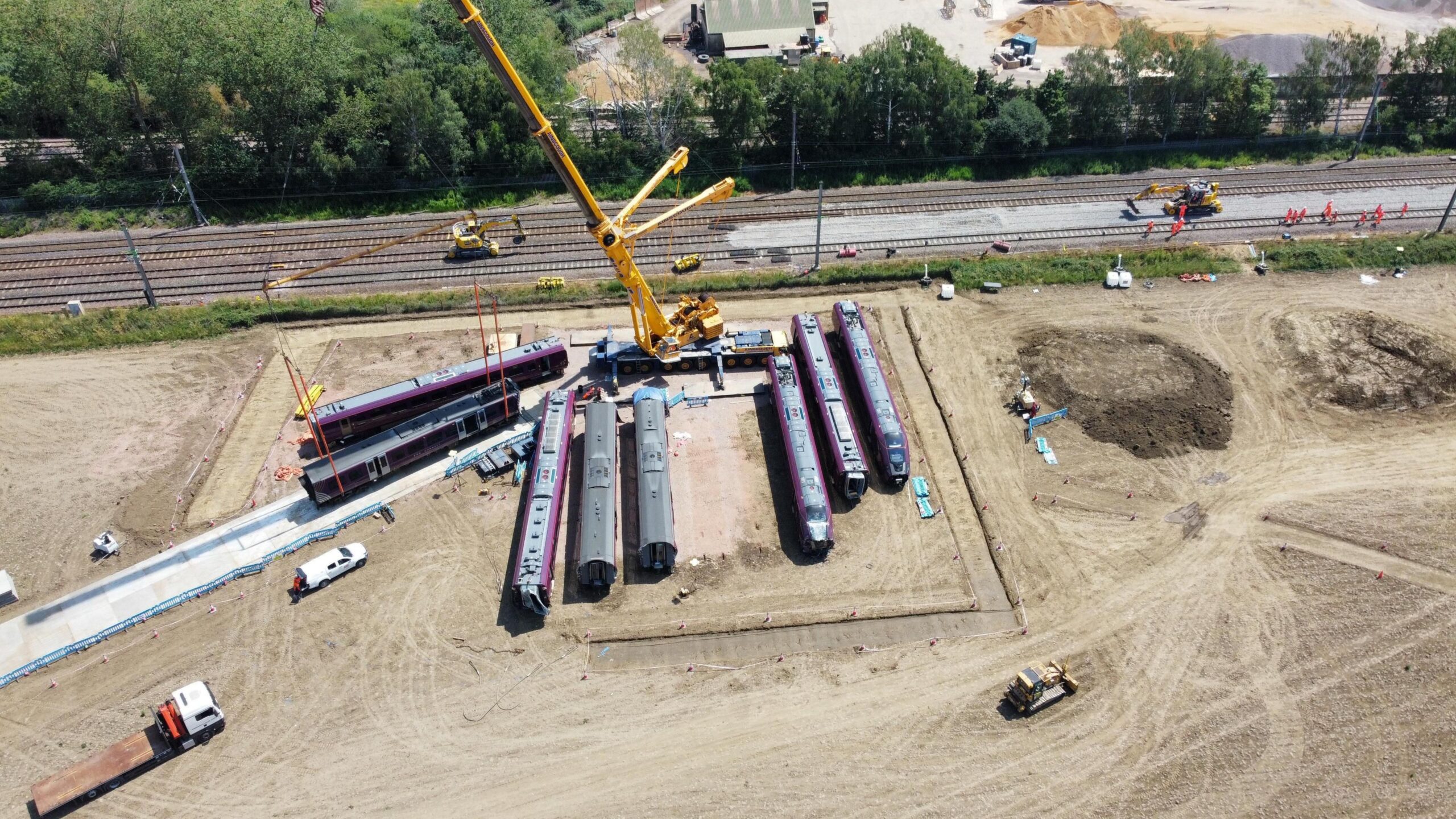 Image source, John Fairhall/BBC
Emergency services, including multiple air ambulances and 70 firefighters, were sent to deal with the immediate aftermath.
Transport Secretary Heidi Alexander told the House of Commons that emergency services had acted “quickly, professionally and bravely”.
Cranes have been used to remove the trains involved in the crash, which were than transported out using a temporary road put in place by construction workers.
British Transport Police officers have recovered a “significant amount of passenger property” which has been sent to a East Midlands Railway storage facility.
Those passengers who have lost items have been asked to contact the force so they can be returned.
Network Rail has warned that the Midland Main Line will remain closed to East Midlands Railway and Thameslink services until the end of the week.