
This post was originally published on this site.
The way commercial spaces are designed has changed considerably in recent years. Businesses across the UK, from hotel groups and restaurant operators to recording studios and corporate office developers, are investing in acoustic ceiling treatment as a standard component of their fit-out rather than an optional upgrade.
At the centre of that shift is fabric ceiling installation, a specialist system that delivers both acoustic performance and a premium visual finish that alternatives simply cannot match.
This article covers what fabric ceiling installation involves, why UK businesses are specifying it, and what to consider before commissioning the work.
What Is a Fabric Ceiling Installation?
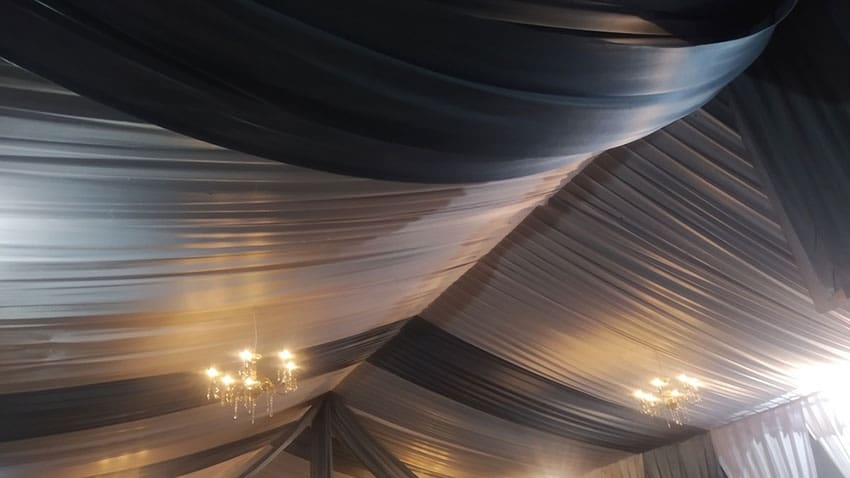
A fabric ceiling installation uses a precision aluminium track frame fixed to the ceiling structure, with an acoustic infill core installed within the frame and an acoustically transparent fabric stretched across the face to produce a seamless, unbroken surface. Unlike a traditional suspended ceiling grid with modular tiles, a fabric ceiling produces no visible joints, no panel edges, and no exposed fixings. The result is a continuous ceiling surface that looks intentional and considered rather than functional and utilitarian.
The fabric face is acoustically transparent by design, meaning sound waves pass through the material and into the infill core behind it, where the energy is absorbed rather than reflected back into the room. This is what gives the system its acoustic credentials. Hard ceiling surfaces, whether plaster, concrete, or standard ceiling tiles, reflect sound back into the space, increasing reverberation times and creating echoes that affect the quality of communication, concentration, and experience within the room.
A correctly specified fabric ceiling addresses this directly. By absorbing sound at the ceiling plane, which is typically the largest unobstructed reflective surface in any room, the system reduces reverberation times measurably and creates a noticeably more comfortable acoustic environment for everyone in the space.
Why Businesses Are Choosing Fabric Ceiling Installation
The reasons businesses are moving towards fabric ceiling installation over alternative acoustic treatments come down to three factors: acoustic performance, visual quality, and long-term value.
In terms of acoustic performance, a fabric ceiling installation with the correct infill core delivers sound absorption ratings that match or exceed those of most alternative ceiling systems. NRC ratings close to 1.0 are achievable with the right specification, meaning the system absorbs almost all sound energy that reaches the ceiling surface rather than reflecting it. For environments where the quality of communication or listening is directly tied to business outcomes, such as boardrooms, hotel conference suites, post-production facilities, and client-facing showrooms, this level of performance justifies the investment.
In terms of visual quality, no other acoustic ceiling treatment produces a finish comparable to that of a properly installed fabric ceiling. There are no visible tiles, no exposed grid, no shadow lines between panels, and no fixings. The ceiling reads as a single, continuous surface, elevating the perceived quality of the entire space. In hospitality environments, high-end offices, and retail interiors, this matters enormously. Customers and clients form immediate impressions based on the quality of the environment they enter, and a premium-looking ceiling directly contributes to that perception.
In the long term, fabric ceiling systems are built to last. When properly specified and installed, the system has a lifespan of fifteen to twenty years or more. The fabric can be replaced without removing the underlying track and infill structure, and access panels can be incorporated into the design to maintain services concealed behind the ceiling surface.
Where Fabric Ceiling Installation Is Specified
Fabric ceiling installation is specified across a wide range of commercial and professional environments in the UK.
Recording studios and post-production facilities represent the most acoustically demanding application. In these environments, the ceiling treatment is a critical part of the room’s acoustic design, working alongside wall panels and bass traps to achieve the precise reverberation time targets the room requires. Fabritech has completed fabric ceiling installations in facilities for Abbey Road Studios, Netflix, Apple, and Spotify, where the acoustic performance requirements are among the most exacting in the industry.
Hotels and hospitality venues are an increasingly significant market for fabric ceiling installation. Conference suites, restaurant dining rooms, event spaces, and hotel lobbies all benefit from controlled acoustics, and the premium visual finish of a fabric ceiling aligns with the design standards that guests expect in high-end hospitality environments.
Commercial offices and workspaces have seen growing demand for acoustic ceiling treatment since the shift to open-plan layouts accelerated. The ceiling is often the largest untreated acoustic surface in an office, and addressing it with a fabric ceiling installation can significantly reduce background noise, improve speech clarity across meeting and collaboration zones, and create a more productive working environment.
Home cinemas and private screening rooms represent the residential end of the market, where homeowners commissioning dedicated cinema rooms increasingly specify fabric ceiling installations as part of a complete acoustic and visual treatment package.
What to Consider Before Commissioning Fabric Ceiling Installation
For any business considering fabric ceiling installation, there are several practical factors to work through before the project begins.
Acoustic brief and performance targets should be established early. The specification of the infill core, track depth, and coverage area is determined by the acoustic targets for the space, whether that means meeting a specific reverberation time, achieving a defined NRC rating, or simply improving the general acoustic comfort of the environment. Engaging the installer at the design stage, rather than after the main contractor has finished, produces significantly better results.
Fire compliance is non-negotiable. All fabrics used in commercial ceiling installations must meet UK building regulations and be assessed against the European standard EN 13501-1. Any reputable fabric ceiling installer will provide full fire rating documentation for all specified materials before installation begins and should be able to advise on the appropriate classification for the specific building type and use.
Fabric selection affects both the acoustic outcome and the visual finish of the installation. Fabritech holds direct accounts with leading acoustic fabric manufacturers including Kvadrat, Camira Fabrics, and Guilford of Maine, giving clients access to a wide range of colours, textures, and performance-rated materials. The specified fabric must be acoustically transparent to ensure the system performs correctly, and all materials must carry the appropriate fire ratings for the environment.
Specialist installation is essential. Fabric ceiling installation is not a standard fit-out trade. The track fabrication, infill specification, and fabric stretching processes require specialist knowledge and experience to be delivered correctly. Incorrect installation results in uneven fabric tension, acoustic inconsistencies, and a finished ceiling that falls short of both its visual and acoustic potential.
Working With a Specialist
is a UK specialist in fabric ceiling installation for commercial, professional, and residential environments. As preferred installer for Studio Creations and Westwood Joinery, the UK’s leading studio construction companies, Fabritech delivers fabric ceiling systems for recording studios, post-production facilities, hotels, commercial offices, and high-end residential projects across the UK. For project enquiries and specification advice, visit fabritech.co.uk/services/fabric-ceiling/.