
This post was originally published on this site.
How Bellingham became Tuchel’s most important player
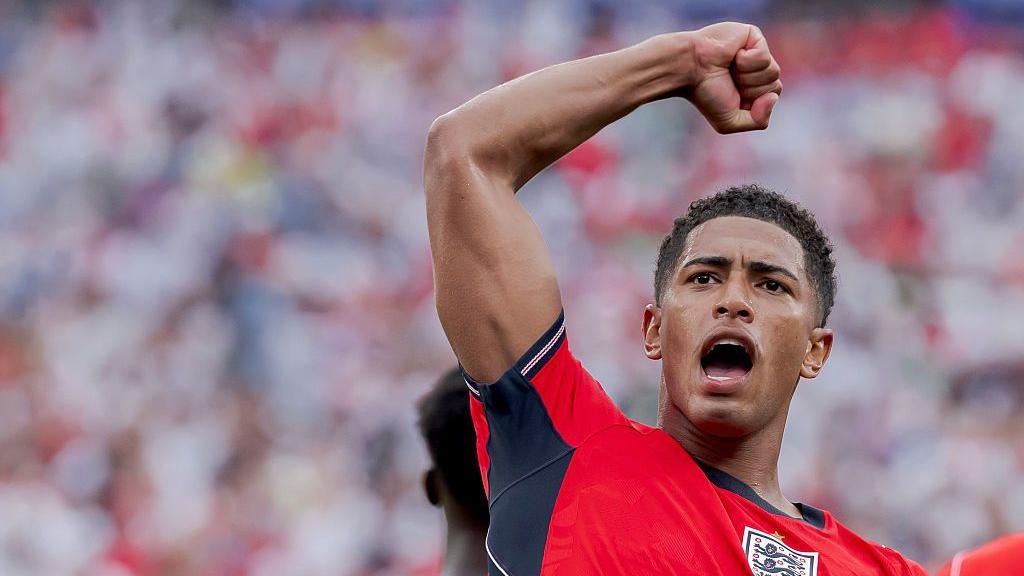 Image source, Getty Images
-
Published
In June 2024, Jude Bellingham scored a dramatic overhead kick in the 95th minute against Slovakia to rescue England’s hopes at the Euros.
In the heat of the moment, he celebrated by screaming into the jubilant crowd.
“Who else?”
After England’s 2-0 win against Panama, the 22 year-old’s performance has a similar feel to it.
Tuchel has been firm in stating his system and approach will largely look the same throughout the tournament but on Saturday we saw subtle tweaks, with injuries in the squad.
Bellingham was central to maximising this system, papering over some of the cracks in the meantime.
It was a tale of two halves for Bellingham who was deployed in a more box-to-box role in Declan Rice’s absence.
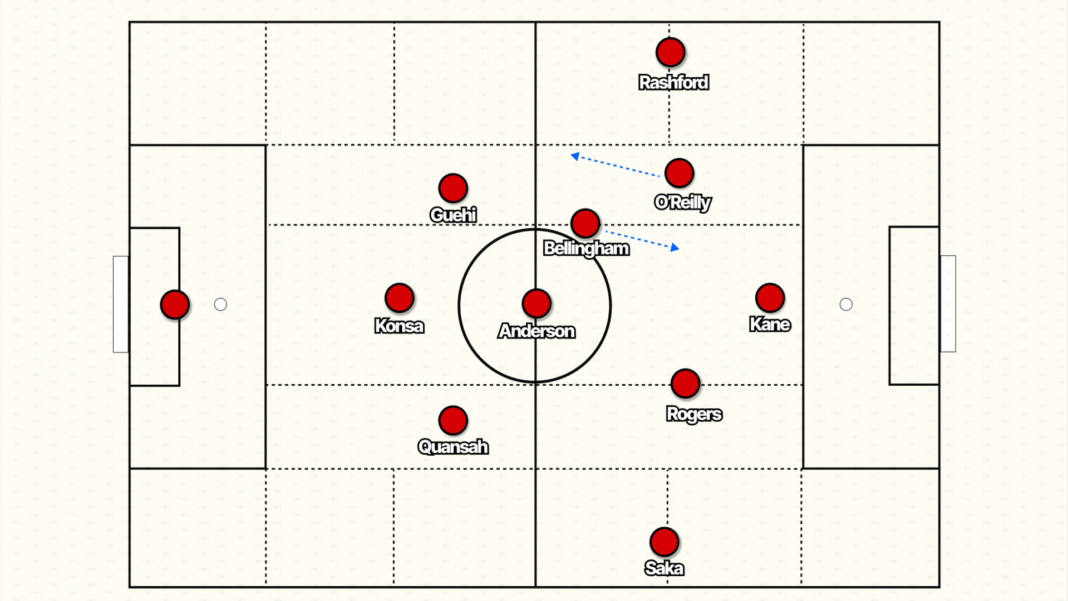
In their first two games, England opted to build from the back with the two central defenders and Elliott Anderson in the centre of the pitch. Both full-backs took wider positions with Rice and Bellingham vacating the holding midfield areas for Harry Kane to drop in and join Anderson.
This shape differed against Panama.
Jarell Quansah came in at right-back for the injured Reece James and was asked to slot into a back three in possession – alongside Marc Guehi and Ezri Konsa. Nico O’Reilly kept his roaming left-back role.
Instead of Kane dropping deep, Bellingham was tasked with supporting Anderson at the base of midfield and England’s shape on the ball loosely flipped between a 3-2-5 and a 3-1-6 depending on how Bellingham read the game.
After the game, Tuchel confirmed his intentions, explaining that Bellingham “played as a 10 when we had the ball” and that he wanted “to have six players in the last line” – likely in an attempt to outnumber Panama’s back five.
Under Tuchel’s leadership, England have a few guiding principles:
-
Entice pressure before speeding up play
-
Look to play vertical passes for runners in behind
-
Counter-press hard as a collective when you lose the ball
-
Build-up primarily through the wide areas using triangles of the full-back, winger and attacking midfielder
-
Maximise set-pieces
Many of these principles are borrowed from the Premier League handbook of 2025-26.
These were largely on show against Panama but this time England also looked to build-up play through the centre of the pitch too – with mixed results.
It felt as if England were acknowledging that the wide players, that were so effective pre-tournament, were not enough in their current form. Paired with the injury to James, England needed an extra dimension and Bellingham’s tactical nous and versatility came in clutch.
Anderson played punchy passes forward whenever space between the lines opened up. With Kane, Morgan Rogers, O’Reilly and Bellingham all positioned centrally at points, England had central presence. By playing into these areas, Panama would converge on the ball, in turn opening up space out wide.
But given this has been an area of the pitch England have not prioritised as much under Tuchel, introducing it mid-tournament without natural small-space players such as Phil Foden came with risks.
Bellingham, a player who thrives in big space, adapted his game.
When he received the ball in these areas under pressure, he found unorthodox ways to sweep play into the free players out wide. If the spaces between the lines were too congested, he did well to win fouls, rather than losing the ball.
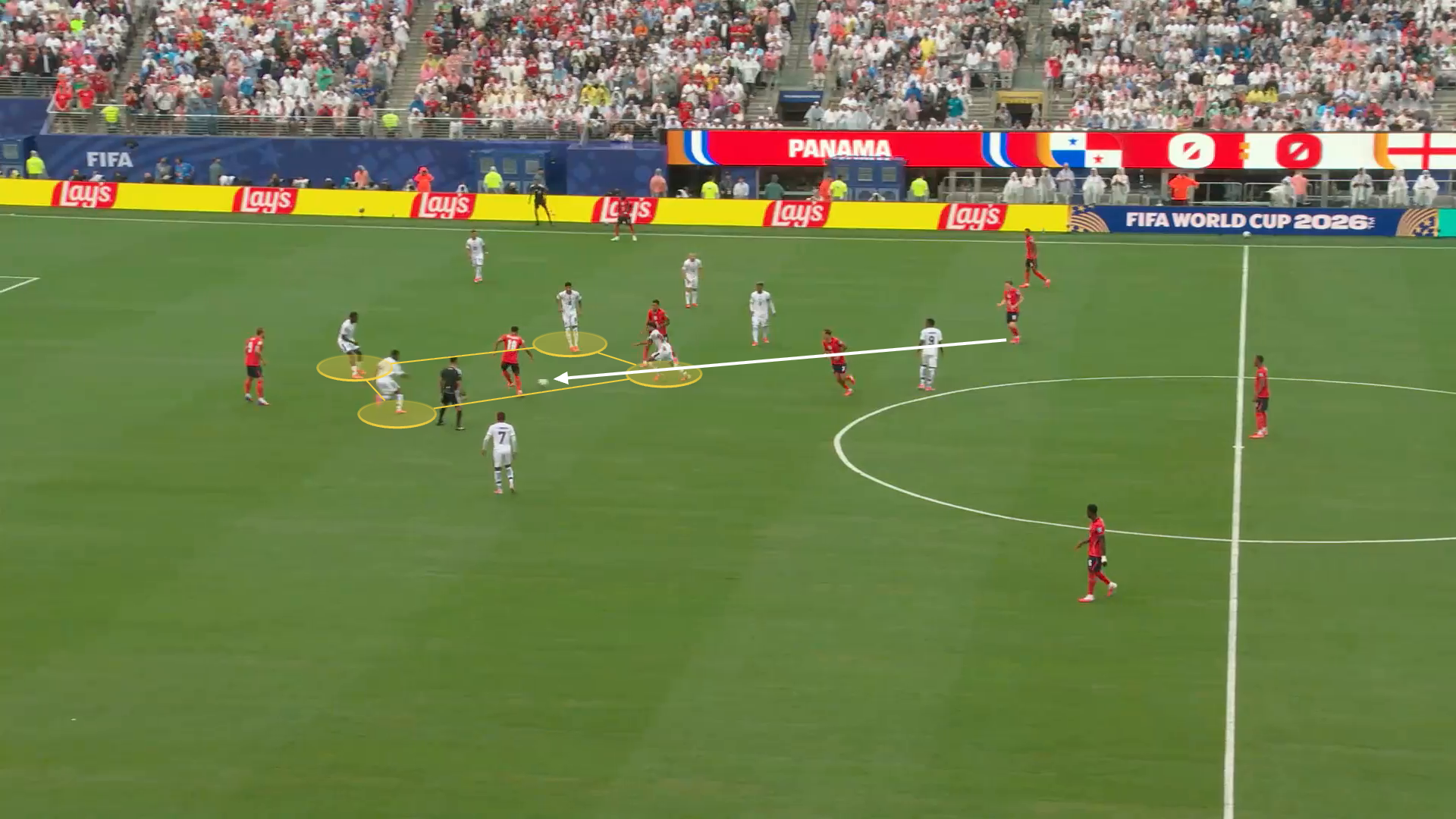
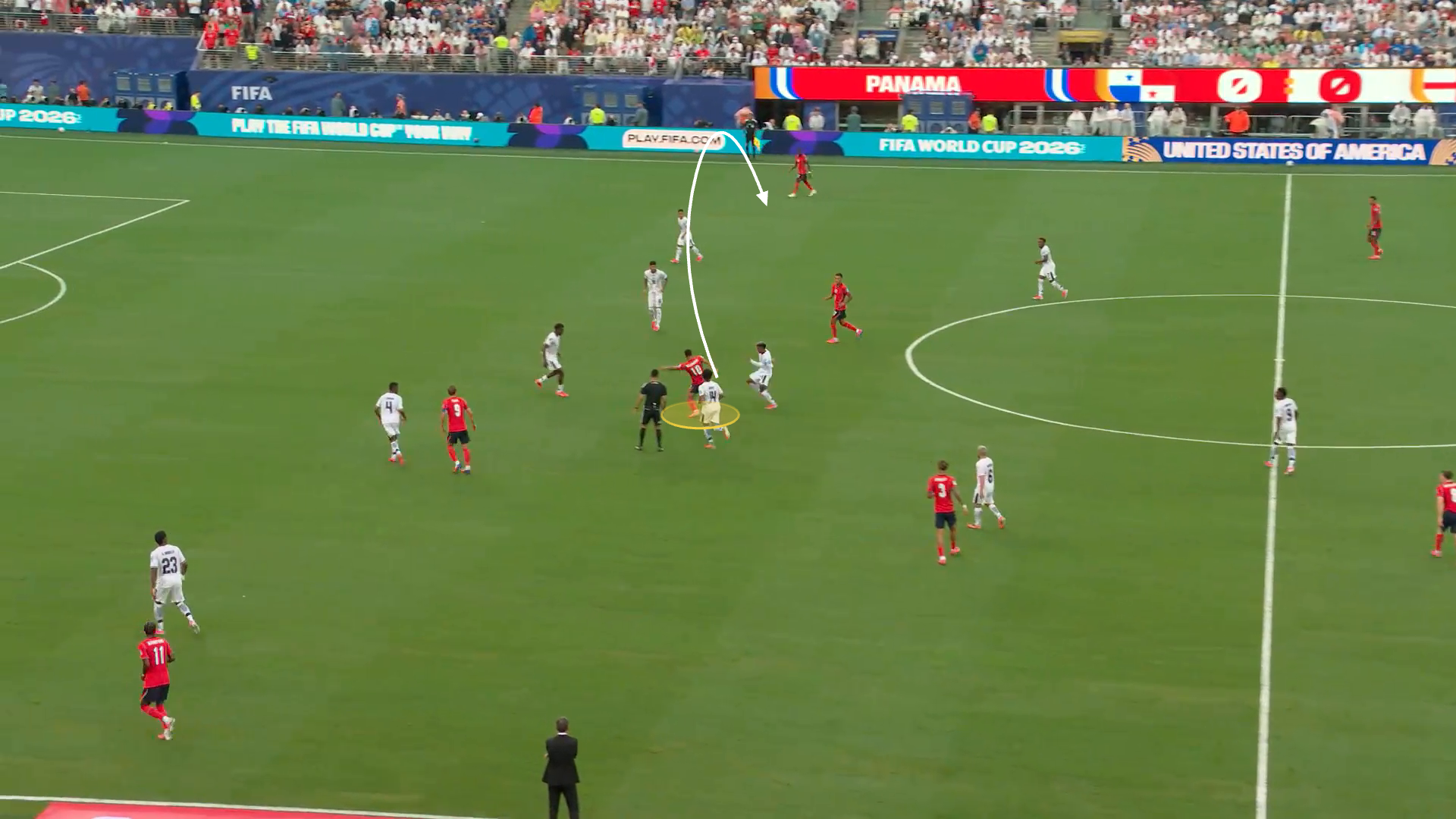
At half-time, Tuchel’s assistant Anthony Barry reflected on England’s build-up play.
“Our guys wanted to start the game fast. The stadium felt like a home game but all of this energy skewed our risk management,” Barry said.
“We had too many central ball losses and that opened up to counter-attacks against a dangerous team.
“After 30 minutes, we got more control in the game. [In the second half] we’ll reinforce [going] for verticality and more speed on the last line.”
During the opening 30 minutes, Bellingham’s engine – primed by a season of fewer minutes in his legs relative to his Premier League counterparts – saved England on a number of occasions.
Despite his superstar status, he made long and intense recovery runs before executing perfectly timed slide tackles to stop dangerously fast breaks.
Immediately after turnovers, given England’s riskier play, Bellingham and many of the forwards, converged around the ball, counter-pressing effectively – a common trend across the Three Lions’ three games so far.
England’s ability to grow into the game, while coming to terms with some of these new tactical ideas that may help them in latter parts of the competition, were done on the back of Bellingham’s fire-fighting.
-
Knockouts are here – what is England’s path to the final?
-
Published10 hours ago
-
-
What you need to know about England’s opponents DR Congo
-
Published12 hours ago
-
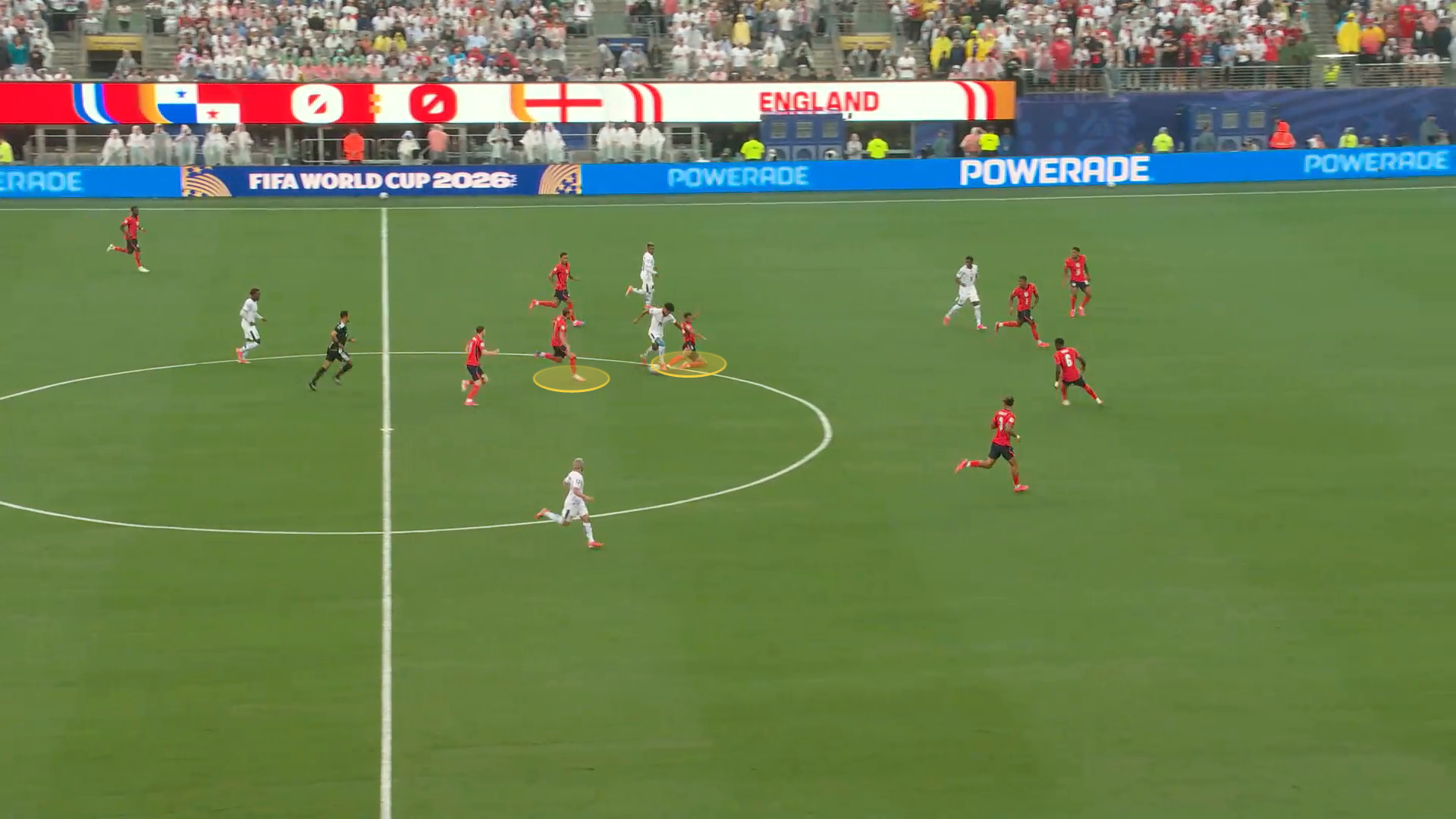
In the second half, we saw Bellingham the attacker, who made the difference for both goals.
His performance made Barry’s half-time statement about verticality and “more speed on the last line,” appear prophetic.
O’Reilly and Quansah, in their more central positions, compared to the wider positions of James and Djed Spence in the Ghana game, drew the left and right midfielders of Panama in field towards them. This opened up space for wide forwards Bukayo Saka and Marcus Rashford to receive the ball in a one-against-one situation.
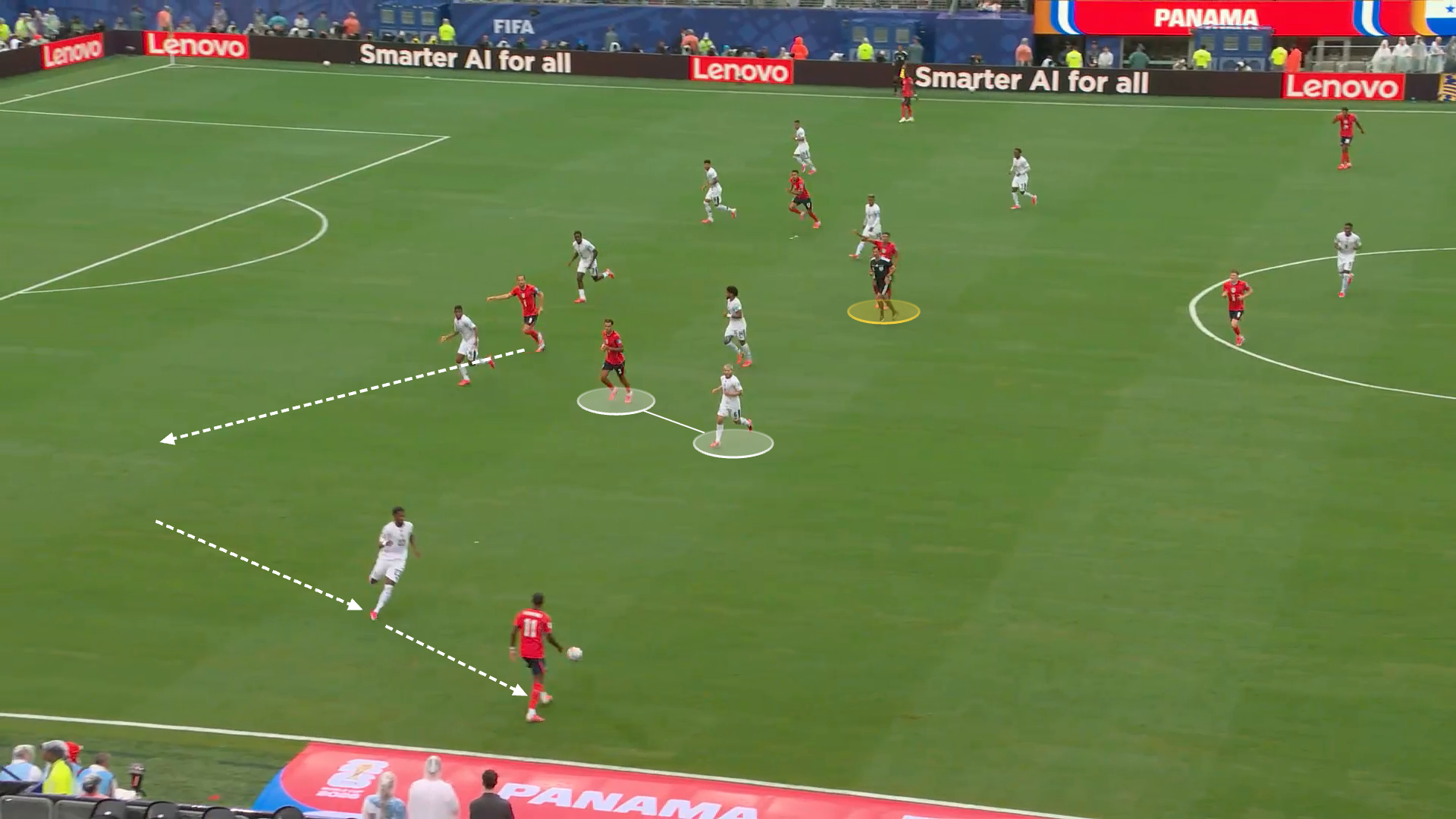
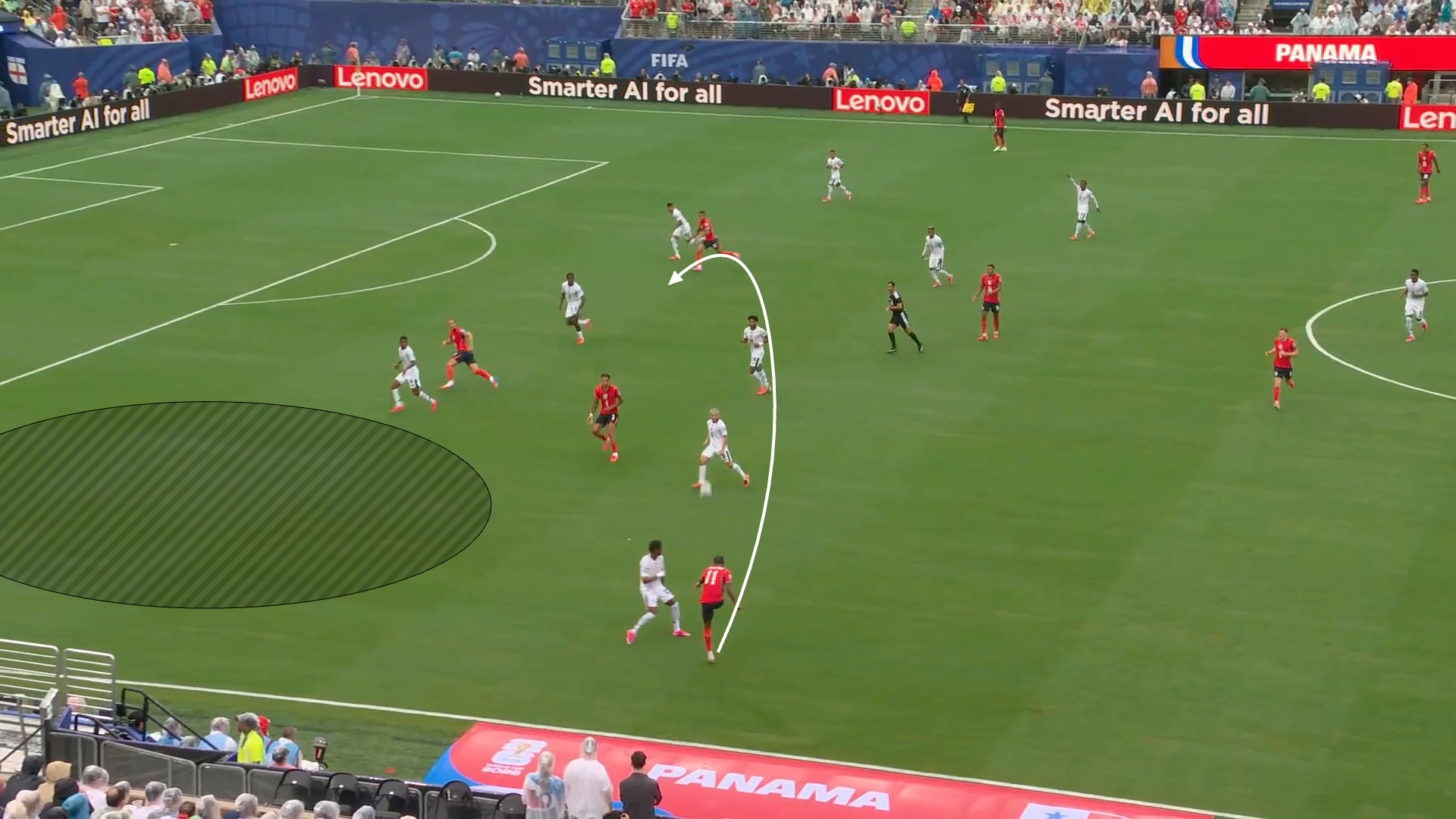
A common routine England used was in Rashford darting deep, to receive a pass directly from the defenders, with time and space on the ball.
By dropping deep, he was able to find separation from the opposition wing-back who was drawn out of Panama’s back-line, which momentarily opened up space “on the last line” for somebody with “speed” to attack, if Rashford played with “verticality”.
In the first half, this pattern occurred but it was Kane making the run in behind and, for all of his quality, he is not the speediest. Rashford instead opted to cross the ball but it was telling that Bellingham had his arm out, pointing into the space Kane ran into, directing his team-mate to look for that pass – the one that would be the source of both goals.
1 of 2
Slide 1 of 2, A screen grab from England v Panama. This shows Rashford in a left wing position. Arrows are drawn to show the movement of the wing-back pressing Rashford and the movement of Kane making a diagonal run into the left wing. Bellingham, pointing, is highlighted by a yellow circle. , After dropping deep, Rashford has time on the ball against a Panama back-line that has applied pressure. In yellow, Bellingham gestures to Rashford to pass it into the channel for the run of Kane
After the break, Bellingham’s position was a lot more as a number 10 than a supporting midfielder to Anderson, which made making those diagonal runs into the space behind the pressing wing-back more viable.
With Panama wanting to apply some forward pressure, making a run in behind against their momentum was incredibly effective. It was a run that was hard for the midfielders to react to and it dragged the centre-back of Panama out.
The corner that broke the deadlock against Panama was won by Bellingham making this run before looking to trick the defender with stepovers.
The assist for Kane, again, came from Bellingham’s intelligence to read this space, physicality to run into it, and technical quality to make the cross.
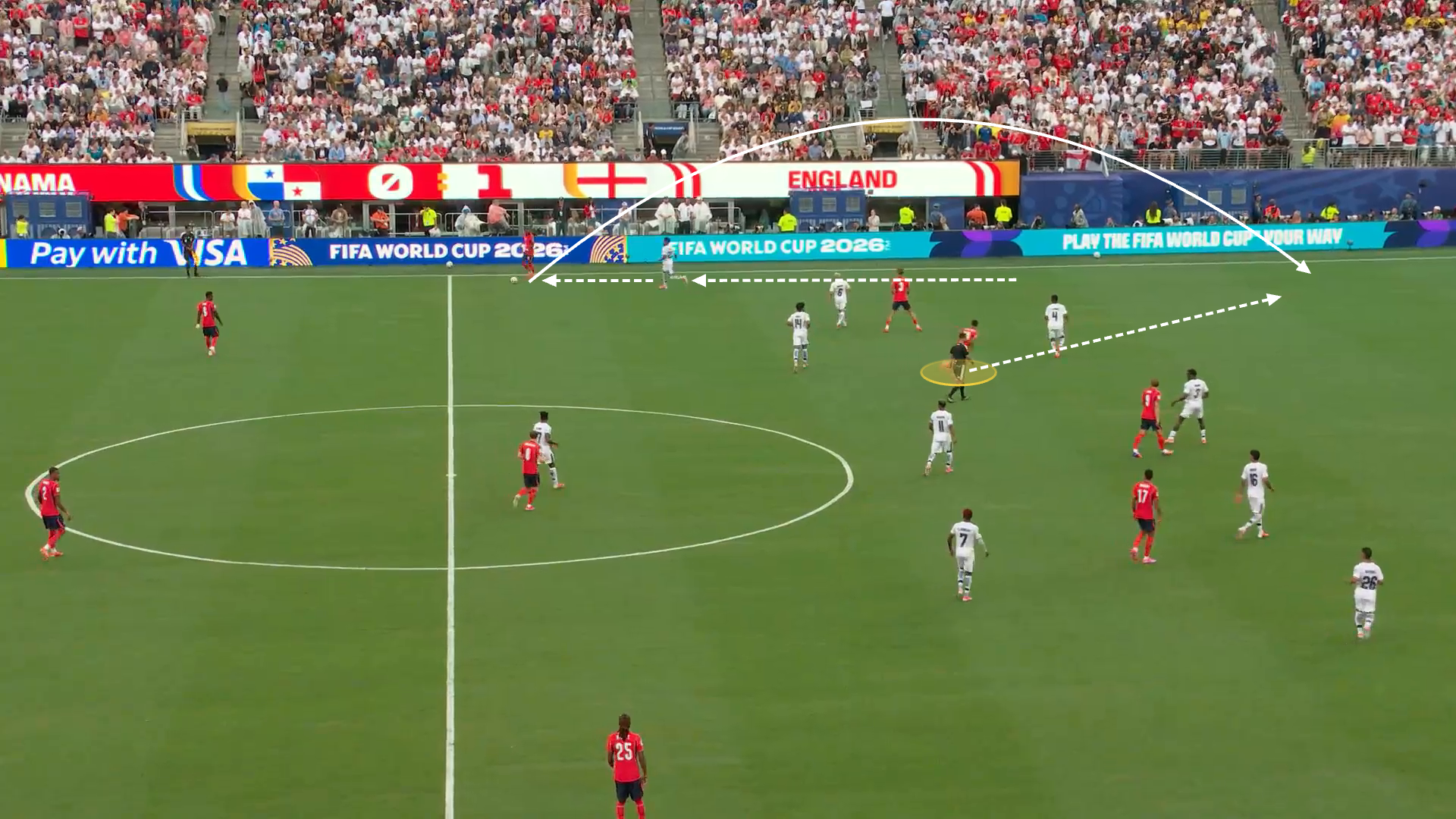
Tuchel’s system is purring. It might not be the easiest on the eye against strong defences but it feels catered to tournament football, providing England a base upon which they dominate the ball, while taking calculated risks.
It is the completeness of Bellingham however, that has proved key in minimising any uncertainty when doing so – a feat more impressive considering that his starting XI place was the subject of much debate before the World Cup.
-
-
Published6 hours ago
-
-
-
Published9 hours ago

-