
This post was originally published on this site.
Great stories, little jeopardy – does the new World Cup format work?
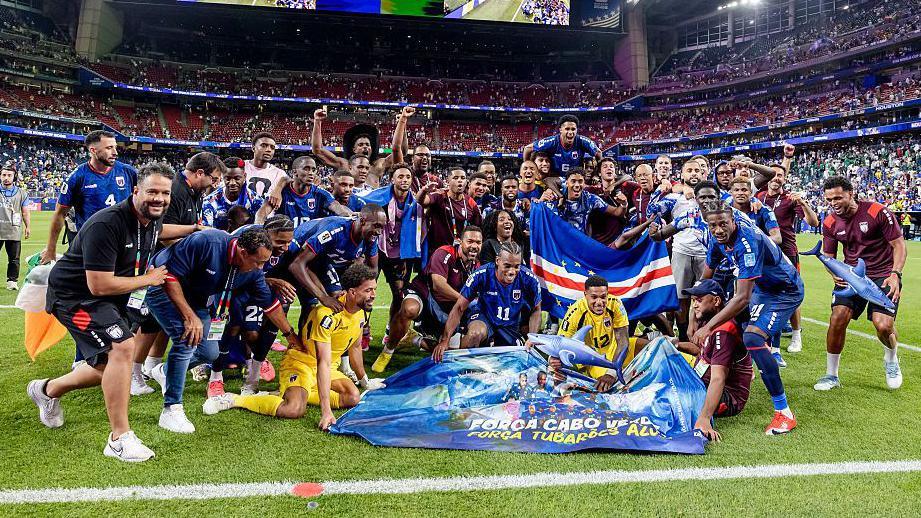 Image source, Getty Images
-
Published
New format, new teams and fascinating storylines. But did the new World Cup group stage really work?
Cape Verde achieved the unthinkable and qualified for the last 32 – knocking out Uruguay in the process.
Gianni Infantino, the Fifa president, may well have been thinking ‘I told you so’ as Cape Verde were one of the countries to benefit from expanding the tournament to 48 teams.
But away from the good news stories, there was no real jeopardy for the major nations.
That was partly caused by the need to send third-placed teams through and Fifa deciding to use head to head as the first group stage tiebreaker.
It meant four teams won their groups with a game to spare, and five were eliminated.
With more goals than any tournament since Sweden 1958, can Fifa claim it has been a success?
Let us know your thoughts in the comments and cast your vote below.
Pros: New faces, new stories
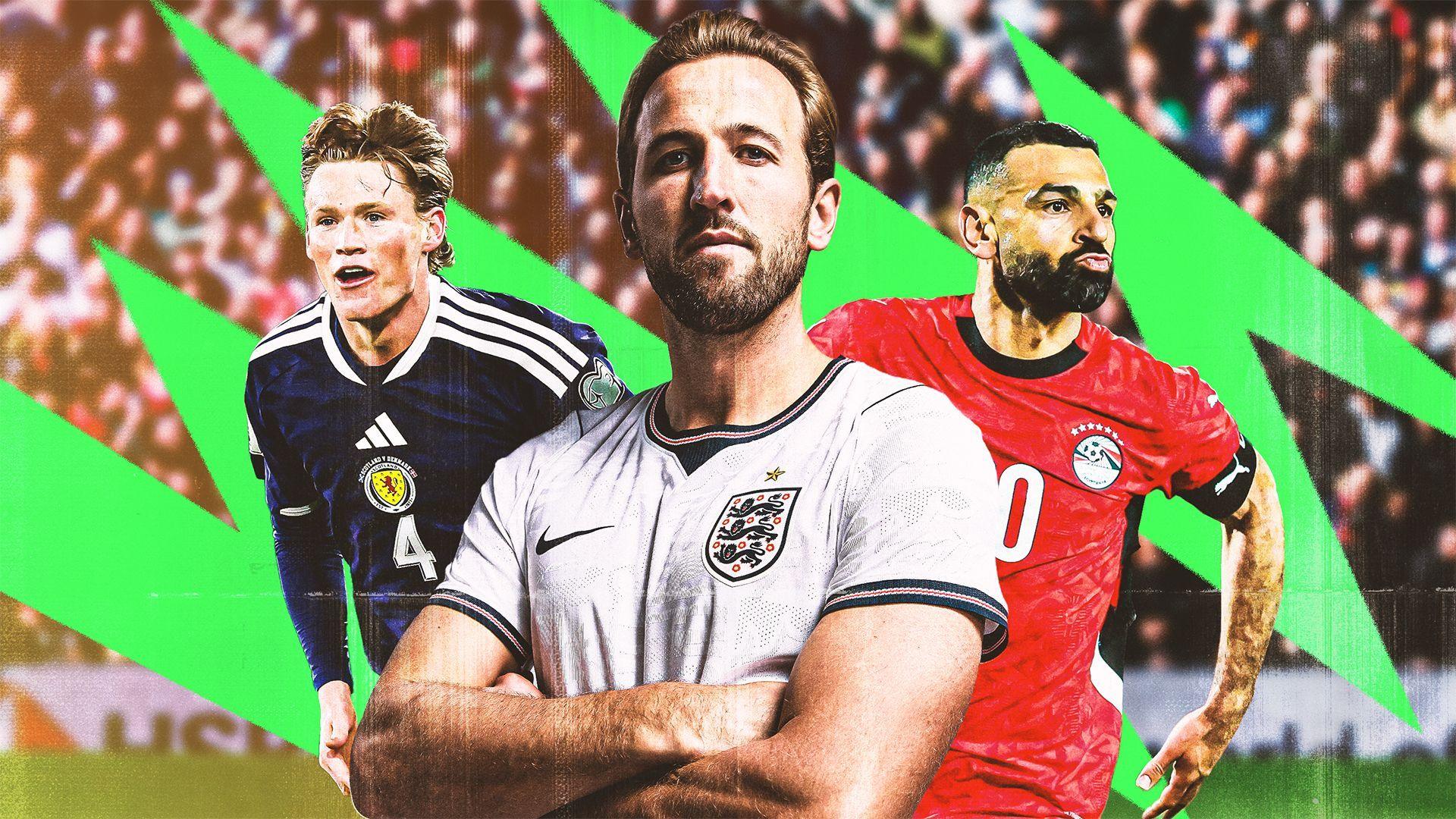
Lionel Messi, Kylian Mbappe, Erling Haaland, Cristiano Ronaldo and Harry Kane trading blows in an electric race for the Golden Boot made plenty of headlines.
That in itself was a gift for Fifa, with the world’s most recognisable players all showing up and trying to outdo each other.
But the World Cup is not just about the star names, certainly at the group stage.
The colour and character of football from around the globe takes the focus.
We did not get any shock defeats in meaningful games for the big teams, like Saudi Arabia beating eventual champions Argentina four years ago.
But there were real stories.
Cape Verde, an archipelagic country in the Atlantic Ocean, may not have come to the World Cup expecting to qualify for the knockout rounds. And they were written off by many before they got on the plane.
After all, who could have imagined they would emerge from a group which included Uruguay and European champions Spain?
That Cape Verde could take a point off Spain, and stop them scoring too, was remarkable. Not just that, they then drew 2-2 with Uruguay, too.
The draw against Saudi Arabia in the final group game secured second placed in the group and a date with world champions Argentina in Miami on Friday.
Ok, they might have been the only team to finish in the top two on three points, but they did what they needed to do.
There could be no greater vindication of Infantino’s plan. Cape Verde were the poster boys.
Vozinha, their 40-year-old goalkeeper, is now a social media star thanks to his heroics against Spain.
Starting the game with 50,000 followers on Instagram, that shot up to five million after full-time. At the latest count, he has 16.7m.
And then his mother, who had been unable to attend the World Cup because of the high cost of obtaining a US visa, was able to fly in for the Uruguay game.
It is a story which only the World Cup can create for a player like Vozinha, who has spent his career in Moldova, Cyprus, Slovakia and the Portuguese second division.
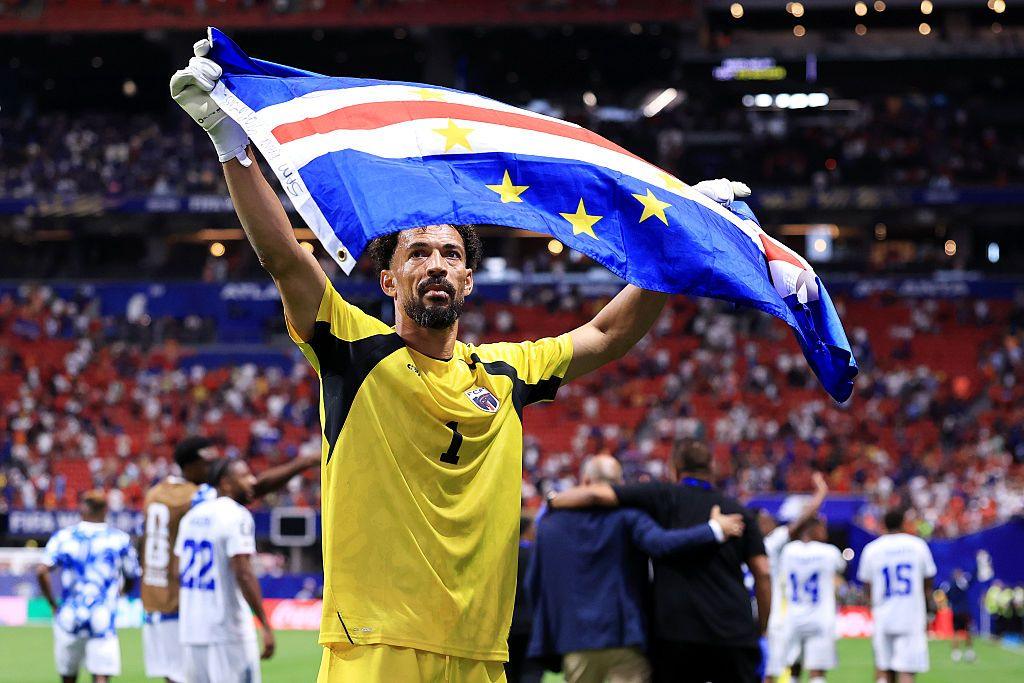 Image source, Getty Images
The Caribbean island of Curacao, which became the smallest country ever to qualify, did not get through but they did claim a point against Ecuador.
DR Congo’s hard-fought 1–1 draw against Portugal helped them to emerge as one of the best third-placed teams.
Haiti’s Wilson Isidor produced a goal-of-the-tournament contender against Morocco, too.
The expansion has allowed for other stories as well.
Bosnia-Herzegovina, Canada, Ivory Coast and South Africa all made it to the knockout rounds for the first time.
Though, of course, it is now much easier to do it with generally weaker groups and more teams going through. The first knockout round, with 32 teams, is the size of the old World Cup format.
But predictably, the tournament has so far been dominated by the European and South American nations.
Not so predictably, African nations have been superb, with nine of their 10 teams getting through to the last 32.
Cape Verde’s story was one reason for Fifa to celebrate this new format, but it might mask under-performance elsewhere. Is there the depth to justify it?
All but one of Concacaf’s 20 points were scored by the three co-hosts.
Curacao, Haiti and Panama, who benefitted from the extra places, scored three goals and conceded 21.
But it was disastrous for Asia. Nine teams and three victories from 27 matches, earning just 0.67 points per game. Only Australia and Japan made it through the group stage.
Asia had double the automatic places for this tournament, up from four to eight, plus Iraq qualified through the play-offs.
If Africa proved the worth of this new format, Asia and Concacaf showed the opposite.
Cons: Where has the jeopardy gone?
Great stories do not make a tournament, they are only part of it.
And there is no getting away from it. The group stage lacked any jeopardy for the major nations. Of the 12 top seeds, only co-hosts Canada and Portugal failed to top their group.
That was partly caused by the expansion to 12 groups, meaning it was very difficult for there to be a group which would create any peril for a top nation.
Barring the surprise elimination of Uruguay, it was essentially a 72-game exercise in chipping away 16 of the smaller countries to create a knockout competition.
But this is about the format and not the teams themselves.
That third-placed teams could qualify removed much of the risk.
Even Ghana coach Carlos Queiroz, whose team went through in third, agreed and called the new format “vulgar and ordinary”.
Fifa also changed the first tiebreaker for teams level on points from goal difference to head to head.
Rather than every country having something to play for on matchday three, nine were basically fulfilling a fixture – four guaranteed to top the group, and five eliminated.
Had Fifa stuck with goal difference, every team would still have been in play.
Then there was the lack of a real competitive edge.
Ecuador’s 2-1 win over Germany was one highlight, but would it have happened if Die Mannschaft had not already won the group?
Not that Ecuador will care, nor should they.
Even the headline-grabbing draws were mostly one-sided, cat-and-mouse games of attack versus defence.
At the 2022 World Cup, only five group games were won by three or more goals. At this World Cup, it was 18 matches.
It is why this tournament has the most goals per game, 2.99, for a group stage since the 32-team format began in 1998. The next highest was Brazil 2014 with 2.83.
It is on track to have the highest goals-per-game rate since the 3.60 of the 1958 World Cup – but it is some way short of the incredible 5.38 of the whole 1954 tournament.
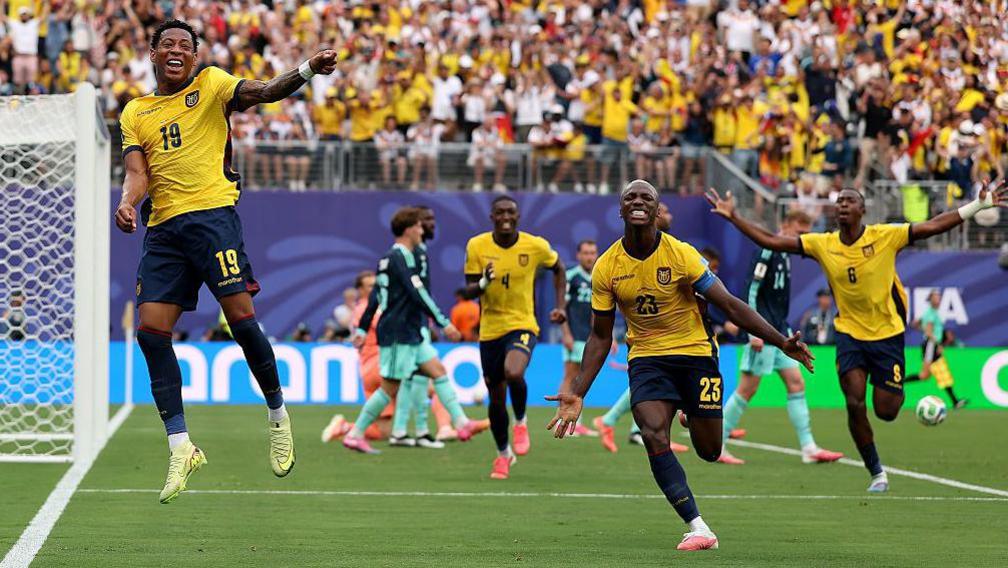 Image source, Getty Images
Spare a thought for Scotland and South Korea.
Two countries who finished on three points on Wednesday but had to wait around until Saturday evening before their elimination was confirmed.
The unfairness of the third-place competition was fully laid bare, greatly weighted in favour of groups which finish later.
Senegal, for instance, knew they had to go for goals against Iraq to get their goal difference into the positive. They took the final spot among the third-placed teams after a 5-0 win.
It also allowed teams in second and third, on three points and at risk of elimination, to play out a draw and both go through.
Australia and Paraguay did have attacking intent in their match but few were surprised when it finished as a 0-0 draw.
Then Austria and Algeria drew 3-3 in the very last match to eliminate Iran. Both teams knew they were through with a draw and eliminated with a defeat.
This was at least an end-to-end game for the most part, but no side had a shot after the 68th minute, following the hydration break
That was until stoppage time, when Algeria took the lead only for Austria to level.
There is not much you can do about it, teams cannot all play at the same time.
But it did feel unjust that the luck of the group stage draw could have such an impact on the potential to qualify in third.
The group stage has felt like a warm-up event for the real event, almost like its own standalone qualifying tournament.
Now we are in to the knockout rounds.
The World Cup really starts now.
-
-
Published9 June
-
-
-
Published6 June
-
-
-
Published1 April
-