

This post was originally published on this site.
Could a heatwave make World Cup matches ‘unsafe’ this week?
-
Published
Temperatures will be rising in parts of the United States and Canada this week as dangerous heat builds, according to the National Weather Service (NWS).
The heat will be accompanied by high humidity which will make the weather more uncomfortable with possible health-related impacts.
As the heatwave intensifies later this week, heat indexes may approach the threshold where global players’ union Fifpro consider it too unsafe for play.
This means that some of the World Cup last-32 matches this week could experience some of the hottest and most difficult conditions of the tournament so far.
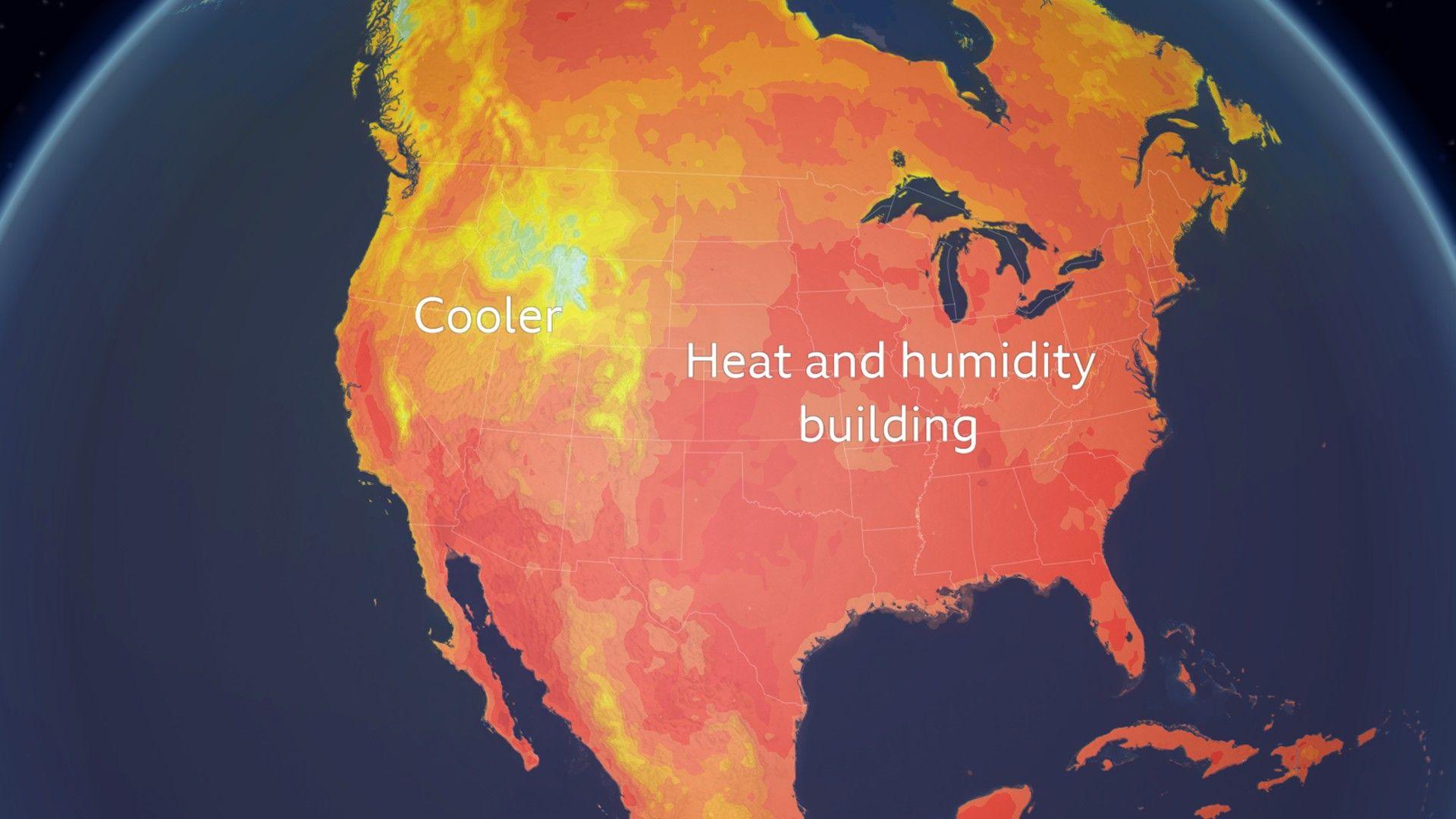
A large heatwave will intensify as the week progresses, covering much of central and eastern US states and through much of Canada.
Temperatures in excess of 32C (90F) are widely expected.
But, add in the humidity, it will actually feel like temperatures are up to 46C (115F) across portions of the southern Plains, mid-Mississippi valley and eventually into parts of the Mid-Atlantic, according to the NWS.
Overnight temperatures may not fall below 20C (70F) – classed as ‘tropical night’ by meteorologists.
The extreme heat will also affect eastern Canada with temperatures forecast to be up to 10C (18F) above average in Ontario and Quebec.
Which matches will be hot?
Not all of the Round of 32 matches in the World Cup will be affected by the heatwave but there will be some notable games to keep an eye on.
The hottest weather this week will be in Texas which will mostly impact fans travelling to and from the air-conditioned stadiums in Houston and Arlington.
In Houston for Brazil v Japan on Monday the ‘feels like’ temperature will be around 44C (111F) and in Dallas on Tuesday up to 41C (106F).
It will obviously feel much more pleasant inside the stadiums for players and fans.
This is also likely to be the case for England v DR Congo on Wednesday in Atlanta where it will also feel hot and humid outside of the air-conditioned stadium.
Elsewhere, some of the matches where the heat could be an issue;
-
Tuesday 30 June – France v Sweden, New Jersey – 30C (86F).
-
Thursday 1 July – Portugal v Croatia, Toronto – 31C (88F).
-
Friday 2 July – Argentina v Cape Verde, Miami – 31C (88F).
-
Friday 2 July – Colombia v Ghana, Kansas City – 32C (90F).
The games on Friday in Miami and Kansas City could be especially uncomfortable as the high humidity here will push the feel like temperature up to 40C (104F).
In the official measure of how heat and humidity affects the human body – known as ‘Wet Bulb Global Temperature’ – both these matches may have an index close to the threshold where Fifpro consider it too unsafe to play.
By this weekend, the heat will peak across eastern areas of the US and Canada.
This could be a particular issue as we head into the last 16 round in Philadelphia and New Jersey on Saturday and Sunday where temperatures will be way above normal.
Temperatures will soar into the high 30’sC (100F) where it will feel like over 40C (104F).
Could thunderstorms be a factor too?
With high temperatures and high humidity you would expect there to be thunderstorms.
Initially though, most of the wet weather and storms will be over the Northern Plains and Upper Midwest – away from the World Cup host cities.
Later in the week though there may be thunderstorms developing in the heatwave area that could affect some of the matches.
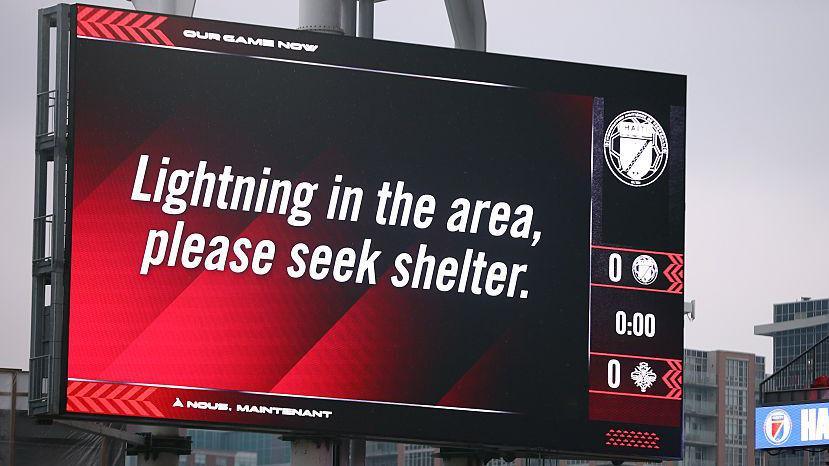
Thunderstorms only have to be within an eight-mile radius of a stadium for a match to be suspended so players and spectators can seek safe shelter.
For England’s game against DR Congo in Atlanta on Wednesday there is currently a small risk of a thunderstorm which may impact the match. The risk is higher later in the afternoon once the game has finished.
There is a also a high chance of a thunderstorm affecting the Argentina v Cape Verde last 32 game in Miami on Friday.
-
-
Published5 June
-
-
-
Published10 May
-