
This post was originally published on this site.
Resident doctors in England accept pay deal and end strikes
-
Published
Resident doctors in England have voted to accept the government’s offer on pay and jobs, bringing an end to three years of strikes.
The offer includes more training jobs, faster pay progression and a plan to cover out-of-pocket expenses like exam fees.
Patients have seen hundreds of thousands appointments cancelled due to industrial action over the past few years.
Some 53% of eligible British Medical Association members voted in favour in a referendum. The turnout was 57%, with 32,932 doctors voting.
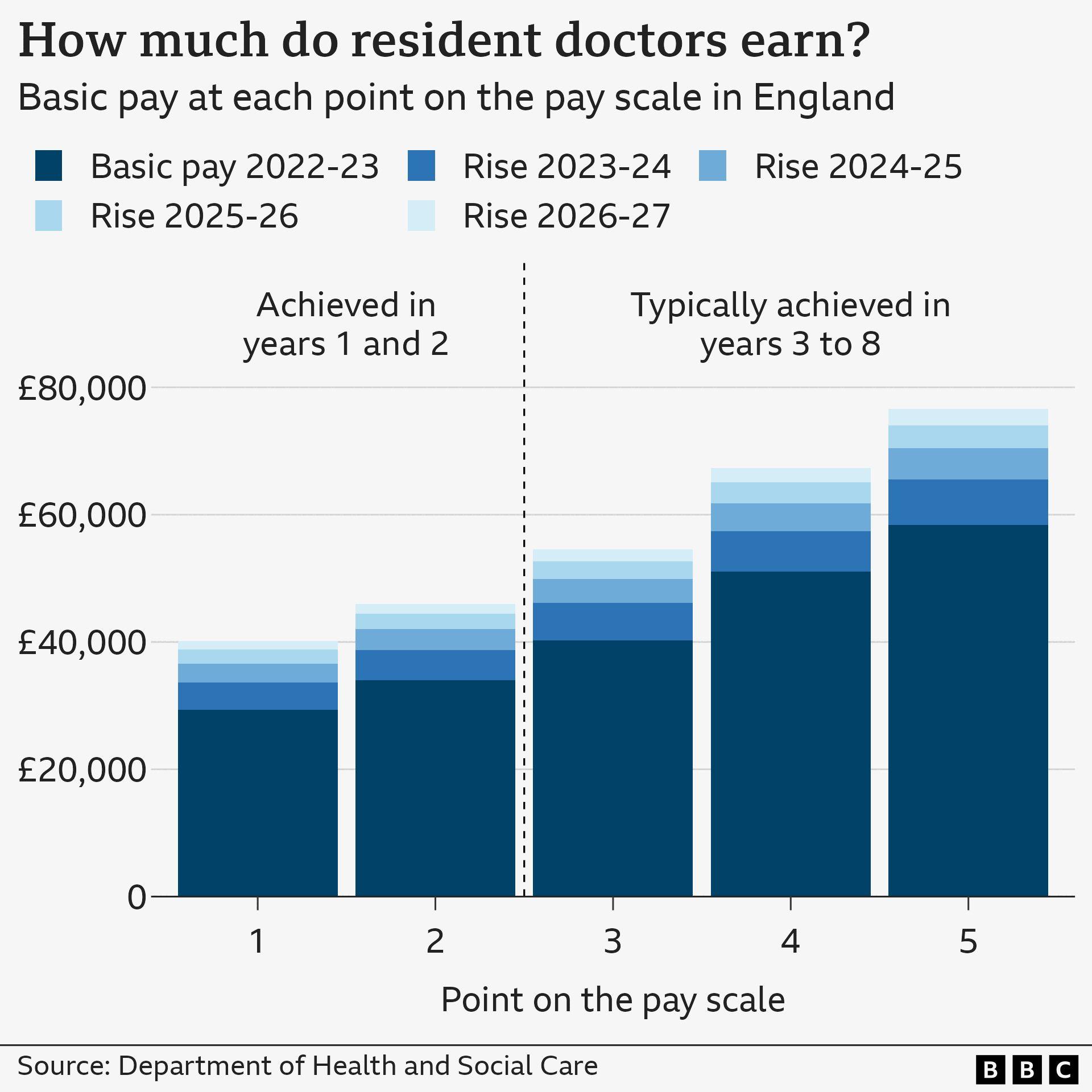
The offer includes a 3.5% pay rise this year, as recommended by an independent review body.
Resident doctors will get backdated pay to 1 April 2026, worth an average increase of 4.9% under the wider package, according to government.
The pay rise would grow to an average 6.6% by April 2027, with a further increase to follow, the union said.
It means starting salaries will be just over £40,000, with the most senior resident doctors getting £76,500 in basic pay. They can earn thousands more each year for things like working unsociable times and additional hours.
In addition, 4,500 extra training places for newly qualified doctors have been promised and doctors’ exam fees will be paid.
The BMA’s resident doctors committee chair Dr Jack Fletcher said: “These strikes did not need to happen.
“We spent far too long at loggerheads with the government when a solution in everyone’s interest was waiting for us: more jobs for doctors, better pay for doctors, and a better-staffed NHS secured for patients well into the future.”
Health and Social Care Secretary James Murray said drawing a line under the disruption was good news for resident doctors, patients and the NHS as a whole.
Resident doctors in Wales are currently resolving or navigating disputes, without going on strike, regarding pay and training opportunities.
In Scotland, they have accepted the government’s pay offer.
In Northern Ireland, resident doctors are holding a 24-hour strike beginning at 07:00 BST on 29 June.
Resident doctors are qualified doctors who have completed a medical degree.
They make up nearly half of all doctors in England, and work across the NHS including in A&E and GP surgeries.
After their initial degree and the mandatory two years of post-graduate foundation training, many choose to specialise in a particular area of medicine or surgery.
They used to be known as junior doctors, but in September 2024 the government agreed to change the name of their role to better reflect their expertise.