
This post was originally published on this site.
Putin makes rare admission of fuel shortages caused by Ukrainian strikes
-
Published
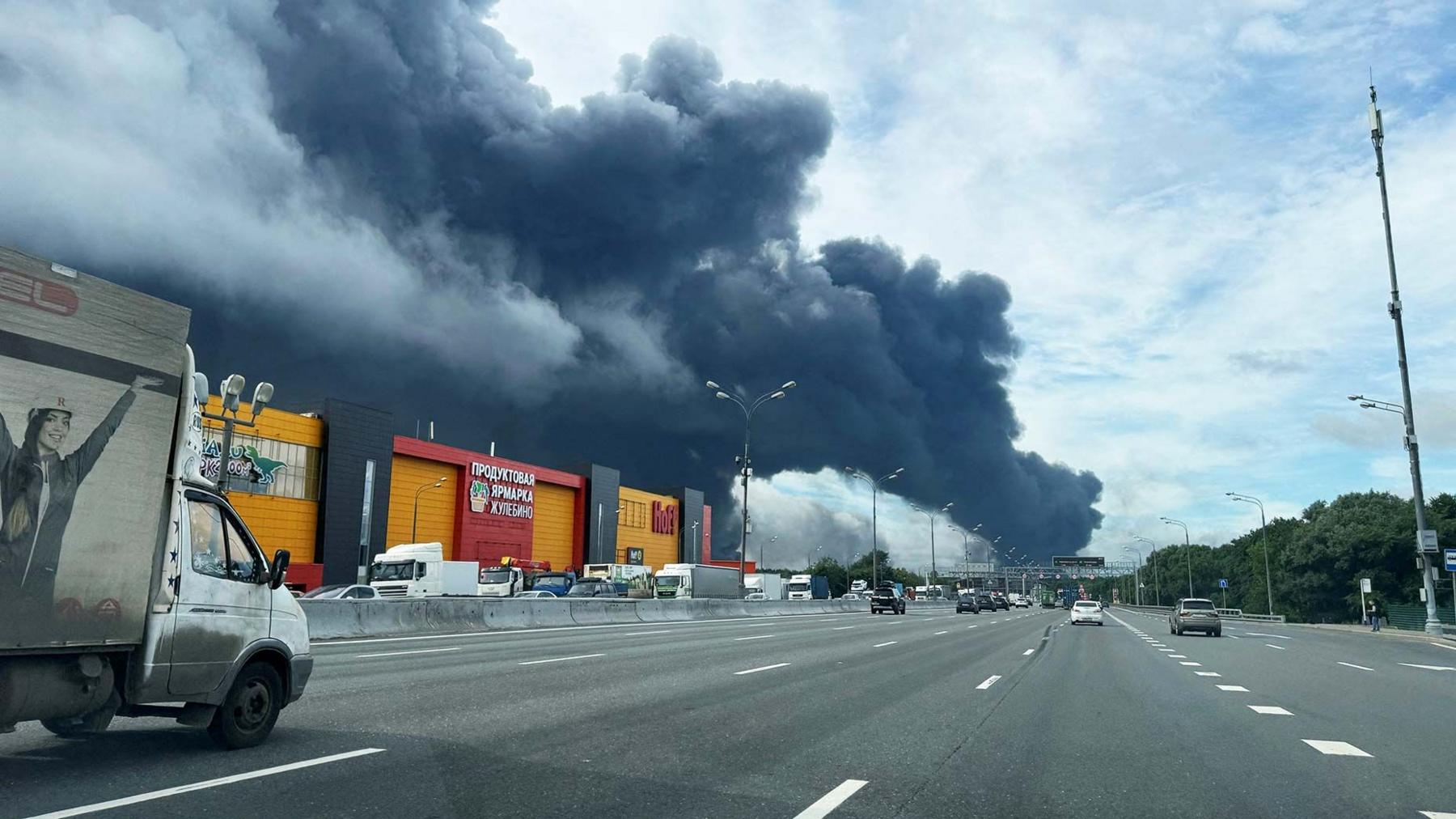
In Russia, the impact of Ukraine’s missile and drone strikes on energy infrastructure from Moscow to the Black Sea and beyond has long been evident.
Queues at petrol stations. Fuel rationing widespread. Refineries hit. Drivers in the Russia-annexed Ukrainian peninsula of Crimea banned from filling their tanks so priority can be given to military vehicles.
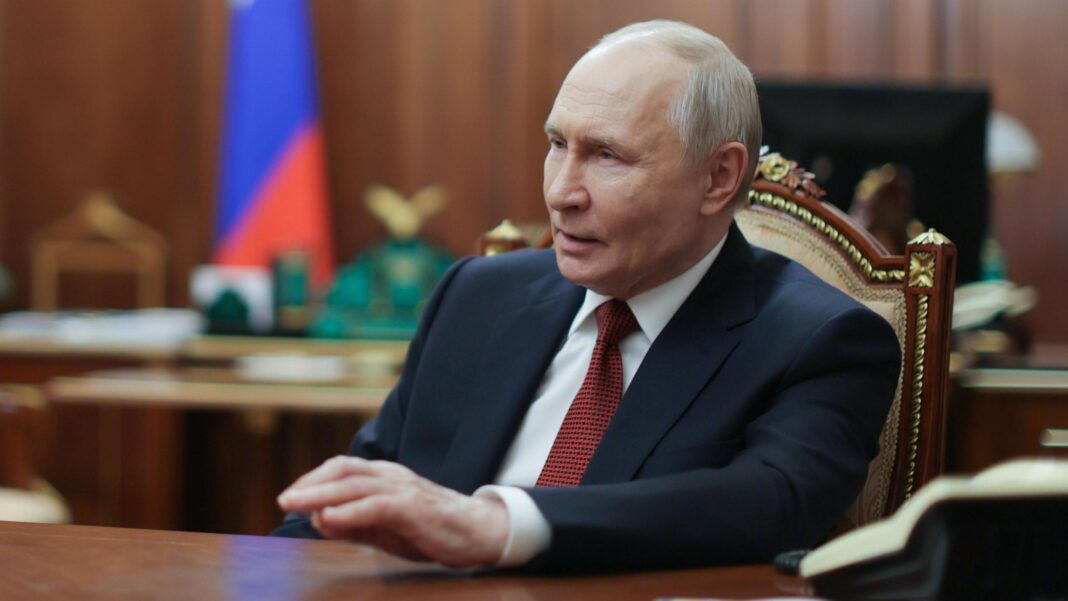
But such is the gravity of the situation it has now been explicitly acknowledged by President Vladimir Putin for the first time.
Over the weekend, Russia’s president discussed the crisis with senior officials and oil executives. And in public remarks, he was unusually frank.
“You’re well aware that problems persist for both motorists and businesses,” he told the meeting. “Unfortunately, there are still queues at petrol stations, and finding the right grade of petrol isn’t always easy.”
He also mentioned the difficulties faced by the agricultural industry and said the harvest “depended on” the fuel supply schedule being met.
According to independent Russian outlet Mediazona, 56 Russian regions are currently enforcing fuel restrictions.
Later, in an interview with Russian state television, Putin was even more open.
He admitted Ukraine’s attacks were “obviously creating problems”: “We are currently seeing a certain shortage,” he said, “but it’s not critical.”
He promised to increase production of air defences to protect Russian energy infrastructure, and to speed up repairs to the refineries that Ukraine managed to hit.
In Crimea, Putin admitted, only “a few days’ supply” was left – but said he was “confident” more fuel would be brought in soon.
It is unusual for Putin to be so open about the impact of Ukrainian strikes and the consequences for Russian people.
But such as been the scale of the fuel shortages and the resulting public awareness, he was probably left with little choice but to acknowledge the reality while still insisting – as usual – that Russia’s war effort was making progress.
This admission of the difficulties being felt in Crimea is particularly significant, given the symbolic importance of the peninsula to many Russians – and to the Kremlin leader in particular.
Since the start of its occupation of Crimea in 2014, Moscow has turned it into a military base and a strategic point for controlling the Black Sea, and used it to launch its 2022 full-scale invasion of Ukraine.
In the televised interview Putin also gave a clue as to why he was being so open about the problem: Ukraine, he argued, was trying to divide Russian society, weaken its support for the war and increase support for negotiations.
“We won’t give them that chance,” he said, adding that Ukraine’s long range strikes were having “absolutely no impact on the situation at the front line”.
The authorities in Kyiv challenge this assessment, saying Ukraine’s long range attacks are designed not only to bring the war home to ordinary Russians but also to force their military commanders to divert resources away from the front line.
In recent months, Ukraine has been growing in confidence that the tide of war was turning in its favour, launching deep strikes on St Petersburg and Moscow, stepping up attacks on Crimea, and openly seeking to inflict maximum casualties along the front line.
But the Kremlin said on Monday Russia’s plans remained the same – to force Ukrainian forces to leave four south-eastern regions that Moscow claims as its own, which Kyiv rejects. “Our position is well known,” spokesman Dmitry Peskov said.
In his interview Putin claimed Ukraine was offering to limit hostilities and begin talks – although he dismissed this as an attempt by Kyiv to buy time to regroup and rearm.
“It is clear why this proposal is being made, because our counter-strikes deep into Ukrainian territory are much stronger, have greater impact and are, frankly, more destructive,” Putin said.
Kyiv’s strikes on Russia, he insisted, were meant to be the “salvation” of the Ukrainian army, which Putin insisted was “catastrophically” depleted.
“But saving the Kyiv regime is not part of our plans.”
-
-
Published18 June
-