


This post was originally published on this site.
Time for Tuchel to show hand as England enter World Cup danger zone
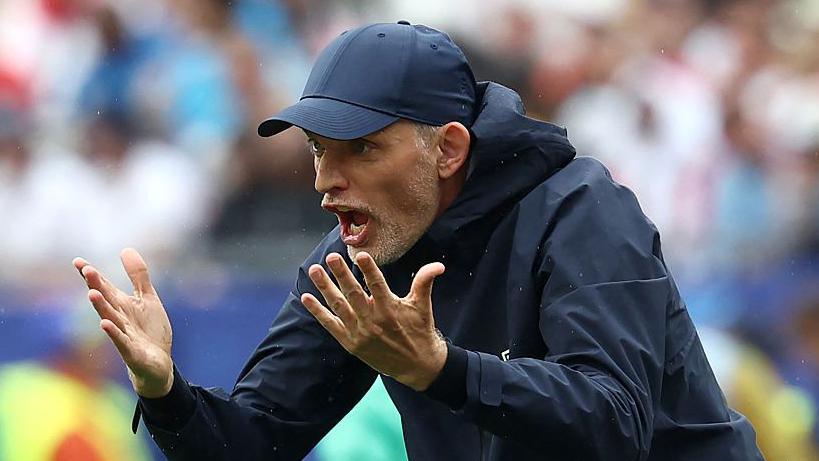 Image source, Getty Images
-
Published
England head coach Thomas Tuchel describes the World Cup knockout stage as “the third chapter” in a story he hopes will end in the glory of a historic triumph.
Tuchel explained that phase one of his stated mission to bring the trophy to England for the first time since 1966 was the preparation training camp in Miami, followed by qualification for the last 32 by topping Group L.
“Chapter Two” was satisfactory rather than gripping, with wins against Croatia and Panama either side of a dismal goalless draw with Ghana.
England have now entered dangerous territory where one slip or one below-par performance can bring Tuchel’s tale to a painful end.
They face DR Congo in Atlanta on Wednesday (17:00 BST), live on BBC TV, with warning signs already posted to the bigger nations that this is becoming the World Cup of shocks.
Tuchel’s players will at least be spared this city’s brutal heat and stifling humidity by the closed roof and temperature control inside the space-age $1.6bn (£1.2bn) Atlanta Stadium.
England’s World Cup quest has so far been a case of “job done” – but now it all goes on the line in the sudden-death environment of knockout games.
-
Tuchel will stick to Southgate’s penalty plan
-
Published8 hours ago
-
-
Bigger than Rumble in the Jungle? DR Congo bid for World Cup history
-
Published15 hours ago
-
Tuchel cannot afford any mistakes
To play this video you need to enable JavaScript in your browser.
This video can not be played
Tuchel’s team selections have been a mixture of tactical tinkering, working around injuries and managing minutes, as well as devising the formulas for England’s progress.
One key area stands out where England are vulnerable, where elite opponents will be licking their lips at the prospect of facing Tuchel’s side.
And that is in defence.
“The area of the pitch you want stability in is your goalkeeper and back four,” former England captain Wayne Rooney told BBC Sport. “With the back four we haven’t had that.”
England’s defensive frailty was flagged up before the tournament, especially the possibility of injuries to players such as Newcastle’s Tino Livramento and Chelsea captain Reece James, who had both suffered regular problems.
Livramento was ruled out even before the World Cup started, and while Tuchel expressed surprise about the hamstring injury James sustained against Croatia, few others were, given his history of such problems.
It has left Tuchel’s defensive selections exposed, especially at right-back, when James’ deputy Jarell Quansah was injured against Panama, leaving England’s resources even lighter.
James and Quansah will both be missing against DR Congo, with Tuchel saying: “They are getting closer and closer. Jarell is a bit ahead of Reece, but the race is close.”
-
England right-backs Quansah and James miss training
-
Published8 hours ago
-
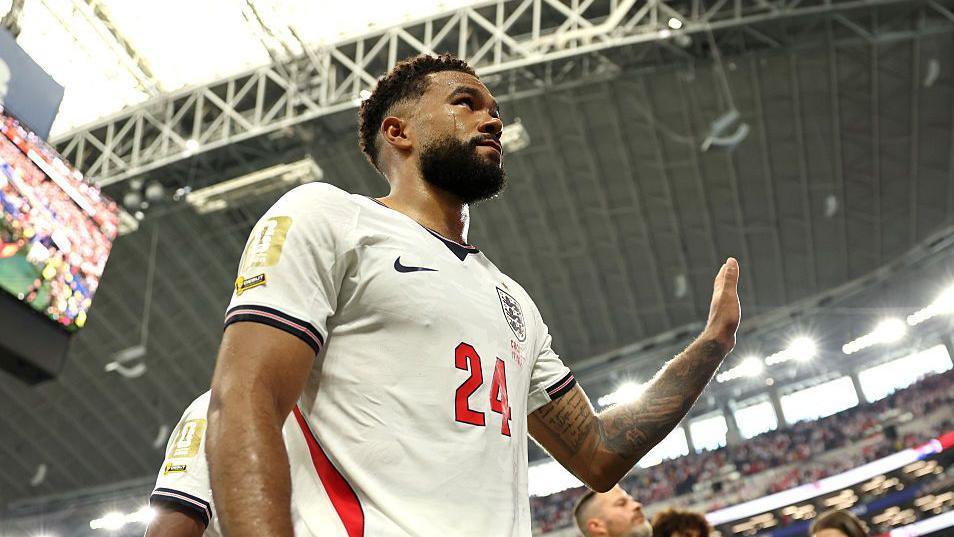 Image source, Getty Images
Their injuries leave Djed Spence as the last right-back standing, although Tuchel could also switch centre-back Ezri Konsa to that position, opening up the possibility of a recall for John Stones.
Jordan Pickford is the goalkeeping mainstay, but the defence is unsettled, Tuchel starting with Stones and Konsa in the 4-2 win against Croatia. He then switched to Konsa and Marc Guehi, with Stones dropping out.
Tuchel has been left having to factor in 32-year-old Stones starting only five Premier League games before leaving Manchester City at the end of last season, while James only started 20 for Chelsea.
The German’s apparent fixation with a strategy of picking versatile defenders who can play on both flanks, along with central defenders who can fill in at full-back, has placed England in a tricky situation.
If England face Brazil and Vinicius Jr in a potential quarter-final in Miami, this is surely a job for a specialist. Tuchel must hope he is not having to keep his fingers crossed while making those optimistic noises about James’ fitness.
Elsewhere, Tuchel must also decide whether to start Arsenal’s Bukayo Saka against DR Congo. He was given his first start of the World Cup against Panama, lasting 63 minute while continuing to nurse an Achilles tendon problem.
Speaking to the media in Atlanta, Tuchel said: “We know these are the moments where we have to find ways to win. We need to dig in and to play at the highest level.”
He added: “We are the favourites. We play against our own expectations. We expect to go further than the round of 32, so why should the public not expect that?”
Tuchel must get every decision right from now on. As with England’s players, the head coach cannot afford mistakes.
-
How Tuchel is still searching for solutions out wide – Shearer
-
Published1 day ago
-
Is Rice England’s key man?
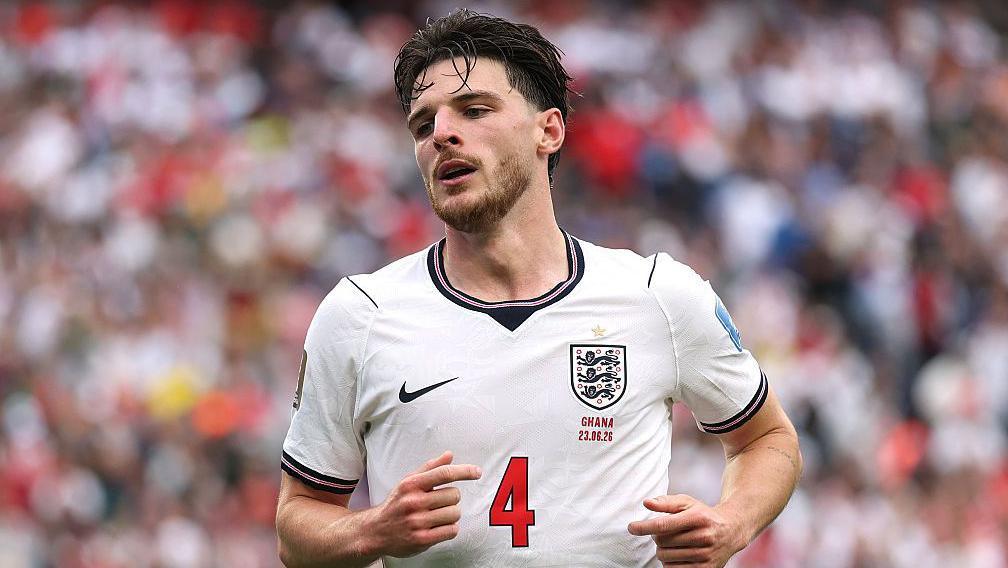 Image source, Getty Images
Having qualified from the group stage with a game to spare, Tuchel wisely rested Declan Rice for the win against Panama, a common sense move with Arsenal’s outstanding midfielder on a yellow card, while also dealing with injury concerns of his own.
Rice has been managing a hamstring problem, and also took a kick on the calf against Ghana.
England’s display against Panama, where they conceded 13 shots to the underdogs and looked too open to counter-attacks, simply confirmed Rice now stands alongside captain Harry Kane and Jude Bellingham as a player who England simply cannot replace.
Tuchel’s selection of attack-minded pair Bellingham and Aston Villa’s Morgan Rogers brought its rewards, but also left England exposed, leaving Elliot Anderson overworked and over-run in central midfield, through no fault of his own.
More accomplished sides than Panama would have inflicted serious punishment.
It only underlined Rice’s importance. If England are to win the World Cup, they will need his quality in providing a defensive screen, creation going forward, game intelligence – and of course, his delivery from set pieces.
Rice not only provides the platform to shield England’s questionable defence. He contributes in attack.
In short, he is irreplaceable.
Tuchel and England warned as giants fall
England, under the fiercely driven Tuchel, are highly unlikely to have their World Cup aspirations undermined by complacency.
If there was the slightest danger, it has surely been removed by Germany’s shock defeat by Paraguay on penalties, which has placed coach Julian Nagelsmann’s position in peril, especially given the vast lobby for ex-Liverpool manager Jurgen Klopp to succeed him.
The Netherlands, with their posse of Premier League players, went the same way against talented Morocco, leading to coach Ronald Koeman’s resignation less than 24 hours later.
The size of the prize and the penalties for failure have been illustrated by the instant pressure engulfing Nagelsmann – and the departure of Dutch counterpart Koeman – after those losses.
Tuchel is aware of the dangers, saying: “There is no percentage of over-confidence in our approach. The games in the round of 32 speak a very clear language. It is very narrow margins.
“It actually makes me more calm than nervous.”
He added: “This is the nature of knockout football. Netherlands and Morocco could have been a quarter-final or semi-final, and Japan and Brazil could have been a quarter-final.
“I think it can actually calm our minds. It just shows these are games of narrow margins. It can help us not to over-expect.
“Teams are well prepared. It is difficult for any team to break another down.”
This is threatening to become a World Cup of shocks, with Carlo Ancelotti’s Brazil only edging past Japan thanks to Gabriel Martinelli’s stoppage-time winner.
England and Tuchel must ensure they do not fall victims to another against DR Congo.
-
-
Published6 June
-
-
-
Published1 April
-


