
This post was originally published on this site.
Iran begins public mourning for Ayatollah killed in February
To play this video you need to enable JavaScript in your browser.
This video can not be played
-
Published
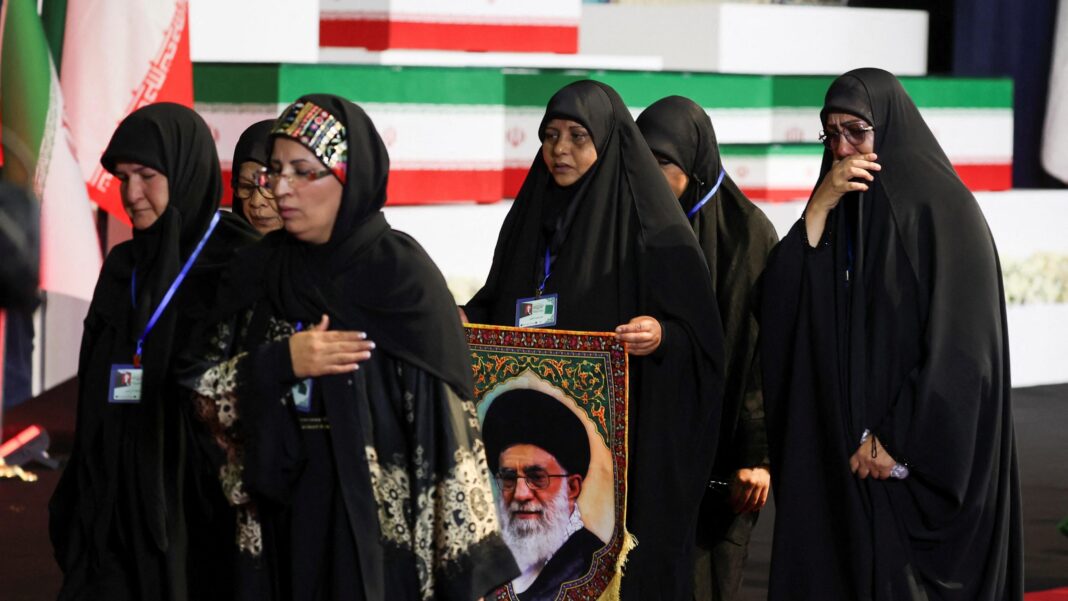
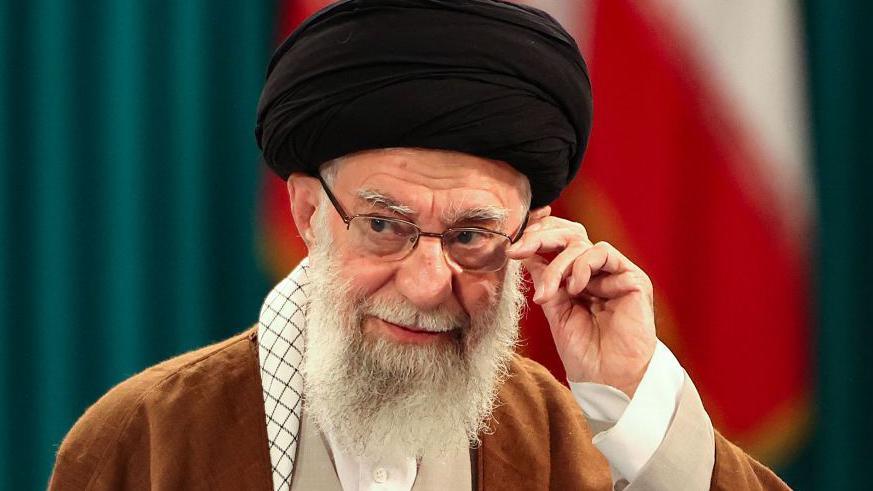
Iran has begun several days of public mourning and funeral processions for its former Supreme Leader, Ayatollah Ali Khamenei, more than four months after he was killed in strikes launched by the US and Israel.
The former Ayatollah’s body will lie in state in Tehran’s Grand Mosalla from Friday, ahead of his burial in his hometown of Mashhad next Thursday.
Iranian authorities said 12 to 20 million people were expected to attend, which they are calling the “funeral of the century”.
It comes as Iran and the United States observe a fragile ceasefire after signing a preliminary deal to halt their conflict in June.
Six days of ceremonies will start at 06:00 (03:30 BST) on Saturday, at Tehran’s Imam Khomeini Mosalla, which visitors can visit to pay their respects until Sunday afternoon.
There will be an official funeral ceremony in Tehran on Saturday, which the Tehran-based Mohammad Rasulullah Corps is leading.
The group’s commander Hassan Hassanzadeh said Khamenei’s coffin would be displayed on an elevated platform, with crowd flows designed to allow visitors to enter and leave within 15 to 20 minutes.
Khamenei’s body will lie in the Grand Mosalla for three days, alongside the remains of family members who were also killed in the US and Israeli strikes in February.
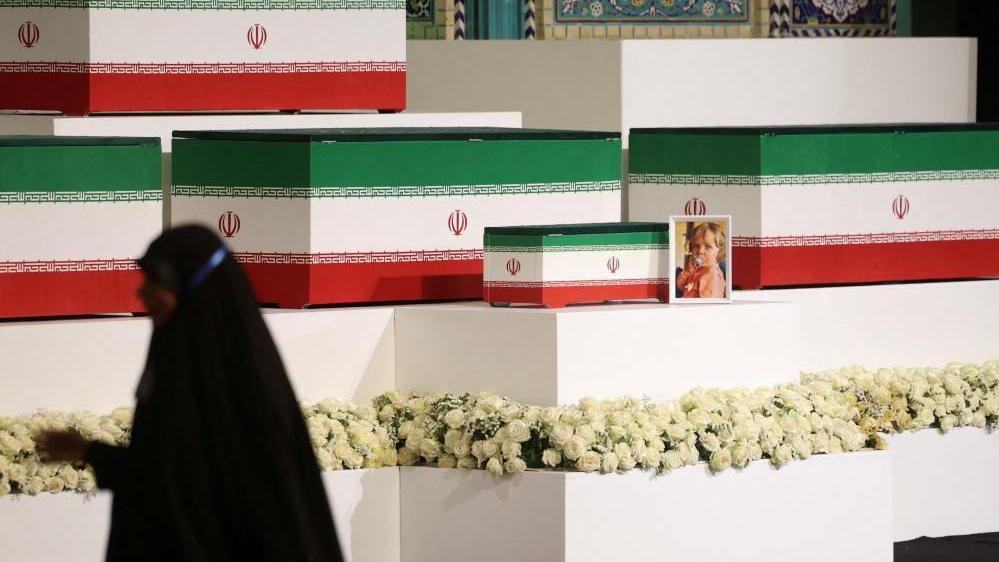 Image source, Reuters
Authorities have ordered public and private offices in Tehran to close from Saturday through Monday, while traffic restrictions will shut down most of the city centre to private vehicles, AFP reported. The airspace over Tehran will be partially closed from Friday and fully closed on Monday.
On Tuesday, events will move to Qom, just south of Tehran, where a senior Shia cleric will lead funeral prayers at Jamkaran – one of Iran’s most prominent and symbolic religious sites.
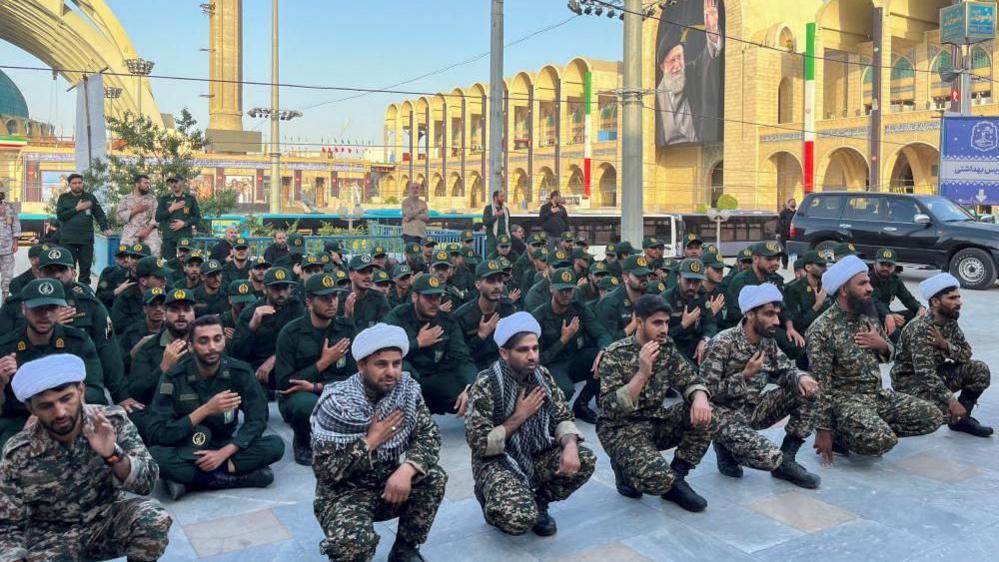 Image source, Reuters
Khamenei’s body will then travel to Najaf in Iraq on Wednesday. Following a procession at the shrine of Imam Ali, Shia Islam’s first imam, ceremonies will continue in Karbala before the body returns to Iran.
Iranian officials say the Iraq events follow requests from Iraqi groups, with some analysts seeing them as representative of Khamenei’s influence across the Shia Muslim world and Iran’s religious and political ties across the region.
Iranian Foreign Minister Abbas Araghchi visited Baghdad to coordinate the arrangements, saying the funeral had a “symbolic importance”.
On Thursday, Khamenei will be buried in the city of his birth, Mashhad, at the Imam Reza Shrine, the mausoleum of Shia Islam’s eighth imam and Iran’s most important pilgrimage site, which attracts millions of visitors each year.
Representatives from multiple countries are expected to attend the ceremonies, including Pakistan’s Prime Minister Shehbaz Sharif.
Ceremonies will continue across the country for 40 days, with commemorative events planned until the first anniversary of Khamenei’s burial.
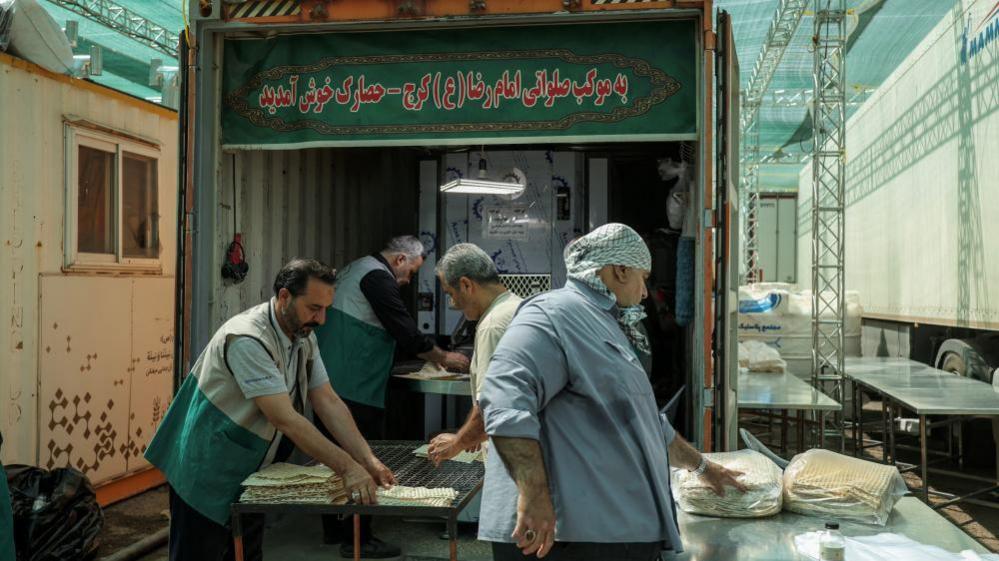 Image source, Reuters
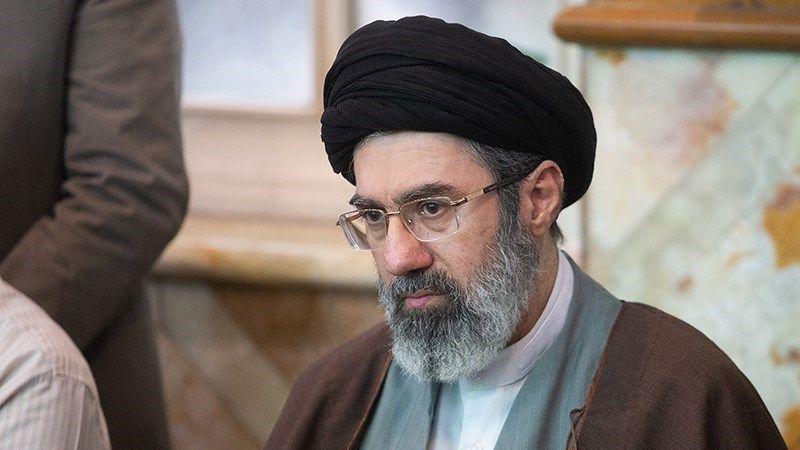
Khamenei was succeeded by his son, Mojtaba, who has not been seen in public since becoming supreme leader.
Key questions around the ceremony centre on whether Mojtaba will attend the funeral.
Last week, secretary of the organising committee, Ali Akbar Pourjamshidian, said any decision on Mojtaba’s attendance would be announced by the offices of the armed forces commander-in-chief and the supreme leader.
Questions also remain about who will lead the funeral prayer, as in Shia tradition the role carries religious and political significance.
-
-
Published8 March
-
-
-
Published1 March
-