
This post was originally published on this site.
How England used five mini games to beat Mexico
To play this video you need to enable JavaScript in your browser.
This video can not be played
-
Published
Much was made about the challenges England would face against Mexico at the Azteca Stadium – and it proved to be tough.
Between the crowd, the altitude of Mexico City and the intensity of the Mexico players, England had to manage the game in numerous phases – phases so distinct that it felt like five smaller games.
England manager Thomas Tuchel proved again why he is known to be so tactically astute and a master in knockout football as England reached the quarter-finals of the World Cup.
Game 1: Keep Mexico at bay
England’s phased approach to the match was confirmed by assistant coach Anthony Barry at half-time.
“We prepared the players that up until the first water break it would be a difficult game,” he said.
“We would have to suffer. Mexico always start fast. We knew 0-0 would be a good result [at the break].”
England muted some of Mexico’s momentum early on.
The visitors were notably more measured defensively than in previous games.
Before the match Tuchel, who has instilled high-intensity pressing into his side, called for them to be more deliberate in doing so.
“We are fully committed to our press,” he said. “But it’s not economical. We need to be smart and pick the right moments.”
England did pick their moments, albeit not without flaws, and looked better than they did against DR Congo in the last 32.
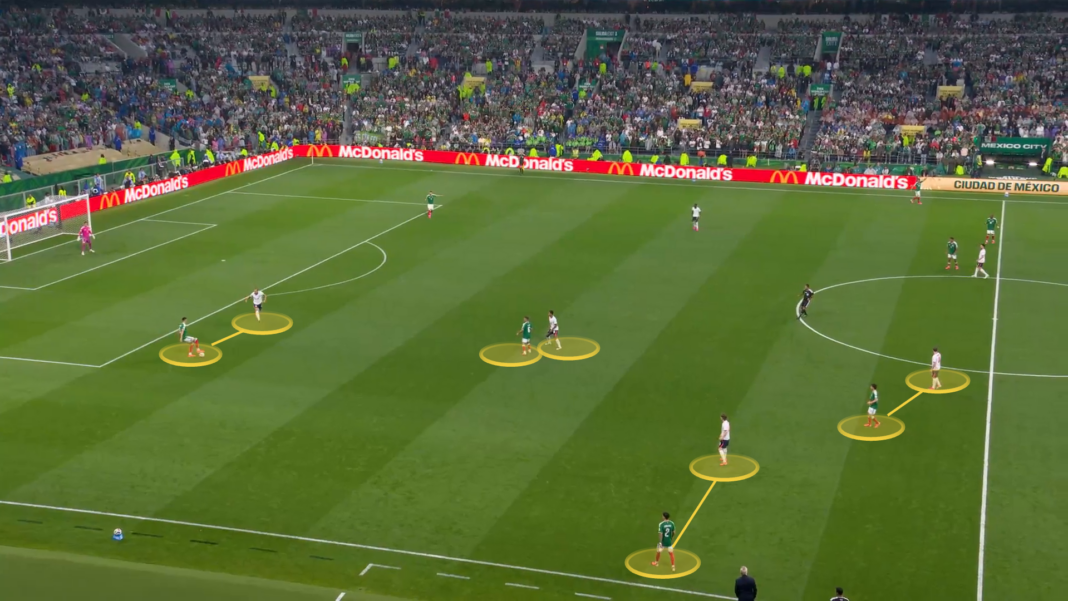
When Mexico built from deep, England used Harry Kane, Jude Bellingham and an extra player – one more than they used against DR Congo – to cut off their options.
Their improved press stalled Mexico but, through clever dropping-deep movements, a midfielder or winger would show for the ball unmarked and Javier Aguirre’s men were able to get up the pitch.
England midfielder Elliot Anderson held his position deeper in these moments – close to his centre-backs – rather than pressing high, to prevent the easy out-ball for Mexico. This became a key detail later in the game.
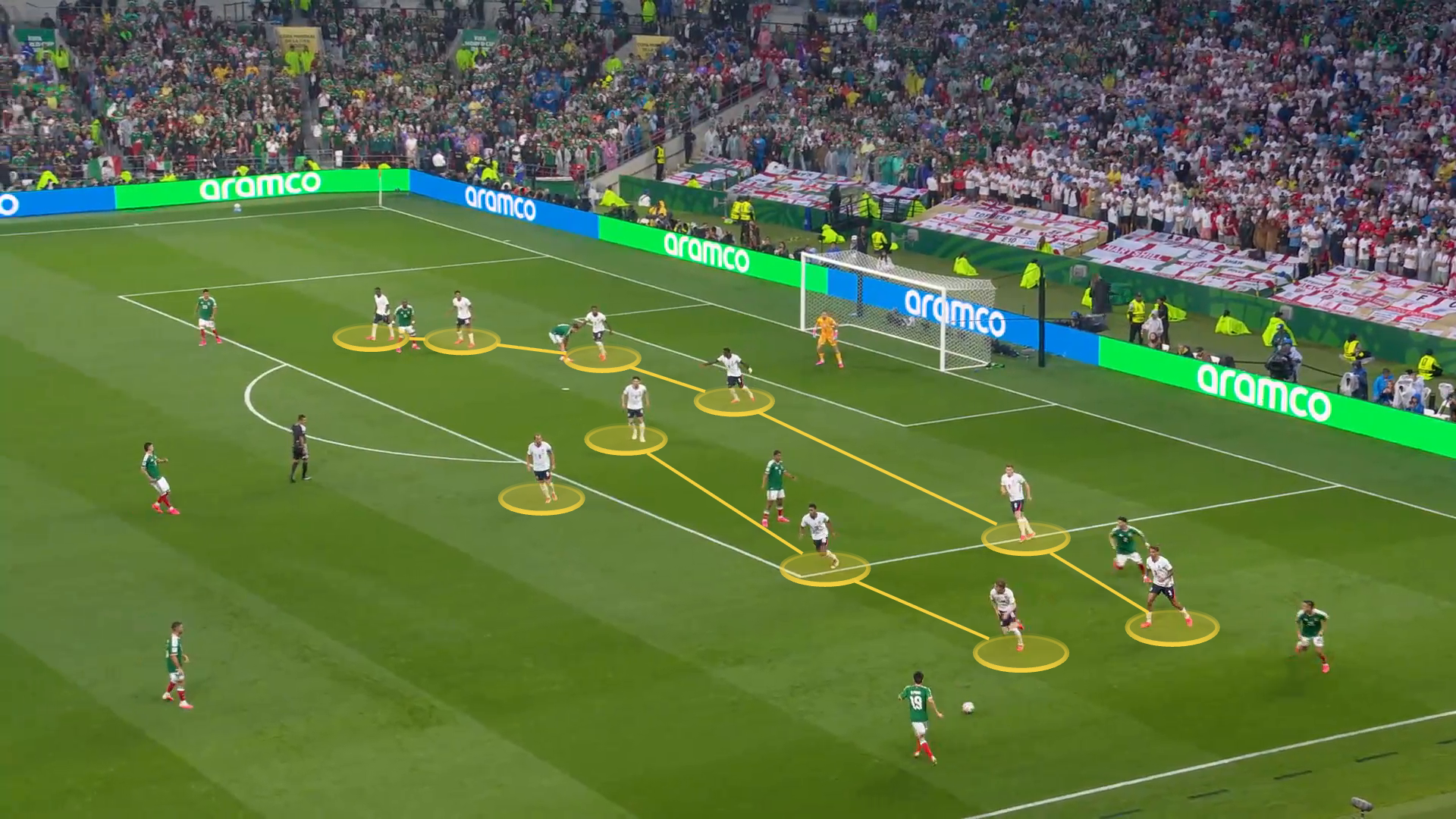
When Mexico established possession higher up the pitch, England dropped into a mid-block. They were willing to defend space in the early parts of the game rather than looking to win it back immediately.
England took an average of 12.1 seconds to recover the ball in their first four games at this World Cup. In the first half against Mexico, that figure was 37 seconds.
Game 2: Smash and grab
Moments defined England’s strong end to the first half.
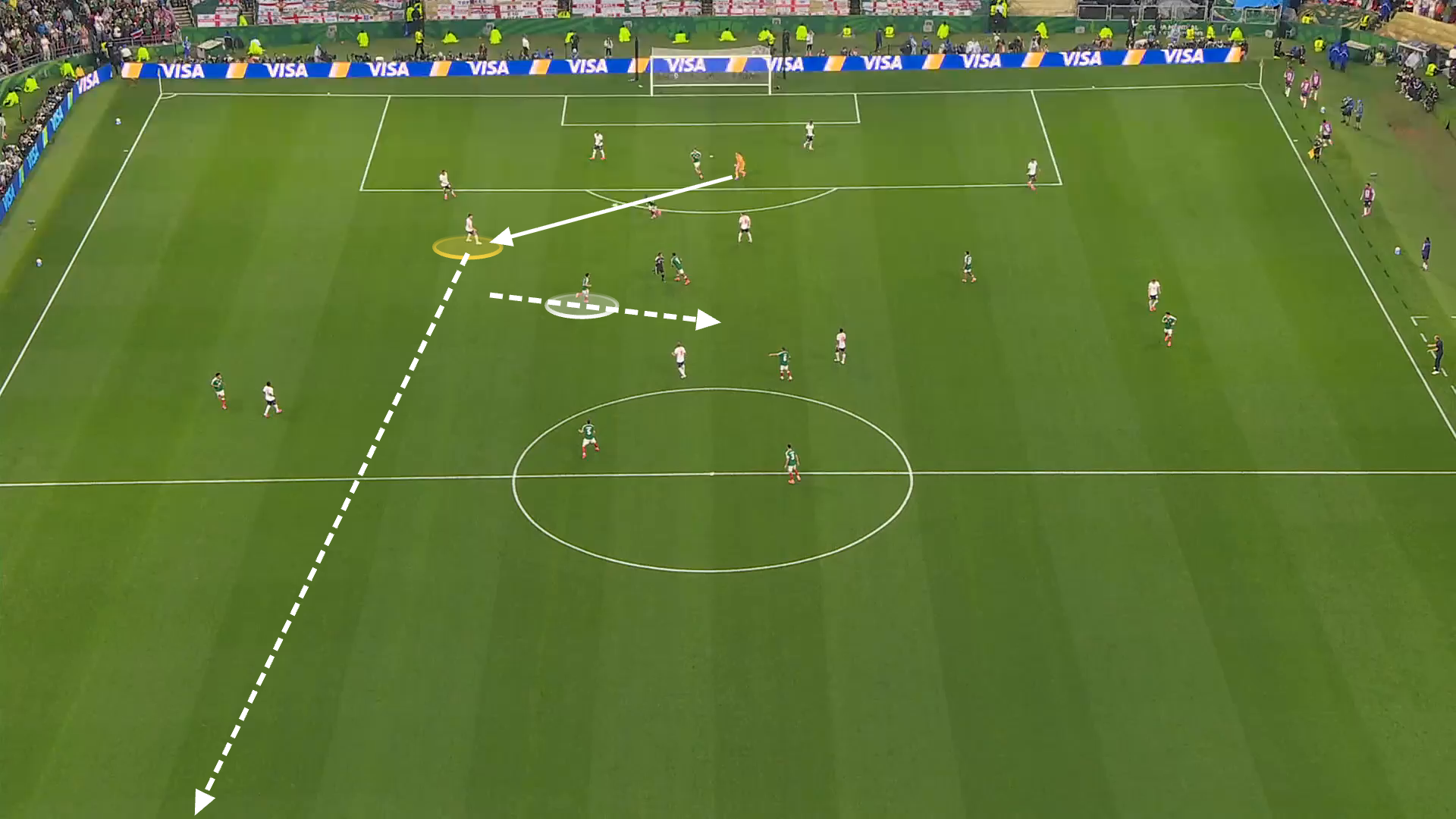
With Mexico leaning on rotations, 17-year-old Gilberto Mora found himself on the left side of attack – despite normally defending towards the right side of midfield.
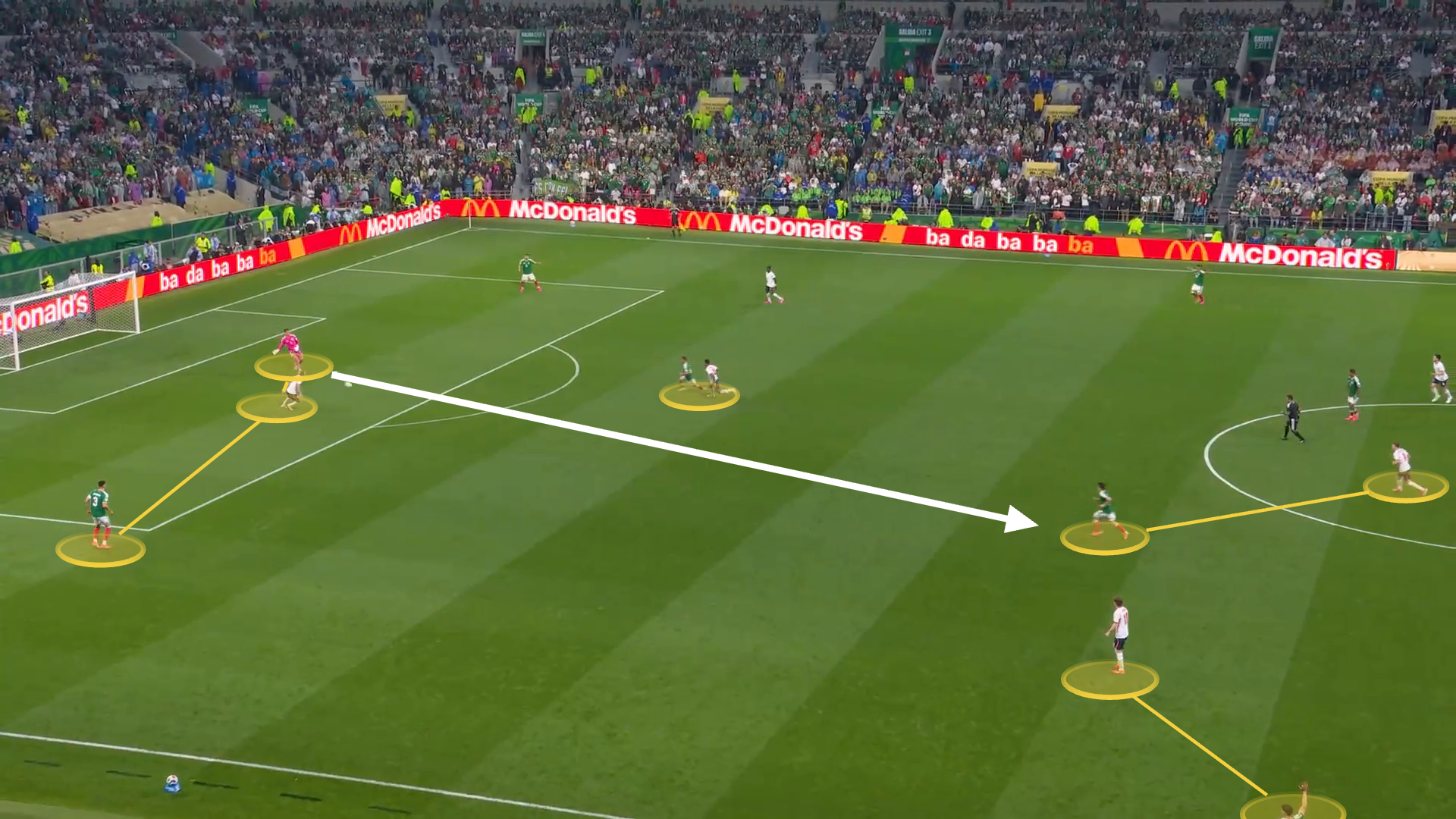
As England goalkeeper Pickford collected the ball, Mora defaulted to returning to his natural position, failing to close the gap.
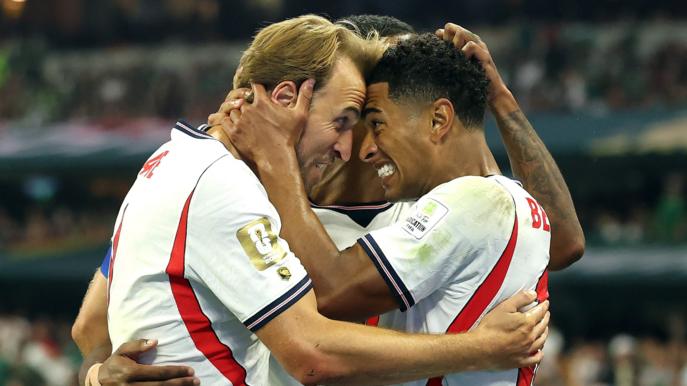
Pickford quickly found Declan Rice, who carried the ball powerfully. He found Bukayo Saka, who crossed it for the late-arriving Bellingham to head home.
Mexico’s kick-off after the goal could not have gone worse.
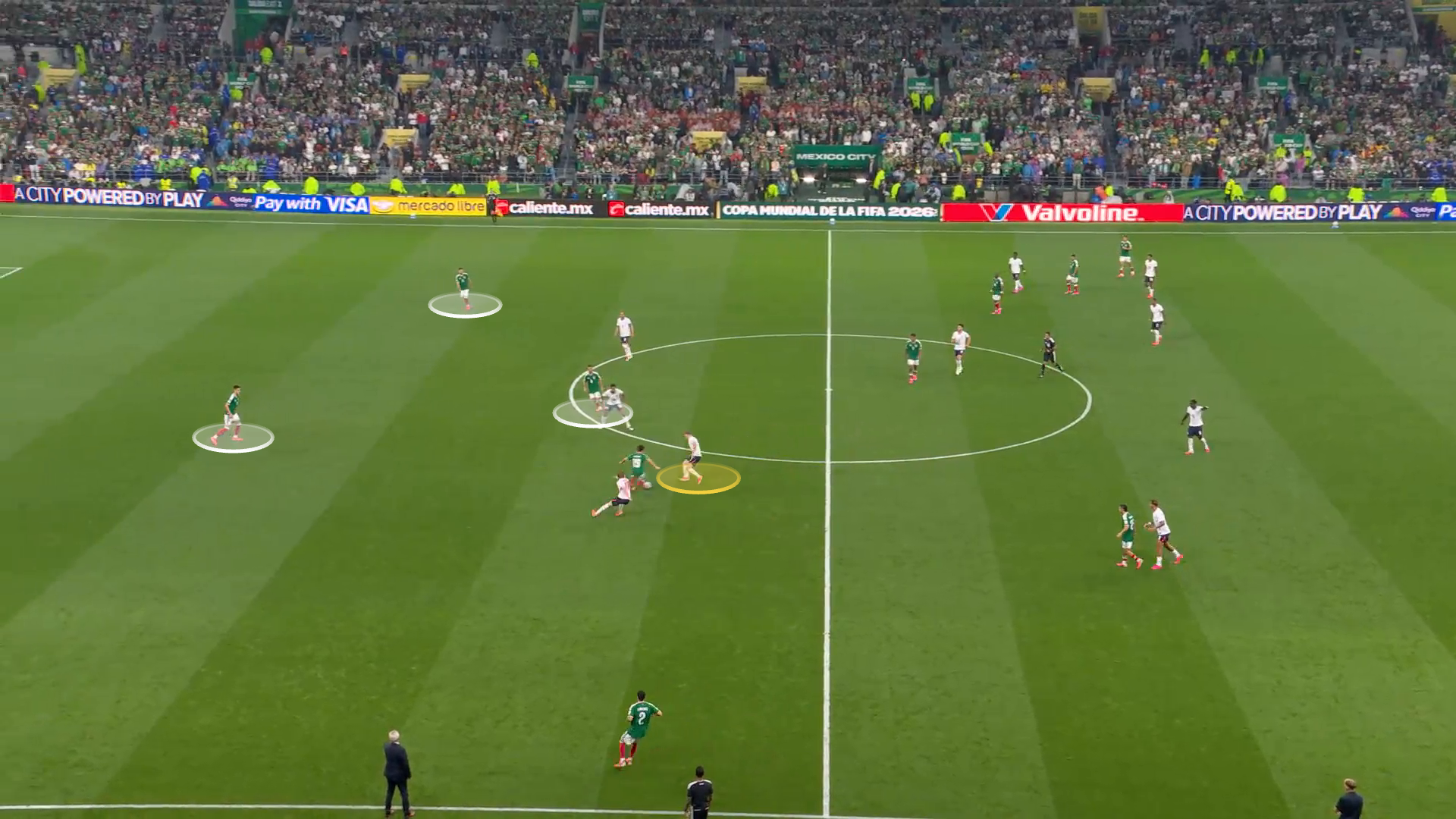
England pressed hard from the restart. Anderson, reluctant to back up the press earlier in the game, followed his attackers forward to fill the space behind them.
This resulted in him winning the ball back to allow England to go on and score their second goal through Bellingham.
Game 3: Look to dominate
England began the second half on the front foot by pressing higher.
Anthony Gordon did this on occasion before the break, but in the second half he and Saka took turns to be the third high-pressing attacker.
It was brave but risky and the game became more end-to-end.
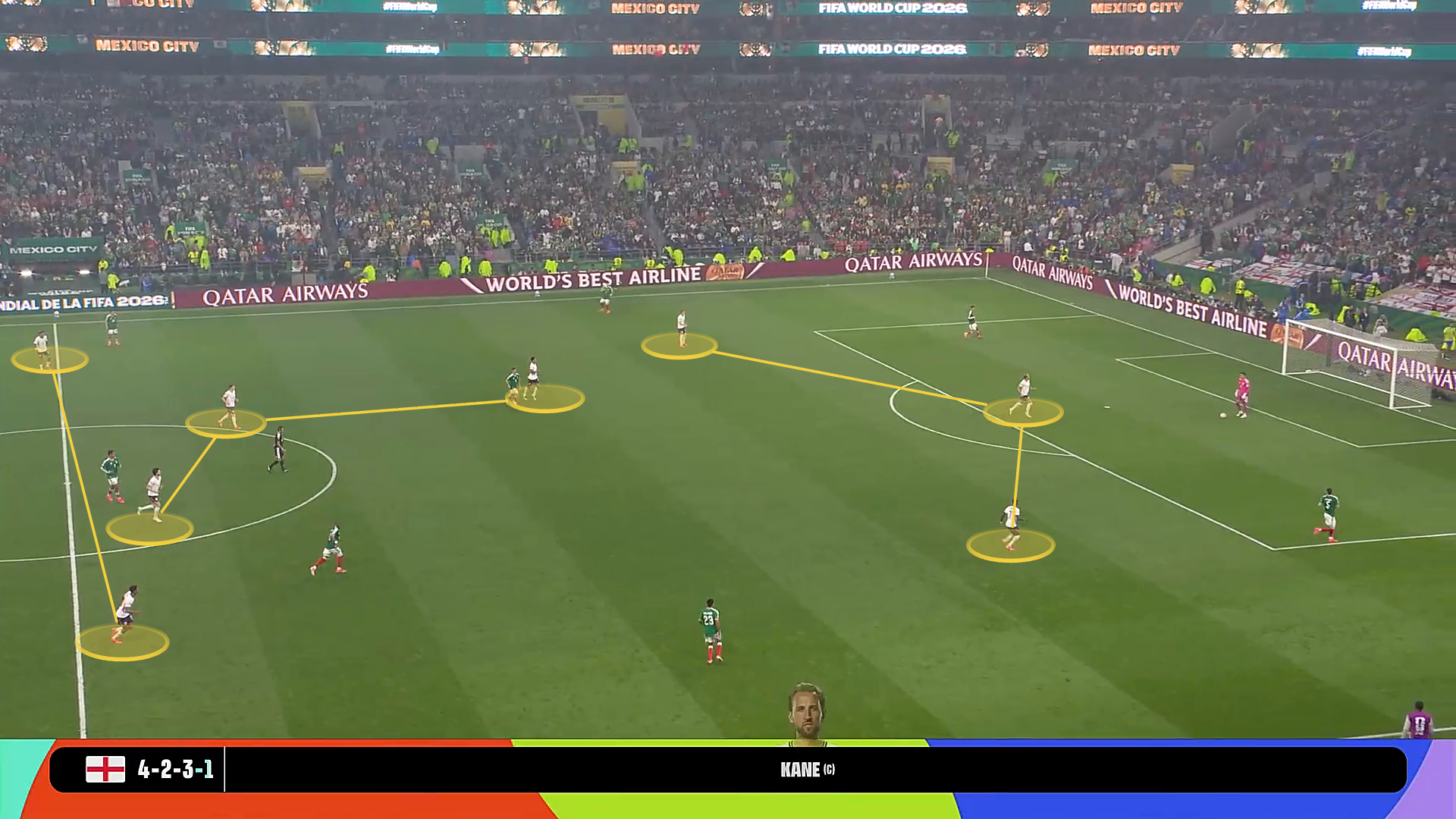
After a good run that ultimately resulted in nothing, Bellingham chased down goalkeeper Raul Rangel.
This was probably not one of those “smart” moments that Tuchel mentioned. England were essentially defending with 10 men as Bellingham was ahead of the ball.
With Mexico left winger Julian Quinones coming infield to drag England right-back Jarell Quansah out of position, Saka still on the front foot and the ball coming back England’s way, it resulted in the late sliding tackle on Jesus Gallardo that earned Quansah a red card.
Game 4: Mexico’s wide overloads
England played two mini games after they had been reduced to 10 men.
First, John Stones came on for Saka, with Ezri Konsa moving to right-back. England played in a 4-4-1 or a 4-3-1-1.
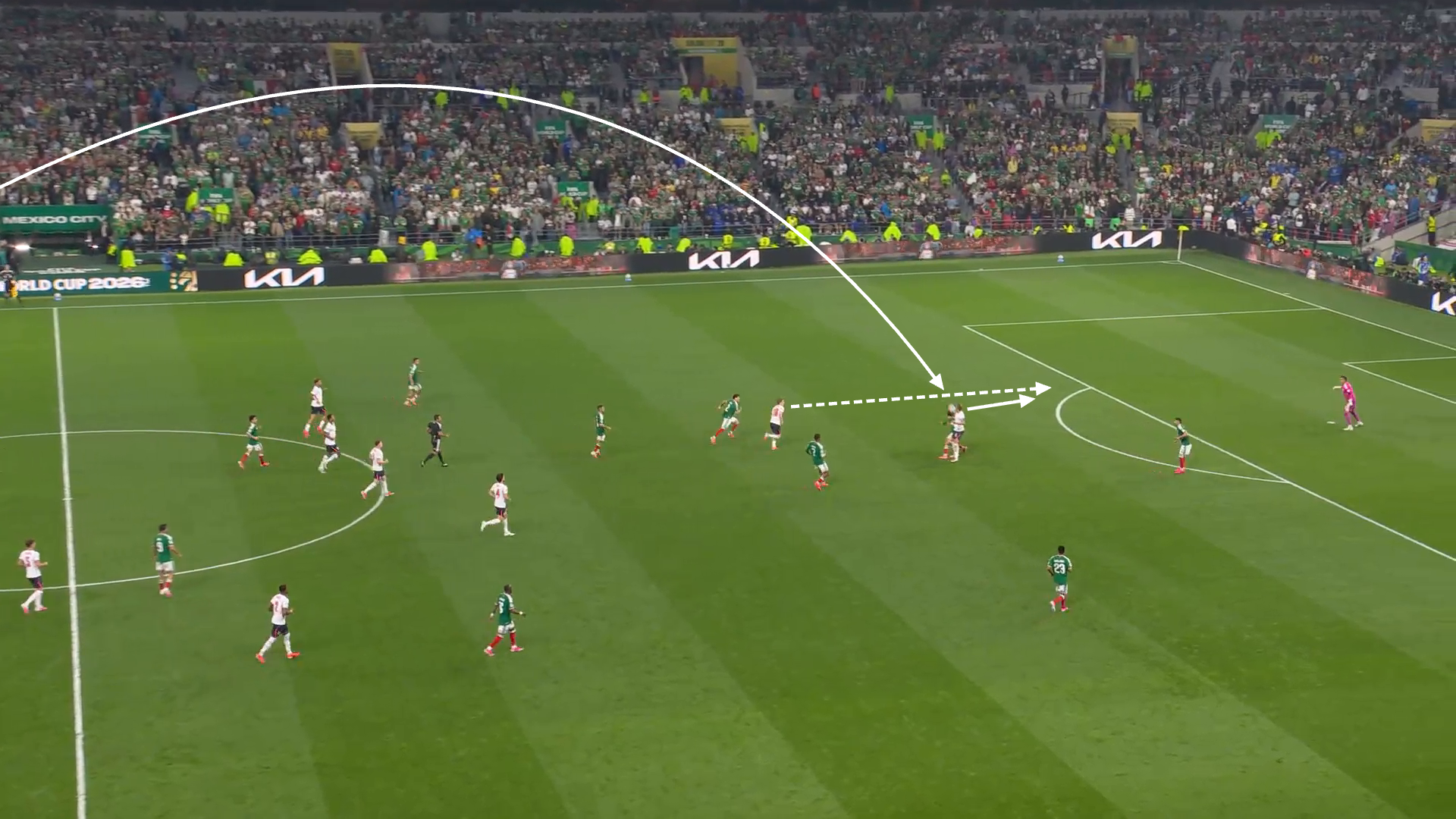
England leaned on a common Tuchel principle: attract pressure deep before playing long into runners.
Gordon was the pacy outlet up front and did well to get on the ball and relieve pressure, winning England a penalty in the process.
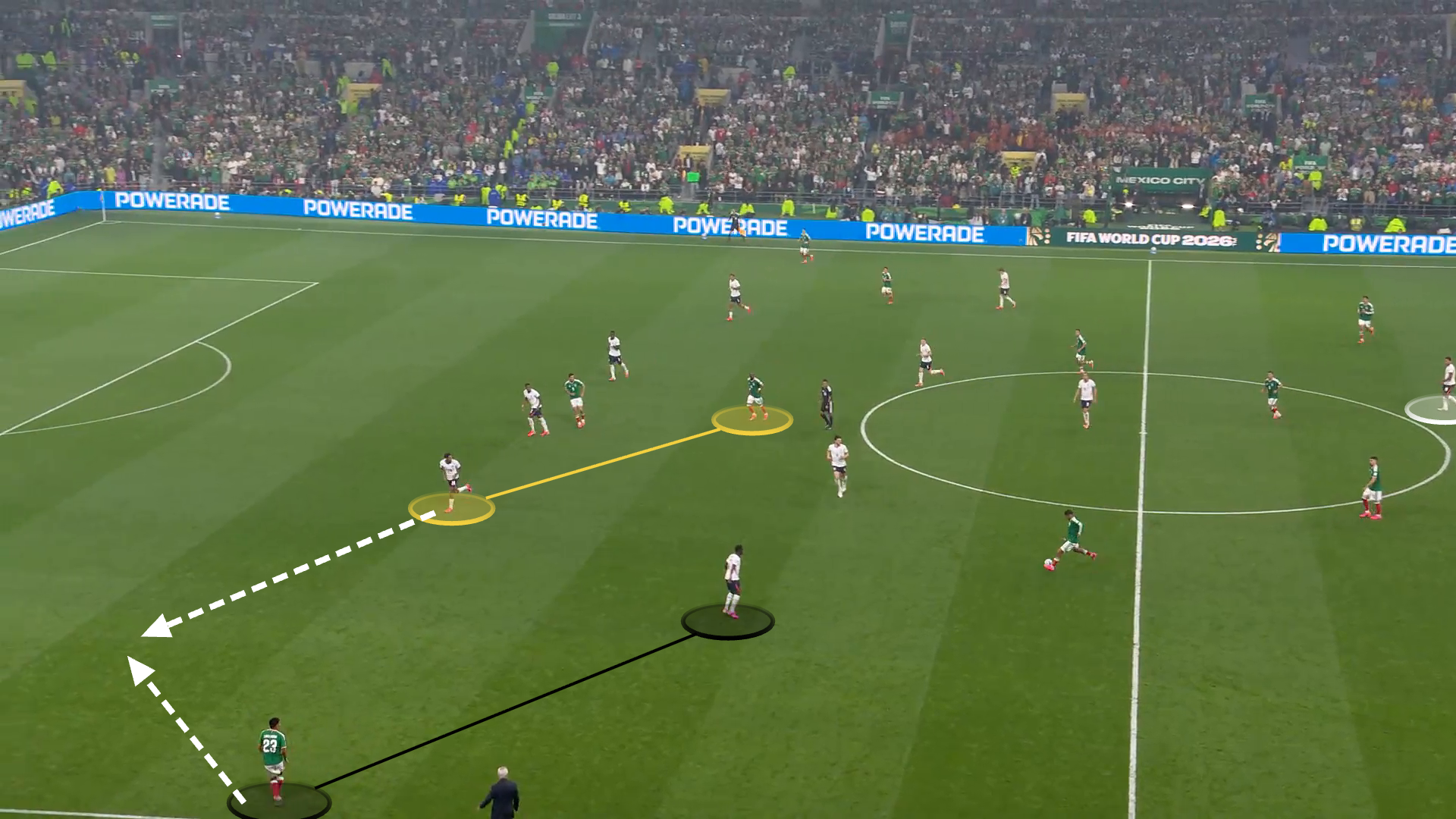
Mexico, however, continued to look dangerous down the left, with Quinones influential.
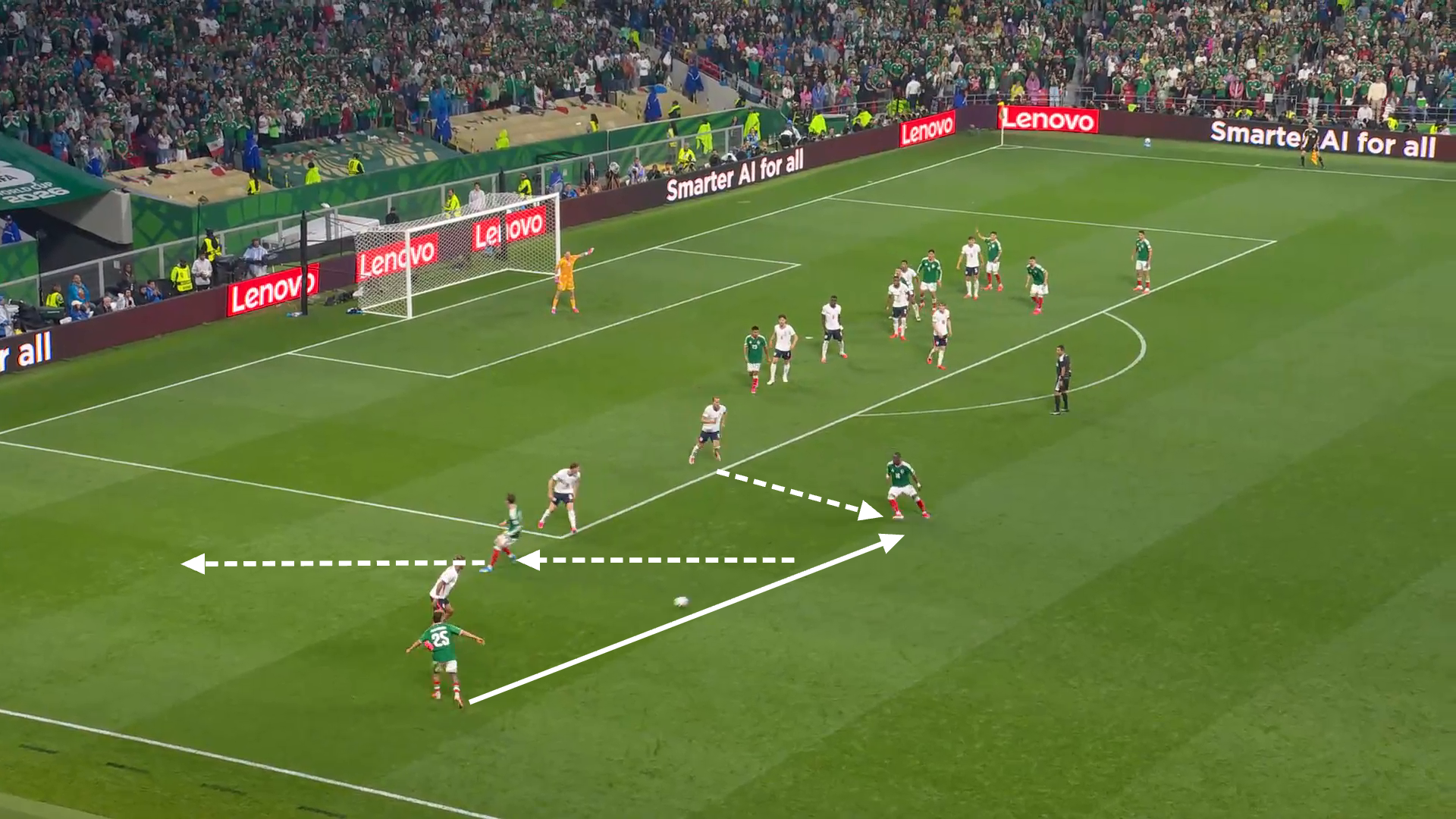
He would drag England players with him, giving left-back Gallardo time and space to make dangerous crosses.
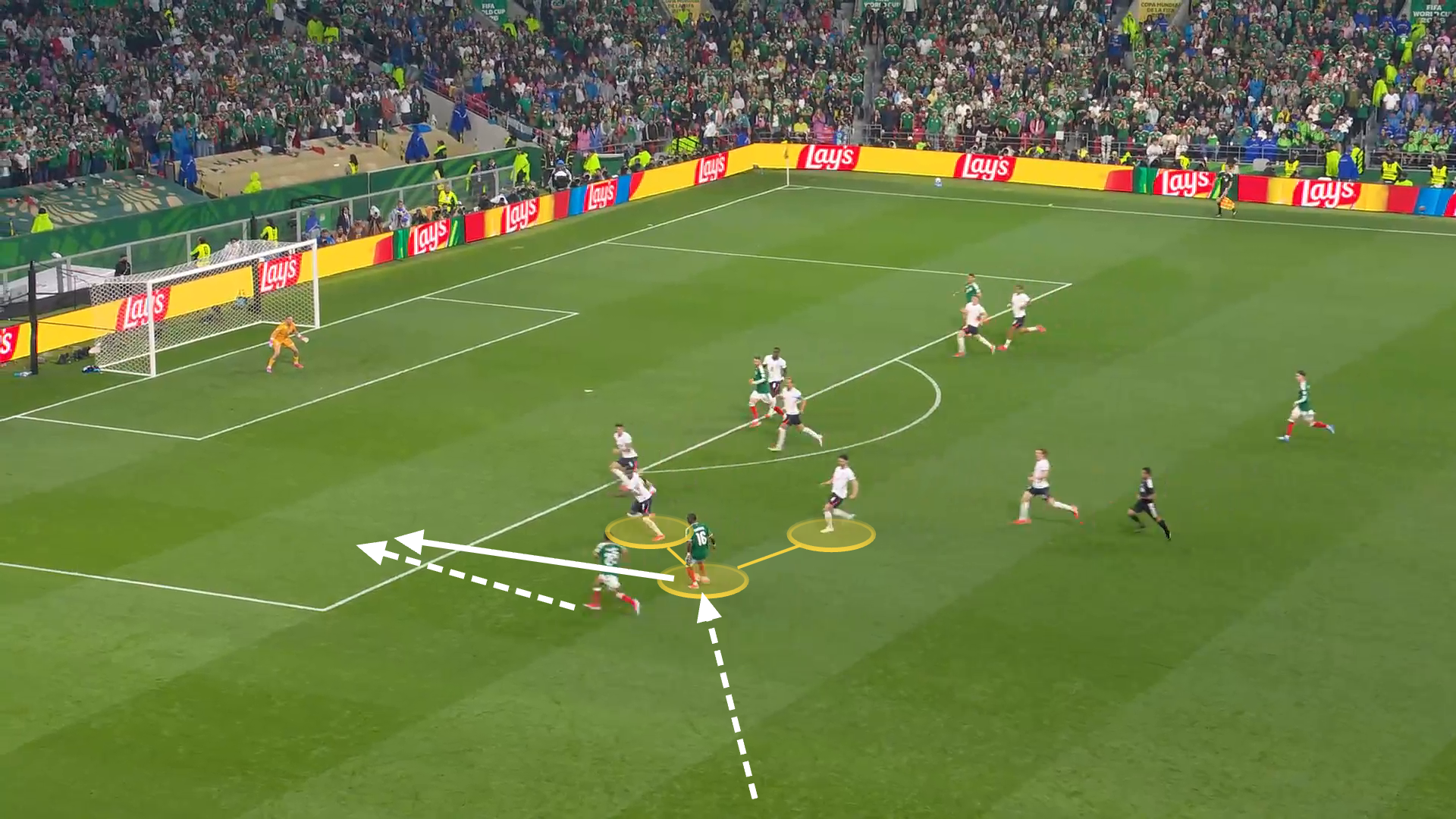
Mexico would use their two left-sided players to create dangerous triangles, not dissimilar to how England have played throughout the World Cup.
It would free up Quinones so he could shoot, switch play or play inswinging crosses – like the one that resulted in Mexico’s penalty.
Game 5: Parking the bus
Tuchel has used hydration breaks to his benefit in this tournament – and did so again in the second half.
Dan Burn and Djed Spence came on for Anderson and Nico O’Reilly respectively as England moved to a 5-3-1 formation.
The industrious Bellingham, Rice and Gordon formed the midfield three, likely for their ability to cover distance quickly.
Stones and Spence made excellent last-ditch challenges in the closing stages, while the 6ft 7in Burn was a much-needed back-post presence as Mexico launched crosses from the left.
With England defending increasingly deep, space for Mexico was appearing in front of England’s defence, but Aguirre took off Quinones for 6ft 3in striker Guillermo Martinez.
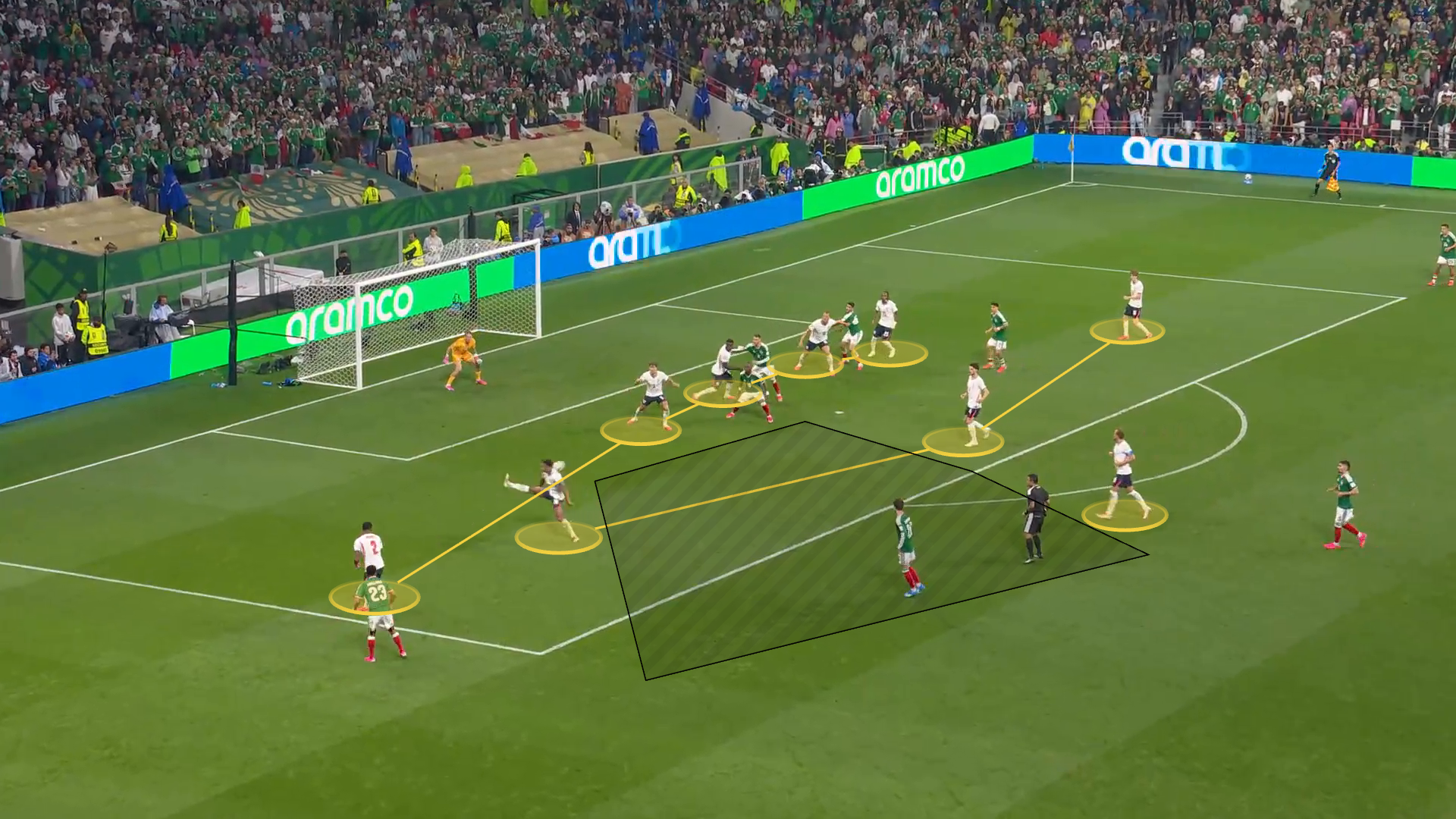
The change played into England’s hands and they were well equipped to deal with Mexico’s cross-heavy tactics.
The hosts lacked the variety in attack that challenged England earlier in the match.
Every attack was funnelled out wide before a hopeful cross was delivered and cleared in what was essentially a set-piece defending drill.
Tournament success requires adaptability to deal with unknowns. Down to 10 against Mexico in Mexico, England’s scrutinised squad selection showed its value.
-
-
Published12 hours ago

-
-
-
Published15 hours ago
-
-
-
Published13 hours ago
-
-
-
Published14 hours ago

-