
This post was originally published on this site.
Consider this a belated PSA: A recent change to Google’s privacy settings is allowing the company to store more of your data, including media such as “images, files, and audio and video recordings,” to improve its AI models. In other words, if you upload any media to Google’s Search services, it’s being used to train AI unless you opt out.
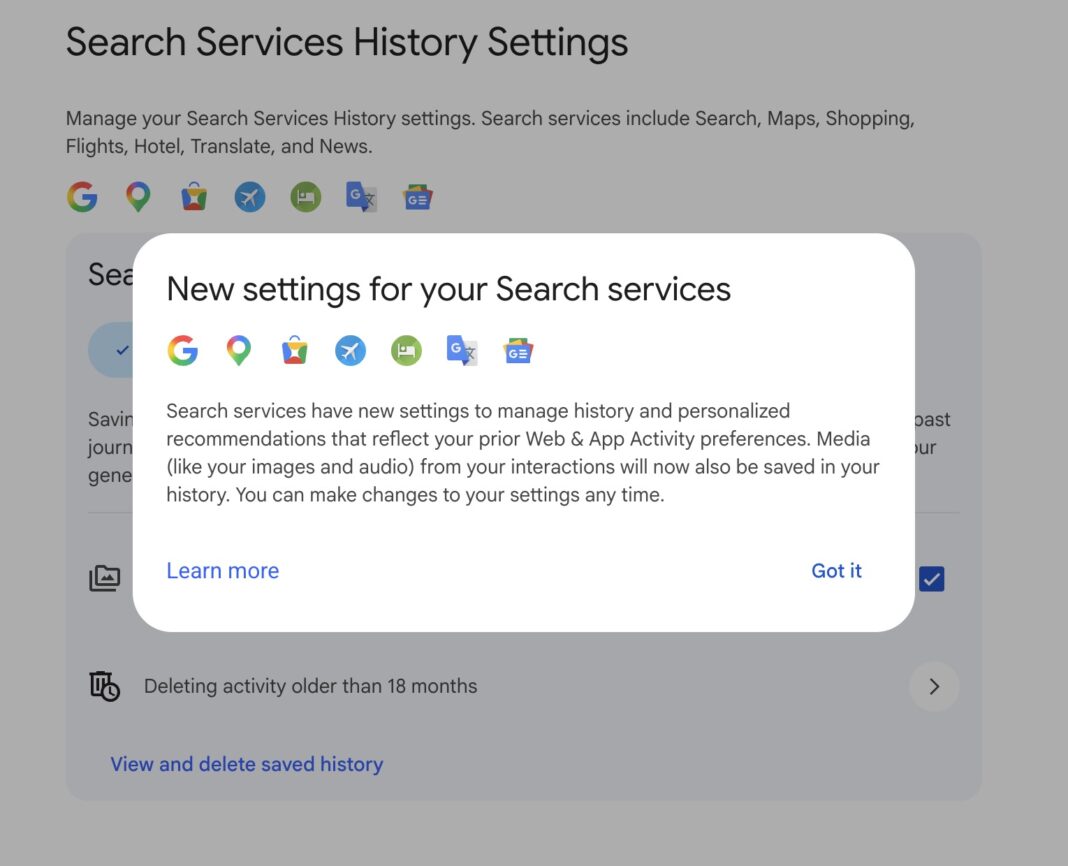
The change came about via an under-the-radar update to Google’s Search services privacy settings, announced in June via a customer email. With the update, the company essentially opted people into this expanded AI training under the guise of giving users more control over their saved history and personalized recommendations.
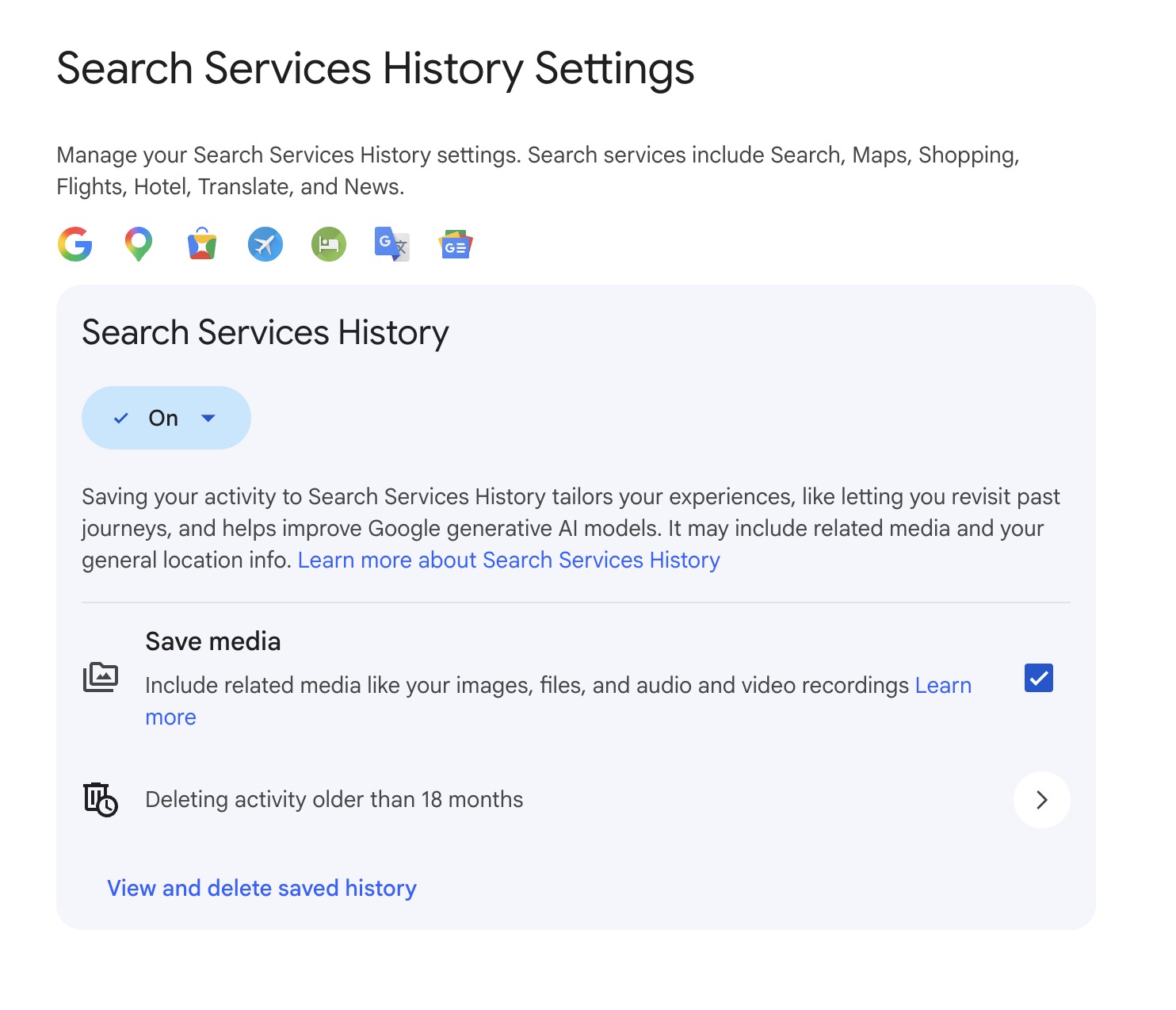
The update introduced two new settings, Search Services History and Personalized Recommendations, allowing you to configure how your activity is used to personalize your Google experience and how long your web and app activity is saved.
This update applies beyond Google Search itself, and also includes other search services such as Maps, Shopping, Flights, Hotels, Translate, and News.
For instance, when you use Google Lens to search for something visually by snapping a photo, that image may now be saved for AI training.
Similarly, if you use the newer Search Live feature to search via voice input in the Google app, those audio recordings could be saved, as can any other Google voice search. If you use Google Translate to practice speaking, that audio is saved, too.
The changes reflect a broader industry shift toward gathering data by any means necessary to improve AI services. Instead of relying solely on information scraped from the web, Google and others are increasingly collecting data that people upload or create when using their services. Meta is another example of a consumer-facing tech company doing this at scale, training its AI on users’ images and media, as well as on content recorded by its AI glasses.
Google confirms the media-training use directly, stating in that email to customers: “Like your Search Services History, your saved media is also used to develop and improve Google services and technologies, including AI models and safety measures.”
Its help documentation echoes this, noting that the company “uses your history to provide, develop, and improve its services (such as training generative AI models) and to protect Google, its users, and the public with the help of human reviewers.”
Some of this storage is temporary and tied to making the product work, but per Google’s own language, saved media can also be retained specifically to train its AI.
Adjusting your settings
The good news is you have some control here. You can change your preferences on the Search Services History and Search Services Personalization pages. On the former, you can uncheck the “Save Media” box separately from the “Search Services History” box, or uncheck both. You can also configure how often you want saved data automatically deleted — after three months, 18 months, or 36 months.
From there, you can jump to this page to dig into other privacy settings, including Web & App Activity, Timeline, YouTube History, and more.
Beyond saved media, Google also uses your search history, location, and other information from the websites you visit to personalize your experience on Google, including which ads are shown.
Before this update, Google let you configure what historical search data was saved via its “Web & App Activity” settings. That’s now been separated into two settings: the Web & App Activity data and the new Search data setting, which is on by default.
That means if you make a change to the Web & App Activity data retention settings in an effort to opt out of having your data stored by the tech giant, the update will no longer impact your use of Google Search services, as it’s now a separate option.
When you purchase through links in our articles, we may earn a small commission. This doesn’t affect our editorial independence.