
This post was originally published on this site.
Messi v Salah: A World Cup meeting of two national icons
-
Published
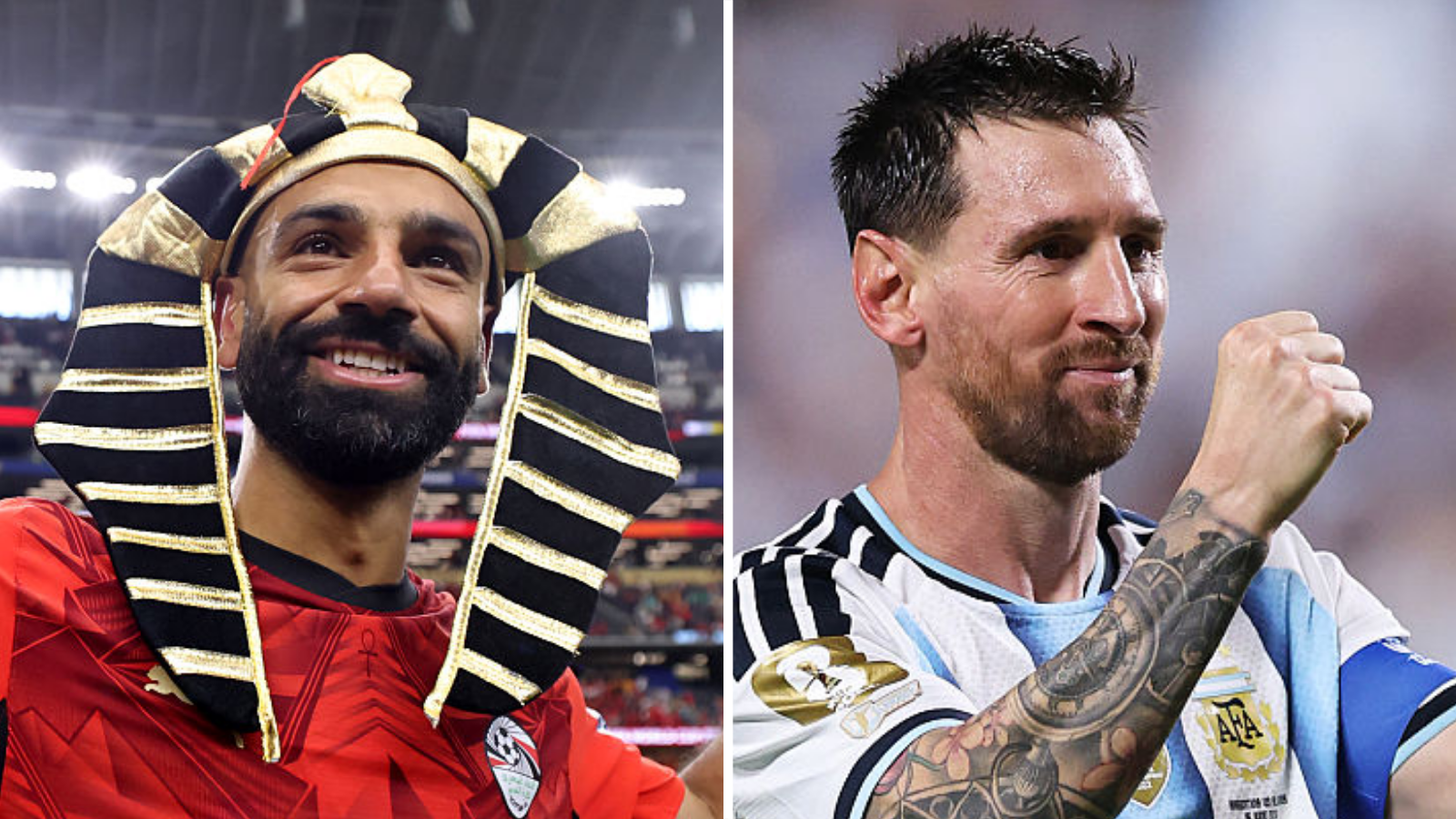
Lionel Messi v Mohamed Salah.
Footballing legends. National icons.
Argentina face Egypt in Atlanta on Tuesday (17:00 BST) for a place in the 2026 World Cup quarter-final. It is also a meeting of two of the game’s greatest players.
Messi, 39, and Salah, 34, are both in the autumn of their careers. Messi has already suggested this will be his last World Cup, although Salah is still hoping to play in 2030.
Their World Cup story is very different.
Messi is a World Cup winner. He is the tournament’s all-time top scorer, appearance maker and is joint top scorer this summer.
For Salah, it has been a different narrative. In his third World Cup for Egypt, this is his first time in the knockout rounds, with his country in the last 16 for the first time.
Egypt lost Africa Cup of Nations finals in 2017 and 2021 during his career, while Salah was involved in several public disagreements with the Egyptian Football Association over issues including image rights, travel arrangements and the team’s management.
His Panenka penalty helped his country make history though with a shootout victory over Australia in the last 32, and he will be hoping Tuesday will mark his biggest World Cup moment.
‘The closer to seeing a loved one leave, the more we miss them’
The most frequently mentioned word in Argentina right now is ‘bicampeonato’ (back-to-back World Cup championship).
But the question everybody is thinking, and nobody wants to mention, is ‘what will we do when Messi retires’?
Every new match the national team plays in the World Cup – such as the one against Egypt on Tuesday – is another step towards glory, a chance to achieve a feat only two other countries have managed (Italy in 1934 and 1938; Brazil in 1958 and 1962).
Yet, each match also brings us closer to the retirement of Argentine football’s greatest icon: the national team captain, Messi.
His goals in this tournament (seven), his new records (playing his sixth World Cup, scoring in eight consecutive World Cup matches), and dramatic encounters like the game against Cape Verde, have kept the country focused solely on the present moment.
To top it off, Messi is playing as if he were 25, not 39 years old.
But we all know that the man who led us to a World Cup victory (Qatar 2022) and two Copa America titles (Brazil 2021 and the United States 2024) is dancing his final tango in the albiceleste jersey.
So, every victory represents progress in the tournament but also one more opportunity to enjoy the man who managed to reach the same heights as Diego Maradona in our pantheon of football gods.
Interestingly, many Argentine sports journalists have criticised the fact that, in this World Cup, the national team has once again become “Messi-dependent”.
One of the great achievements attributed to manager Lionel Scaloni was being the first coach to build a team that complemented Messi rather than relying on him.
In the years prior to Scaloni’s arrival, the national team had endured a string of heartbreaks – the 2014 World Cup final loss in Brazil and two Copa America defeats on penalties in the final (Chile 2015 and the United States 2016) – but that changed under the current manager.
Now, only four of the 11 goals Argentina have scored in the United States were not netted by Messi; the two main strikers – Lautaro Martinez and Julian Alvarez – seem to play merely as providers for the great captain, and the creative midfielders who stepped up in previous tournaments – Enzo Fernandez and Alexis Mac Allister – seem more focused on defending their own goal than on attacking the opponent’s.
As in a personal relationship, it seems that the closer we come to seeing a loved one leave, the more we need them.
‘He is pride, joy and inspiration’
Salah is much more than a footballer, he is pride, joy and inspiration.
He inspires millions of Egyptians every day. His story, from a small village in Nagrig to the biggest football stadiums in the world, makes every Egyptian feel proud.
He shows us that with hard work and belief, anything is possible. People see him and feel hope, not just in football, but in life.
What makes Salah even more special is who he is as a person. He is humble, calm and respectful. No matter how big he becomes, he never forgets where he came from. He always represents Egypt in the best way, and this is something we all truly value and admire.
Today, as we watch Egypt in the World Cup, the feeling is different when Salah is on the pitch.
When Egypt beat Australia in a tough match decided by penalties, the whole country was living every second together.
Hearts were beating fast, families were gathered, and when we won, it felt like one big celebration across Egypt. Salah was at the centre of that feeling – leading, inspiring and giving confidence to everyone.
Egyptians love Salah deeply. He brings people together and gives us moments we will always remember. When he plays, you can feel the whole country behind him, proud and hopeful.
To me personally, Salah inspires strength, patience and belief. He reminds us to always keep going and to stay true to ourselves.
Salah is not just a football star, he is a symbol of pride for every Egyptian.
-
-
Published6 June
-
-
-
Published1 April
-