
This post was originally published on this site.
Officer in Kaba shooting may not face misconduct case
-
Published
The police marksman who shot Chris Kaba may no longer face misconduct proceedings after the government changed the rules on how officers’ use of force is judged.
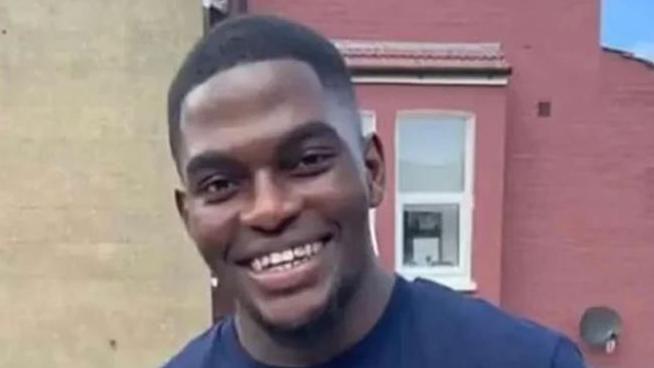
Sgt Martyn Blake shot 24-year-old Kaba in Streatham, south London, in 2022 after he tried to ram his way past police cars.
Blake was cleared of murder following a trial in 2024 but was subject to a separate disciplinary hearing, which the Independent Office for Police Conduct (IOPC) paused while it waited for the changes to be published.
The legal test for misconduct in officers’ use-of-force cases has been raised to the same used in criminal law, meaning conduct that would not amount to a crime should not amount to misconduct either.
After Blake’s acquittal, then home secretary Yvette Cooper said she would raise the legal test used to decide whether to charge officers over use of force.
On Wednesday, the watchdog said it now believes the case should not go ahead. It will consult the Kaba family, who argue there are exceptional circumstances why it should still proceed.
Dozens of other non-fatal use-of-force cases could also be affected if forces take the same approach.
IOPC director of strategy and policy Andrew Johnson said: “We carefully considered the law change and its stated intent to address the perceived unfairness and lack of proportionality of the civil law test.
“We believe this position provides consistency across impacted cases and is fair to officers who are facing potential dismissal for misconduct, which if it occurred now, would not amount to misconduct under the new law.
“We expect the number of relevant cases that are affected by this law change to be relatively small.”
Metropolitan Police deputy commissioner Matt Jukes, referring to Blake by his cypher NX121, said: “We have consistently said since the criminal trial that there is no basis for further action against this officer and that remains our position.
“That is why I welcome the recent changes to the law, introducing a presumption of anonymity for firearms officers during court proceedings until conviction, and restoring the criminal test for the use of force in misconduct cases.”
The family of Chris Kaba said the decision had a damaging impact on bereaved families in cases involving use of force by the police, and that “it gives every appearance that the IOPC has a closed mind on this specific case”.
Temi Mwale and Kayza Rose from the Justice for Chris Kaba Campaign said they were “appalled” by the IOPC’s decision.
They added: “The only just approach would have been to conclude all existing cases under the rules that were in place when those proceedings began.
“Instead, the rules have been changed mid-process to ensure that Martyn Blake will face no professional accountability.”
The campaigners described the decision as a blow to public confidence and said Britain was “moving backwards on police accountability”.
On the night Kaba died, police had followed and boxed in the Audi he was driving because it had been linked to three firearms incidents in the previous five months.
Officers did not know his identity at the time. He was later reported by police to have links to a street gang and to two shootings in the six days before his death.
Listen to the best of BBC Radio London on Sounds and follow BBC London on Facebook, external, X, external and Instagram, external. Send your story ideas to hello.bbclondon@bbc.co.uk, external
-
-
Published28 January
-
-
-
Published21 October 2024
-