

This post was originally published on this site.
Heat health alerts extended as record for most 34C days in a year broken
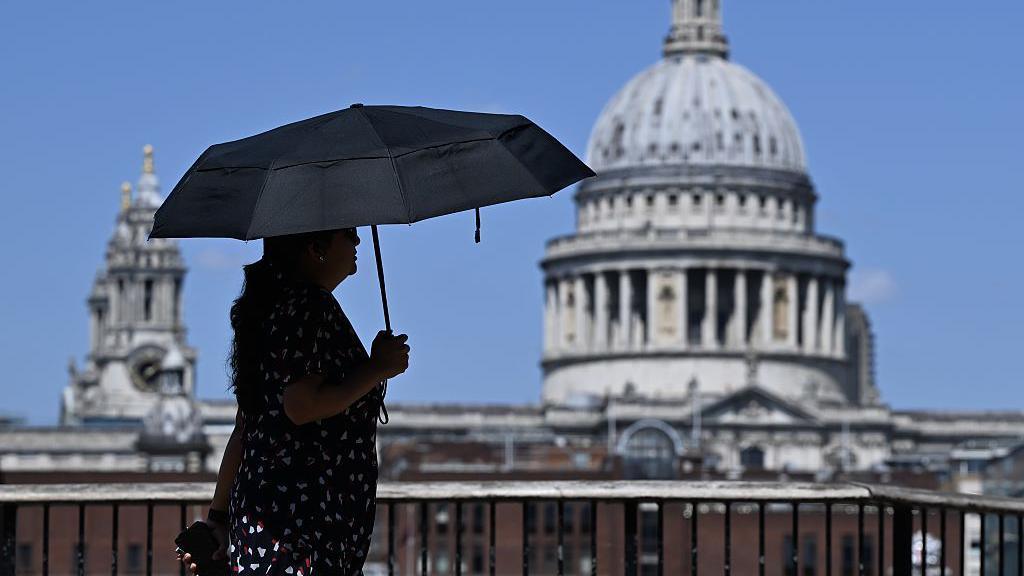 Image source, Getty Images
-
Published
Amber heat health alerts were extended to the north of England as the third heatwave of the year saw temperatures soar to 35C (95F) on Thursday.
The alerts now cover almost all of England, indicating that the heat is likely to have a significant impact on health services and cause possible travel disruption until 21:00 BST on Sunday.
Rush-hour commuters faced delays, cancellations and slower rail services on Thursday evening, while NHS England warned many of its ambulance services were facing “sustained pressure” due to the heatwave.
While temperatures are not due to match those recorded in June’s record-breaking heatwave, the heat may last longer – possibly until the end of next week.
Thursday’s high of 35.5C, recorded in Surrey, meant the UK marked a record-breaking eighth day this year in which temperatures reached or exceeded 34C, beating the seven days seen in 1976 and 2020.
A further temperature reading at or above 34C is expected as the heatwave peaks on Friday, adding to the two during May’s heatwave, four in June’s and so far two in July.
Elsewhere, Wales recorded its highest temperature of 31.3C in Cardiff, Scotland reached 29.3C in Charterhall, and Northern Ireland saw 27.5C in Killowen.
The fresh amber alerts for north-west England and Yorkshire – issued in situations that could potentially put the whole population at risk – joined those already in force for the Midlands, eastern, and southern England.
A yellow alert, indicating that significant impact is possible, covers the north-east.
But the worst of the heat was recorded in south-eastern England, parts of which declared a heatwave on Monday after five days at or above 30C, placing additional pressure on players and spectators at Wimbledon.
Thursday’s high approached the record 35.7C seen at the London tennis championship in 2015, where this year additional water and electrolytes are being provided to players, as well as iced towels and umbrellas during changeovers.
A 10-minute break can be requested between sets if the temperature and humidity pass a certain threshold.
-
Why heatwaves hit women harder
-
Published20 hours ago
-
-
How can I get air conditioning in my home and how much does it cost?
-
Published10 hours ago
-
Rush hour travel was disrupted as several operators reported cancellations, delays and speed restrictions due to high track temperatures.
East Midlands Railway reported several cancellations and service alterations, while Great Western Railway, South Western Railway and London Northwestern Railway also warned passengers of disruption caused by the extreme heat.
Transport for Wales and c2c, which has suspended some services altogether through Friday, both reported speed restrictions due to hot tracks.
Passengers have been advised to expect delays and reduced services on Friday.
Separately, the UK’s electricity grid operator Neso issued a request for more power to be made available, warning of “tight electricity margins” on Thursday evening – although it did not suggest a risk of shortages or blackouts.
Extreme heat can make energy processes less efficient and lead to a spike in electricity demand as people increase their use of air conditioning, freezers and fridges.
Meanwhile, the public has been advised to heed safety advice and care for each other as the prolonged spell of heat continues.
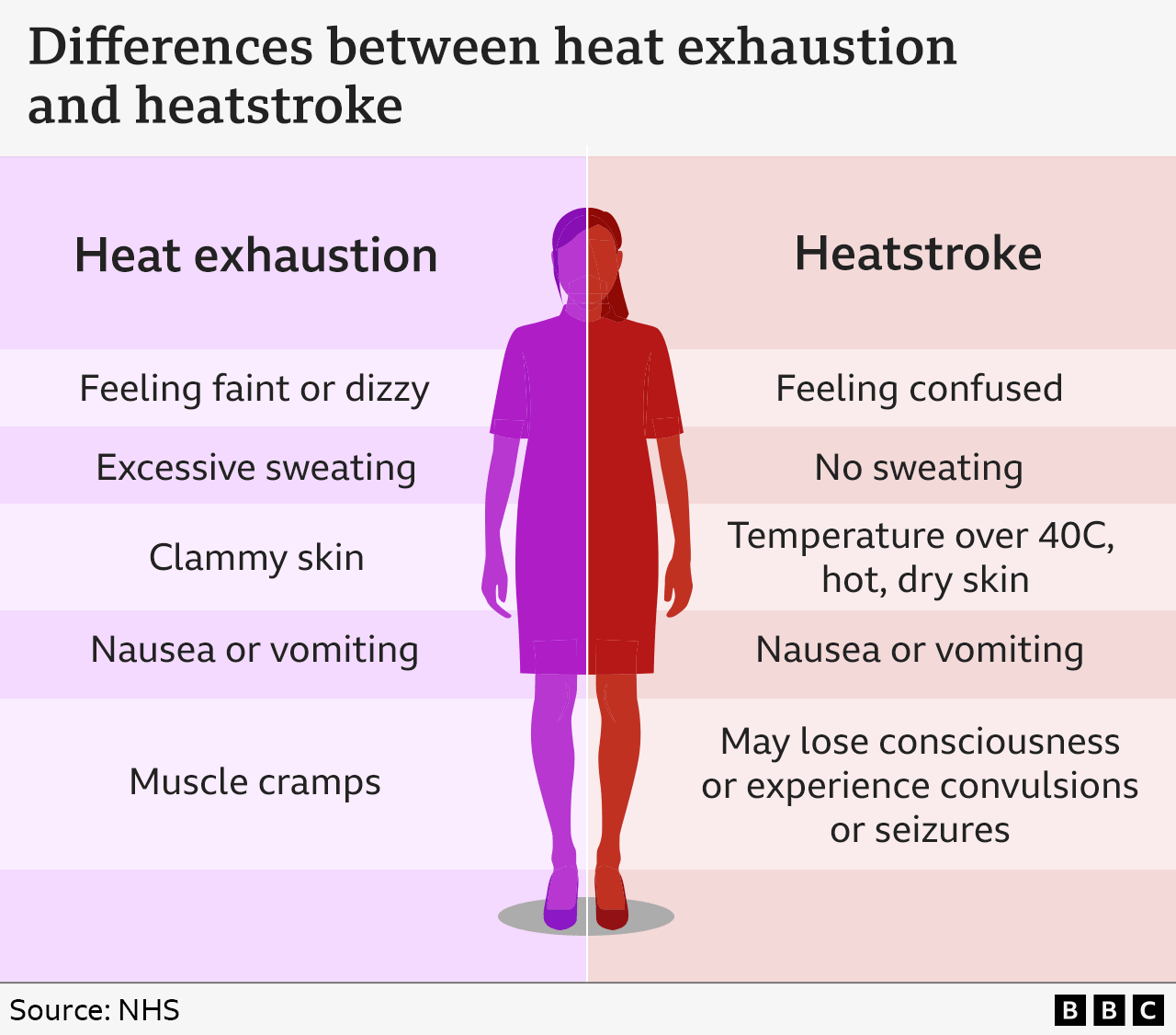
NHS England has asked the public to “take the heat seriously” – particularly when it comes to children, the elderly and those with existing conditions – as it warned many of its ambulance services were under pressure.
The Royal College of Paramedics advised drinking enough water, supporting those who may be vulnerable with access to cooling systems, and trying to stay out of the sun when the heat tends to peak from 12:00-16:00.
The Welsh Ambulance Service has warned dehydration and fatigue from the heat could cause falls, while South Wales Fire and Rescue has advised extra caution around open water.
“Warm weather does not mean warm water, and cold water can affect your breathing and swimming ability very quickly,” cautioned station manager Gavin Murphy.
The National Fire Chiefs Council (NFCC) warned on Wednesday that the dry and hot weather posed an increased risk of wildfires. The NFCC also advised people to avoid using disposable barbecues in open countryside, park and moorlands.
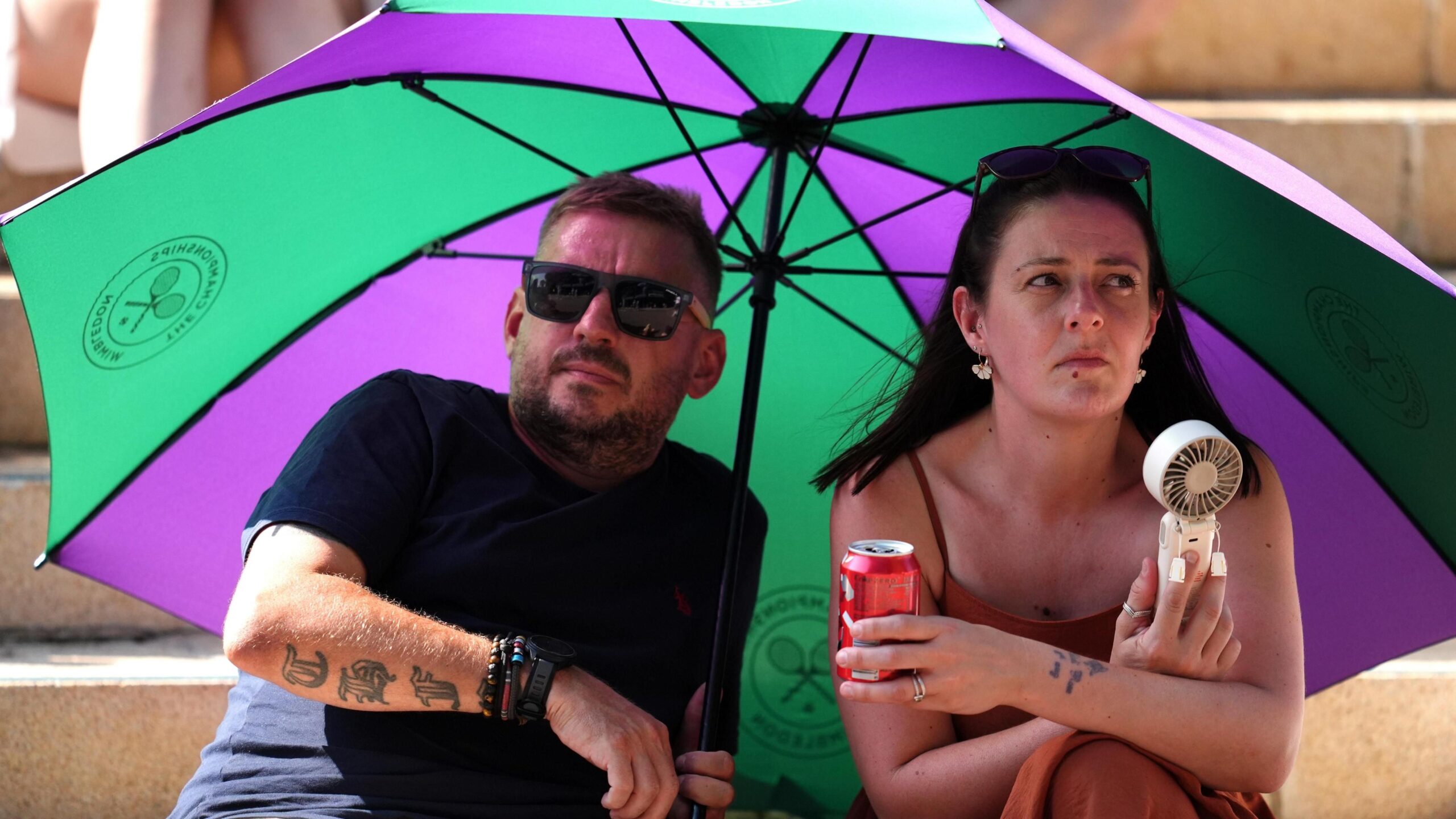 Image source, PA Media
While the worst heat is expected on Thursday and Friday, temperatures could remain well above the July average of 18-23C for another week – which would make it one of the UK’s longest heatwaves since 1976.
It comes weeks after the hottest June ever recorded across western Europe – and the second-hottest seen globally – when UK temperatures peaked at a record-breaking 37.7C in Norfolk.
Scientists have warned such weather events have been made more likely and more intense by human-induced climate change, and that UK and European summers will keep getting warmer on average as carbon emissions continue to heat up the planet.
The number of days exceeding 30C in the UK more than trebled between 2015 and 2024 compared with the 1961-1990 average, according to the Met Office.
The maximum temperature recorded each year has also shot up, and where it was rare to reach 35C in the 20th Century, six of the past 10 years have seen temperatures surpass that mark.
-
No air con? Here’s how to get the most out of your electric fan
-
Published1 day ago
-
-
The UK’s summers are getting hotter – but how prepared are we?
-
Published24 June
-
Additional reporting by Sarah Keith-Lucas, BBC Weather