
This post was originally published on this site.
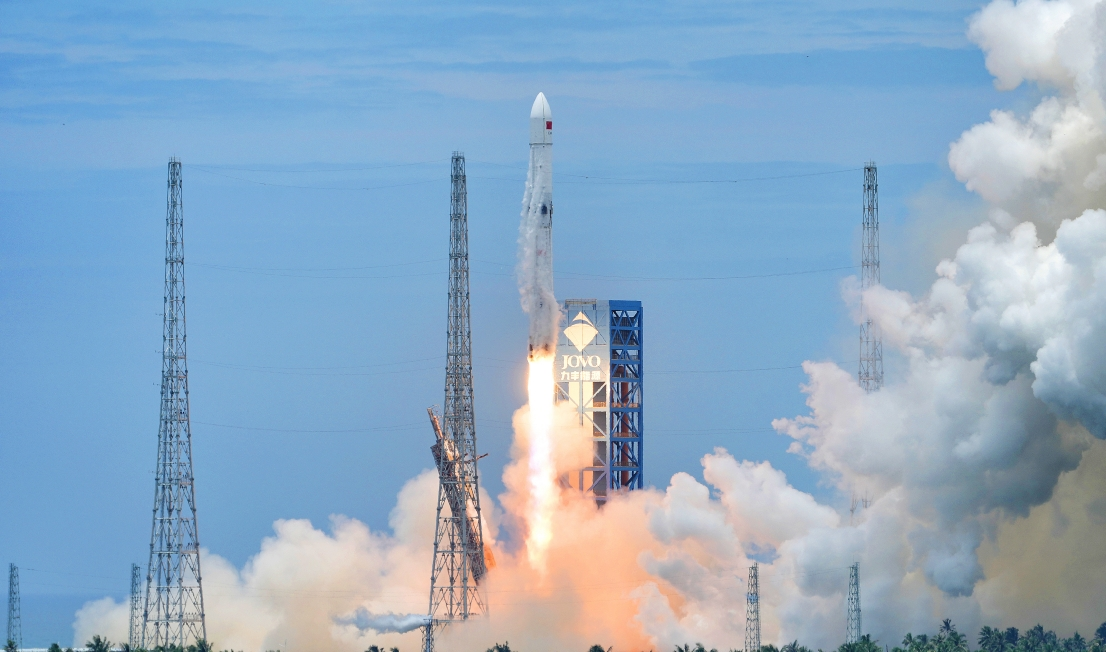
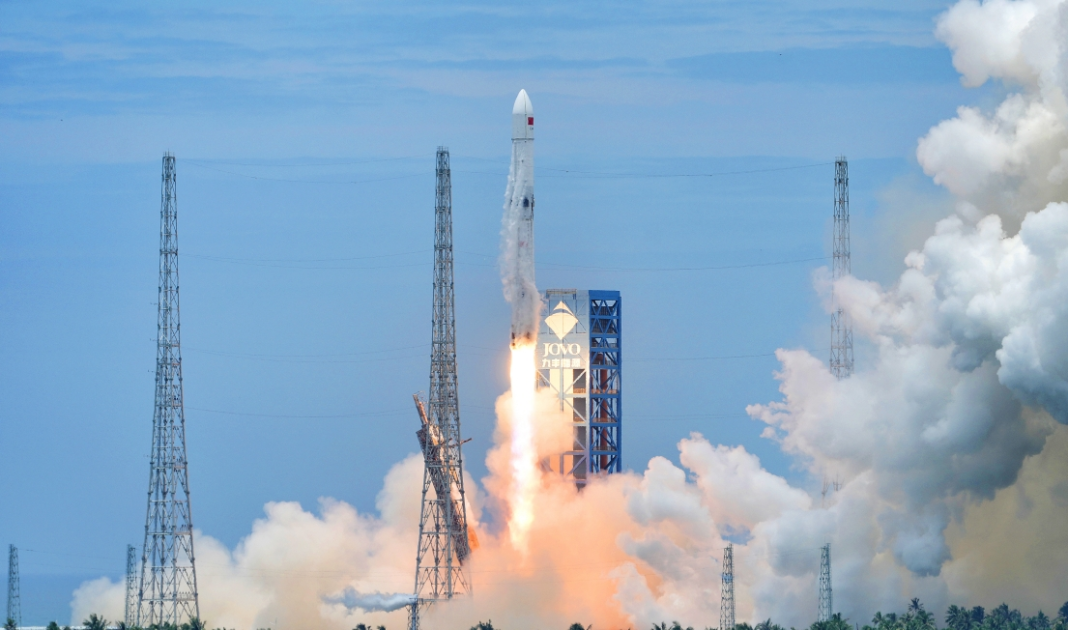
China’s state-owned space company successfully launched a Long March orbital rocket and landed the booster on a seagoing recovery vessel, making it the second country to achieve the feat.
The demonstration on Friday shows that China’s Aerospace Science and Technology Corporation (CASC) is poised to match the advance that catapulted SpaceX to the top of the heap: reusing the same booster again and again to drive down the cost of launching spacecraft. CASC said it would attempt to reuse the booster, which can carry about as much payload as SpaceX’s workhorse Falcon 9, by the end of the year.
Instead of unfolding landing legs to settle onto a floating platform, as the Falcon 9 does, China’s approach uses netting strung across a large frame onboard a recovery ship to capture the descending rocket. The ability to get the rocket back to the ship in a controlled flight, however, depends on sophisticated guidance software and sensors, along with engines that are reliable enough to restart and rugged enough to survive the descent back through the atmosphere.
SpaceX is currently breaking launch records on an annual basis with its fleet of reusable Falcon 9 rocket boosters. The vehicle underpins the company’s Starlink satellite network, which depends on cheap, regular space access, as well as its work for NASA and the U.S. Space Force.
China wouldn’t compete directly with Musk’s company for launch customers due to national security rules that effectively split the global market for rockets between the U.S. and Europe on one hand, and Russia and China on the other. However, a reusable rocket would enable China’s satellite communications networks and hypothetical orbital data centers to compete with SpaceX’s offerings.
That would mean more competition for Starlink in global markets, particularly in Africa, the Middle East, and Southeast Asia. For the U.S. military, it would mean a diminished advantage in space. The Long March booster recovery comes days after a consortium of investigative journalists reported new documents showing that China and Russia are cooperating on ways to damage Starlink because of its successes in Ukraine.
Unless, that is, SpaceX can get its much larger Starship rocket flying successfully. The last attempt to launch the rocket ended with mixed results at best, but Musk’s newly public conglomerate is expected to make another attempt this month. A static fire test of the huge booster appeared to go off without a hitch today.
The U.S. has other companies trying to develop reusable rockets, notably Jeff Bezos’ Blue Origin, which recovered a booster in 2025 and reused it earlier this year. Blue Origin saw one of its rockets explode on the launch pad in May, delaying any further attempts for now. Rocket Lab has been working on Neutron, which is intended to fly with a reusable booster, while Stoke Space is developing a fully reusable rocket that it hopes to test this year.
When you purchase through links in our articles, we may earn a small commission. This doesn’t affect our editorial independence.