
This post was originally published on this site.
What is Manchesterism?
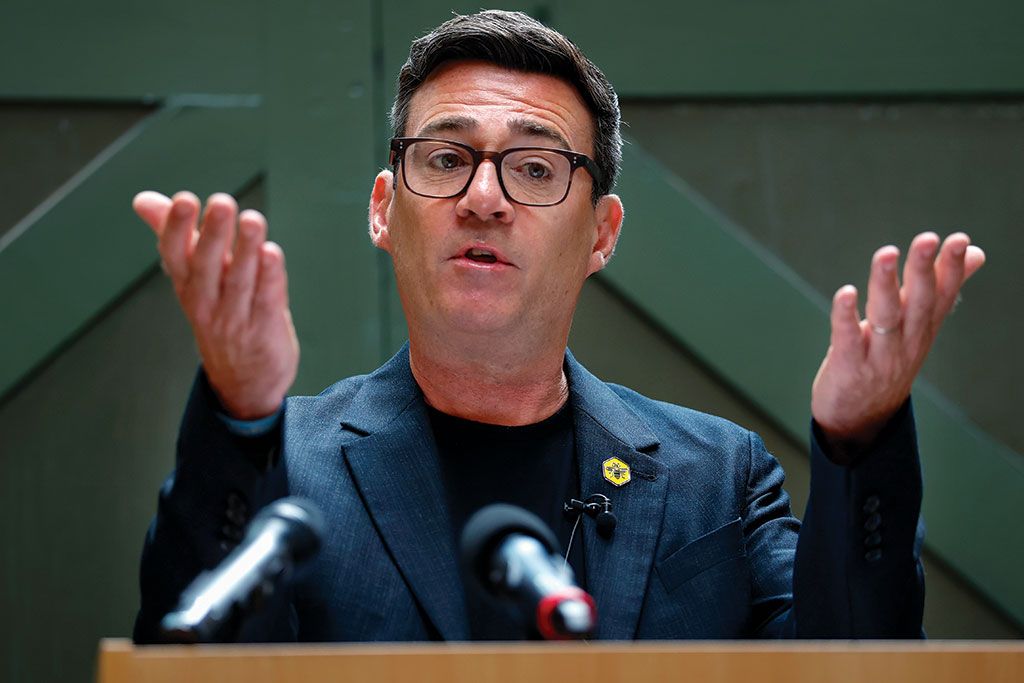
Manchesterism is the new political buzzword that Andy Burnham uses to describe his political philosophy – essentially meaning social democracy with an emphasis on close relations with business, regional devolution, strong municipal government and public control (though not ownership) of essential services. It is the word the soon-to-be PM himself prefers to sum up his outlook and record as metro-mayor of Greater Manchester since 2017.
In Burnham’s words, the concept means “a modern and functional response to the high-inequality, low-growth trap that came from the 1980s drive to privatise economic power and overcentralise political power in the Treasury”.
To Burnham’s critics, Manchesterism is nebulous flannel with no coherent set of policies attached; vibe-shift politics at its most virtue-signalling and vacuous. Meanwhile, to economic historians – free-market liberals in particular – his adoption of the concept is ironic and mildly annoying.
Sign up to Money Morning
Don’t miss the latest investment and personal finances news, market analysis, plus money-saving tips with our free twice-daily newsletter
Don’t miss the latest investment and personal finances news, market analysis, plus money-saving tips with our free twice-daily newsletter
What’s wrong with Manchesterism?
In the 19th century, “Manchesterism” was coined to describe the culture of laissez-faire capitalism that grew up in Manchester and its cotton-rich Lancashire hinterland. Burnham sees his new Manchesterism as the nemesis of “neoliberalism”.
By contrast, original Manchesterism meant the free-trade liberalism of Richard Cobden and John Bright, leaders of the Anti-Corn Law League, which campaigned successfully to scrap the protectionist tariffs that kept bread prices artificially high. The idea – as relevant today as ever – was that free markets and free trade will lead to a more equitable society by making goods available to all at reasonable prices.
What about modern Manchester?
Its recent history is also of expansion and getting richer: the city-region’s economy has grown at more than 3% since 2015, double the overall UK rate, and the skyline is dotted with gleaming new towers. However, as Burnham acknowledges, the roots of that transformation long predate his tenure as city-region mayor.
In the late 1980s, the Labour mayor of Manchester City Council, Graham Stringer, began opening up the city to private-sector property investment. In the early 1990s, only a few hundred people lived in Manchester’s city centre. Following the massive redevelopment and regeneration that followed the IRA bombing in 1996, that figure is now approaching 100,000.
In the 2010s, Labour council leader Richard Leese, together with the council’s chief executive, the late Howard Bernstein, opened up the city to foreign investment in property and expanded the tram system. They also negotiated Greater Manchester’s far-reaching devolution deal – creating the city-region and mayor position – with then-chancellor George Osborne in 2014.
What has Andy Burnham achieved as Greater Manchester mayor?
His signature achievement has been to bring Greater Manchester’s buses, which were deregulated in the 1980s, back into one publicly controlled system known as the Bee Network. The municipal authority doesn’t own the companies, rather it operates a franchise system under one (distinctive yellow) branding, with control over services, routes and fares (capped at £2 for a single trip).
It’s been a success, with passenger numbers and customer satisfaction up. He’s also attracted some £2 billion of public and private investment into the Greater Manchester Good Growth Fund, which aims to fund the building of 10,000 council and social homes by 2028, as well as a series of public-private industrial schemes.
Is Manchesterism socialism?
Burnham reckons Manchesterism is “business-friendly socialism”, says Tej Parikh in the Financial Times. But the long-term rise of Manchester was actually built on stable, pragmatic local government and its openness to private enterprise. “The emphasis on attracting investment, clustering and connectivity has supported creative destruction” – in particular the regeneration of old industrial zones into business spaces, drawing in higher value-added sectors including professional services, technology and media.
That’s the real story of Manchesterism, not public control of colourful buses. Regional devolution has helped, but the city’s rise is more “about the ‘neoliberal’ forces the politically astute Burnham has recently criticised, and less the socialist principles he suggests”.
If the UK as a whole is to grow faster under its new PM, it will need to draw on the real “Manchesterism, not the version Burnham supporters think he represents”.
Can Manchesterism work at the national level?
“What Manchester does today, the rest of the world does tomorrow,” remarked prime minister Benjamin Disraeli on a visit to Britain’s industrial powerhouse in the 1870s. Burnham, despite his eye-catching plans for a “Number 10 North”, will obviously not find it that simple.
If the UK does indeed follow Manchester’s example, a new paper by two Burnham allies, Mathew Lawrence and Alex Williams (“The Productive State: A Framework for Manchesterism”), ought to be a promising guide to what we might expect. It calls for “public control of essentials” such as water and sewerage, energy networks and rail infrastructure, alongside social housing and social care.
But Greater Manchester doesn’t actually have public control of these sectors. And in any event, the idea that what worked so well for Manchester will work for the UK is “the very definition of a fallacy of composition: the generalisation from a single example to the whole, from a city to a country”, says Wolfgang Munchau on UnHerd.
The crucial difference between a country and a large city is not size, it is macroeconomics and fiscal policy. Cities don’t have currencies, don’t have significant tax-raising powers and “they certainly don’t have bond markets. Becoming acquainted with the latter will be a new experience” for the self-styled King of the North.
This article was first published in MoneyWeek’s magazine. Enjoy exclusive early access to news, opinion and analysis from our team of financial experts with a MoneyWeek subscription.